For furniture retailers, hospitality procurement teams, and
direct-to-consumer brands, establishing a kitchen table OEM relationship with a verified manufacturer is a strategic decision that
determines product quality, cost structure, and supply chain reliability. Unlike
off-the-shelf imports, OEM kitchen tables require precise engineering to meet
brand-specific dimensions, finishes, and packaging requirements. This article
provides a technical framework for evaluating kitchen table OEM partners, covering substrate engineering, surface durability testing, knockdown
hardware selection, and container loading optimization. Drawing on the expertise
of Essent Home, a premium OEM/ODM
furniture manufacturer, we outline the critical specifications that buyers must
verify before committing to production.
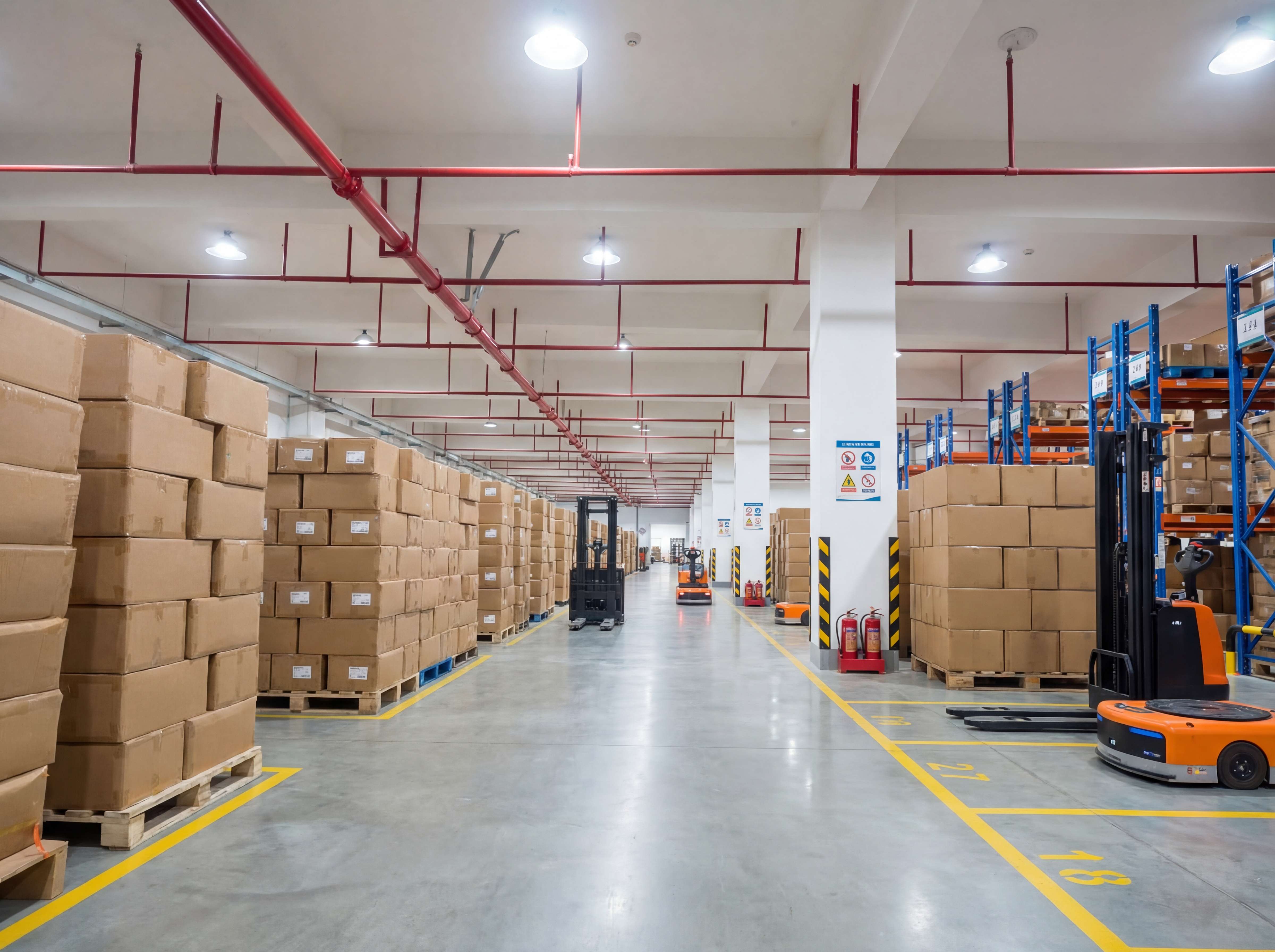
1. Core Competencies of a Professional Kitchen Table OEM
An effective kitchen table
OEM partner goes beyond basic woodworking. The following
capabilities are necessary for international B2B success:
Material certification management: CARB Phase 2 / TSCA
Title VI for composite wood, FSC chain of custody for solid wood, and REACH
compliance for finishes.
Structural engineering: Finite element analysis (FEA) for
table top deflection under load (e.g., 150 kg distributed load).
Finish laboratory testing: Abrasion resistance (Taber
test), chemical resistance (household stains), and heat resistance (hot pan
test).
Packaging engineering: ISTA 3A certification for drop and
vibration during ocean freight.
Leading manufacturers like Essent Home operate as an
integrated kitchen table OEM provider, offering comprehensive product
development services from 3D rendering to pilot run production. Their dining
table portfolio includes farmhouse, mid-century modern, and industrial styles
engineered for flat-pack shipping.
2. Substrate Selection for Kitchen Table OEM Durability
2.1 Core Material Options
When specifying a kitchen table
OEM design, the substrate directly impacts weight, screw-holding
strength, and warp resistance. Common choices:
High-density fiberboard (HDF): Density >880 kg/m³.
Offers superior screw retention (≥250 N pull-out) for leg mounting plates.
Preferred for painted or veneered tables.
Moisture-resistant MDF (MR-MDF): Contains wax emulsion and
melamine resin. Required for kitchens with humidity >65% to prevent edge
swelling. Test method: 24-hour water immersion (swelling <12%).
Plywood (birch or poplar core): 11–13 ply, thickness 18–25
mm. Best for large tables (>1800 mm length) due to dimensional stability. No
edge banding needed if veneer is applied.
Solid wood (rubberwood, oak, walnut): Requires moisture
content control (8–10%) and proper joinery (breadboard ends) to resist cracking.
Higher cost but premium perception.
A professional kitchen table OEM will provide a material
declaration and test samples for each substrate option, including edge screw
holding tests per ASTM D1761.
2.2 Edge Treatments and Profiling
Edge detailing affects both safety and durability. For family-use kitchen
tables, the following edge profiles are common:
3mm PVC edge banding: Impact-resistant, color-matched to
the surface. Requires hot-melt adhesive application with a minimum bonding
strength of 10 N/mm².
ABS edge banding (1–2 mm): More flexible, resists
yellowing. Preferred for white or light-colored tables.
Solid wood edge (glued and doweled): 20x20 mm hardwood
strip applied to HDF core. Allows a beveled or round-over profile (R5–R10
mm).
Mitered edge (veneer wrapped): Continuous wood grain
appearance. Requires precise 45° cutting and CNC folding.
Your kitchen table OEM should supply edge pull-off test
results (minimum 50 N/cm width) to guarantee banding adhesion over the product’s
lifetime.
3. Surface Finish Engineering for Kitchen Environments
Kitchen tables face daily exposure to heat (hot pots up to 180°C), moisture
(spills), abrasion (cutlery), and chemicals (vinegar, detergents). A competent
kitchen table
OEM employs a layered finish system:
Sealer coat: Polyurethane (PU) or acrylic base, applied at
80–100 g/m². Prevents substrate absorption.
Color layer: UV-cured pigmented lacquer or water-based
stain. Two passes for uniform opacity.
Topcoat (clear): Two-component PU or ceramic-reinforced
lacquer. Thickness 40–60 microns after curing.
Anti-fingerprint additive: Matte finish (sheen 10–20 GU at
60°) with oleophobic properties.
Request test reports for the following standards from your kitchen
table OEM:
Heat resistance: ISO 4211-2: no whitening or blistering
after 70°C hot mug contact for 30 minutes.
Chemical resistance: 24-hour exposure to 10% acetic acid,
10% ammonia, and red wine – maximum change rating 2 (barely visible).
Abrasion resistance: Taber abrasion (CS-10 wheel, 500 g
load, 500 cycles) – no breakthrough of color layer.
Essent Home operates an
in-house finish laboratory and can provide these test reports as part of their
kitchen table OEM service. Their product engineering team also offers alternative finishes such as UV-resistant matte for outdoor-adjacent
kitchens.
4. Structural Design for Knock-Down (KD) Assembly
Most international kitchen table orders require flat-pack (KD) construction
to reduce shipping volume. A reliable kitchen table
OEM designs with the following fasteners and reinforcements:
Leg attachment plates: 3 mm thick zinc-plated steel,
pre-welded nuts (M8 or M10). Plates must be recessed into the table bottom by 2
mm to avoid scratching floors.
Cross-brace support: For tables longer than 1500 mm, a
steel or wooden stretcher with cam lock connectors prevents sagging. Deflection
limit under 150 kg center load: <2 mm.
Corner blocks: 30x30 mm solid wood glued and screwed into
all internal corners of the apron – increases racking resistance by 40%.
Hardware bag standardization: All screws, dowels, hex keys,
and assembly instructions packed in a sealed bag with a QR code linking to a
video guide.
Request that your kitchen table OEM performs a KD cycle
test: assemble and disassemble the table 5 times using standard tools. No
stripped threads or cracked wood allowed after the final cycle.
5. Packaging Engineering for Ocean Freight
Inadequate packaging is a leading cause of claims against an overseas
kitchen table
OEM. Professional exporters adhere to ISTA 3A (standardized testing
for parcel shipments) or 6A (for palletized freight). Minimum packaging
specifications:
Edge protectors: Cardboard L-profiles (4 mm thickness) on
all table top corners.
Corner foam: Expanded polyethylene (EPE) 30 kg/m³ density,
15 mm thickness wrapping each component.
Desiccant: Silica gel packs (100 g per carton) to maintain
<50% relative humidity inside.
Double-wall carton: 200 lb burst strength, with hand holes
and “Fragile – Do Not Stack Over 2 High” labels.
Palletization: For orders over 100 units, shrink-wrapped on
GMA-certified pallets with corner posts and strapping.
A professional kitchen table OEM will provide a packaging
test video or a certificate from an independent lab (e.g., SGS, Bureau Veritas).
Essent
Home offers optional pre-shipment container loading simulation to
identify shifting risks before cargo departs.
6. Industry Pain Points and Solutions for Kitchen Table OEM Sourcing
6.1 Inconsistent Finish Color Between Production Batches
Problem: A buyer receives two containers of the same SKU but
with visible color difference (ΔE > 2.0). Solution: Require
the kitchen table OEM to supply a master color panel (300x300
mm) and spectrophotometer readings (CIELAB L*a*b* values) for each batch. A
tolerance of ΔE < 1.5 is achievable with automated mixing systems.
6.2 Table Top Warping After Arrival
Problem: HDF or MDF tables show a bow >3 mm over 1200 mm
length. Root causes: Substrate not conditioned to destination
humidity, or poor storage during transit. Solution: Specify
that the kitchen table OEM acclimatizes raw boards for 72 hours
in a controlled environment (20±2°C, 50±5% RH) before cutting. Also, ensure
cartons have moisture barrier liners.
6.3 Leg Attachment Failure Under Load
Problem: Legs loosen or pull out after 3 months of use.
Solution: Demand that the kitchen table OEM uses threaded inserts (brass or zinc) embedded in the substrate, not direct wood
screws. Pull-out test: each insert must withstand 500 N axial force without
failure.
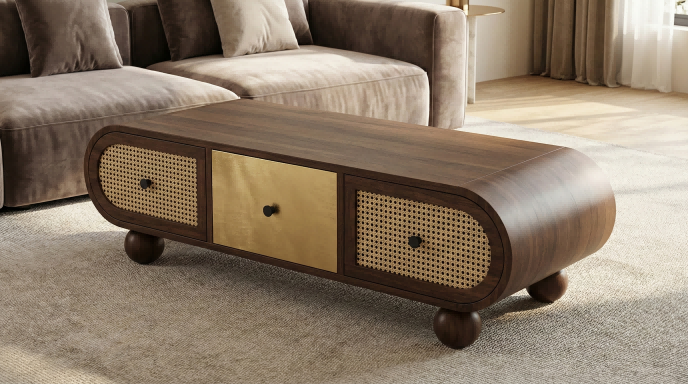
7. Compliance Documentation for Global Markets
When importing kitchen tables, buyers must provide customs with specific
documents. A professional kitchen table
OEM supplies the following:
Phytosanitary certificate (if solid wood is used) –
confirming heat treatment per ISPM 15.
Formaldehyde emission test report – CARB 93120 or EU E1
(≤0.124 mg/m³).
REACH/SVHC declaration – listing any substances of very
high concern (e.g., DMF, lead).
Bill of lading and packing list – with HS code 9403.40
(wooden kitchen furniture).
Essent Home as a
kitchen table OEM includes a compliance checklist with each
proforma invoice, significantly reducing detention risk at the destination
port.
Frequently Asked Questions (FAQ) – Kitchen Table OEM
Q1: What is the typical minimum order quantity (MOQ) for a kitchen
table OEM project?
A1: For fully custom designs (unique dimensions,
finish, and packaging), MOQs typically range from 100 to 300 pieces per SKU. For
semi-custom (existing tooling with your branding), MOQs can be as low as 50
pieces. Always confirm with your kitchen table OEM; Essent
Home offers flexible MOQs for first-time partners.
Q2: How do I verify the financial stability of an overseas kitchen
table OEM?
A2: Request a Dunn & Bradstreet D‑U‑N‑S report and a
bank reference. Also, ask for a credit report from a trade insurer (Coface,
Euler Hermes). A transparent kitchen table OEM will share
audited financial statements for the last two years and allow a third-party
factory audit (e.g., SGS, TÜV).
Q3: Can a kitchen table OEM handle drop-shipping to Amazon FBA or
retail warehouses?
A3: Yes, but you must confirm that the OEM can
apply FNSKU labels, suffocation warning labels (for poly bags), and carton
labels per Amazon’s FBA requirements. Not all OEMs offer this service. Verify
that your kitchen table OEM has prior FBA experience.
Essent Home provides FBA-ready packaging as an option.
Q4: What is the typical lead time for a new kitchen table OEM design
from concept to first container?
A4: The process takes 60–75 days:
15 days for engineering drawings and 3D printing, 20 days for material sourcing
and pilot run (5–10 units), 30 days for mass production, and 10 days for
inspection and container loading. Repeat orders can be 30–40 days. Always add
3–4 weeks for ocean transit to US or EU ports.
Q5: What warranty should I expect from a kitchen table OEM on
structural defects?
A5: Industry standard for B2B is 1 year against
manufacturing defects (delamination, joint failure, hardware defects). Some
premium OEMs offer 2 years on the frame and 5 years on the table top substrate.
The warranty should cover replacement parts shipped by air freight. Get the
warranty terms in writing on the purchase order.
Building a Reliable Kitchen Table OEM Partnership
Selecting the right kitchen table OEM determines your
brand’s reputation for quality, delivery consistency, and cost competitiveness.
By prioritizing material certifications, finish durability testing, KD
structural engineering, and packaging validation, buyers can avoid common
sourcing pitfalls. A professional OEM partner like Essent
Home integrates design, compliance, and logistics into a single
workflow, reducing your supply chain complexity. Use the technical criteria
outlined above to evaluate proposals, request samples, and negotiate quality
assurance protocols before mass production.
Ready to launch your private-label
kitchen table collection? Contact Essent Home today. Their OEM
specialists provide free material sampling, structural testing, and a full
compliance roadmap for your target market.
Send your inquiry now – include your target dimensions,
wood species/finish preference, estimated annual volume, and desired lead time.
You will receive a detailed quotation with tooling costs and sample lead times
within 48 hours.