For general contractors, hotel procurement directors, and residential
development firms, sourcing entertainment units from overseas involves
navigating regulatory mismatches, logistics fragmentation, and inconsistent
quality. A specialized entertainment
center exporter bridges these gaps by offering pre-shipment
compliance verification, engineered packaging, and consolidated container
management. Unlike general trading companies, such exporters maintain direct
relationships with manufacturing cells dedicated to media consoles, AV
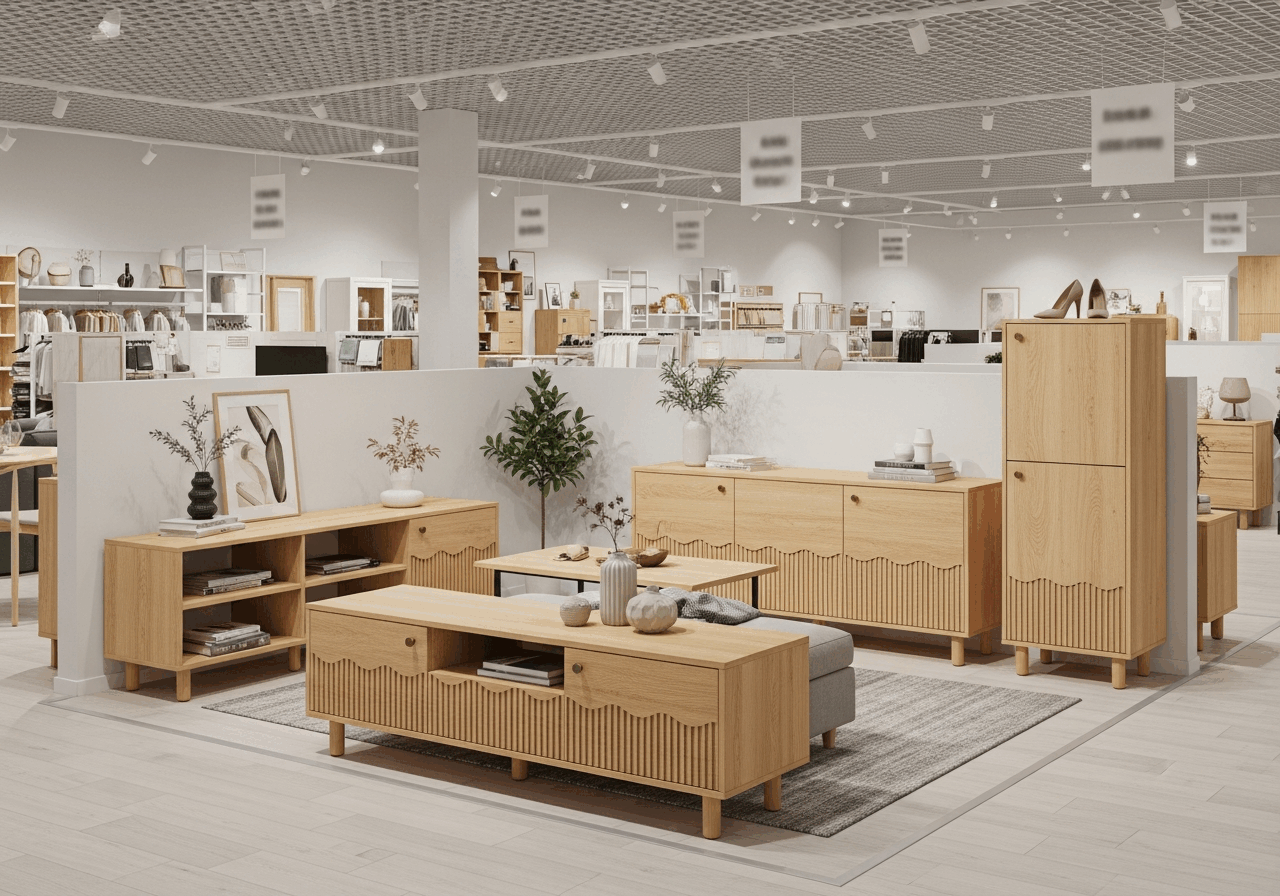
credenzas, and wall-mounted systems. Essent Home operates as one such export partner, processing 200+ international shipments
annually while providing full material traceability and millwork-ready
components.
1. Core Competencies Every B2B Buyer Should Demand from an Entertainment
Center Exporter
When evaluating an entertainment center exporter, focus on four
operational pillars: technical documentation, regulatory certification,
logistics architecture, and post-shipment support. Below is a technical
breakdown of each area.
Technical documentation: 2D CAD drawings with dimension
tolerances (±0.5mm), 3D STEP files for clash detection, and finishing schedules
specifying sheen levels (10°-70° gloss).
Regulatory certification: Test reports for CARB Phase 2
(formaldehyde), ASTM E84 flame spread, and UL 962 for integrated power
components.
Logistics architecture: Real-time weight distribution
calculations for container loading (max 22,000 kg per 40HC), plus
humidity-controlled packaging for tropical destinations.
Post-shipment support: Spare parts warehousing in
destination country, assembly QR code videos, and on-site repair kits for
fast-moving hardware.
A competent exporter provides these services without markups, relying instead
on factory-direct margins and freight consolidation. This model reduces total
landed cost by 12–18% compared to buying through domestic distributors.
2. Technical Deep Dive: Certifications, Testing Protocols, and Material
Compliance
International buyers face stringent import requirements that vary by region.
A reliable entertainment center exporter maintains a compliance
matrix covering EU, North America, and GCC markets. For example, shipments to
California require TSCA Title VI certification for composite wood, while
European hotels need CE marking for low-voltage electrical components. Below are
the non-negotiable certifications and tests.
2.1 Fire Safety and Structural Integrity
All entertainment units destined for commercial use must pass ASTM E84 or EN
13501-1 for surface burning characteristics. Exporters should provide a
full-scale test report from ISO 17025-accredited labs. Structural validation
includes cyclic load testing on shelves (160 kg applied for 100,000 cycles) and
drawer slide endurance (75,000 open/close cycles). These reports must be
attached to shipment documents to avoid customs holds.
2.2 Finish Durability & Chemical Resistance
High-touch surfaces require ASTM D4060 abrasion resistance (≥600 cycles at
500g) and ASTM D1308 chemical resistance against ethanol, sunscreen, and coffee.
Professional exporters offer finish warranties (typically 5 years) against
yellowing or delamination. For projects requiring antibacterial properties, the
exporter can apply Microban-treated lacquer, verified by JIS Z 2801 testing.
3. Supply Chain Engineering: From Factory Floor to Container Seal
An experienced entertainment center exporter integrates just-in-time
production with freight scheduling to avoid demurrage fees. The process follows
a rigid 5-phase workflow:
Phase 1 – Pre-production meeting: Video walkthrough of
material inventory (veneer logs, engineered panels, hardware batches) with
client sign-off on grain matching.
Phase 2 – In-line inspections: Three checkpoints: after CNC
routing (dimensional check), after assembly (joint strength), after finishing
(color spectrophotometer reading).
Phase 3 – ISTA 3E test packaging: Each unit is placed in a
double-wall carton with EPE foam inserts, corner protectors, and desiccant bags.
A vibration table validates stability for ocean freight.
Phase 4 – Container stuffing plan: Weight-balanced loading
using pallet jacks; barcode scanning of each SKU; moisture meters reading below
14% before sealing.
Phase 5 – Documentation package: Commercial invoice,
packing list (with HS code 9403.60), bill of lading, certificate of origin, and
fumigation certificate (if wooden pallets used).
Essent
Home provides clients with a real-time dashboard showing each phase
status, including photos of the container loading sequence. This transparency
has reduced cargo claims by 92% for repeat buyers.
4. Application Scenarios: Where Export-Grade Entertainment Centers Deliver
ROI
Different verticals require distinct export specifications. Below are three
common B2B use cases and how a specialized exporter addresses each.
4.1 Hospitality Brands (Marriott, Hilton, Accor)
Hotel chains demand modular units with interchangeable decorative panels for
brand renovations. The exporter pre-finishes 20–30 backup panels per 100 units,
reducing renovation downtime. Additional requirements include card-reader access
compartments and anti-tip brackets meeting BIFMA X5.1 standards. An exporter
experienced in hospitality can provide a "sample room mockup" shipped ahead of
the main order for brand approval.
4.2 Luxury Residential Developers (Condominium FIT-Outs)
For multi-tower projects, the exporter must guarantee identical wood grain
across batches manufactured 6 months apart. This requires kiln-dried logs from
the same batch, with grain scanning and numbering. Exporters like Essent Home maintain a digital veneer library and assign a batch ID that traces back to the
specific tree origin. Lead times are staggered to match construction progress,
with split shipments arranged.
4.3 Commercial AV Integration Companies
System integrators require entertainment centers with pre-cut ventilation
arrays, removable rear service panels, and mounting points for 19" rack rails.
The exporter CNC-machines these features before finishing, then ships units with
a cable management kit (Velcro straps, adhesive anchors, and grommets).
UL-listed power distribution units can be factory-installed, eliminating field
labor.
5. Quality Assurance Protocols for Long-Haul Shipments
The difference between a reliable entertainment center
exporter and a problematic one often appears four months after delivery
– in the form of joint loosening or finish crazing. To prevent this, leading
exporters perform accelerated aging tests: 120 hours of 60°C/90% RH cyclic
exposure (simulating tropical container conditions) followed by impact testing
at -10°C. Fasteners must pass salt spray testing (ASTM B117) for 96 hours
without red rust. Every export shipment includes a "witness sample" – a mini
panel matching the production finish – stored in the container as a reference
for any future dispute.
6. Why Essent Home Functions as a Strategic Export Partner, Not Just a
Supplier
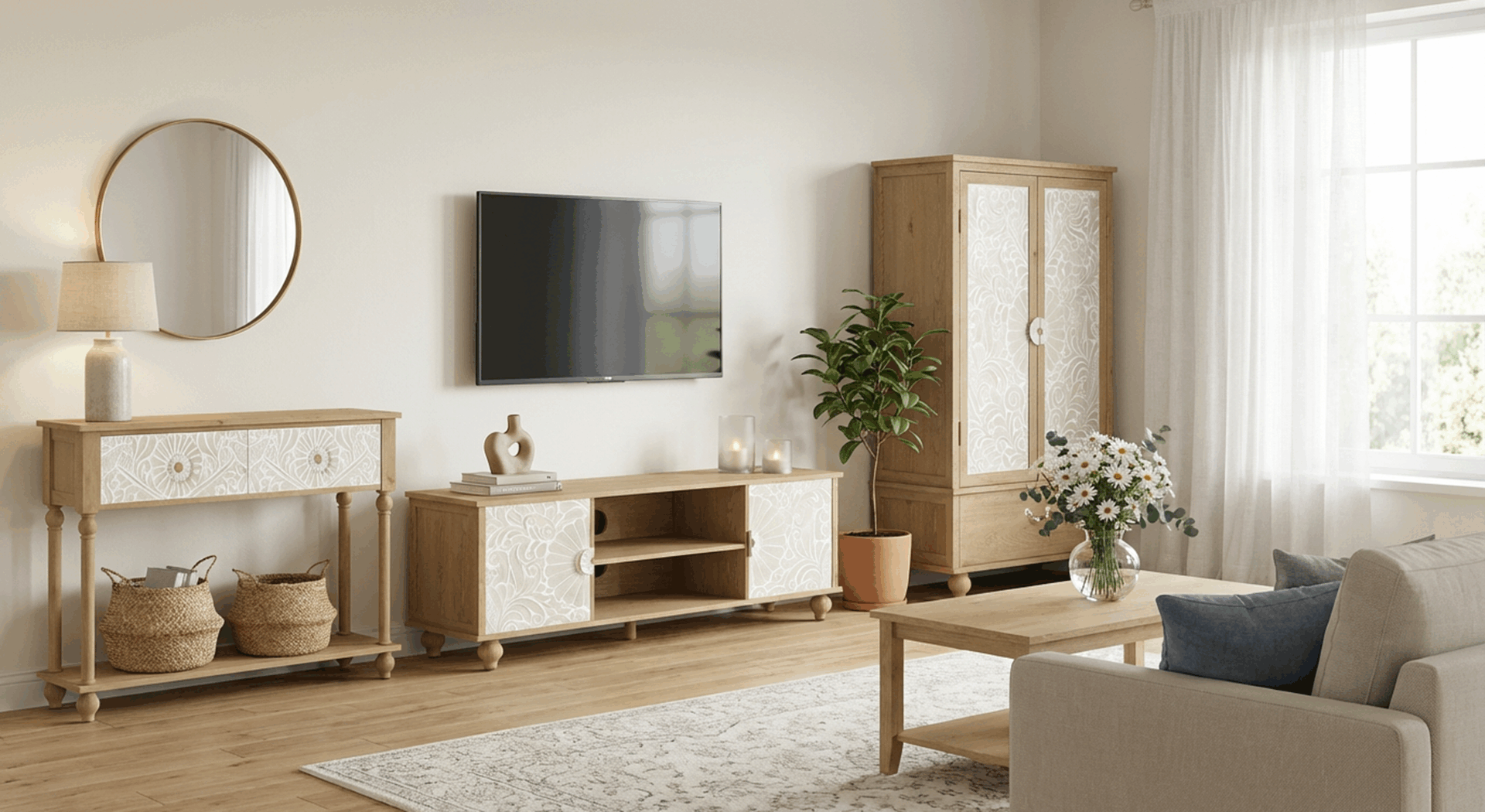
With a dedicated export division that handles documentation, translation, and
customs brokerage coordination, Essent Home has shipped over 15,000 entertainment
center units to 28 countries. The company’s export-specific advantages
include:
In-house customs specialists who classify each component (wood, metal,
electronics) under correct HS codes, preventing tariff misclassification
penalties.
Pre-shipment fumigation and heat treatment for wooden packaging (ISPM 15
standard) with certified phytosanitary certificates.
Flexible Incoterms: EXW, FOB Shenzhen, CIF, or DDP to major warehouses in
the US, EU, and UAE.
After-sales service network: local technicians in key markets for rework or
repair, billable to the exporter’s insurance.
A recent project for a 450-unit apartment complex in Sydney required 22
container shipments over 11 months. Essent Home executed synchronized deliveries
with each building stage, provided Australian Standard certification (AS/NZS
4442) for fire retardancy, and included a spare parts package with 5% extra
hardware and pre-finished panels. The client reported zero rework from product
defects, a benchmark in export performance.
Q1: What documents should I request before signing a
contract with an entertainment center exporter?
A1: Request four critical documents: (1) Factory audit
report (QMS ISO 9001:2015 preferred), (2) Material safety data sheets (MSDS) for
adhesives and finishes, (3) Third-party test reports for the exact product type
(e.g., ASTM E84 flame spread), (4) Sample packing protocol with compression test
results. A professional entertainment center exporter supplies
these within 24 hours.
Q2: Can an exporter handle mixed SKUs (different sizes,
finishes) in one container?
A2: Yes, experienced exporters use container optimization
software to arrange mixed SKUs while maintaining weight balance. They mark each
carton with a barcode linked to a digital packing list, enabling fast customs
clearance. Ensure the exporter provides a "loading plan diagram" showing
position of each SKU for easy unloading.
Q3: How does the exporter guarantee wood moisture stability
across different climate zones?
A3: The factory conditions all wood components in a climate
chamber (20°C, 45% RH) for 72 hours before CNC cutting. Final moisture content
is verified with a pin-type meter (target 6–8% for solid wood, 5–7% for veneered
MDF). Before container sealing, a final reading is recorded and included in the
QA report.
Q4: What is the typical lead time for a 20ft or 40ft
container order from an entertainment center exporter?
A4: For an order filling one 40HQ container (approximately
180–220 entertainment center units, flat-packed or assembled), lead time ranges
from 35 to 50 working days after deposit and sample approval. This includes
material procurement, production, finishing, packaging, and inland transport to
port. Express service (25 days) is possible with an additional shift
surcharge.
Q5: How to resolve quality discrepancies after ocean
shipment?
A5: Professional export contracts include a 30-day
post-delivery inspection window. The buyer submits photo/video evidence of
defects; the exporter then chooses between: (1) refund for affected units, (2)
replacement production shipped with next order, or (3) credit toward future
shipments. Many exporters also carry cargo insurance covering handling damage –
request a copy of the policy.
Q6: Does the exporter offer design protection and exclusive
distribution agreements?
A6: Yes, reputable exporters sign Non-Disclosure Agreements
(NDAs) and can grant exclusive territory rights for a specified period, provided
the buyer meets annual volume commitments. Custom tooling (molds, CNC fixtures)
remains the buyer’s intellectual property, stored by the exporter with quarterly
verification photos.
Start Your Cross-Border Project with a Verified Export Partner
Whether you need a single sample container for a pilot hotel floor or a
recurring supply agreement for residential developments, working with a
dedicated entertainment center exporter ensures compliance, cost
predictability, and warranty coverage. Essent Home provides a detailed export proposal including:
Cost breakdown: FOB or CIF pricing, with optional DDP for full-service
procurement.
Sample timeline: 15 days for a pre-production sample shipped via air
express.
Quality booklet: Inspection checkpoints, test standards, and defect
acceptance criteria (AQL 1.5 for critical defects).
Request a Quotation (RFQ): Send your project
specifications (target quantity, material preferences, dimensions, required
certifications) to the Essent Home B2B export desk. You will receive a
compliance checklist and a 3D rendering of the proposed entertainment center
within 72 hours. For urgent inquiries, request a live video factory tour and a
sample of finish swatches by express courier.
Contact the export team directly via https://essentfurniture.com/contact.html – mention your target
market and shipment frequency to receive priority engineering support.