For procurement professionals, interior designers, and facility managers, sourcing a desk with drawers supplier involves more than comparing product catalogs. The desk forms the operational center of an office, and its construction directly influences daily user experience, maintenance cycles, and the longevity of the furniture investment. This article examines the material choices, joinery techniques, and hardware specifications that distinguish durable, serviceable desks from those that require frequent repair or replacement. Each criterion is evaluated through the lens of commercial application, where desks endure heavy use, frequent cleaning, and often, reconfiguration across different office layouts.
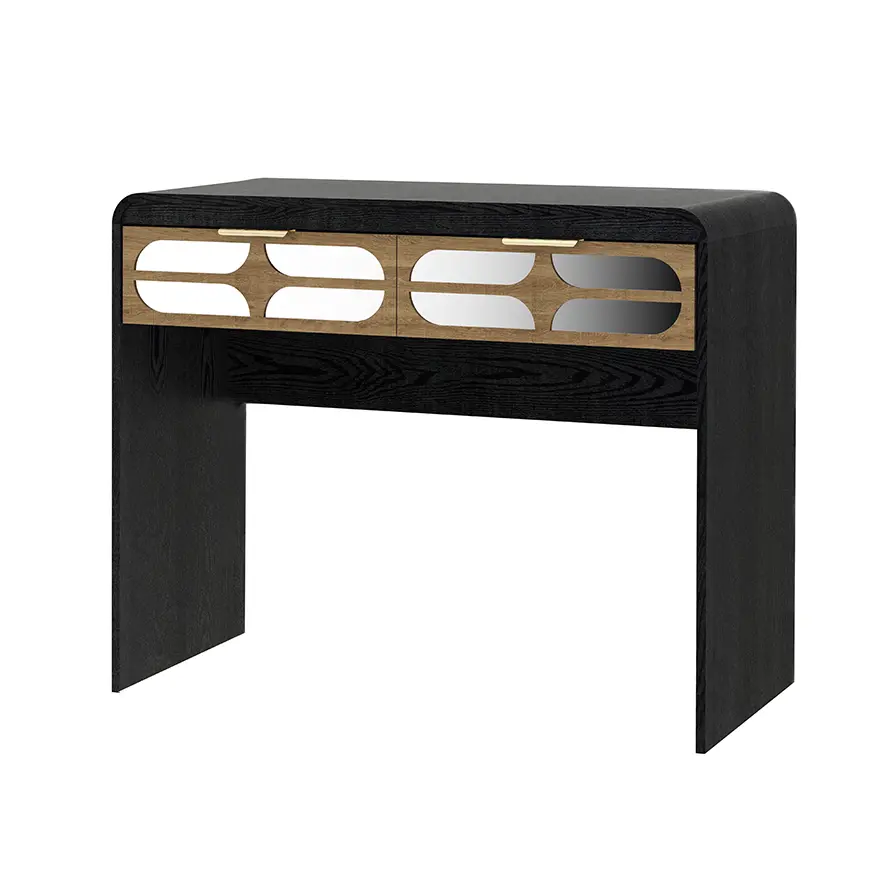
Core Material Selection: Solid Wood, Veneers, and Engineered Panels
The substrate and surface material of a desk determine its resistance to moisture, scratches, and dimensional change over time. A desk with drawers supplier serving the contract market should offer clear specifications for each material layer, from the core substrate to the final finish.
Solid Hardwood vs. Engineered Core Construction
Solid hardwood offers natural grain patterns and the ability to be refinished multiple times, which appeals to clients seeking long-term adaptability. However, solid wood expands and contracts with ambient humidity changes. In climate-controlled commercial buildings, this movement is manageable, but in spaces with wide humidity swings, solid wood panels can develop cracks or cupping. Many commercial desks therefore use a plywood or medium-density fiberboard (MDF) core with a wood veneer surface. This construction provides dimensional stability while maintaining the appearance of solid wood. The core material should be specified as either cabinet-grade plywood (with at least 7 plies for 18mm thickness) or high-density MDF (density above 700 kg/m³) to ensure screw-holding strength and resistance to sagging under load.
For veneered surfaces, the veneer thickness matters. A veneer of 0.6mm or thicker allows for light sanding and refinishing, whereas thinner veneers (0.3mm) cannot withstand abrasion from cleaning or surface repair. The veneer layup—whether book-matched, slip-matched, or balanced—affects the visual consistency across the desk surface. Book-matched veneers create a mirrored grain pattern that is often preferred for executive desks, while slip-matched veneers provide a more uniform appearance suited to modular workstations.
Edge Banding and Impact Resistance
Desk edges are vulnerable to impact from chairs, carts, and user contact. Edge banding material and application method are therefore critical to long-term appearance. Wood veneer edge banding, applied with hot-melt adhesive or through a laser-edge system, offers a seamless look when properly matched to the surface. Laser-edge banding uses a special adhesive layer that melts under laser heat, creating a bond that resists moisture penetration and is less likely to separate over time compared to standard hot-melt applications. For desks that will be moved frequently, edge banding with a 2mm thickness provides better impact resistance than the more common 0.8mm or 1mm options.
Drawer Construction and Hardware Integration
The drawers are the most frequently used component of a desk, and their construction directly affects user satisfaction and maintenance frequency. A desk with drawers supplier should provide detailed information on drawer box assembly, slide mechanisms, and weight ratings.
Drawer Box Assembly Methods
Drawer boxes can be constructed using dovetail joinery, dowel joints, or confirmation (cam-lock) fasteners. Dovetail joints—through dovetails or half-blind dovetails—provide superior mechanical interlock and glue surface area, making them the preferred choice for high-load commercial drawers. The pin-and-tail geometry should be cut precisely; a gap of more than 0.2mm in the joint will allow seasonal movement and eventual loosening. Dowel construction is acceptable for light- to medium-duty applications, but the dowel spacing and glue application must be consistent to avoid racking (parallelogram distortion) over time.
Bottom panels should be captured in a groove routed into the drawer sides, rather than simply stapled or nailed. This captive construction prevents the bottom from sagging or falling out when the drawer is loaded. For drawers exceeding 600mm in depth, a bottom panel thickness of 6mm (for MDF) or 4mm (for plywood) is recommended to maintain flatness under standard office loads of 20–25 kg per drawer.
Drawer Slide Systems and Load Ratings
The slide mechanism determines drawer operation smoothness, side-to-side stability, and load capacity. Three slide types are commonly used in commercial desks: undermount slides, side-mount slides with ball bearings, and side-mount slides with rollers. Undermount slides, mounted beneath the drawer, offer the best lateral stability and are typically rated for loads of 30–50 kg per drawer pair. They also include a built-in damping mechanism for soft-close action, which reduces user fatigue and minimizes the chance of drawer slam damage.
Side-mount, full-extension ball-bearing slides provide lower cost and are easier to replace, but they require more clearance (typically 12.5mm per side) and are more visible from the side of the desk. For applications where drawers are used intermittently, side-mount slides with a rating of 45 kg are adequate. For frequent-use drawers—such as filing or supply drawers—undermount slides with a 50 kg rating are preferable due to their smoother action and lower side-to-side play. The slide extension type is also a consideration: full-extension slides allow complete access to the drawer interior, while three-quarter extension slides leave part of the drawer hidden.
Finishes and Surface Durability
The surface finish of a desk must resist common office contaminants—coffee, ink, cleaning agents—while maintaining its appearance after years of use. For wood finishes, three main categories exist: conversion varnish, polyurethane, and oil-based finishes. Conversion varnish (catalyzed lacquer) offers the highest chemical resistance and hardness, making it suitable for high-traffic work surfaces. It cures through a chemical reaction that produces a cross-linked film; this film resists scratching and staining better than pre-catalyzed or nitrocellulose lacquers. A typical conversion varnish system includes a sealer coat and two topcoats, with a total film build of 35–50 microns.
Polyurethane finishes, particularly two-component water-based polyurethanes, have improved significantly in recent years. They offer good abrasion resistance and lower volatile organic compound (VOC) emissions, which can be a requirement for projects pursuing LEED or WELL certification. However, polyurethane finishes are softer than conversion varnish and may show scuff marks from frequent cleaning. For desks that see heavy use, a conversion varnish remains the preferred choice.
The finish application process also matters. Spray-applied finishes, when properly cross-coat sprayed, provide a more even film thickness than roller-applied finishes. The number of coats and the sanding between coats influence the final smoothness. A desk surface that feels glassy to the touch indicates a finish that has been sanded to at least 320-grit between coats. Lower grit sanding leaves microscopic scratches that become visible after prolonged use.
Ergonomic Dimensions and User Adjustment
Commercial desks are not one-size-fits-all. The standard desk height of 725–735mm accommodates a seated user of average stature, but for shared workstations or spaces where users vary in height, adjustment mechanisms become valuable. Height-adjustable desks—either manually cranked or electrically powered—allow users to set the work surface at an optimal height relative to their seated posture. For these products, the desk with drawers supplier must specify the adjustment range, the stability of the legs at full extension, and the control mechanisms ergonomics.
Drawer placement relative to the users leg position is another ergonomic consideration. Lower drawers should not conflict with the users thighs; a clearance of at least 200mm from the seat surface to the underside of the drawer is recommended. Side drawers placed in the knee well—a common feature in many designs—should have a rounded front edge to avoid pressure points against the users knees. The drawer pull type also affects usability: bar pulls or recessed pulls that allow a full-hand grip are preferable to small knobs that require a pinched grip, particularly for users with reduced hand strength.
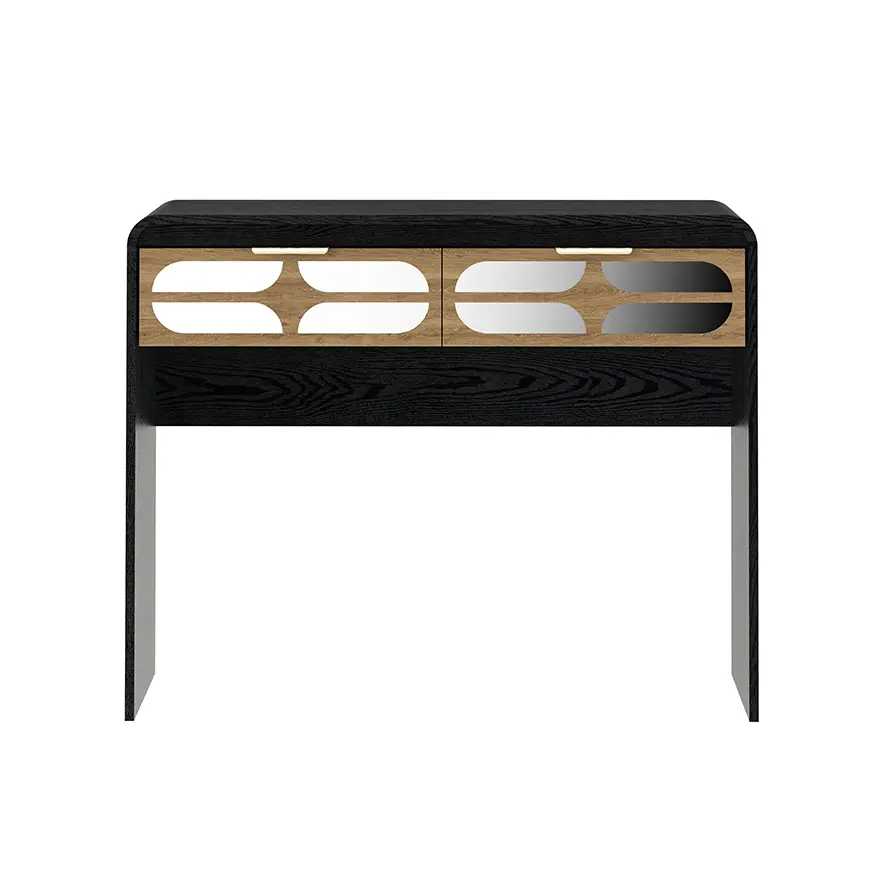
Custom Configuration and Modularity
Commercial interiors often require desks in non-standard dimensions or with specific drawer configurations. A desk with drawers supplier that offers custom sizing—within tolerance of ±2mm for width, depth, and height—can accommodate irregular office shapes or special user needs. The supplier should document their customization capabilities in terms of material availability, finish matching, and lead time for non-catalog items.
Modularity refers to the ability to add or remove components, such as returns, bridges, or overhead storage, from the base desk. This feature is particularly relevant for growing companies that may reconfigure offices over time. A modular desk system uses a consistent locking mechanism and hole pattern across components, allowing field assembly without special tools. The presence of pre-drilled connection points on the desks leg and apron ensures that returns or bridges can be attached securely without compromising the desks structural integrity.
Procurement Specifications for Commercial Projects
When drafting purchase specifications for a commercial desk project, buyers should include performance-based criteria rather than merely listing features. For example, instead of specifying "wood drawer slides," a performance specification might state "drawer slides shall support a load of 45 kg and cycle at full extension without deflection exceeding 1mm." This approach allows the desk with drawers supplier to propose the most appropriate construction method while meeting the projects functional requirements.
Quality assurance measures are equally important. The supplier should provide samples of finish color, veneer grain, and edge banding for approval before production. For large orders, a pre-production mock-up allows the project team to inspect assembly quality and hardware performance. Many commercial furniture suppliers, including Essent Home, offer this service to ensure that the final product matches the approved design intent. Documentation such as test reports for finish durability, formaldehyde emissions, and hardware cycle life provides third-party verification of the desks performance claims.
Common Questions from Procurement and Design Professionals
Q1: What is the recommended drawer depth for a general-purpose office desk?
A1: A drawer depth of 450–500mm accommodates standard letter-sized files and office supplies. For filing drawers that hold hanging file folders, a depth of 520–550mm is required to allow the folders to hang freely without bending. The drawer width should be at least 330mm for a single legal-sized file and 400mm for letter-sized. For drawers intended primarily for office accessories (pens, notepads, small supplies), a depth of 300–350mm is adequate.
Q2: How does veneer orientation affect desk durability?
A2: Veneer orientation affects both appearance and resistance to surface stress. Veneer faces that run parallel to the desks long dimension expand and contract more along the width, which can cause edge joint separation if not accounted for in the edge banding. Suppliers often cross-band the substrate—applying a thin veneer layer perpendicular to the face veneer—to balance the dimensional change. This cross-banding is a sign of higher-quality construction and should be specified for desks that will experience significant humidity variations.
Q3: What is the difference between a "contract" grade and a "residential" grade desk with drawers?
A3: Contract-grade furniture is designed for continuous daily use in commercial environments and typically undergoes more rigorous testing for load capacity, cycle life, and finish durability. For example, contract-grade drawer slides are tested for 50,000 cycles of opening and closing, while residential slides may be tested for 20,000 cycles. Contract-grade finishes must resist common cleaning agents and maintain their appearance after 1,000 rub cycles on an abrasion tester. Buyers should request test data that confirms the desk meets relevant ANSI/BIFMA standards for office furniture.
Q4: Can a desk with drawers be modified after installation to add a keyboard tray or monitor arm?
A4: Most desks with a solid wood or plywood top can accommodate clamp-on keyboard trays and monitor arms, provided the top thickness is at least 25mm to support the clamping force. Desks with an MDF core thinner than 19mm may not provide sufficient holding strength for clamp-on accessories; in such cases, grommet-mounted attachments that pass through a pre-drilled hole are a more secure option. When specifying a desk, asking the supplier to pre-drill attachment holes for common accessories can simplify field installation.
Q5: What finish types best resist yellowing under fluorescent or LED office lighting?
A5: Conversion varnish finishes, particularly those with a UV inhibitor additive, show minimal yellowing over time. Polyurethane finishes, especially oil-modified versions, are more prone to yellowing due to their chemical composition. Water-based polyurethane finishes are less prone to yellowing but may not offer the same hardness. For offices with significant natural light, a finish with a 5–10% amber tint adjustment can help maintain color consistency as the wood ages. The suppliers finish documentation should specify the lightfastness rating (in terms of Delta E change after exposure) to support informed selection.
Q6: How should drawer slide alignment be checked upon delivery?
A6: Drawer slide alignment affects both operation and durability. A quick field check involves opening a drawer to full extension and applying a downward force of 10–15 kg near the front. If the drawer drops more than 2mm from its horizontal position, the slides are under-rated or incorrectly installed. A more precise check uses a caliper to measure the gap between the drawer front and the desk apron at full extension; this gap should not vary by more than 1mm from one side to the other. Any variation indicates that the slide brackets are not parallel, which will accelerate wear on the ball bearings.
Q7: What documentation should a desk with drawers supplier provide for a commercial project?
A7: Buyers should request product specifications that include material declarations, finish test reports, hardware manufacturer and model numbers, and assembly instructions. For projects requiring environmental compliance, documentation should include formaldehyde emission certificates (meeting CARB Phase 2 or EPA TSCA Title VI), VOC content for finishes, and a list of recycled content where applicable. Manufacturers like Essent Home can provide this documentation as part of their project package, facilitating compliance with building certification programs.
For assistance with product specifications, custom configurations, or to receive a comprehensive quote for your commercial project, please direct your inquiry to the desk with drawers supplier team. We provide detailed technical support to help you select the most suitable products for your interior design or procurement requirements.