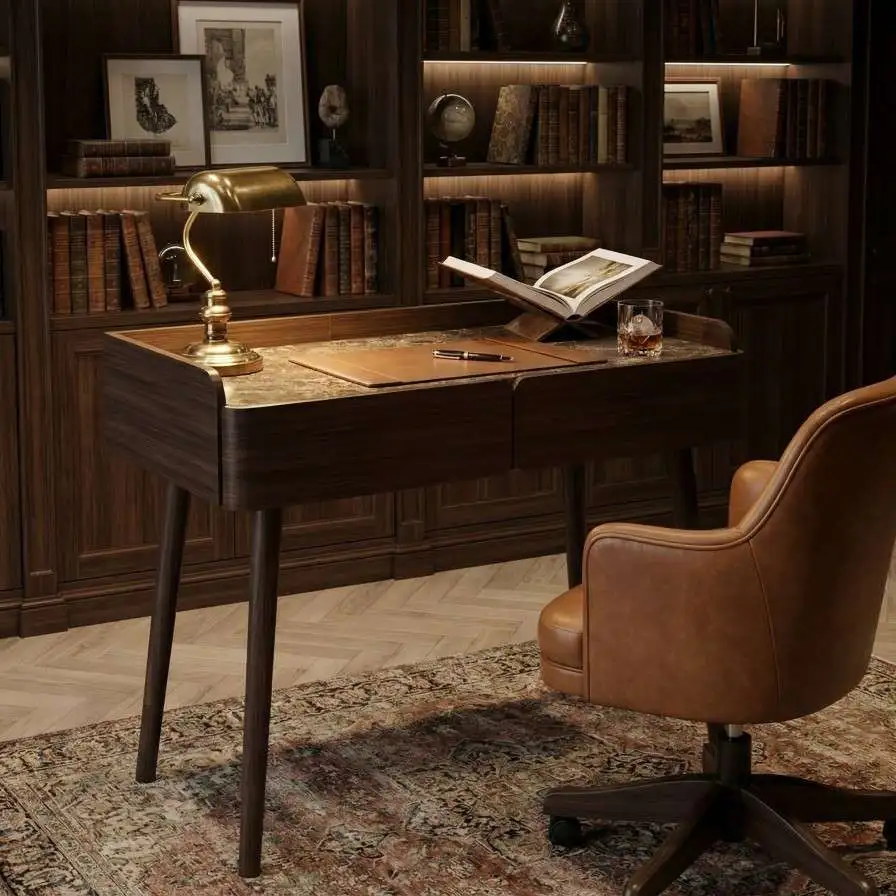
Sourcing furniture for commercial offices, luxury hotels, or upscale residential developments requires a thorough understanding of manufacturing standards. For procurement managers and interior designers, the choice of a production partner is a key factor that determines both project longevity and aesthetic alignment. Partnering with a specialized desk with drawers factory is vital to securing casegoods that withstand heavy daily use while retaining their visual appeal.
This analysis examines the engineering standards, material choices, joinery methods, and logistical considerations that define a premier manufacturing facility. By understanding these production variables, procurement professionals can make informed decisions that align with high-end project specifications.
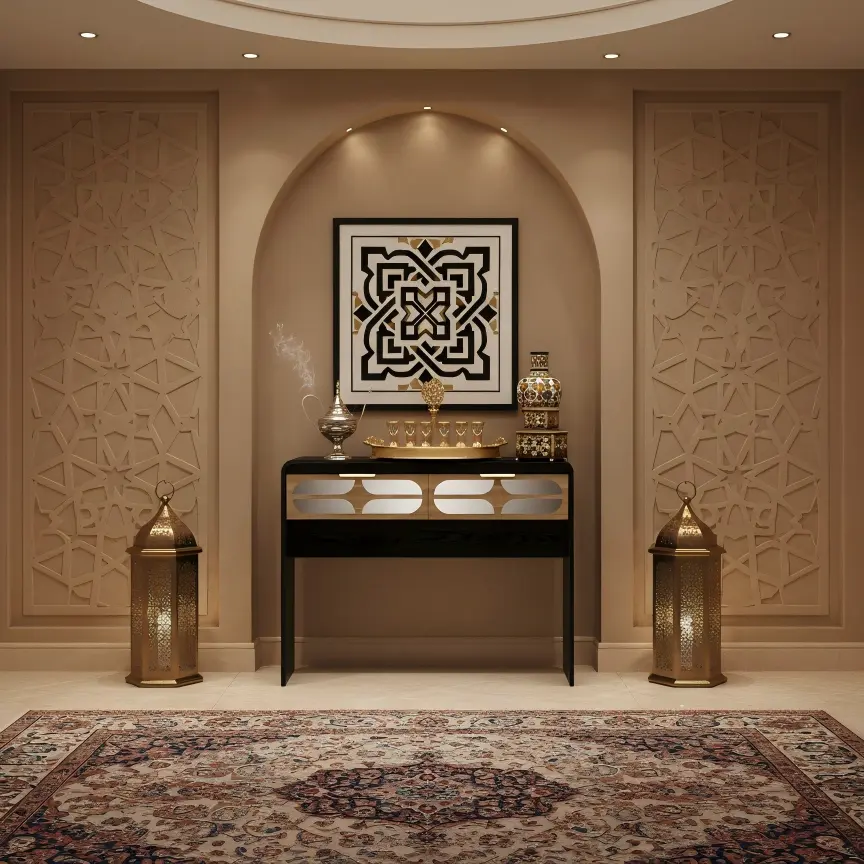
Structural Engineering and Joinery in Premium Desk Manufacturing
The structural integrity of a desk, particularly one containing moving parts like drawers, depends on its internal engineering. Unlike residential furniture designed for light use, commercial-grade desks must endure repetitive physical loads. A professional factory approaches structural design with a focus on stability, load distribution, and joint durability.
Dovetail vs. Doweled Drawer Box Construction
The construction of the drawer box itself is a clear indicator of a manufacturers quality standards. High-end factories typically utilize two primary methods for drawer box assembly:
- English Dovetail Joinery: This traditional wood-to-wood joint features interlocking flaring tenons. It provides exceptional tensile strength, ensuring the drawer front does not detach from the drawer sides even under heavy, continuous pulling forces.
- Doweled and Glued Construction: Using high-precision CNC machinery, dowel holes are bored into the panel edges. Fluted wooden dowels combined with industrial-grade PVAc adhesives create a solid, permanent bond that distributes stress evenly across the joint interface.
Drawer Slide Systems and Weight Ratings
A drawer is only as reliable as its runner system. Premium factories partner with reputable hardware suppliers to integrate undermount, full-extension, soft-closing slides. Undermount slides are preferred in high-end design because they are concealed beneath the drawer box, preserving the clean lines of the wood grain on the drawer sides. These systems should carry a dynamic load rating of at least 35 kilograms and be certified for over 50,000 open-close cycles to meet contract-grade specifications.
Material Selection: Substrates, Solid Wood, and Specialty Veneers
Material selection determines how well a desk responds to environmental shifts, such as changes in temperature and relative humidity. When collaborating with a high-end desk with drawers factory, wood selection and substrate preparation follow strict engineering guidelines.
| Material Category | Structural Characteristics | Primary Application in Desk Manufacturing |
|---|
| CARB Phase 2 MDF | High density, uniform composition, excellent dimensional stability. Resistant to warping. | Substrate for natural wood veneers on desk tops, end panels, and drawer fronts. |
| Multi-Layer Birch Plywood | Exceptional screw-holding capacity, high impact resistance, water-resistant bonding. | Internal drawer boxes, structural framing, and heavy-load support rails. |
| Solid Hardwood (Walnut/Oak) | Natural grain variations, high density, premium tactile feel, repairable surface. | Edge banding, solid wood legs, drawer handles, and decorative trims. |
Veneer Matching and Balancing
For executive desks, the aesthetic pattern of the top surface is a primary design element. Factories utilize AA-grade natural wood veneers, applying them to stabilized substrates using hot-press machines. To prevent the substrate from bowing over time, manufacturers must apply a balancing veneer of equal thickness and species to the underside of the panel. Common veneer matching techniques include:
- Book Matching: Alternating veneer sheets are turned over like pages in a book, creating a symmetrical mirror image along the joint line.
- Slip Matching: Veneer sheets are joined side-by-side without flipping, resulting in a repeating, uniform grain pattern across the desk surface.---
Design Verification and Prototyping Capabilities
Before mass production begins, a reliable manufacturer must translate raw design concepts into detailed engineering shop drawings. This stage is where design intent is reconciled with manufacturing realities.
Experienced manufacturers like Essent Home utilize advanced CAD and BIM software to generate 2D orthographic drawings and 3D renderings. These documents detail every dimension, tolerance, hardware location, and wire-routing path. Once the shop drawings are approved, the prototype phase begins. A physical mockup allows designers and procurement teams to evaluate the tactile quality, drawer operation, and finish consistency under actual lighting conditions before authorizing full-scale production runs.
This structured workflow minimizes errors during the manufacturing process, ensuring that the final delivered pieces match the approved specifications down to the millimeter.
Integration of Modern Workplace Functionality
Modern desk designs require the seamless integration of power, data, and wire management systems without compromising the clean lines of the furniture. A sophisticated factory incorporates these elements directly into the structural design rather than treating them as afterthoughts.
Integrated Power and Cable Management
To support modern hardware, executive desks often feature CNC-milled cutouts designed to accommodate flush-mounted power hubs, HDMI outlets, and USB charging ports. Cable management channels are routed through the interior of the desk legs or behind the drawer pedestals. This configuration allows wiring to travel from the floor box up to the desktop without being visible to the user or visitors.
Concealed Storage and Security
Drawers are increasingly designed with integrated locking mechanisms, ranging from traditional high-security mechanical locks to electronic RFID lock systems hidden beneath the wood veneer. A specialized desk with drawers factory has the engineering capability to mortise these locking systems into the drawer frames, maintaining a clean exterior profile while providing necessary security for sensitive documents and personal belongings.
Quality Control Protocols and Performance Standards
To meet the demands of global hospitality and corporate projects, a factory must operate under a rigorous quality management system. Each stage of the manufacturing process must have clear inspection checkpoints.
The quality control sequence begins with wood drying. Raw lumber must be kiln-dried to a moisture content of between 8% and 10% to ensure stability in different climate zones. During assembly, digital calipers are used to verify that tolerance deviations do not exceed 0.5mm. Once assembly is complete, the surface finishing phase involves applying multi-layer polyurethane or water-based UV coatings. These coatings undergo cross-hatch adhesion tests and chemical resistance evaluations to ensure the surface can withstand hot coffee spills, alcohol-based cleaning agents, and daily abrasive contact.
Finally, packaging standards must be designed for international transport. Finished desks are encased in high-density foam edge protectors, wrapped in PE protective film, and packed into heavy-duty double-walled corrugated boxes. For LCL (Less than Container Load) shipping, these boxes are further protected within custom wooden crates to prevent puncture damage during transit.
Logistical Coordination for Global Furniture Procurement
Managing the logistics of a global furniture shipment is as important as the manufacturing process itself. A competent desk with drawers factory must implement a systematic approach to shipping, customs documentation, and container loading.
Factories must provide accurate loading plans to maximize container space and reduce shipping costs. Knock-down (KD) assembly designs are often utilized for larger desks to minimize shipping volume, provided the assembly joints are designed with high-quality metal-to-metal connectors that can be easily put together on-site. For fully assembled casegoods, the factory must ensure the structural framing can withstand the continuous vibration experienced during maritime transport.
In addition, compliance with international customs regulations is managed by providing precise commercial invoices, packing lists, and certificates of origin. Proper timber labeling and fumigation certificates (when solid wood packaging is used) are verified to prevent shipping delays at international ports of entry.
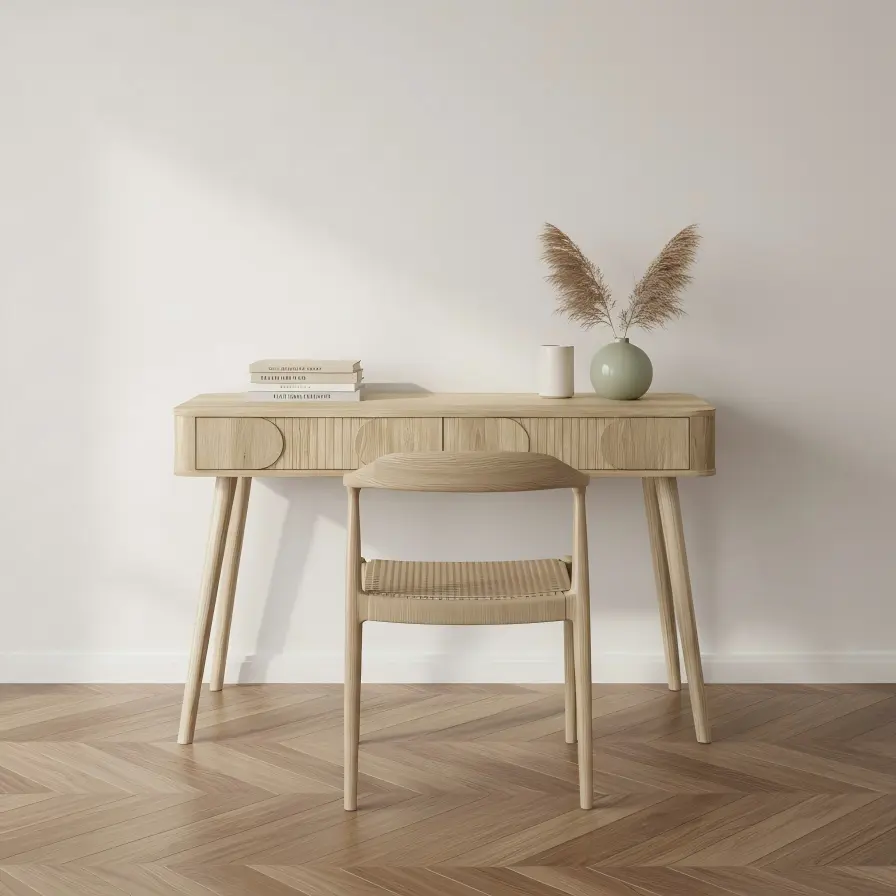
Achieving Design Balance with Essent Home
High-end furniture manufacturing is a delicate balance of traditional craftsmanship and modern machinery. Brands like Essent Home maintain this balance by employing master woodworkers who oversee CNC operations, hand-selecting veneers, and conducting final assembly inspections.
This combination of advanced machinery and human expertise ensures that every desk leaving the production line meets both structural performance requirements and aesthetic standards. Whether fabricating a custom executive suite or supplying a large-scale corporate headquarters, partnering with a manufacturer that controls every aspect of production—from raw lumber sourcing to final finishing—guarantees a consistent, reliable product.
Submit Your Specifications for a Detailed Production Proposal
If you are managing an upcoming commercial development, hospitality project, or high-end residential workspace, finding the right manufacturing partner is a key step in your procurement process. Our engineering and production teams are available to review your design schematics, CAD drawings, or material specifications.
We invite global designers, procurement agencies, and commercial developers to contact us directly to discuss production capacities, material options, and customization possibilities. Submit your inquiry today to receive a comprehensive manufacturing assessment and production timeline tailored to your project schedule.
Frequently Asked Questions
Q1: What are the primary joinery techniques used for commercial-grade drawer boxes?
A1: Commercial-grade drawer boxes typically utilize either English dovetail joinery or high-precision doweled construction. English dovetails provide excellent tensile strength, resisting pulling forces over long-term use. Doweled construction, utilizing CNC-bored alignment and industrial PVAc adhesive, creates a rigid box structure that distributes stress evenly across the panel joints.
Q2: How does the factory ensure that wood veneers do not peel or crack over time?
A2: To prevent peeling and cracking, the factory applies wood veneers to stabilized substrates like CARB Phase 2 MDF using industrial hot-press machines and moisture-resistant adhesives. Additionally, a balancing veneer of equal density and thickness is applied to the reverse side of the panel to neutralize internal tension, preventing warping caused by environmental changes.
Q3: What is the standard lead time for a bulk order at a desk with drawers factory?
A3: The standard lead time typically ranges from 45 to 60 days following the approval of the technical shop drawings and the receipt of the initial deposit. This timeline includes material sourcing, CNC milling, assembly, multi-layer finishing, quality inspection, and export packaging preparation.
Q4: Can standard desk designs be modified to incorporate custom cable management and power modules?
A4: Yes, professional factories accommodate custom specifications for cable management and power integration. During the shop drawing phase, our engineering team can modify internal cable routing channels and mill precise desktop cutouts to match your specified power hubs, data outlets, or wireless charging pads.
Q5: How are large executive desks packaged to prevent damage during international shipping?
A5: Finished desks are packaged using a multi-layer protective system. This includes high-density polyethylene (PE) foam sheets to protect finished surfaces, molded corner guards to prevent impact damage, and heavy-duty double-walled corrugated cartons. For international shipments, particularly LCL ocean freight, cartons are placed on pallets and secured with wood crates to prevent movement and puncture damage.