The choice of a desks supplier directly influences the quality, longevity, and aesthetic value of office furnishings. For commercial projects, hospitality environments, or executive workspaces, the desk serves as both a functional workstation and a design statement. Evaluating a supplier requires technical scrutiny of material sourcing, joinery methods, surface finishing, and quality control protocols. This article establishes a comprehensive assessment framework for professionals responsible for specifying and procuring high-end desks.
The distinction between standard office furniture and premium custom desks lies in the details: the stability of the frame, the consistency of wood veneer matching, the resistance of the top coating to abrasion and moisture, and the precision of edge banding. A supplier with robust manufacturing capabilities can meet these requirements consistently, while a less equipped vendor may introduce variability that affects the final installation. The following analysis breaks down the critical parameters that distinguish a reliable desks supplier from a commodity provider.
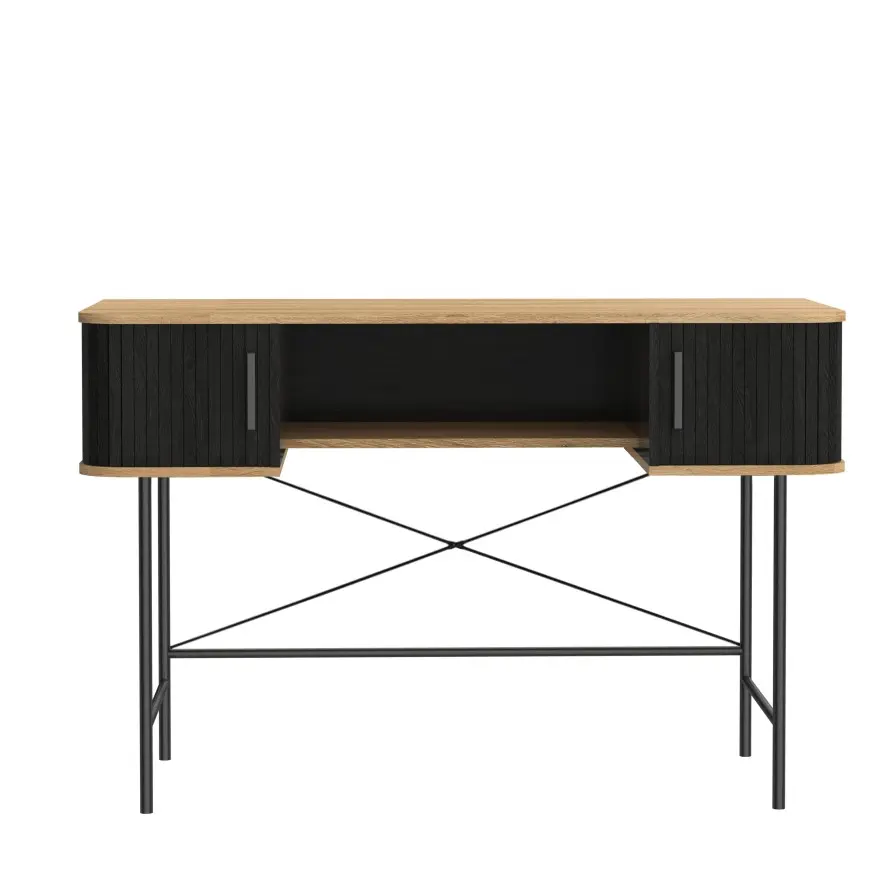
Raw Material Standards: The Foundation of Durable Desks
The performance of any desk starts with the materials used for its core structure and surface. High-end manufacturers prioritize kiln-dried hardwoods, multi-ply birch plywood, or medium-density fiberboard (MDF) with low formaldehyde emissions (E0 or CARB Phase 2 compliant). Each substrate has distinct characteristics:
- Solid hardwoods (walnut, oak, cherry, mahogany) offer natural grain patterns and can be refinished multiple times. They require careful acclimatization to the workshop environment to prevent warping or splitting after assembly. A supplier with proper seasoning facilities and moisture meters ensures that the wood reaches equilibrium moisture content (EMC) for the destination region.
- Veneered engineered boards provide dimensional stability and allow for book-matching or end-grain matching across large surfaces. The veneer thickness (typically 0.6mm to 1.2mm) affects the sanding tolerance and the depth of the final finish. Thicker veneers can withstand light sanding during future maintenance, while thinner layers risk burn-through.
- Metal components—such as legs, stretchers, and cross-bars—should be fabricated from cold-rolled steel or extruded aluminum with powder coating or electroplating for corrosion resistance. The thickness of the metal (minimum 2mm for structural parts) and the quality of welds determine the load-bearing capacity and long-term rigidity.
A reputable desks supplier will provide documentation on material origin, certification, and batch testing results. This transparency enables buyers to verify compliance with environmental and performance standards before production begins.
Joinery and Construction Techniques
The method of joining parts determines the structural integrity of the desk. While dowel-and-glue assemblies are common in mass production, premium desks employ mortise-and-tenon joints, dovetail drawers, and steel-braced corner blocks. These techniques resist racking forces and maintain alignment over years of use. For modular or demountable desks, the supplier should use precision-machined inserts and cam-lock fittings with consistent torque specifications.
Frame construction should account for the desks length and weight distribution. A span exceeding 1800mm requires either a thicker top (minimum 40mm solid or 60mm with a support beam) or a central leg to prevent sagging. The suppliers engineering team should perform deflection calculations based on the intended load (e.g., monitors, computers, documents) and provide a maximum weight rating. Without these calculations, the desk may develop a visible bow over time, compromising the flatness required for precise work.
Drawer boxes and internal compartments benefit from dovetailed joints and full-extension, soft-close slides (rated for 50 kg or more). The drawer bottom should be either plywood or thick MDF, not particleboard, to avoid collapse when loaded. For desks with integrated cable management, the supplier must design channels and grommets that accommodate multiple power cords and data cables without creating pinch points or impeding the movement of adjustable mechanisms.
Surface Finishing and Coating Systems
The surface finish protects the wood from moisture, stains, and daily wear. High-end desks typically receive a multi-coat system comprising a sealer, a color coat (if needed), and a topcoat. The choice between conversion varnish, polyurethane, lacquer, or oil/wax finishes affects both appearance and maintenance requirements:
- Conversion varnish offers excellent chemical and scratch resistance, making it suitable for corporate environments where cleaning agents are frequently used. It cures to a hard film that can be polished to various sheen levels (matte, satin, gloss).
- Polyurethane provides good abrasion resistance and water repellency, but it can yellow over time if exposed to UV light; the addition of UV inhibitors mitigates this effect.
- Lacquer produces a beautiful, high-clarity finish that is repairable, but it is less resistant to heat and solvents than varnish. It is often used for intricate inlays and decorative surfaces.
- Hard wax oil penetrates the wood fibers and leaves a natural, open-pore feel. This finish requires periodic reapplication but allows for easy spot repairs.
The application process—whether spray, roller, or hand-wiped—must be performed in a controlled environment with proper dust extraction and curing ovens. A supplier that lacks these facilities may produce finishes with orange peel, pinholes, or uneven sheen. Quality control should include thickness measurements (using a coating thickness gauge) and adhesion tests (cross-cut tape test) to confirm that the coating meets the specified performance levels.
For veneered surfaces, the grain direction and matching pattern (e.g., slip match, book match, or random match) should be agreed upon in advance. A skilled desks supplier will provide a veneer layout diagram for approval, ensuring that the final product matches the clients aesthetic expectations. Mismatched grain or color variation between panels is a common complaint; it can be avoided by selecting veneer from the same flitch and using a densitometer to measure color consistency.
Quality Assurance and Factory Auditing
Before placing a large order, buyers should request a supplier quality manual and conduct a factory audit if possible. Key checkpoints in the production process include:
- Incoming material inspection—testing moisture content, checking for insect infestation, verifying thickness and flatness of panels.
- Machining accuracy—measuring the tolerance of mortises, tenons, and boring patterns using calibrated gauges. Acceptable tolerance for a premium desk is ±0.5mm.
- Subassembly clamping pressure—ensuring that glued joints are pressed for the correct duration and at the recommended temperature to achieve full bond strength.
- Sanding progression—starting from 120 grit and moving through 180, 240, and 320 grit to eliminate scratch marks before finishing.
- Finish application and curing—monitoring the temperature and humidity in the spray booth and oven, and performing a hardness test (pencil hardness or scratch test) after curing.
- Final assembly and inspection—checking hardware torque, edge alignment, drawer operation, and surface defects under halogen lighting.
A supplier that maintains a documented quality management system (ISO 9001 certified) and performs random destructive testing (e.g., joint pull tests, drop tests for drawers) demonstrates a commitment to consistency. Without these procedures, the risk of receiving out-of-specification products increases, leading to delays and rework at the installation site.
For international procurement, packaging and shipping protocols are equally important. Desks should be wrapped in acid-free tissue, corner-protected with foam, and packed in custom-fit wooden crates with desiccant bags to control humidity during transit. A desks supplier experienced in export logistics will design packaging that meets maritime or airfreight standards, minimizing the risk of damage from vibration or stacking.
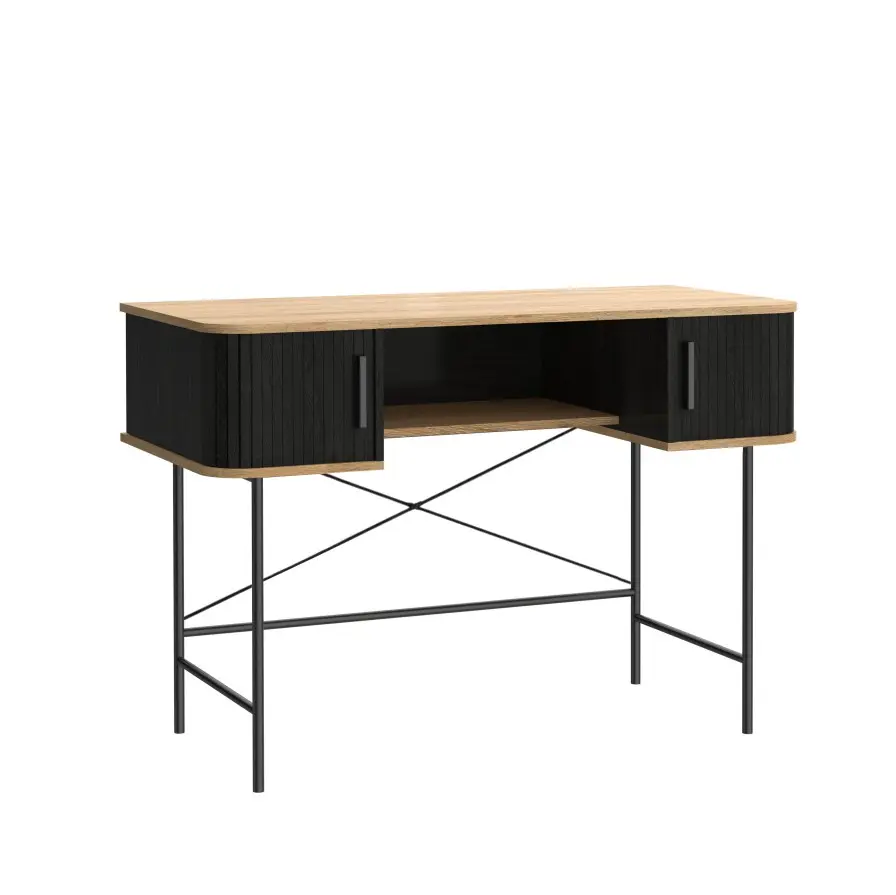
Customization Capabilities: From Dimensions to Finishes
High-end office projects often require non-standard sizes, unique shapes (curved, trapezoidal, or L-shaped), and integrated power/data modules. A suppliers ability to handle custom requests depends on their engineering and machining resources. CNC routers with a large working area (e.g., 3000 x 1500 mm) can cut complex profiles with high precision, while edge-banding machines with automatic feed and trimming capabilities ensure clean edges on shaped panels.
Color matching is another critical aspect. Whether the requirement is to match an existing furniture set or to replicate a specific Pantone color, the supplier must have a spectrophotometer and a tinting system to produce consistent stains and lacquers. Sample boards should be produced and approved under the same lighting conditions as the final installation environment (daylight, warm LED, or cool fluorescent). A lack of color-matching capability often results in unacceptable variations between individual desks within the same order.
For height-adjustable (sit-stand) desks, the supplier must integrate lifting columns and control systems from reputable manufacturers (e.g., LINAK or Bosch Rexroth). The desk frame should accommodate the lifting mechanism without compromising stability, and the cable management system must allow for free movement of wires during height changes. The supplier should provide test reports for the lifting cycle count (minimum 20,000 cycles) and the load capacity at maximum extension.
Essent Home maintains an engineering team that collaborates with architects and interior designers to translate conceptual sketches into manufacturable desk designs. The companys production line includes a finishing laboratory where custom colors and textures are developed and documented for repeat orders.
The timeline for custom desk production typically ranges from 6 to 12 weeks, depending on the complexity and the quantity. A reliable supplier will provide a detailed production schedule with milestones (material procurement, machining, assembly, finishing, quality control, packing, and shipping) and offer progress updates weekly. Delays in any stage can cascade, so realistic planning and buffer time are essential.
When evaluating a desks supplier for a large-scale commercial project, the total cost of ownership extends beyond the initial price. Factors such as warranty coverage (minimum five years), spare parts availability, and the suppliers policy on rectifying defective units should be clarified in the purchase agreement. A supplier that offers a written warranty and a clear returns process indicates confidence in their manufacturing quality.
Essent Home provides comprehensive documentation for all desk models, including material safety data sheets, care instructions, and installation guides. The company also offers a white-glove delivery and assembly service for clients who require on-site setup, ensuring that each desk is positioned and leveled correctly.
Frequently Asked Questions
Q1: What certifications should a desks supplier hold to ensure material safety and sustainability?
A1: Look for FSC (Forest Stewardship Council) certification for wood sources, CARB Phase 2 or E0 compliance for low formaldehyde emissions, and ISO 9001 for quality management. Additionally, GREENGUARD Gold certification indicates low chemical emissions for indoor air quality. These certifications demonstrate a suppliers commitment to responsible sourcing and safe production.
Q2: How can I verify the durability of a desks finish before ordering in bulk?
A2: Request a finished sample board and perform a series of tests: rubbing with a cloth soaked in isopropyl alcohol (to simulate cleaning agents), placing a hot mug (60°C) for 10 minutes, and scratching with a coin under moderate pressure. The finish should show no whitening, blistering, or permanent marks. Also, ask the supplier for laboratory test reports such as cross-cut adhesion, abrasion resistance (Taber test), and chemical resistance according to ASTM standards.
Q3: What is the typical lead time for custom-sized desks, and how can it be shortened?
A3: Lead times range from 6 to 12 weeks for custom work. To shorten the timeline, choose a supplier with in-house machining and finishing capabilities (no outsourcing), provide clear technical drawings early, and reduce the number of custom color matches. Ordering standard sizes with custom finishes often saves 2–3 weeks compared to full dimension customization.
Q4: How do I ensure color consistency across multiple desks ordered at different times?
A4: Ask the supplier to keep a retained sample of each stain and lacquer batch and to provide a color reference formula (e.g., CIELab values). When reordering, the supplier should use the same formula and adjust for any drift in raw materials. Some suppliers offer a color lock service where they store a physical panel for future matching. Additionally, ordering all units in one production run is the safest way to ensure uniformity.
Q5: What construction features distinguish a contract-grade desk from a residential-grade one?
A5: Contract-grade desks use thicker substrate (≥25mm for tops), solid-wood edge banding, mortise-and-tenon joinery, heavy-duty drawer slides (≥50 kg capacity), and a finish with ≥10% more abrasion cycles (Taber test). The frame is typically steel with a powder-coated finish, and the desk undergoes a structural load test (e.g., 150 kg uniformly distributed) to simulate commercial use. Residential desks may use lighter materials and simpler joinery, which are not suitable for high-traffic office environments.
Q6: How can I evaluate the quality of a desks suppliers packaging for international shipping?
A6: Request a packaging specification sheet that includes material types (corrugated cardboard, plywood crates, foam density, etc.), edge protection methods, and strapping tension. Ask for photo documentation of a packed unit. The supplier should also provide a shipping test report (e.g., ISTA 3A or ASTM D4169) if available. Proper packaging prevents damage from humidity, vibrations, and impacts during long-distance transit.
For detailed product specifications, custom design consultations, or to request a sample board and quality documentation, the team at Essent Home is ready to assist. Submit your inquiry through the website to discuss your project requirements and schedule a factory tour or video conference with our engineering and design departments.