Sourcing millwork for high-end residential properties demands precision.
While standard cabinet runs forgive minor site deviations, corner configurations
do not. A single millimetric error at a 90-degree or 135-degree intersection can
derail an entire kitchen, dressing room, or architectural pantry
installation.
For general contractors, architects, and procurement teams, selecting the
right corner cabinets factory determines whether an installation finishes on
schedule or stalls in costly site modifications. Corner units sit at the
structural crosshairs of non-plumb walls, concealed service ducts, and dynamic
load-bearing hardware.
Are you evaluating production partners for an upcoming luxury development?
Contact the engineering desk at Essent Home to review your
architectural joinery schedules or request a comprehensive
design-for-manufacturability (DFM) assessment.
Below are the seven technical benchmarks that define an elite corner cabinets
factory capable of executing complex luxury specifications.
1. A Top-Tier Corner Cabinets Factory Delivers Sub-Millimeter CNC
Precision
High-end architectural millwork cannot tolerate generic cabinet sizing.
Bespoke luxury estates regularly feature acute or obtuse corner junctions that
defy standard 90-degree layouts. An elite bespoke corner cabinets factory
maintains dimensional tolerances within ±0.5mm across all structural
elements.
Achieving this level of precision requires five-axis CNC machining centers.
Unlike basic three-axis routers, five-axis machinery executes complex compound
cuts, concealed hardware mortises, and mitered corner joints in a single setup.
This eliminates the cumulative error that occurs when repositioning panels
between machines.
Zero-Joint Laser Edge-Banding: Premium factories utilize
hot-air or laser edge-banding technology. By fusing polymer edge-bands with
functional layers rather than EVA glues, the factory creates an invisible seam
that blocks moisture and prevents glue line discoloration.
Automated Boring Patterns: System holes for shelving and
hardware must align across joined units. Modern CNC lines drill mounting
patterns with absolute spatial symmetry, guaranteeing that opposing doors hang
flush without binding.
If a factory relies on manual table saws or standard horizontal panel saws
for corner scribes and filler blocks, site carpenters will spend hours trimming
components on site. A genuine luxury manufacturer resolves these intersections
before panels ever leave the shop floor.
2. Hardware Engineering: How the Corner Cabinets Factory Integrates Tier-1
Systems
Corner cabinets endure more dynamic stress than any other millwork carcass.
Deep shelves and articulated pull-outs carry heavy loads, from cast-iron
cookware to custom stone interior fittings. An accomplished luxury corner
cabinet manufacturer treats hardware integration as a mechanical engineering
problem.
Budget cabinet shops fasten moving systems directly into standard 18mm
particleboard with generic wood screws. Over time, dynamic loads pull those
screws free. A world-class corner cabinets factory pre-engineers structural
reinforcement plates, internal hard-point blocking, and industrial anchor
sleeves into the carcass design.
Native System Compatibility: The engineering team must
demonstrate fluent integration of Tier-1 systems, including Blum Space Corner
drawers, Kesseböhmer LeMans II trays, and Häfele Magic Corner mechanisms.
Load Calculation Protocols: High-capacity swing-out trays
can exert extreme leverage on cabinet gables when fully extended. Tier-1
facilities calculate cantilever forces, reinforcing the hinge mounting side with
multi-ply birch plywood or concealed aluminum structural stiffeners.
Soft-Close Dampening Tuning: The factory must balance
dynamic dampeners according to the weight of your specified door materials,
ensuring silent, fluid closure regardless of front panel heft.
3. Multi-Material Capabilities of a Luxury Corner Cabinets Factory
Contemporary luxury design has moved past single-material joinery. Today’s
premier residential projects combine natural wood veneers with architectural
metals, back-painted glass, leather linings, and book-matched natural stone
countertops. Your corner cabinets factory must master the union of these
disparate materials.
When distinct materials meet at an inside corner, differential expansion
rates become a serious concern. Natural timber breathes with seasonal humidity,
while brass inlays and stone tops remain stable. A sophisticated factory builds
internal expansion reliefs and floating bracket assemblies into the carcass to
absorb movement without cracking finishes.
Integrated Channel Lighting: Luxury specifications
regularly demand continuous LED illumination running through 90-degree internal
junctions. The factory should precision-mill 45-degree channels for diffusers
and route hidden wiring paths through internal framing.
Flush Metal Inlays: Brass, bronze, or blackened steel
accent strips require micron-accurate pocketing to sit flush against lacquer or
veneer faces across corner transitions.
Sub-Top Reinforcement for Heavy Stone: Large corner islands
and L-shaped counters often bear massive quartz or marble slabs. The factory
must integrate structural steel supports or honeycombed aluminum sub-tops
directly beneath the cabinet deck.
At Essent Home, our production lines merge traditional
cabinet crafts with multi-material integration, guaranteeing that metal
profiles, custom glass inserts, and lacquered panels align along continuous
sightlines.
4. Space Optimization: How a Bespoke Corner Cabinets Factory Solves Blind
Corners
Blind corners represent one of the most frustrating challenges in
architectural space planning. Traditional lazy susans waste valuable storage
volume and fail to satisfy high-net-worth clients. A progressive OEM corner
cabinets factory engineers proprietary and advanced storage layouts that utilize
every cubic centimeter.
True bespoke manufacturing adapts the internal layout to the client's actual
storage habits rather than forcing stock accessory inserts into empty
carcasses.
Motorized Servo-Drive Pulls: Premium residential kitchens
demand touch-to-open convenience. The factory must engineer concealed electrical
chases, mounting plates, and counterweights for motorized blind corner
pull-outs.
Vertical Lift Mechanisms: Back corners frequently host
heavy countertop appliances. High-specification facilities engineer internal
vertical elevators that raise coffee machines or heavy food processors flush
with the island surface at the tap of a sensor.
Walk-In Corner Pantries: For larger residential floor
plans, the manufacturer constructs modular walk-in corner units featuring
floor-to-ceiling storage, articulated rotating corner columns, and integrated
micro-switches for ambient illumination.
The goal is effortless usability. The engineering team at the factory must
anticipate accessibility, reach depths, and door clearances to prevent cabinet
fronts from striking adjacent hardware or decorative cladding.
5. Quality Assurance: The Corner Cabinets Factory 100% Dry-Fit Pre-Assembly
Protocol
The greatest risk in custom millwork procurement is discovering a geometric
discrepancy on the project site thousands of miles away from the production
line. An elite corner cabinets factory eliminates this hazard through a
mandatory Factory Acceptance Testing (FAT) protocol.
Never partner with a supplier that ships custom corner assemblies directly
from the edge-bander to the packing crate. Top manufacturers construct a
complete 100% dry-fit mock-up of the entire corner configuration, including
surrounding adjacent cabinetry, on leveled assembly decks inside the
facility.
Comprehensive Gap Analysis: Quality inspectors verify that
all door margins, reveal lines, and drawer gaps match project specifications
within a 0.5mm variance.
Dynamic Movement Verification: Moving hardware, rotating
trays, and integrated soft-close mechanisms run through minimum 50-cycle tests
to catch friction, misalignment, or sag.
Video Sign-Off Documentation: The factory should provide
international clients with high-resolution video walks and detailed inspection
logs of the dry-fit assembly prior to breakdown and packaging.
Essent Home adheres to rigorous factory acceptance standards. We run full
mock-up assemblies for every bespoke order, giving international project teams
total peace of mind before freight leaves our facility floor.
6. In-House Engineering: BIM & CAD Support from Your Corner Cabinets
Factory
A premier corner cabinets factory acts as an engineering partner rather than
a passive builder. High-end architectural drawings frequently contain spatial
oversights, such as unnoticed structural columns, uneven wall plumb lines, or
clashes with MEP (mechanical, electrical, plumbing) risers.
The factory’s technical office should employ dedicated millwork engineers who
translate design concepts into production-ready Shop Drawings, CAD details, and
BIM models.
MEP Clash Detection: Corner voids frequently carry building
plumbing, gas drops, or main electrical conduits. The factory's technical
draftsmen review architectural plans to incorporate access panels, ventilation
grilles, and pipe chases into the cabinet carcasses.
Detailed Shop Drawing Packages: Expect comprehensive
submittals showing plan views, elevations, section details, and hardware
fastening schedules. Every joint and scribe allowance should be clearly
dimensioned for architect sign-off.
Installation Scribing Allowances: Real-world walls are
rarely square. Experienced factory engineers integrate specialized scribe
fillets and micro-adjustable corner fillers that allow field installers to
accommodate out-of-square walls without altering face frames.
By resolving architectural conflicts on paper before cutting raw materials,
the engineering office protects your project schedule from expensive on-site
rework.
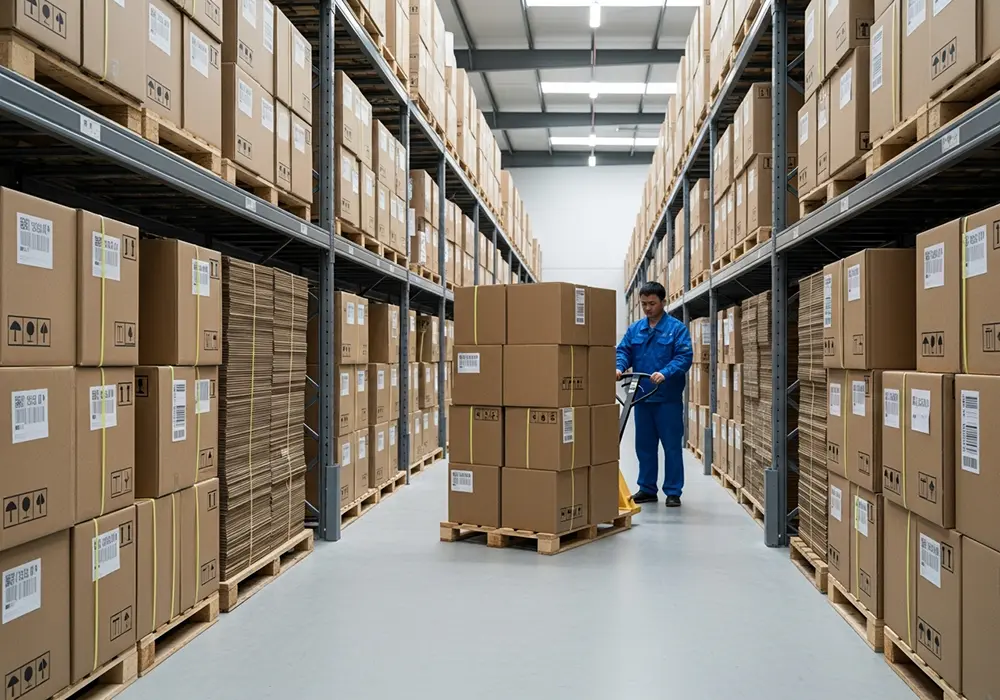
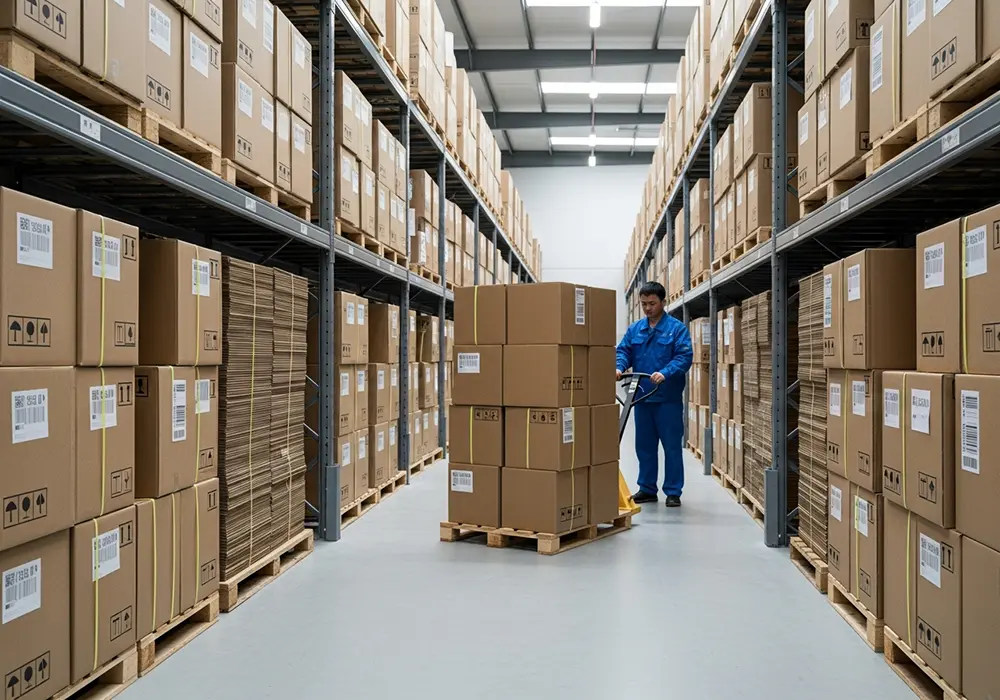
7. Export-Ready Logistics: The Corner Cabinets Factory Packing &
Traceability Standard
L-shaped and diagonal corner carcasses present unusual geometries. Their
irregular weight distribution and protruding flanges make them vulnerable to
impact, racking, and torsion during ocean transit and domestic freight. A
professional corner cabinets factory treats protective packaging as an extension
of manufacturing.
Substandard packing leads to cracked joints, chipped lacquer edges, and bent
pivot hardware. A world-class facility invests in heavy-duty logistics
engineering to guarantee components arrive in pristine condition.
Plywood Crate Construction: Forget thin corrugated boxes.
Heavy corner assemblies demand custom, ISPM-15 compliant, fumigation-free
plywood crates reinforced with internal timber framing and shock-absorbing
high-density polyethylene (HDPE) foam.
Moisture & Climate Defense: Ocean shipping exposes
millwork to extreme temperature and humidity swings. Premium suppliers
vacuum-seal finished lacquered components inside barrier films with industrial
desiccant packs to prevent moisture absorption and finish blushing.
QR Code Traceability: Every panel, filler, and hardware
pack should bear a machine-readable QR code linking back to the installation
drawing. This allows the general contractor’s site team to scan components,
identify their exact room coordinates, and streamline staging.
Logistical competence ensures that the precision built on the factory floor
survives transit, handling, and staging at the job site.
Summary Checklist for Evaluating Production Facilities
Before issuing an advance payment or finalizing supply agreements for bespoke
millwork, cross-reference your prospective manufacturer against this
verification matrix:
Does the facility operate multi-axis CNC machines capable of holding ±0.5mm
tolerances?
Can the factory prove structural carcass reinforcement for heavy-duty swing
systems?
Is there clear evidence of multi-material processing (wood, stone, metal,
integrated LEDs)?
Do they provide non-standard blind corner solutions beyond stock catalog
trays?
Will the factory conduct a 100% dry-fit mock-up assembly with documented
sign-offs?
Does the factory have in-house draftsmen to produce detailed shop
drawings?
Are export crates custom-built with moisture barriers and part-level
tracking labels?
Partner with a Proven Corner Cabinets Factory for Your Next Project
Corner millwork leaves no room for manufacturing compromises. The difference
between an ordinary supplier and a world-class luxury corner cabinet
manufacturer shows in the crispness of the reveals, the balance of the hardware,
and the speed of on-site installation.
Essent Home manufactures architectural-grade custom joinery
and cabinetry for high-end residential, hospitality, and commercial developments
worldwide. Our engineering team helps design firms and contractors resolve
complex corner conditions through rigorous CNC precision, premium hardware
engineering, and comprehensive factory assembly protocols.
Take the risk out of your next high-specification project. Submit
your architectural drawings and millwork schedules to Essent Home today to receive an engineering review, hardware optimization assessment, and
competitive commercial quotation.
Frequently Asked Questions
Q1: What are the main challenges when manufacturing bespoke corner
cabinets for high-end residences?
A1: The primary challenge centers
on non-square site conditions. In luxury construction, walls are rarely true
90-degree angles. A specialized factory must engineer adjustable scribe fillers
and hold sub-millimeter tolerances on joinery. In addition, the factory must
manage dynamic load distribution from heavy pull-out mechanisms to prevent doors
and frames from sagging over time.
Q2: Why are standard Lazy Susan mechanisms rarely specified in luxury
residences?
A2: Standard Lazy Susans waste significant storage
volume within the corner dead zone, display noticeable mechanical play, and
carry low weight ratings. Modern bespoke millwork favors heavy-duty articulated
trays, motorized blind corner drawers, or custom walk-in pantries that maximize
space utilization while delivering quiet, sophisticated operation.
Q3: How does a professional corner cabinets factory prevent damage to
irregular carcasses during ocean freight?
A3: Irregular corner
cabinets have off-center balance points that invite damage during transit. Top
manufacturers construct custom fumigation-free plywood crates tailored to the
carcass footprint. They secure critical points with high-density foam blocking,
brace open cabinet faces, and seal units in climate-proof barrier film with
industrial desiccants to defend against moisture fluctuations.
Q4: Can a bespoke corner cabinets factory integrate custom stone or
metal parts directly onto the carcasses?
A4: Yes. Elite
manufacturers feature multi-material departments that cut, fit, and pre-mount
architectural metals, integrated LED diffusers, and stone supports on the
production line. By dry-fitting these materials before dispatch, the factory
prevents differential expansion issues and guarantees that all seams align
perfectly when installed on site.
Q5: What technical files does an architect or contractor need to
submit to get a production quote?
A5: To obtain an accurate DFM
review and quotation, provide your CAD floor plans, millwork elevations,
hardware specifications, and finish schedules. If available, 3D models or detail
sketches of architectural features like integrated stone returns or non-standard
angles will help factory engineers evaluate tolerances and optimize joinery
methods.