Corner spaces present the toughest challenge in cabinet manufacturing. When a
kitchen or architectural millwork layout fails, it usually happens at the
90-degree junction. Uneven reveals, sagging hinges, door collisions, and binding
pull-out mechanisms can ruin an otherwise flawless installation.
For high-end residential brands, developers, and commercial contractors,
sourcing corner units requires more than standard contract assembly. You need a
specialized corner cabinets ODM partner capable of handling complex kinetics,
tight tolerances, and premium finishes. Design for Manufacturability (DFM) must
happen before cutting the first panel.
Essent Home delivers integrated engineering and production solutions for
custom interior brands worldwide. This guide explains how to evaluate an ODM
supplier to ensure your corner cabinet lines install cleanly, operate smoothly,
and stand up to heavy daily use.

1. Kinematic Synergy and Advanced Hardware Integration
A standard rectangular box is easy to build. A functional corner cabinet,
however, is a dynamic mechanical system. The manufacturing partner you choose
must understand kinematic clearances and load distributions under real-world
conditions.
Comprehensive Geometry and Mechanism Mastery
Top-tier projects demand solutions tailored to specific floor plans. Your
corner cabinets ODM partner should support multiple configurations without
hesitation:
Blind Corner Pull-Out Systems: Articulated trays that glide
forward and swing clear of adjacent doors.
Magic Corner Mechanisms: Front baskets pull the rear
storage frame forward in a single, smooth pull.
Bi-Fold Corner Enclosures: Hinged dual doors that fold
neatly while avoiding strikes against adjacent pulls.
Corner Drawer Solutions: 90-degree V-shaped drawer boxes
that require precise front-panel mitering.
Heavy-Duty Lazy Susans: Central-pole or shelf-mounted
rotational systems with positive center-stop positioning.
Factory-Calibrated Hardware Machining
Field-drilling corner hardware on a job site wastes billable hours and
invites installation errors. A qualified corner cabinets ODM integrates
CNC-drilled system holes calibrated directly to Tier-1 hardware makers like
Blum, Kesseböhmer, Grass, Hettich, and Hafele.
Look for machining tolerances held strictly within ±0.5mm. Pre-milled pilot
holes, dowel locations, and concealed runner brackets allow field crews to hang
doors and snap sliding mechanisms directly into place without measuring tape or
jigs.
2. Substrate Stability and Advanced Edge Processing
Corner cabinets endure continuous mechanical stress. Pull-out hardware acts
as a lever arm on side panels, while sinks and cooktops placed near corners
expose panels to high moisture and heat. Material integrity must never be
compromised.
Certified Substrate Selection
High-end hospitality and multi-family residential developments operate under
strict regulatory and environmental guidelines. Verify that your ODM partner
sources certified core materials:
CARB Phase 2 and EPA TSCA Title VI certified multi-layer birch plywood or
high-density particleboard.
FSC-certified timber for LEED-accredited projects.
E0 or ENF ultra-low formaldehyde emissions for luxury residential
interiors.
Solid moisture-resistant (MR) green cores for wet zones and coastal
regions.
Zero-Joint Edge Finishing
Traditional EVA hot-melt glues leave visible glue lines that attract dirt and
break down when exposed to steam. A capable corner cabinets ODM utilizes PUR
(Polyurethane) or hot-air/laser zero-joint edge banding technology.
Zero-joint edges form a permanent, hydrophobic bond. The door edges and
interior carcase perimeters become completely impervious to moisture, preventing
swelling at mitered corners and face joints.
Precision Surface Matching
Color deviations between straight cabinetry runs and corner components look
unprofessional. Whether applying anti-fingerprint super-matte PET, high-gloss
piano lacquer, or book-matched natural wood veneers, the factory must enforce
strict batch controls. Insist on a color consistency standard of ΔE < 0.8
across all production batches.
3. Engineering Support and DFM Verification
The difference between a basic cabinet OEM and a genuine corner cabinets ODM
partner lies in engineering capability. An ODM takes your architectural
concepts, sketches, or 3D renderings and optimizes them for scalable,
mistake-proof manufacturing.
Essent Home applies structured DFM protocols at the front end of every
production run. Engineering teams examine panel load paths, hinge clearances,
swing radii, and transit geometry before releasing jobs to the factory
floor.
Eliminating Field Variables
Job-site walls rarely sit at a perfect 90-degree angle. An experienced
manufacturer accounts for building settlement and drywall tapers by engineering
built-in adjustment zones into corner units:
Integrated scribing fillers that allow installers to adjust for wall run-out
up to 25mm.
Concealed heavy-duty suspension brackets with three-axis leveling access
from inside the cabinet.
Reinforced top stretchers to eliminate sagging when supporting heavy natural
quartzite or granite counters.
Rapid Prototyping and Dynamic Testing
Before launching full production runs, request a 1:1 functional prototype of
complex corner mechanisms. The factory should load test pull-out trays to their
rated dynamic capacities—often 20kg to 25kg per shelf—checking for tray
deflection, soft-close resistance, and smooth travel over 50,000 continuous
cycles.
Need detailed clearance data? Contact our engineering desk
to download our complete Corner Cabinet Hardware & Clearance Technical Guide
for your project planning.
4. Compliance, Packaging, and Logistics Management
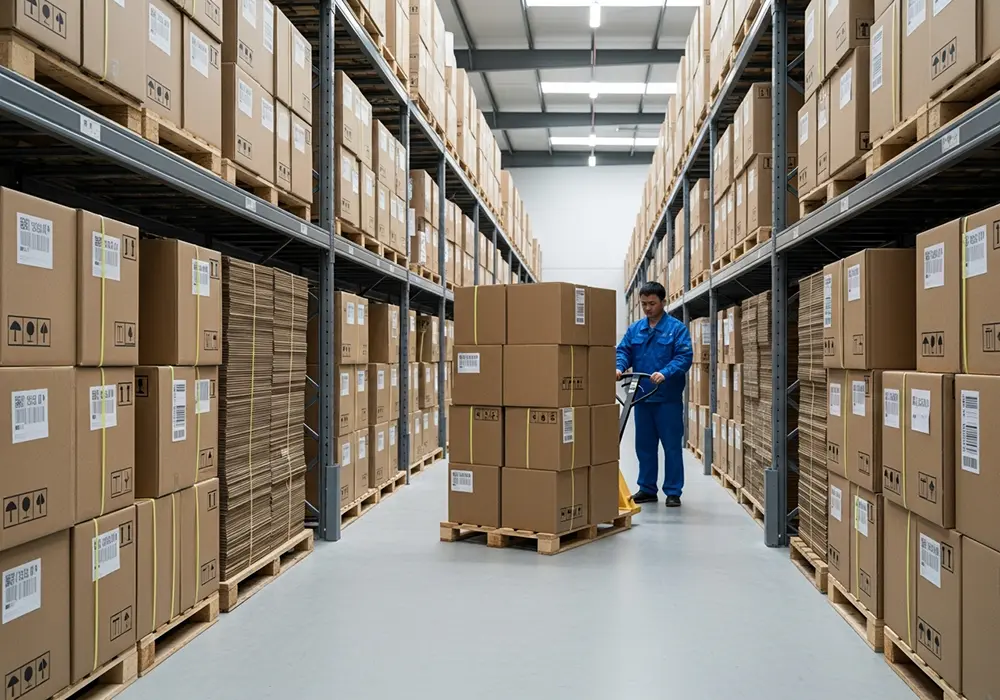
High-end cabinetry manufacturing requires careful packaging to prevent damage
in transit. A corner cabinet damaged on the ocean or highway halts the entire
kitchen installation line.
Transit Protection for Irregular Geometries
Corner carcases, especially L-shaped or diagonal units, have asymmetrical
centers of gravity. If packed poorly, they twist or crush under pallet
strapping. A professional corner cabinets ODM designs custom shipping protection
for every component:
High-density expanded polyethylene (EPE) corner protectors fitted to all
mitered edges.
Five-layer reinforced corrugated outer cartons with water-resistant plastic
wrapping.
Internal honeycomb foam spacers to prevent hardware kits from shifting
against finished panel faces.
Flat-Pack (RTA) vs. Rigid Assembly Options
Evaluate whether your installation schedule and shipping budget require
Flat-Pack (Ready-to-Assemble) or fully pre-assembled rigid construction. A
quality ODM provides both:
Flat-pack saves container space and reduces freight costs by up to 40%, but
requires precise, tool-free cam-lock or dowel-and-groove connections for rapid
site assembly. Pre-assembled units arrive square and glued from the factory,
cutting site labor to the absolute minimum.
5. Why Select Essent Home as Your Corner Cabinets ODM Partner
Finding a factory that balances modern machine accuracy with custom millwork
flexibility is rare. Essent Home bridges this gap for developers, procurement
firms, and commercial distributors globally.
Our production facilities utilize automated CNC machining centers,
computerized panel sizing, and PUR edge-banding lines. We hold dimensions to
industrial tolerances while tailoring finishes, grain patterns, and hardware
selections to your brand specifications.
By partnering with Essent Home for your corner cabinets ODM requirements, you
gain a dedicated engineering wing. We review your submittals, optimize hardware
layouts, build functional prototypes, and deliver verified cabinetry directly to
your project site or distribution warehouse on schedule.
Frequently Asked Questions (FAQ)
Q1: What is the main difference between an OEM and an ODM for corner
cabinets?
A1: An OEM (Original Equipment Manufacturer) builds
strictly according to your finished shop drawings. An ODM (Original Design
Manufacturer) provides full engineering support, DFM reviews, hardware
integration, and mechanical optimization based on your design concepts or
architectural plans.
Q2: How do you prevent blind corner doors from colliding with
adjacent drawer handles?
A2: We engineer corner filler posts
directly into the cabinet design. These fillers typically range from 50mm to
75mm depending on handle depth, ensuring the door clears projecting hardware
when opening past 90 degrees.
Q3: Can your factory integrate our preferred European hardware brands
into the corner units?
A3: Yes. As an experienced corner cabinets
ODM, we regularly pre-machine carcases to match technical drilling patterns from
Blum, Kesseböhmer, Hafele, Grass, and Hettich. We can either supply the hardware
directly through our supply chains or receive your hardware for factory
assembly.
Q4: What is the standard production lead time for custom corner
cabinet orders?
A4: Prototype engineering and sampling generally
take 10 to 15 working days following drawing sign-off. Full mass-production runs
typically ship within 30 to 45 days, depending on the complexity of finishes and
material specifications.
Q5: How do you control batch-to-batch color consistency on lacquered
corner doors?
A5: We utilize automated flatline spray lines and
closed-loop color monitoring. Each lacquer batch is checked with a
spectrophotometer against a master control sample to ensure color deviation
remains strictly under ΔE 0.8 across all production lots.
Ready to elevate your commercial millwork or residential cabinetry
line? Send your drawings, architectural schedules, or concept briefs to
the Essent Home engineering team today to receive a complete DFM assessment and
competitive wholesale quotation.