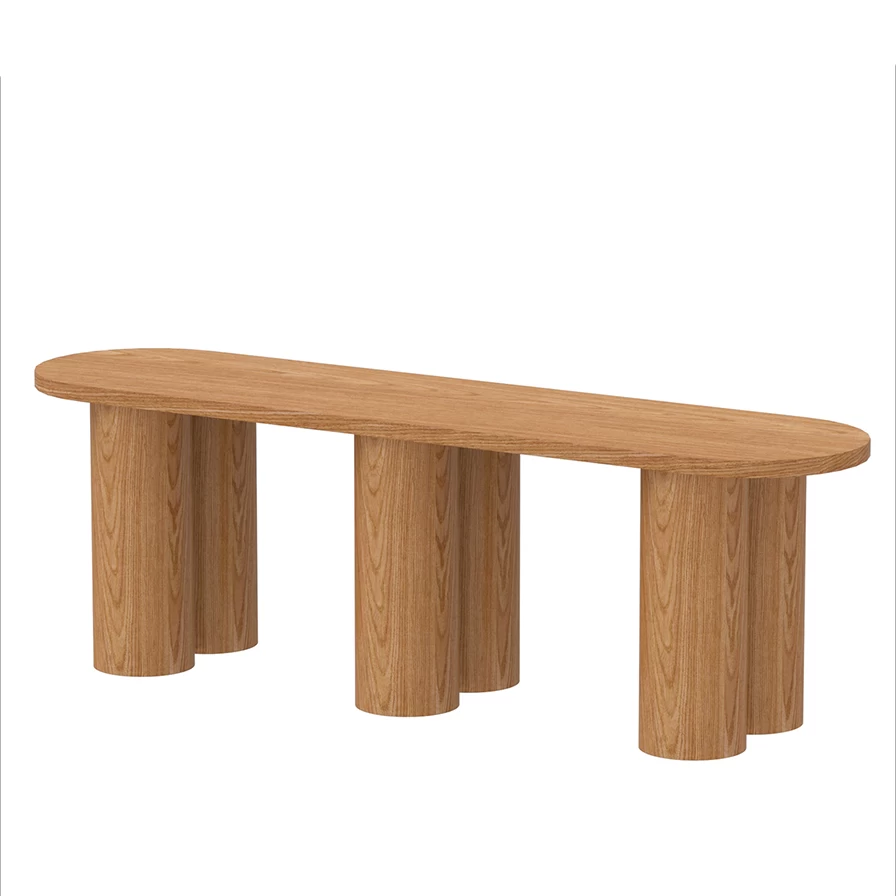
Commercial and luxury residential environments in 2026 demand more than
catalog defaults. High-traffic hotel lobbies, executive suites, and curated
residential galleries require spatial anchors that align with strict
architectural narratives. Standard off-the-shelf furniture often fails
structural compliance tests and rarely meets exact dimensional requirements.
Specifying custom accent benches bridges the gap between sculptural art and
contract durability. Bespoke production gives design teams precise control over
dimensional tolerances, wood species, metal finishes, and performance
upholstery. At Essent Home, we collaborate directly with
architectural firms and interior specifiers to translate conceptual sketches
into engineered, buildable assets.
If you are planning an upcoming commercial build or luxury development, early
engagement with your manufacturing partner prevents value-engineering
compromises later. Submit your project drawings to our bespoke seating team today for a preliminary engineering review and firm trade quotation.
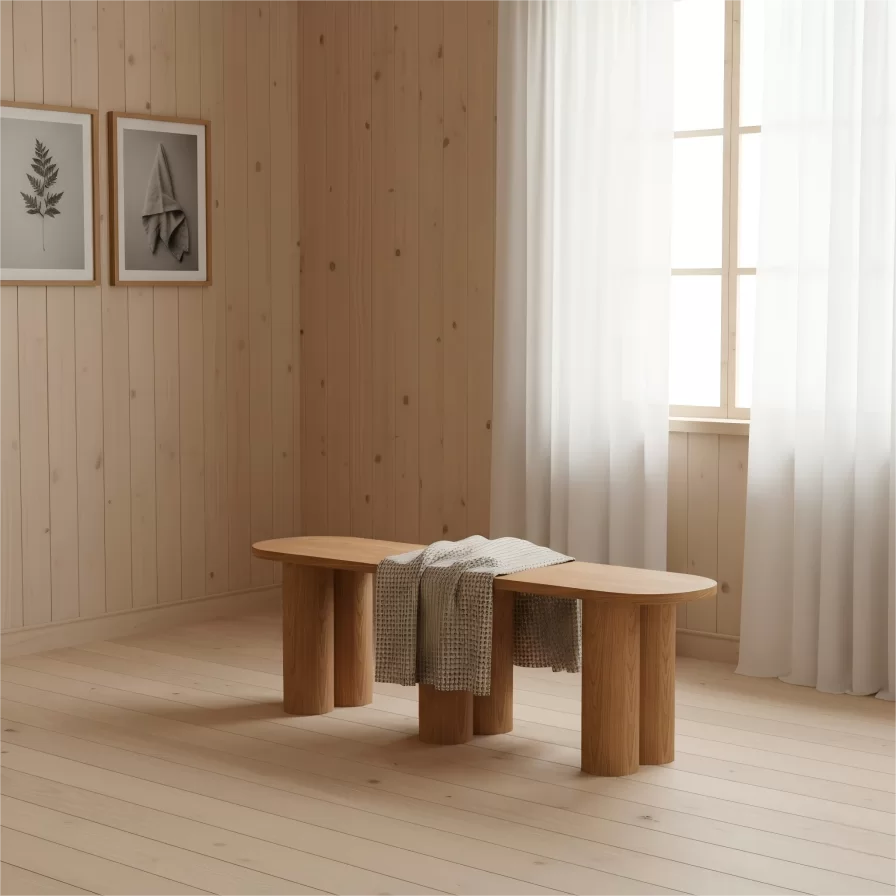
1. The Strategic Role of Accent Benches in Contemporary Spatial Flow
From Residential Nooks to Commercial Anchors
Modern floor plans prioritize flexible boundaries and continuous sightlines.
In these open layouts, accent benches define zones without building permanent
vertical partitions. A low-profile bench maintains visual connectivity across an
expansive hotel atrium while orchestrating foot traffic between reception and
lounge areas.
In high-end residential interiors, the accent bench serves as a transitional
anchor. Placed within an entryway, along a gallery corridor, or at the foot of a
bed, it provides functional rest without adding visual clutter. The silhouette
must command attention as a standalone design statement while harmonizing with
adjacent architectural finishes.
Form Meets Function: Balancing Visual Impact with Ergonomics
Striking the right balance between visual drama and physical support depends
entirely on anticipated dwell time. Designers categorize bench applications into
three distinct operational zones:
- Perch Seating (1–5 minutes): Typical of hotel elevator
vestibules and retail shoe-fitting areas. These pieces emphasize angular
profiles, floating stone plinths, and firmer foam packages.
- Transitional Seating (5–15 minutes): Suited for museum
corridors and luxury residential entries. These require moderate contouring and
resilient cushioning.
- Lounge Seating (15+ minutes): Designed for cocktail bars
and public lounge perimeters. These pieces incorporate pitched backrests,
generous seat depths (minimum 22 inches), and dual-density foam
layers.
When engineering custom accent benches, specifiers must balance striking
silhouettes with human proportions. A bench that looks exceptional in a
rendering will fail in practice if seat heights deviate from standard ADA
guidelines or seat depths cause postural fatigue.
2. 2026 Trend Forecast: Materiality & Form Factor in Custom Accent
Benches
Sustainable & Circular Material Innovations
Material traceability is no longer optional for contract submittals; it is an
absolute requirement. In 2026, leading firms mandate third-party environmental
validation for all primary substrates. Designers increasingly source timber
certified under ISO standards for sustainable forest management to guarantee
chain-of-custody compliance.
Circular manufacturing techniques dictate frame construction.
Forward-thinking manufacturers replace solvent-heavy adhesives with mechanical
fasteners and bio-based resins. Recycled structural aluminum and low-VOC powder
coatings allow commercial accent benches to contribute directly to LEED v4.1 and
WELL Building credits.
Tactile Luxury: Fabric & Upholstery Selection
Commercial interiors demand tactile warmth combined with heavy-duty
performance. High-traffic hospitality venues lean away from flat synthetic
surfaces in favor of heavily textured bouclés, structured chenilles, and
full-grain aniline leathers treated with micro-barrier technology.
Specifiers must verify abrasion performance through standard ASTM
textile test methods. When detailing contract-grade custom accent benches,
observe these minimum fabric performance benchmarks:
- Commercial Abrasion Resistance: Minimum 50,000 double rubs
on the Wyzenbeek scale, or 40,000 cycles Martindale for high-traffic public
installations.
- Stain Resistance: Factory-applied fluorocarbon-free liquid
barriers (such as Crypton or Nanotex).
- Crocking Fastness: Grade 4 minimum wet and dry crocking
resistance to prevent color transfer from guest apparel.
Organic Silhouettes & Architectural Geometries
The 2026 aesthetic alternates between two dominant profiles: soft biophilic
curves and monolithic brutalist massing. Curved, kidney-shaped accent benches
soften the rigid orthogonal lines of modern commercial towers. These continuous,
serpentine designs encourage multi-directional seating in central lobbies.
Conversely, monolithic silhouettes celebrate raw material honesty. Cast
concrete bases, solid travertine plinths, and thick-slab white oak benches
inject grounding weight into residential and boutique hospitality settings.
Fabricators must engineer concealed steel substructures inside these heavy
masses to ensure secure floor anchoring and manageable shipping weights.
3. Engineering & Specifying: Contract-Grade Criteria Designers Must
Know
Structural Integrity & Weight Capacities
The internal skeleton dictates whether an accent bench survives commercial
turnover or fails within months. Residential builds may tolerate dowelled
particleboard, but contract furniture demands corner-blocked, double-doweled
kiln-dried hardwood or fully welded 14-gauge tubular steel frames.
Design specifications should reference performance metrics established by ANSI/BIFMA
safety and durability standards for commercial seating. High-traffic accent
benches must pass rigorous drop tests and continuous horizontal pull testing
without joint separation or frame deflection.
Foam Density and Fire Retardancy (CAL 117 / BS 5852)
Cushion breakdown remains the leading cause of premature furniture failure.
Specifying budget polyurethane foam yields sagging seats within twelve months of
active commercial use. For commercial accent benches, contract documents should
define strict foam properties:
- Seat Core Density: High-Resiliency (HR) polyurethane foam
with a minimum density of 2.5 to 3.0 lbs/cu. ft. and an Indentation Load
Deflection (ILD) rating between 35 and 45.
- Dacron Wrap: A bonded polyester fiber wrap to soften the
edges and prevent upholstery migration over time.
- Fire Code Compliance: Mandatory compliance with California
Technical Bulletin 117-2013 (CAL 117) for North America, or British Standard
5852 (Crib 5) for European and UK commercial hospitality venues.
Integrated Tech & Multi-Functional Elements
Modern commercial lobbies demand integrated power solutions that preserve
visual minimalism. Designers increasingly specify accent benches equipped with
under-mounted power infrastructure. Concealed USB-C fast-charging ports, Qi
wireless charging surfaces integrated beneath wood veneer tops, and low-voltage
floor-wash LED lighting transform simple seating units into modern work-perch
hubs.
Manufacturers such as Essent Home assist specifiers by
detailing internal wire chases, access hatches, and integrated transformer
housings directly within shop drawings during the pre-production phase.
4. The Sourcing & Procurement Playbook: From CAD to Installation
The Digital Handoff: BIM/Revit Models & Digital Twins
Fast-track architectural projects require rich digital assets to maintain
momentum. Specifiers should select vendors who supply accurate 3D models and
native Revit families. These digital models ensure that clear floor space, MEP
penetrations, and surrounding clearance envelopes coordinate seamlessly before
physical construction begins.
A reliable custom manufacturer delivers submittals containing exact polygon
meshes, accurate parameter data, and realistic material maps. This digital
clarity eliminates coordination clashes between structural walls and custom
millwork benches early in design development.
Vetting the Right Custom Manufacturer
Sourcing bespoke furniture offshore or domestically demands a systematic
qualification process. Before awarding a contract for high-volume accent
benches, verify that the builder satisfies these baseline criteria:
- Comprehensive Shop Drawings: Capability to issue detailed
2D millwork sections and exploded joinery details within 5 to 7 business
days.
- Material Finish Samples: Direct delivery of finished
control samples—including wood stains, plated metal chips, and COM (Customer’s
Own Material) test mock-ups.
- Factory Direct Quality Control: On-site structural
inspection reports with dimensional verification protocols prior to
crating.
- Full-Scale Prototyping: Production of an approved physical
sample piece for high-volume hospitality orders.
Navigating Supply Chain Resiliency and Lead Times in 2026
Lead-time management makes or breaks project installations. Bespoke furniture
production generally requires an 8- to 14-week window from approved shop
drawings to final crating. Port friction, tariff updates, and raw material
shortages require strategic buffers.
Architects must incorporate a minimum three-week cushion into their FF&E
procurement schedules. Sourcing from custom manufacturers with integrated
frame-building, metal-fabrication, and upholstery facilities reduces reliance on
fragmented sub-suppliers, mitigating sudden production halts.
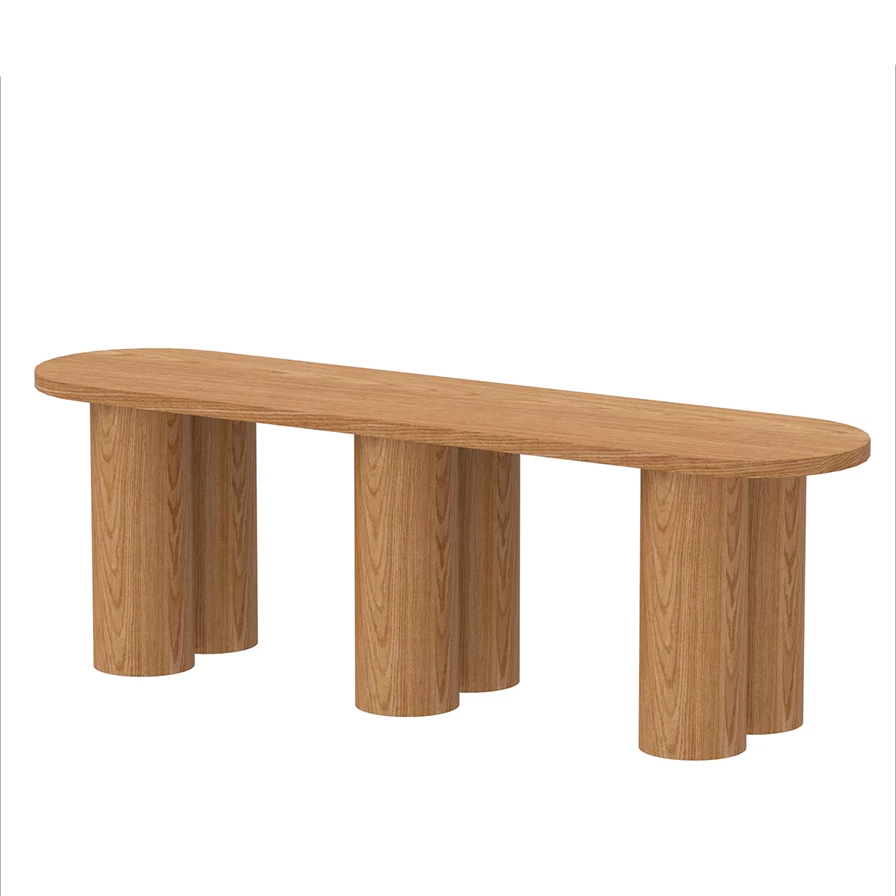
5. Cost Breakdown & Budget Optimization for Bespoke Accent Benches
Understanding cost allocation allows designers to optimize their budget
without compromising architectural intent. Custom accent benches typically
divide expenses across four distinct buckets:
- Substructure and Frame Engineering (30%): Structural steel,
kiln-dried hardwoods, precision CNC cutting, and internal joinery.
- Foam and Upholstery Labor (35%): Skilled pattern matching,
welt detailing, tufting, and application of certified flame-retardant
foams.
- Textile / Leather Selection (20%): Specified fabric yardage
or leather hides, including required COM waste factors.
- Protective Packaging & Freight (15%): Specialized
ISPM-15 wooden export crates, edge protection, and specialized logistics
handling.
When project budgets face pressure, designers can implement strategic value
engineering (VE) protocols. Swapping solid bronze components for high-durability
PVD-coated stainless steel achieves the intended visual texture while reducing
metal costs by up to 30%. Similarly, keeping the frame geometry straightforward
while reserving high-end fabrics exclusively for contact surfaces maximizes cost
efficiency.
Frequently Asked Questions
Q1: What is the standard dimensional specification for a commercial
entryway accent bench?
A1: Standard contract
dimensions specify an overall height of 17 to 19 inches to ensure ADA compliance
and natural sit-to-stand transitions. Seat depths range from 16 to 20 inches for
perch and entry seating, with bench lengths varying between 48 and 72 inches
depending on corridor clearances.
Q2: How much fabric overage should I specify for Customer’s Own
Material (COM) orders?
A2: For solid,
non-directional textiles, add 10% to 15% overage above base net yardage. For
fabrics with large repeat patterns, directional stripes, or delicate velvets,
plan for 20% to 30% additional yardage to guarantee pattern matching across
cushion seams.
Q3: What wood species perform best for custom accent bench frames in
high-traffic commercial spaces?
A3: Kiln-dried
North American White Oak, European Beech, and Hard Maple offer superior
screw-holding strength, dimensional stability, and Janka hardness ratings above
1,300 lbf. Avoid softwoods and low-density tropical woods for structural
components.
Q4: How do I ensure custom accent benches comply with local municipal
fire codes?
A4: Explicitly state compliance
criteria in your FF&E specification sheets. Require manufacturer
certification documentation verifying that all cushioning, interliners, and
outer fabrics pass CAL 117-2013 or BS 5852 Crib 5 testing before approving
production.
Q5: What is the typical lead time for delivering custom accent
benches on hospitality projects?
A5: Standard
contract lead times span 8 to 12 weeks following shop drawing sign-off and
receipt of COM fabrics. Full-scale prototype units require an initial 3 to 4
weeks prior to triggering volume production.
Partner with Essent Home for Custom Seating Specifications
Executing bespoke seating requires close collaboration between interior
architects and production craftspeople. Whether your design requires sculpted
organic contours, architectural metal framing, or integrated power distribution,
working with an experienced manufacturer protects both your concept and your
project timeline.
Essent Home engineers and manufactures contract-grade custom
accent benches for leading architectural practices, luxury hotels, and
commercial developers. Our engineering department reviews CAD drawings,
optimizes structural subframes, and handles technical documentation to
streamline your FF&E delivery schedule.
Contact our commercial engineering team today to review your seating schedule, request material finish samples, or receive a formal production quote for your project.