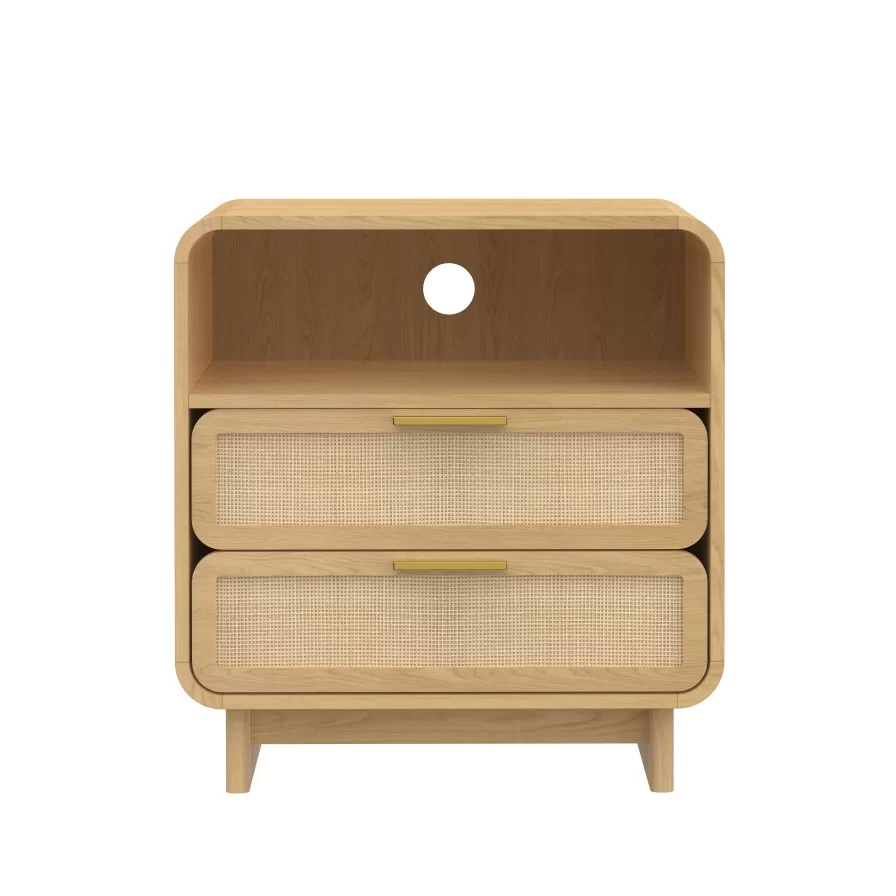
Matching bedroom sets are quietly disappearing from modern interior design.
For decades, showrooms pushed the same package: a bed frame, two identical
nightstands, and a matching dresser cut from the same factory template. The
result felt sterile, like a catalog spread rather than a personal sanctuary.
Today, discerning homeowners and interior designers take a different path.
They treat the nightstand not as a matching afterthought, but as a visual
anchor. A well-placed accent bedside table breaks up visual
monotony, introduces rich texture, and reflects authentic character.
At Essent Home, our workshop crafts bespoke furniture designed to withstand
decades of daily use. Whether you are an interior architect sourcing for a
boutique hotel or a homeowner seeking a custom centerpiece, this guide outlines
the physical proportions, joinery standards, and material choices you need to
make the right choice.
Planning a hospitality project or custom residential build? Contact Essent Home today to request a custom furniture inquiry and catalog.
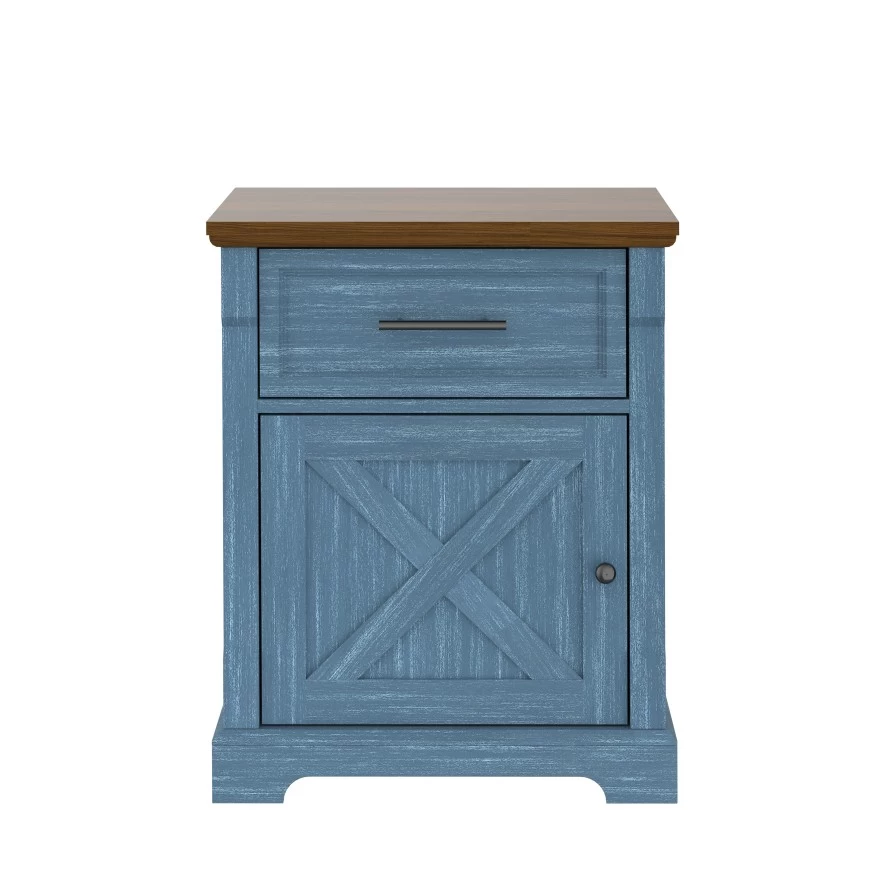
1. Getting the Proportions Right: The Golden Rules of Scale and Height
Most buying regrets stem from poor ergonomics rather than aesthetics. An
accent piece can look striking in a studio photo, but if you knock your elbow
against it reaching for a glass of water, it fails as a functional object.
The Mattress Height Rule
The top surface of your accent bedside table should sit level with the top of
your mattress, or rise just 1 to 2 inches higher. Avoid buying tables that sit
lower than your sleeping surface. Dropping down below the mattress line forces
awkward shoulder rotations when reaching for items in the dark.
Standard mattress profiles with foundations typically sit between 24 and 28
inches from the floor. Thinner platform beds may sit at 18 to 20 inches. Always
pull out a tape measure before committing to a design. If you fall in love with
a low-profile Japanese-inspired nightstand, verify that your bed frame mirrors
that low center of gravity.
Scale and Visual Weight
Visual weight relates to how heavy a piece feels in a room. Balance comes
from pairing opposites:
- For grand, upholstered beds: Balance deep-tufted headboards
or thick king-sized frames with an airy, leggy accent bedside table. Delicate
brass stems or tapered wooden spindles keep the bedside from looking boxed
in.
- For minimalist platform beds: Ground thin frames with a
heavier, block-style pedestal table or a solid wood accent table that extends
down to the floor.
- Wall clearance: Leave at least 2 inches between the table
edge and the bed frame. This allows duvet corners to drape naturally without
bunching up.
Surface Area Needs
Audit your evening habits honestly before selecting a tabletop size. A
minimalist may only need space for a phone and a small carafe, which a 14-inch
circular table handles comfortably. If you prefer a reading lamp, a hardback
book, and a sound machine, look for surface widths between 20 and 26 inches.
Keep the base of your bedside lamp under one-third of the total tabletop
footprint. When surface real estate is scarce, pair a compact accent
bedside table with a wall-mounted swing-arm sconce to keep the surface
clear.
2. Choosing the Right Style: Matching vs. Contrasting
Selecting an accent bedside table means giving yourself permission to
introduce contrasting elements. A bedroom gains architectural depth when
surfaces dialogue rather than mirror each other.
The "Accent" Factor
An accent table creates visual tension through contrast. If your bedroom
features cool-toned linen, plush wool rugs, and painted drywall, introduce an
organic shape. A solid walnut nightstand with a natural live edge or a honed
Carrara marble top immediately catches the eye.
Consider mixed materials. A handcrafted nightstand built from ebonized oak
paired with hand-cast unlacquered brass hardware provides a grounded, tactile
element against neutral bedding. The goal is intentional divergence, not visual
chaos.
Should Your Bedside Tables Match?
The short answer from a custom builder: absolutely not. Asymmetrical bedside
styling offers a practical way to suit the different storage habits of two
people sharing a room. One partner might need deep drawers for medication and
journals, while the other only requires a slender pedestal for a tablet.
To pull off mismatched bedside tables successfully, maintain at least one
unifying thread:
- Consistent height: Keep table tops within 1 to 2 inches of
each other to maintain a steady horizontal eye-line across the room.
- Shared material palette: Use different shapes (one round,
one square) executed in the same timber species, such as white oak.
- Symmetrical lighting: Anchor mismatched tables with
identical table lamps or matching hanging pendants to ground the bed.
3. Material and Craftsmanship: A Maker’s Perspective
Mass-market retailers cut corners where buyers rarely look: beneath veneers,
behind backer boards, and inside drawer boxes. Understanding furniture
construction keeps you from buying disposable pieces that wobble within two
years.
Solid Wood vs. Veneer and MDF
Medium-density fiberboard (MDF) wrapped in thin paper foil or cheap plastic
laminate dominates fast-furniture platforms. When moisture from a water cup
penetrates a seam in paper veneer, the fiberboard underneath swells permanently.
It cannot be sanded or repaired.
True architectural veneers applied over multi-ply Baltic birch are
structurally sound, but nothing matches the longevity of a solid wood
accent table. Solid American black walnut, white oak, and hard maple
withstand decades of handling. They take on a natural patina rather than wearing
out.
Wood is a living material that expands and contracts across seasons.
Professional furniture makers study radial and tangential shrinkage rates, as
documented by the USDA Forest Products Laboratory, to
construct joints that allow the wood to move without splitting.
Joinery Matters
Look inside the drawer boxes before you buy. If you see staples, cheap pin
nails, or hot glue, walk away. Quality cabinetmakers construct drawer boxes with
mechanical interlocks.
The industry benchmark remains the English dovetail joint. The wedge-shaped fingers interlock tightly,
resisting the outward pulling force applied each time you yank open a loaded
drawer. For modern floating nightstands, look for precision-cut mitered corners
reinforced with internal hardwood splines.
Inspect drawer runners as well. Soft-close, undermount metal slides (like
those rated under commercial hardware standards) or traditional wax-rubbed
hardwood runners provide silent, lifelong service. Hardwood runners on solid
wood rails require zero maintenance beyond an occasional rub of beeswax.
Finishes and Durability
Bedside tables live in a spill zone. Condensation rings from nighttime water
glasses ruin delicate nitrocellulose lacquers. When sourcing pieces at Essent
Home, we favor hardwax oil finishes and conversion varnishes.
Modern hardwax oils bond molecularly with raw wood fibers rather than forming
a brittle plastic film on top. If you scratch a hardwax oil surface, you do not
need to strip the entire piece. You simply buff a drop of maintenance oil into
the scratch with a cotton rag. For commercial and hospitality projects, ensure
the piece meets clear surface resistance guidelines and complies with the
structural stability criteria outlined in ASTM F2057 standards for bedroom storage units.
4. Balancing Form and Function: Open Shelves vs. Drawers
Before choosing a silhouette, review what you actually plan to store beside
your bed. Do you prioritize hidden utility, or do you want an airy, minimal
display?
The Case for Open Pedestals
Open accent tables work wonders in compact rooms. Because the eye travels
through open legs to the wall behind, the room reads as larger and less
congested. Slender tripod stands, sculptural fluted pillars, and floating ledges
bring dynamic shapes into the room.
The downside? You cannot hide clutter. If your nightstand collects charging
cords, reading glasses, hand lotions, and half-empty notebooks, an open shelf
will turn those items into visual clutter.
The Case for Closed Drawers
If you prefer an orderly, restful bedroom, opt for a nightstand with storage.
A single concealed drawer conceals evening necessities, leaving the top surface
pristine for a small ceramic dish and a reading lamp.
Look for thoughtful modern conveniences in contemporary designs:
- Integrated cable conduits routed through the rear legs to hide charging
wires.
- Felt-lined drawer bottoms to deaden sound when dropping keys or watches late
at night.
- Soft-closing mechanisms that prevent rattling drawers while a partner
sleeps.
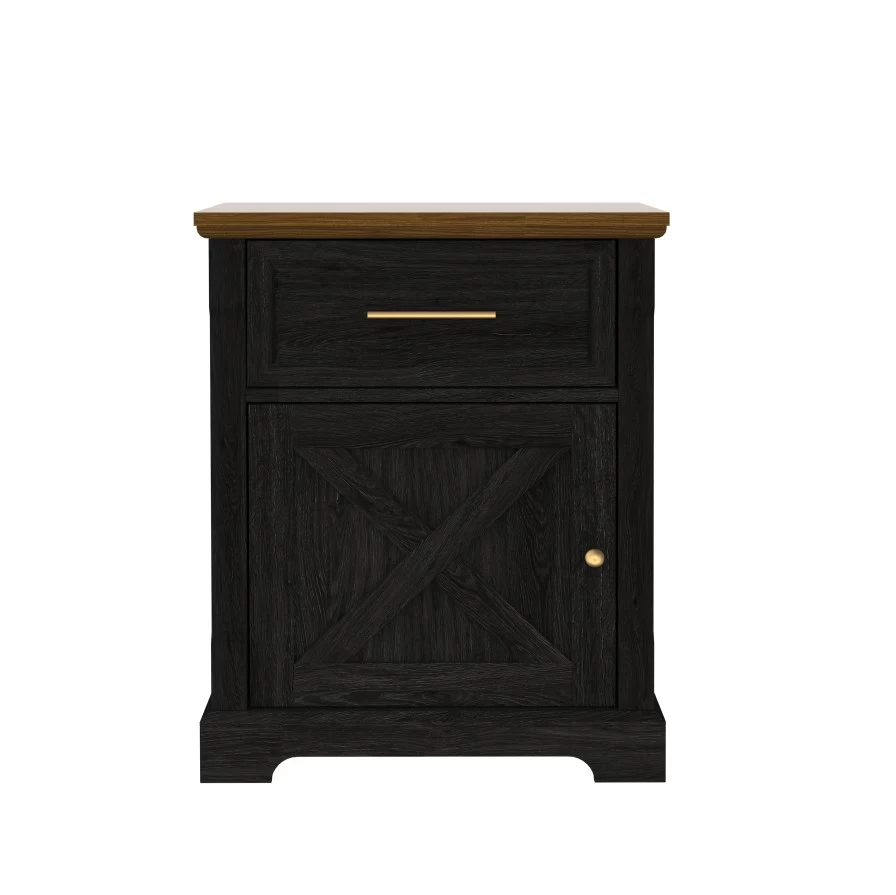
5. Why Consider a Custom Accent Bedside Table?
Standard off-the-shelf retail furniture works around mass logistics,
flat-pack container shipping, and safe, generic aesthetics. However, modern
bedrooms often feature awkward architectural conditions that standard pieces
cannot handle cleanly.
A custom accent bedside table solves real spatial
challenges:
- Narrow clearances: If an en-suite door or closet swing cuts
close to your mattress, a custom piece can be sized down to the exact half-inch
without sacrificing proportion.
- Specific outlet access: Custom makers can mill hidden
cutouts into the back carcass to align directly with wall outlets, keeping messy
cords hidden.
- Material continuity: Custom building allows you to pair
your nightstand directly with existing architectural millwork, wood flooring, or
door casings.
- Character grain: Handcrafted furniture preserves distinct
wood features—such as fiddleback figure, deep swirls, and sapwood
transitions—that commercial factories reject as waste.
At Essent Home, our craftsmen collaborate directly with architects, interior
specialists, and trade buyers to build one-of-a-kind furniture tailored to exact
project drawings.
Frequently Asked Questions
Q1: How do I choose an accent bedside table for a small
bedroom?
A1: Choose a wall-mounted floating nightstand or a piece
with slender metal legs. Exposing floor space underneath the table fools the
brain into seeing a larger room footprint. Aim for an overall width between 14
and 18 inches to preserve breathing room between the bed and adjacent walls.
Q2: Can an accent bedside table be a different color from the bed
frame?
A2: Yes, and contrast is often preferred. If your bed frame
is a dark stained walnut, a painted accent table in muted sage, deep navy, or
light natural ash adds energy to the bedroom. Just make sure the color ties into
secondary room elements, like curtains, artwork, or throw pillows.
Q3: What is the most durable material for a
nightstand?
A3: Dense American hardwoods like white oak, hard maple,
and black walnut are the most durable choices for daily use. When treated with a
commercial hardwax oil or conversion varnish, these solid timbers resist water
stains, scratches, and structural sagging far better than particleboard or
softwoods like pine.
Q4: How much weight should a floating accent nightstand
hold?
A4: A properly installed floating nightstand anchored directly
into wooden wall studs should hold at least 50 pounds. This handles heavy
ceramic lamps, stacks of books, and the occasional downward force of an adult
leaning on the edge. Never rely solely on hollow-wall drywall anchors for
floating furniture.
Q5: What are the standard accent bedside table
dimensions?
A5: Most standard bedside tables measure between 24 and
28 inches in height, 18 to 24 inches in width, and 16 to 20 inches in depth.
Always choose the height based on your specific mattress measurement rather than
relying on standard retail averages.
Build Your Vision with Essent Home
Finding the right accent bedside table comes down to balancing proper
ergonomic proportions with authentic materials. Avoid the trap of disposable,
flat-packed furniture sets. Choosing solid hardwoods, traditional dovetail
joinery, and durable finishes gives you a piece that lasts for decades while
anchoring your bedroom aesthetic.
Are you outfitting a luxury residence, sourcing commercial hotel inventory,
or looking for a bespoke furniture partner? Essent Home supplies fine furniture
crafted to exact trade specifications.
Send an inquiry to Essent Home today to discuss
material samples, review our portfolio, and receive a direct production quote
for your next project.