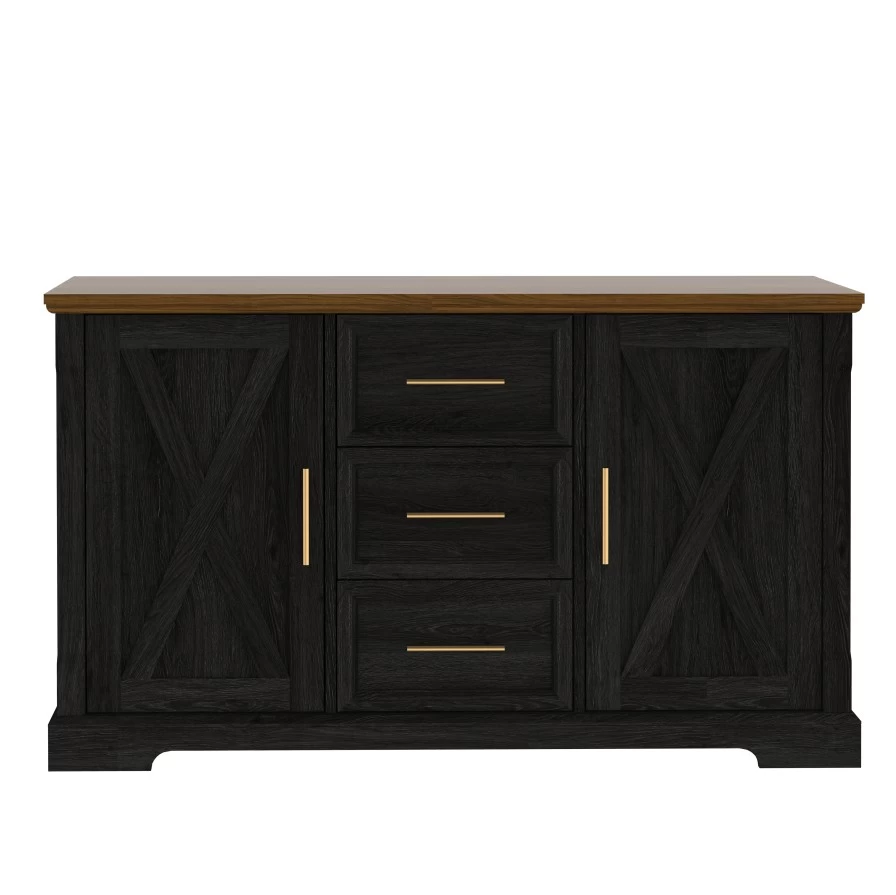
You find an original 1960s credenza at a flea market. The teak grain shows
rich golden patina, and the sculpted pulls look flawless. Then you pull out your
tape measure. The piece is 220 centimeters long, but your dining alcove only
clears 195 centimeters.
This spatial mismatch happens constantly. Original mid-century residential
architecture prioritized long, uninterrupted horizontal wall spans. Modern
apartments, townhomes, and renovated open-plan spaces rarely feature those exact
dimensions. When an original piece misses your wall measurements by just two
inches, it disrupts your entire room layout.
Settling for generic modern storage strips the warmth out of a room. At
Essent Home, we work directly with interior designers,
specifiers, and residential clients facing this exact dilemma. If you manage
hospitality builds or bespoke residential fit-outs, you can submit an inquiry for custom dimensions directly to our
production team. You do not need to abandon historical character just to fit
your floor plan.
Recreating an authentic vintage sideboard to exact spatial
specifications is entirely achievable. By understanding historical joinery,
proportions, and finishes, you can commission or build a custom storage credenza
that maintains true mid-century pedigree.
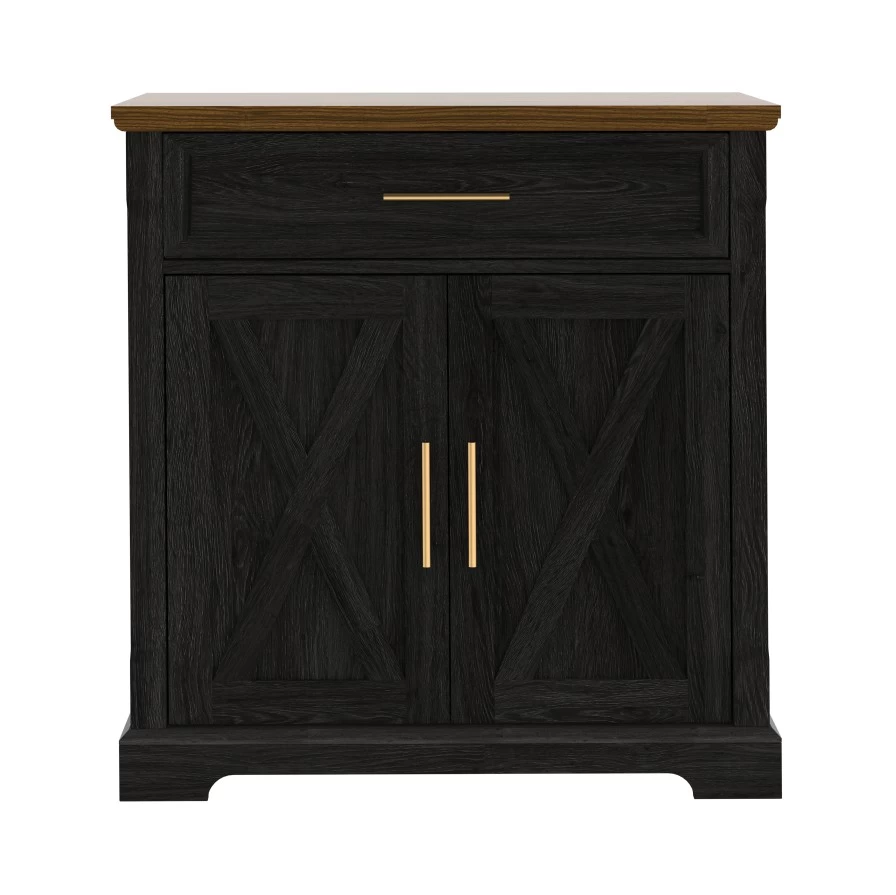
To recreate an antique or mid-century credenza faithfully, you must
understand what makes the original pieces work visually. True period character
does not stem from decorative distressing; it relies on specific structural
proportions, materials, and hardware integration.
Signature Wood Tones and Grain Configuration
Authentic mid-century sideboards rely heavily on warm hardwoods. Burmese
teak, American black walnut, and European white oak dominate historical
production. Teak was favored by Scandinavian designers for its natural oils,
rich amber aging profile, and tight linear grain structure.
Solid wood is not always the historically accurate choice for large exterior
panels. Mid-century manufacturers like McIntosh, G-Plan, and Arne Vodder
utilized architectural wood
veneer pressed over engineered substrates. This method prevented the
seasonal warping common to wide, solid lumber slabs across seasonal humidity
shifts.
- Teak: Displays a warm, honey-to-caramel baseline with
subtle dark streaks.
- American Walnut: Offers deep chocolate-brown lowlights with
muted gray-brown mid-tones.
- Grain Matching: Look for continuous crown-cut or
slip-matched sheet grain across adjoining drawer and cabinet fronts.
Iconic Base and Leg Profiles
The base structure gives a vintage sideboard its visual
lightness. Original post-war designs lifted heavy cabinetry off the floor to
make living spaces appear larger. A box resting flat on the baseboards destroys
this historical effect immediately.
Tapered dowel legs remain the most recognizable support style. These legs
typically angle outward at an 8 to 12-degree rake, terminating in turned brass
feet or unadorned timber tips. Alternatively, Danish designs often utilized
solid stretcher bases, where legs connect via horizontal rails that sit recessed
from the cabinet facade.
Floating bases present another authentic route. In these configurations, a
deeply recessed plinth creates a shadow-gap joint beneath the main carcass,
producing the illusion that the entire storage body floats above the floor
plane.
Period-Accurate Hardware and Cabinet Doors
Visible surface-mounted hinges rarely appeared on premium twentieth-century
sideboards. Craftsmen engineered concealed pivot mechanisms or interior knife
hinges to preserve clean external silhouettes.
Door styles generally fell into three distinct functional categories:
- Tambour Doors: Ultra-thin vertical timber slats glued to
canvas backings that slide smoothly into hidden internal side tracks.
- Bypass Sliding Panels: Twin doors set into routed wooden
top and bottom tracks, eliminating outward swing clearances.
- Sculpted Integrated Pulls: Solid timber handles shaped
directly into drawer fronts or door stiles rather than applied metal
pulls.
Spatial Planning: Measuring for Modern Living
Historic sideboards served formal dining rooms holding 12-person china sets,
heavy linen rolls, and silver platters. Modern homeowners need pieces that
accommodate flatscreen televisions, record collections, bar supplies, or narrow
entryway clearances. Your custom project starts with structural measurement.
Depth and Clearance Constraints
Original 1950s credenzas often measured between 48 and 55 centimeters deep.
Placing a piece with that depth into a contemporary dining corridor can choke
the primary walking zone. For narrow spaces, scale your external depth back to
38 or 42 centimeters.
Ensure that reducing the external depth does not sacrifice your practical
storage needs. A standard 12-inch vinyl LP jacket measures 31.5 centimeters
square. Factoring in rear backer panels and sliding door clearances, an internal
depth of 35 centimeters represents the functional absolute minimum for
audio-focused credenzas.
Visual Proportions and Architectural Balance
A vintage sideboard should anchor its respective wall
without crowding adjacent architraves or floor vents. Apply the two-thirds
visual rule: the sideboard length should occupy roughly 60% to 70% of the
uninterrupted wall plane it occupies.
If you plan to hang artwork or mount a media display above the credenza, keep
the cabinet width wider than the overhead feature. The storage unit should
extend at least 15 to 25 centimeters beyond the edges of the television frame on
both sides to maintain compositional balance.
Dedicated Functional Layouts
Determine internal layout early in your planning sketches. Modern media
hardware requires active cable routing and thermal ventilation that original
vintage pieces completely lack.
Incorporate 50mm cable grommets cut cleanly through the base panel rather
than the rear backing board. This preserves clean wall visuals when viewed from
above. If housing high-output amplifiers or gaming hardware, specify passive
ventilation slots routed horizontally through internal division panels.
3 Ways to Recreate the Look in Your Exact Dimensions
Achieving a custom-proportioned mid-century cabinet depends heavily on your
budget, available timeline, and fabrication resources. Three primary routes
exist for executing your design.
Option 1: The Modified Base Cabinet Route
For modest residential budgets, building around standard modular carcasses
offers a practical approach. You source the internal box framework from
commercial cabinet suppliers, then replace every exposed surface with
period-correct timber components.
Construct a custom hardwood face frame using solid walnut or teak strips.
Mitre the outer corners at 45 degrees to replicate authentic carcass
construction. Mount high-grade aftermarket doors faced in natural crown-cut
veneer to conceal the engineered core boards beneath.
Complete the piece by building a bespoke solid timber leg base. Avoid cheap,
pre-threaded metal plate legs from online retail warehouses; turn hardwood
dowels on a lathe or cut tapered square legs with a consistent bevel for
accurate historical weight.
Option 2: Dimensional Resizing and Upcycling
Occasionally, you may discover a damaged original vintage
sideboard that sells cheaply because one end sustained structural water
decay or veneer chipping. These pieces make ideal modification donors.
Skilled woodworkers can remove the damaged section, shorten the internal
framing, and reinstall the original end panel. This retains authentic aged
timber finishes, original drawer fronts, and period hardware while shrinking the
overall footprint down to match your target alcove dimensions.
You can also repurpose vintage two-drawer lowboys or mid-century executive
desks. Removing kneehole components and joining matching low drawers allows you
to form a compact, custom-width console carrying genuine historical patina.
Option 3: Commissioning Commercial-Grade Bespoke Fabrication
When residential or hospitality projects require precise dimensional
coordination alongside contract-grade durability, commission a specialized
manufacturer. At Essent Home, we build custom credenzas and
custom size sideboards that align with detailed architectural joinery
schedules.
When commissioning a bespoke vintage build, provide your fabrication partner
with precise technical requirements:
- Core Material: Specify high-density, moisture-resistant
core boards layered with 0.6mm architectural-grade natural timber veneers.
- Edge Banding: Mandate solid 3mm to 6mm hardwood edge
lipping applied prior to veneering, allowing craftsmen to sand smooth, rounded
external corners.
- Joinery Details: Request splined mitres, dowel-reinforced
carcass corners, or blind dovetail joinery inside drawer boxes.
Step-by-Step: Replicating the Authentic Mid-Century Patina
Modern commercial factory finishes often feature thick, high-gloss
polyurethane that wraps the wood in what looks like a sheet of clear plastic.
This finish profile ruins an otherwise accurate vintage reproduction. Recreating
historical character requires careful attention to raw surface prep, stain
coloration, and surface reflectance.
Tonal Formulation and Stain Base
Original Scandinavian teak naturally oxidizes into an amber, golden-brown hue
over decades of exposure to ambient light. Freshly cut walnut displays cool
purplish-gray tones, while newly surfaced teak appears olive or light tan.
To recreate age without obscuring grain clarity, avoid opaque gel stains. Use
high-transparency, alcohol-based or water-based dye stains. Formulate your base
coat with yellow-orange undertones before applying a warm brown wiping glaze.
This establishes dimensional visual depth across the grain pores.
Edge Profiling and Softening
Nothing reveals a modern reproduction faster than sharp, machine-cut
90-degree edges. True vintage cabinetry exhibits soft, organic transitions
shaped by human hands and decades of cleaning friction.
Break every sharp corner manually using 240-grit sandpaper held over a
resilient rubber sanding block. Form a consistent 2mm radius along the top
perimeter, door stiles, and drawer lip details. This subtle softening allows the
edge to catch the light naturally, simulating authentic handling wear.
Sheen Control and Topcoats
Historical finishes were thin, penetrating, and non-reflective. Craftsmen
used cold-pressed linseed oils, tung oils, or diluted cellulose lacquers that
protected the wood fibers without building an artificial plastic film.
According to industrial finishing standards such as ASTM D523 specular gloss
measurement, vintage credenza topcoats sit firmly in the dead-flat to
low-satin categories (typically below 15 to 20 gloss units at a 60-degree
viewing angle).
For modern projects requiring drink resistance alongside vintage visual
texture, use an ultra-matte hardwax oil or a dead-flat conversion varnish. These
coatings soak deep into the timber grain, leaving an open-pore, tactile finish
that feels completely authentic to the touch.
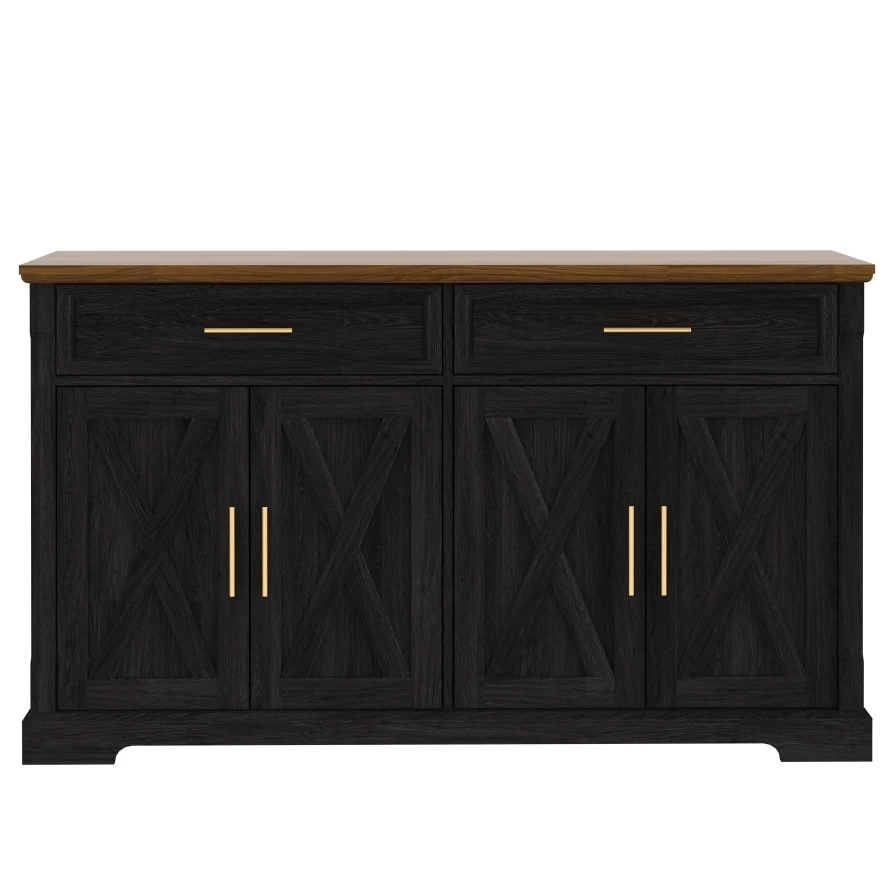
Styling Your Recreated Piece to Preserve Period Credibility
Once your custom-sized credenza sits in position, your contextual styling
determines whether it reads as a genuine vintage heirloom or an obvious
reproduction.
Anchor the horizontal plane with authentic twentieth-century design
artifacts. Incorporate lighting fixtures showcasing spun brass, raw spun
aluminum, or matte opaline glass shades. Bauhaus-inspired desk lamps or Danish
mushroom-style table lights match low-slung credenza profiles exceptionally
well.
Balance hard wood surfaces with textured organic objects:
- Studio pottery featuring volcanic or textured salt glazes.
- Abstract mid-century expressionist art pieces framed in thin, raw-sawn
timber profiles.
- Indoor botanicals with structured leaves, such as Monstera
deliciosa or Ficus lyrata, placed in unglazed stoneware
pots.
Avoid cluttering the top surface. Authentic mid-century design emphasizes
negative space; leave at least 40% of the credenza top surface clear to
highlight the natural timber grain.
Frequently Asked Questions
Q1: What standard dimensions define a traditional vintage
sideboard?
A1: Traditional mid-century models typically measure
between 180 and 220 centimeters long, 45 to 55 centimeters deep, and 75 to 82
centimeters high. Modern custom iterations often decrease overall depth down to
38 or 42 centimeters to ensure adequate clearance in compact layouts.
Q2: Is solid wood superior to veneered construction for a vintage
credenza?
A2: No. Historical master woodworkers deliberately
utilized high-grade veneers over stable engineered cores for wide panels.
Veneering prevents cracking, bowing, and joint separation across seasonal
humidity shifts. Edge-banded natural veneers maintain authentic period
construction methodology.
Q3: Which clear finish provides protection without artificial
shine?
A3: Hardwax oil systems provide optimal protection and
vintage tactility. Formulations based on carnauba and linseed oils cure deep
inside the wood fibers, preserving an open-grain texture and natural satin
finish that resists beverage rings.
Q4: How do I identify quality door slide hardware for custom
builds?
A4: Select solid hardwood runner tracks or precision
bottom-mounted brass rail channels. Avoid exposed, modern metal track hardware.
The best historical cabinets used waxed timber-on-timber grooves or recessed
nylon rollers set into the bottom rail.
Q5: Can I match my custom sideboard to existing vintage teak
pieces?
A5: Yes, but raw new teak will not match oxidized vintage
teak out of the box. You must apply warm amber dye coats to balance modern raw
wood against the aged patina of your existing furniture collection before
applying protective topcoats.
Build Your Custom Vintage Storage with Confidence
Room constraints should never force you to compromise your design vision. By
targeting proper architectural proportions, using the right hardwood species,
and avoiding heavy, modern finishes, you can achieve the rich presence of a
mid-century original in a footprint tailored precisely to your floor plan.
If you need custom contract production, bespoke residential
millwork, or precision-crafted mid-century styling for an upcoming architectural
project, Essent Home delivers commercial-grade execution. Send an inquiry to our custom design department today to discuss technical specifications, timber grades, and
bespoke sizing options.