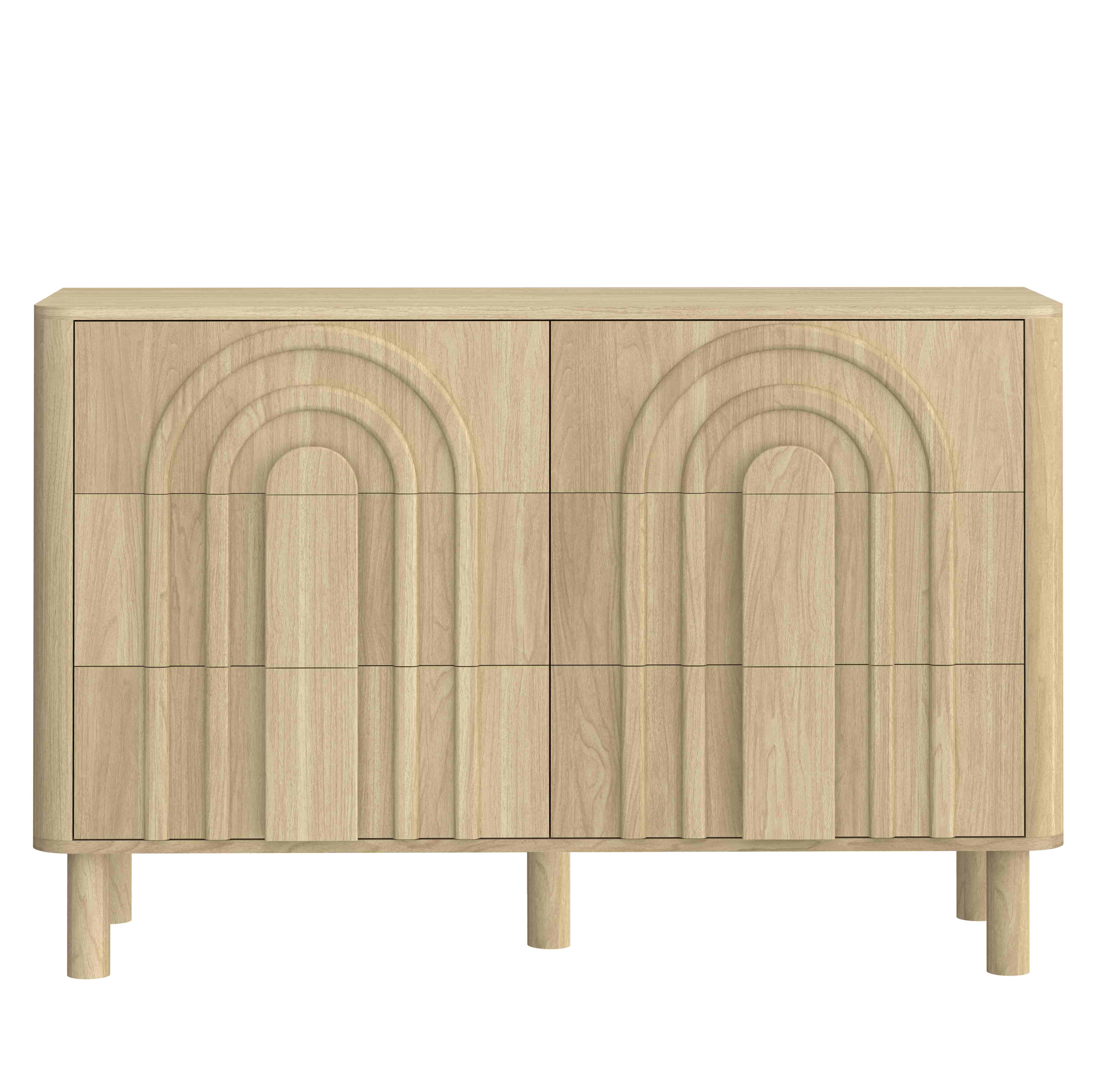
For interior specifiers, property developers, and furniture retailers, the
choice of a dedicated pdrawer dresser factory determines
product longevity, client satisfaction, and supply chain reliability. A dresser
with multiple drawers is not merely a storage unit—it must withstand daily
mechanical stress, maintain glide smoothness over years, and align with the
architectural vocabulary of a space. This guide examines the manufacturing
parameters, material selection protocols, surface finishing methods, and quality
assurance benchmarks that distinguish a professional drawer dresser factory from
low-end assembly workshops.
We will focus on performance attributes such as drawer side thickness,
under-mount vs. side-mount slide systems, load cycle testing, and environmental
compliance (CARB2 / E0). For partners seeking consistent batch production or
fully customized runs, understanding these specifications is the foundation of a
successful procurement relationship.

1. Core Manufacturing Capabilities of a Specialized Drawer Dresser
Factory
A facility that brands itself as a pdrawer dresser factory must demonstrate
control over every production stage: from panel sizing to edgebanding, dovetail
joinery, and final assembly. The following capabilities separate
industrial-grade operations.
1.1 Panel Processing and Core Materials
Solid wood dressers (oak, walnut, ash) require kiln-dried lumber with
moisture content stabilized at 6–8%. For engineered products, the standard is
high-density fiberboard (HDF) or multi-layer plywood with a minimum of 7
cross-plies for drawer fronts. A professional factory will reject warped
substrates and use CNC routers with ±0.2 mm tolerance for drawer box
components.
1.2 Drawer Joinery Systems
Three joinery methods dominate durable dresser manufacturing:
Dovetail (through or half-blind): Provides maximum tensile
strength for the front-to-side joint. A high-end drawer dresser factory will use
7–11 dovetail pins per drawer side, milled from solid hardwood.
Mortise and tenon: Preferred for heavy-duty drawers (load
> 30 kg), often reinforced with cross dowels.
Dowel construction (dowel pins + PVA glue): Acceptable for
mid-range dressers, but requires precise alignment jigs.
Essent Home applies dovetail joinery
across all dressers produced in its integrated facility, backed by a 10-year
warranty on drawer box integrity.
2. Drawer Slide Systems and Load Performance
The sliding mechanism defines user experience and failure points. A reputable
pdrawer dresser factory offers multiple
slide grades:
Ball-bearing side-mount slides (3/4 extension): Standard
for budget lines; rated for 25 kg per drawer. Wear life approx. 20,000
cycles.
Under-mount soft-close slides (full extension): Preferred
in luxury dressers. Concealed under the drawer, they provide 100% access and
rated for 35–50 kg. Soft-close dampers reduce impact noise.
Tandem plus Blum / Grass systems: High-cycle industrial
slides rated for 80,000 cycles. Used in hotel furniture and high-use residential
dressers.
Factory testing should include a 24-hour continuous open-close test on
randomly sampled drawers. Ask for cycle test reports. In Essent Home’s quality
protocol, every batch of dressers undergoes a 50,000-cycle test on under-mount
slides before release.
3. Surface Finishing and Coating Durability
Dresser surfaces face abrasion from objects placed on top and chemical
exposure from cleaning agents. Professional finishing lines employ:
Conversion varnish (post-catalyzed lacquer): Hard,
chemical-resistant finish. Requires spray booth and forced drying. Achieves 4H
pencil hardness.
Polyurethane (2K PU): Excellent for high-moisture
environments (bathroom dressers). UV-stabilized formulations prevent
yellowing.
Water-based acrylic + topcoat: Low-VOC, but requires
careful sanding between coats to achieve a smooth sheen.
Oil and wax (Osmo / Rubio): For natural wood aesthetics,
but less protective against water rings.
A factory must document film thickness (≥ 120 μm for horizontal surfaces) and
cross-hatch adhesion (ISO 2409 rating 0). They should also provide heat
resistance data: finish should withstand a 70°C mug for 20 minutes without
whitening.
4. Industry Pain Points and Their Mitigation in Drawer Dresser
Production
Contract buyers frequently encounter the following issues when sourcing from
unverified factories. Each has a proven solution.
4.1 Drawer Misalignment and Sagging
Symptom: After 6–12 months, drawers do not close flush or
rub against the frame. Root cause: Insufficient drawer side
thickness (≤12 mm solid wood or ≤15 mm engineered board) and inadequate slide
mounting brackets. Solution: Specify drawer sides ≥ 15 mm for
widths > 600 mm. Require that the factory uses 2.0 mm steel brackets for
under-mount slides, pre-drilled with pilot holes to prevent particleboard
stripping.
4.2 Finish Delamination or Blushing
Observed in: Dressers shipped to humid climates or stored in
non-conditioned warehouses. Cause: Curing time less than 72
hours before packaging; also, absence of a sealer coat.
Correction: A qualified pdrawer dresser factory must enforce a
minimum 96-hour air-dry period after final topcoat, followed by a moisture
barrier film before cartoning. For cross-border shipments, specify desiccant
packs inside the drawer cavities.
4.3 Odor Issues from Engineered Wood
Client complaints about formaldehyde or acetic acid smell.
Mitigation: Use CARB Phase 2 compliant or E0-grade panels. For
contract projects, request EN 16516 declaration for total VOC emission (≤ 100
μg/m³). The factory should ventilate assembled dressers for 24 hours under air
exchange before packing.
4.4 Inconsistent Staining Between Batches
For large hospitality orders (200+ dressers), color variation across batches
is a major rejection reason. Solution: The factory must
maintain a spectrophotometer-controlled mixing system for stains and lacquers,
with a delta E (ΔE) ≤ 1.0 between batches. A physical reference panel (color
standard) must be signed off prior to production and retained at the line.
5. Customization Workflows for B2B Clients
Unlike standard stock items, a contract-focused drawer dresser factory offers
modular customization. The typical process includes:
Step 1 – CAD rendering and joinery mapping: The client
provides external dimensions, drawer configuration (e.g., 3 small + 2 deep
drawers), and drawer front profile (shaker, slab, beveled).
Step 2 – Material selection: Choose from 20+ wood species,
veneers, or high-pressure laminates (HPL). The factory provides 200x200 mm
sample swatches with edge profile.
Step 3 – Hardware specification: Select slide brand (Blum,
Hettich, Grass) and handle style (integrated groove, bar pull, cup pull). The
factory pre-installs handles to metric or imperial hole spacing.
Step 4 – Pilot run (5-10 units): Full inspection by
client’s QC team. Any adjustments to drawer gap tolerances (standard 2-3 mm) or
finish gloss level (20° to 80° sheen) are implemented.
Step 5 – Bulk production and random sampling: AQL 1.0 for
critical defects (structural, finish peeling), AQL 2.5 for minor defects (dust
nibs, slight color shift).
Essent Home operates a dedicated B2B
project management team that handles these steps with a 4-week lead time for up
to 500 dressers, including custom finishes.
6. Quality Assurance Protocols in Drawer Dresser Manufacturing
Before a dresser leaves the factory floor, it should pass these checks:
Structural load test: Each drawer is loaded to 40 kg and
fully extended for 24 hours; residual sag measured must be < 3 mm.
Slide operation test: Automated open-close cycle tester for
10,000 cycles (or client-specified number). No audible squeak or resistance
increase.
Finish adhesion test: Cross-cut tape test on drawer front
and top panel – no flaking.
Formaldehyde emission test: Perforator method (EN 120) with
result ≤ 8 mg/100g for E1 level; ≤ 4 mg/100g for E0.
Packaging drop test: 30 cm drop on each corner and edge
(ISTA 1A) to verify corner protection adequacy.
Documentation of these tests must accompany each shipment for commercial
dispute protection.
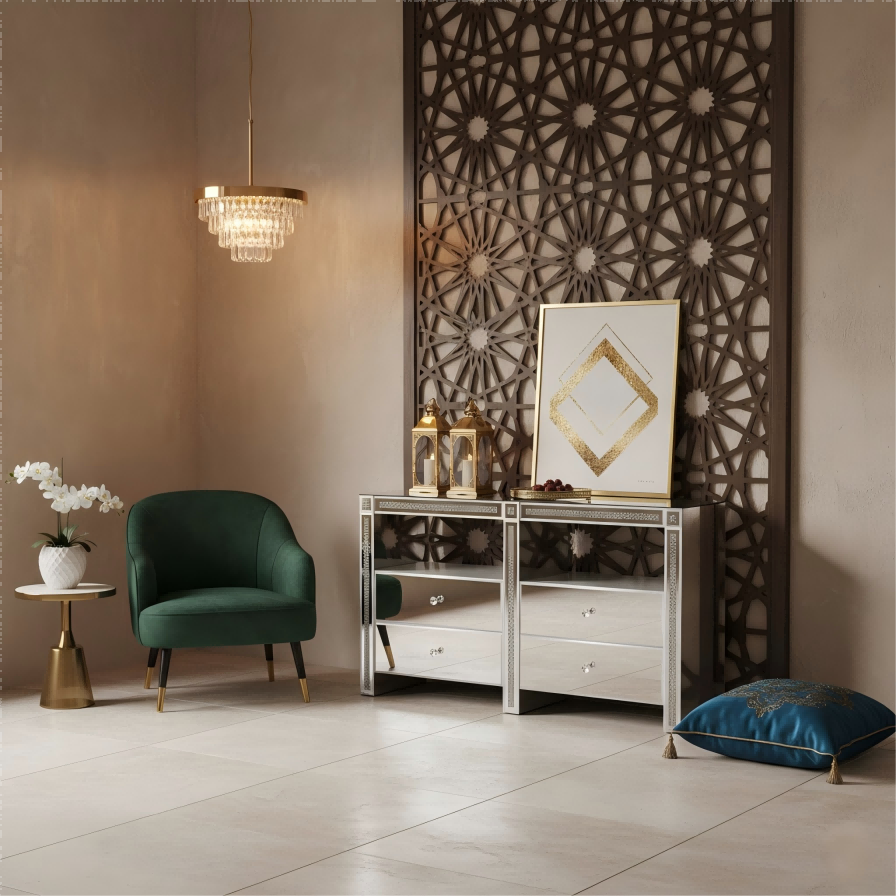
7. Sustainability and Compliance for Modern Projects
Green building certifications (LEED, BREEAM) require evidence of responsible
sourcing. A professional drawer dresser factory should provide:
FSC-certified wood chain of custody.
Low-VOC finish certificates (Greenguard Gold).
Recycled content in drawer slide packaging or use of corrugated
cardboard with > 70% recycled fiber.
Working with a compliant partner reduces project documentation risk. Essent
Home maintains FSC CoC and GREENGUARD certification for all its dresser
finishes, suitable for schools and healthcare environments.
Frequently Asked Questions (FAQ) About Drawer Dresser Factory Sourcing
Q1: What is the typical lead time for a custom drawer dresser order
of 100–300 units from a professional factory?
A1: For a standard
specification (plywood carcass, dovetailed drawers, soft-close slides, and
sprayed conversion varnish), lead time ranges from 30 to 45 working days after
sample approval. Factors affecting lead time include custom staining, hardware
import (if non-stocked), and current line load. A reliable pdrawer dresser factory will provide a
Gantt chart with milestones.
Q2: How can I verify the quality of drawer slides before committing
to a bulk order?
A2: Request 10 fully assembled drawer samples
(preferably in the actual size and weight of your design). Conduct a cycle test
manually: open and close each drawer 1,000 times (can be done over 2–3 days).
After the test, measure lateral play (should be ≤ 1 mm). Also, inspect the
slide’s ball bearings for flat spots. Essent Home offers third-party slide test
reports upon request.
Q3: What is the acceptable standard for drawer side thickness and
bottom panel thickness in a contract-grade dresser?
A3: For drawers
up to 600 mm width, side thickness should be ≥ 12 mm for solid wood and ≥ 15 mm
for engineered panels. The bottom panel must be at least 6 mm thick for plywood
or 8 mm for MDF, supported by a groove on all four sides and glued. For heavy
loads (linens, tools), specify 15 mm plywood bottom.
Q4: Do I need to provide a physical sample for color matching, or is
a digital Pantone code sufficient?
A4: Digital references (Pantone,
RAL, or NCS) are not precise for wood stains because the substrate grain alters
absorption. You must provide a physical sample (at least A5 size) of the desired
finish on a similar wood species. The factory will produce a match sample and
measure delta E. Only after your written approval does production begin.
Q5: What kind of warranty should I expect from a drawer dresser
factory for hospitality projects?
A5: For B2B contracts, a minimum
2-year warranty against manufacturing defects (joint failure, finish blistering,
slide malfunction) is standard. Some premium factories like Essent
Home offer a 5-year structural warranty on drawer boxes and slide
systems for indoor commercial use. The warranty must specify coverage for both
parts and labor for replacement.
Choosing the right production partner for high-end drawer dressers requires
scrutiny of joinery methods, slide durability, finishing consistency, and
compliance documentation. A factory that openly shares its test protocols and
material certifications will minimize post-delivery surprises. For
technical datasheets, custom configuration support, or to request a sample
drawer box from a qualified pdrawer dresser factory, contact the Essent Home B2B
team today.
Send your inquiry now — include target dimensions, drawer
quantity per unit, preferred wood species, and estimated annual volume. Our
project engineers will respond with a production roadmap and reference pricing
within 48 hours.
Request a quotation or factory audit visit with
Essent Home