For hospitality developers, commercial interior designers, and procurement
specialists, selecting a manufacturing partner is one of the most consequential
decisions in any furniture project. A round cocktail table
factory that combines advanced manufacturing capabilities with
rigorous quality systems can mean the difference between consistent, durable
products and recurring field failures. This article examines the operational
standards, technical processes, and quality frameworks that define a world-class
manufacturing facility, drawing on decades of experience in custom furniture
production.
When evaluating potential manufacturing partners, it is essential to look
beyond surface-level capabilities. A professional round cocktail table
factory operates with integrated systems that control every
variable from raw material procurement to final packaging. At Essent
Home, we have structured our manufacturing operations around
transparency, precision, and scalability—principles that deliver consistent
results for clients worldwide.
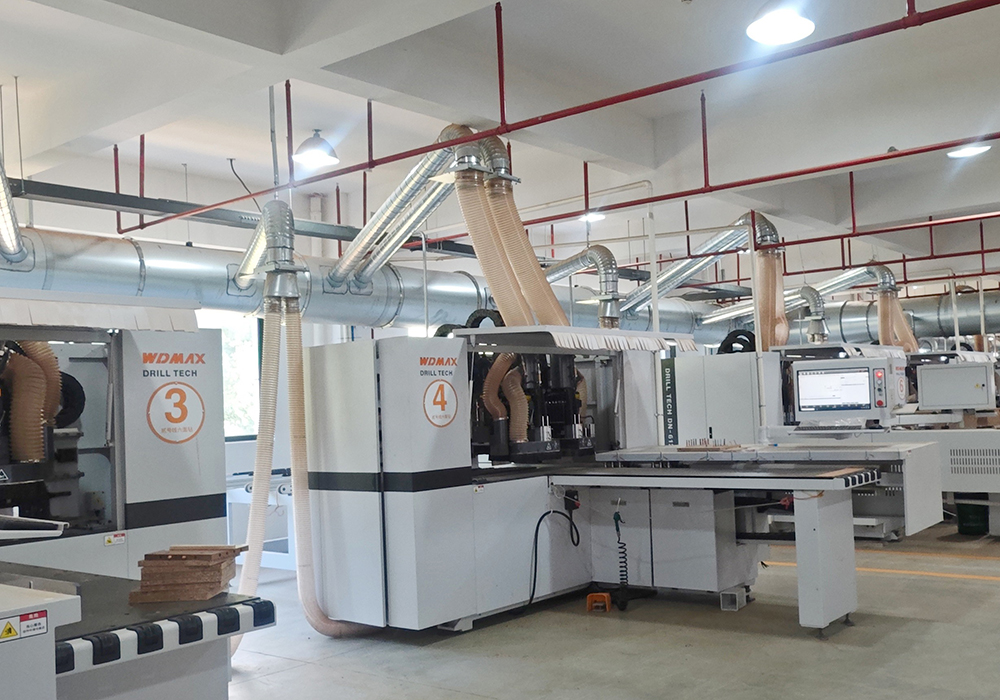
1. The Manufacturing Ecosystem: What Defines a Professional Round Cocktail
Table Factory
A furniture factory is not merely a collection of machines. It is an
integrated ecosystem where material science, skilled craftsmanship, and process
engineering converge. For a round cocktail table
factory to consistently deliver contract-grade products, it must
demonstrate capabilities across five critical domains.
1.1 Vertical Integration and Process Control
Factories that maintain in-house control over key production stages—wood
processing, metal fabrication, finishing, and assembly—offer superior quality
consistency. External subcontracting introduces variability in quality, lead
times, and communication. A vertically integrated facility can:
Monitor material moisture content from lumber yard to finished product,
maintaining 6–8% for kiln-dried hardwoods to prevent post-delivery warping.
Control metal fabrication tolerances within ±0.3mm for welded components,
ensuring stable bases that do not rock on finished floors.
Apply finish systems with consistent mil thickness and curing parameters,
eliminating color variation across production batches.
1.2 Production Capacity and Scalability
For projects ranging from boutique hotel suites to multi-property hospitality
rollouts, manufacturing scalability is essential. A professional factory
maintains:
Flexible production lines capable of handling small-batch custom work (25–50
units) alongside high-volume orders (500+ units) without compromising
quality.
Reserved capacity for repeat orders, allowing clients to expand
installations over multiple phases with consistent product specifications.
Tooling and fixture storage systems that retain setup configurations for
repeat projects, reducing lead times for subsequent orders.
2. Technical Manufacturing Processes: From Raw Material to Finished
Product
Understanding the technical processes employed by a round cocktail table
factory enables procurement professionals to make informed sourcing
decisions. The following sections detail the critical manufacturing stages that
determine product quality and longevity.
2.1 Wood Processing and Substrate Preparation
High-end cocktail tables begin with properly prepared substrates. Advanced
factories employ:
CNC Nesting Optimization: Computer-controlled cutting
maximizes material yield (typically 85–90%) while maintaining grain continuity
for round tabletops. Programmed toolpaths ensure edge quality that requires
minimal sanding.
Edge Banding and Profiling: For engineered wood substrates,
automated edge banding systems apply 3mm to 5mm solid wood edges with PUR
(polyurethane reactive) adhesive, creating seamless transitions that withstand
impact and humidity cycling.
Cross-Laminated Construction: For solid wood tops,
multi-layer lamination with opposing grain directions prevents cupping and
splitting, critical for round shapes where radial movement can be
problematic.
2.2 Metal Fabrication and Base Engineering
Table bases require structural engineering that accounts for both aesthetics
and stability. Professional manufacturing includes:
Laser Cutting and CNC Bending: Fiber laser cutting achieves
tolerances of ±0.1mm for intricate base designs. CNC press brakes with angle
measurement feedback ensure consistent bend angles across all units.
Robotic Welding: For high-volume production, robotic
welding cells provide repeatable weld penetration and appearance, critical for
bases with exposed welds that form part of the design language.
Surface Preparation: Multi-stage abrasive blasting removes
mill scale and creates uniform surface profiles for coating adhesion, followed
by phosphate pretreatment for corrosion resistance.
2.3 Coating and Finish Application
Finish durability directly impacts field performance. A professional
round cocktail table
factory employs:
Electrostatic Powder Coating: For metal components,
automated electrostatic application ensures uniform coverage of 60–80 microns.
Curing ovens with monitored temperature profiles achieve cross-linking that
resists chipping and corrosion.
Catalyzed Conversion Varnish: For wood surfaces, catalyzed
finishes provide chemical resistance (tested against wine, coffee, and cleaning
agents) and hardness ratings exceeding 3H on the pencil hardness scale.
UV-Cured Finishes: For high-volume flat panels, UV-cured
finishes offer instant curing and zero VOC emissions, with excellent scratch and
stain resistance suitable for high-traffic applications.
2.4 Assembly and Final Quality Control
The final assembly stage is where components become finished products.
Rigorous factories implement:
100% assembly verification for structural integrity, checking all fasteners,
leveling glides, and connection points.
Photometric color matching with ΔE (delta E) readings maintained below 1.0
for painted finishes and 0.8 for stained wood.
Load testing on random samples, verifying that tables exceed contract-grade
standards (e.g., 150 lb concentrated load on tabletop edges).
3. Quality Management Systems: Ensuring Consistency Across Production
Batches
For specifiers managing multi-unit projects, consistency is paramount. A
professional round cocktail table
factory implements documented quality management systems that
provide traceability and accountability.
3.1 ISO 9001:2015 Certification and Quality Documentation
ISO 9001 certification indicates a factory maintains documented procedures
for quality control, continuous improvement, and customer satisfaction. Key
elements include:
Controlled work instructions for each manufacturing operation.
Non-conformance reporting systems that track defects and implement
corrective actions.
Calibration records for all measurement equipment, ensuring accuracy
throughout production.
3.2 First Article Inspection (FAI) and Production Part Approval
Before full production begins, professional factories conduct FAIs where the
first production unit is measured against engineering specifications. This
process verifies:
Dimensional accuracy across all features and mounting points.
Finish color, gloss level, and texture against approved standards.
Structural performance through load and stability testing.
Only after FAI approval does the factory proceed with batch production,
ensuring that client expectations are validated before scale manufacturing
begins.
3.3 In-Process and Final Inspection Protocols
Quality control occurs at multiple points:
Incoming Material Inspection: Raw materials are verified
against specifications before release to production floors.
In-Process Checkpoints: Critical operations (CNC machining,
welding, finishing) have designated inspection points where operators verify
conformance.
Final Random Sampling: Finished goods undergo AQL
(Acceptable Quality Limit) sampling per ANSI/ASQ Z1.4 standards, with rejection
criteria clearly defined.
4. Application Scenarios: Manufacturing Solutions for Diverse
Environments
A versatile round cocktail table
factory must accommodate varied application requirements. Below are
three scenarios with distinct manufacturing considerations.
4.1 Luxury Hospitality: High-Volume Consistency with Premium Materials
Manufacturing Requirements: Production of 200+ units with
consistent book-matched veneer patterns and integrated wireless charging. The
factory must source matched veneer sets from certified suppliers, maintain CNC
programming for consistent pocketing for charging modules, and coordinate
electrical component sourcing and testing.
Factory Solution: Dedicated production cells for repeatable
operations, with reserved kiln capacity for veneer conditioning and specialized
jigs for electronic module installation. Batch tracking ensures all units from a
single project share consistent material batches.
4.2 High-End Residential: Small-Batch Customization
Manufacturing Requirements: Ten unique tables with varying
diameters, custom metal patinas, and integrated stone tops. Each piece requires
individual engineering attention and hand-finishing techniques.
Factory Solution: Flexible CNC programming that adapts to
varying dimensions without hard tooling changes. In-house metal finishing with
skilled artisans capable of achieving custom patinas. Direct communication
between client and production team for iterative sample approval.
4.3 Corporate Hospitality: Modular Systems and Brand Integration
Manufacturing Requirements: Tables designed for knock-down
shipping and on-site assembly, with inlaid brand elements and concealed power
distribution. The factory must manage complex packaging requirements and provide
assembly documentation.
Factory Solution: Engineered joinery systems with
color-coded components for simplified assembly. Custom inlay capabilities using
laser-engraved or CNC-routed brand elements. Pack-out verification to ensure all
hardware and components are present before shipment.
5. Global Sourcing and Logistics Considerations
For international projects, a round cocktail table
factory must demonstrate competence in export logistics and
compliance. Key factors include:
ISPM 15 Compliance: All wooden packaging must meet
international phytosanitary standards, with certified heat treatment markings
visible on each pallet and crate.
Container Loading Optimization: Professional factories
maintain loading plans that maximize container utilization while protecting
finished goods. Knock-down designs reduce shipping volumes by up to 60% compared
to fully assembled products.
Customs Documentation: Comprehensive documentation
including commercial invoices, packing lists, certificates of origin, and
material declarations to facilitate smooth customs clearance.
Lead Time Transparency: Clear production schedules with
milestone reporting allow clients to coordinate site readiness and installation
timing.
6. Selecting the Right Factory Partner: Evaluation Criteria
When evaluating potential manufacturing partners for custom furniture
projects, consider the following criteria:
Technical Capability: Does the factory maintain modern CNC
equipment, finishing systems, and testing facilities? Can they demonstrate
previous projects of similar complexity?
Quality Systems: Are ISO certifications current? Can they
provide AQL sampling plans and non-conformance documentation?
Material Sourcing: Do they maintain relationships with
certified lumber suppliers, metal mills, and finish manufacturers?
Communication Infrastructure: Is there a dedicated project
management team that provides regular production updates and addresses technical
questions?
Financial Stability: Does the factory have the capacity to
manage raw material purchasing and production without requiring upfront payment
that exceeds standard industry terms?
At Essent Home, we meet these
criteria through a combination of advanced manufacturing infrastructure,
experienced engineering staff, and a commitment to quality transparency. Our
facility operates under ISO 9001:2015 standards, with in-house capabilities
spanning woodworking, metal fabrication, finishing, and assembly—allowing us to
serve as a true partner for round cocktail table
factory projects ranging from boutique to large-scale
commercial.
Q1: What minimum order quantities (MOQs) should I expect
when working with a round cocktail table factory?
A1: MOQs vary significantly based on the level of
customization and materials involved. For a round cocktail table
factory specializing in contract-grade furniture, MOQs typically range
from 25–50 units for semi-custom projects (veneer selection, standard finishes)
and 50–100 units for fully custom designs requiring new tooling or castings.
Factories with flexible production systems may accommodate smaller runs, though
pricing per unit increases accordingly. Always discuss MOQ flexibility during
initial consultation.
Q2: How can I verify the quality standards of a factory
before placing a production order?
A2: Quality verification involves multiple steps: request
documented ISO 9001 certification and review their quality manual; ask for
previous project references and contact past clients regarding their experience;
request a first article inspection (FAI) sample before full production begins;
review their AQL sampling plan for final inspection; and if possible, conduct a
factory audit to observe production processes and quality checkpoints firsthand.
Professional factories welcome these verification steps as part of establishing
a transparent partnership.
Q3: What lead times are typical for custom round cocktail
table production?
A3: Lead times generally range from 12 to 18 weeks from
approved design to shipment. This timeline includes 2–3 weeks for engineering
and sample approval, 8–10 weeks for production (material procurement,
fabrication, finishing, assembly), and 2 weeks for final inspection and
packaging. Factors affecting lead times include material availability, finish
complexity, and current factory capacity. Reputable factories provide production
schedules with milestone updates to maintain visibility throughout the
manufacturing process.
Q4: How do factories ensure color consistency across
multiple production batches or project phases?
A4: Professional factories maintain physical finish
standards for each project—typically 12″ × 12″ sample panels with documented
coating parameters. For repeat orders, these samples are retained and used as
reference. Spectrophotometers provide digital color measurement with ΔE
tolerance standards (typically ≤1.0). Additionally, detailed production logs
record coating application settings, batch numbers for finishes, and curing
conditions, enabling consistent reproduction even months or years after initial
production.
Q5: What sustainability certifications should I look for
from a round cocktail table factory?
A5: Key sustainability certifications include FSC Chain of
Custody for wood products (ensuring responsible forestry), GREENGUARD Gold for
low chemical emissions (critical for indoor environments), ISO 14001 for
environmental management systems, and documentation of low-VOC finishes.
Additionally, factories should provide material declarations and, where
applicable, documentation regarding compliance with Lacey Act requirements for
wood imports and conflict minerals reporting for metal
components.
Conclusion: Partnering with the right round cocktail table
factory transforms furniture procurement from a transaction into a
collaborative engineering process. By prioritizing factories with vertical
integration, documented quality systems, and transparent communication,
specifiers can achieve products that meet performance requirements while
maintaining design integrity. For inquiries about custom manufacturing
capabilities, visit Essent Home to explore our
facilities and project portfolio.