In the competitive landscape of commercial interiors, sourcing high-end
office furniture is no longer a transactional procurement process—it is a
strategic decision that impacts brand identity, employee productivity, and
operational efficiency. For businesses, designers, and procurement leaders, the
distinction between off-the-shelf products and a dedicated office
desk ODM partnership represents a fundamental shift in how
workspace solutions are conceived, developed, and scaled. This article provides
an authoritative, data-driven exploration of the office desk
ODM model, technical benchmarks, and the critical criteria for
selecting a manufacturing ally that aligns with long-term business
objectives.
1. Office Desk ODM vs. OEM: Defining the B2B Manufacturing Paradigm
To appreciate the depth of custom manufacturing, one must first understand
the distinction between Original Equipment Manufacturing (OEM) and Original
Design Manufacturing (ODM). In an OEM arrangement, the buyer provides complete
specifications, and the factory executes production. While functional, this
model limits creative input and often results in commoditized outputs.
Conversely, a genuine office desk ODM partner like Essent Home offers end-to-end design, engineering, and
manufacturing capabilities. Clients gain access to in-house R&D teams,
material science expertise, and proprietary manufacturing processes that
transform conceptual requirements into fully certified, market-ready
products.
For B2B stakeholders—from architectural firms to multinational
corporations—this model reduces time-to-market by 30–40% compared to developing
a product from scratch independently. It also ensures that every desk, from
executive boardroom tables to height-adjustable workstations, aligns with
exacting quality standards and brand aesthetics without the overhead of
maintaining internal production facilities.
2. Technical Excellence: The Engineering Backbone of High-Performance Custom
Desks
Premium office desk ODM projects demand a convergence of
structural engineering, ergonomic science, and sustainable sourcing. Below are
the core technical pillars that distinguish superior commercial furniture
manufacturing.
2.1 Material Science and Sustainability Compliance
Contemporary corporate clients require full transparency regarding material
origins and environmental impact. Leading ODM manufacturers utilize certified
North American hardwoods (walnut, white oak, ash) with FSC™ chain-of-custody
certification, low-VOC finishes compliant with SCAQMD Rule 1113, and steel
frames finished with TGIC polyester powder coating that exceeds AAMA 2604
standards. Additionally, high-density multi-ply panels with CARB Phase 2 / TSCA
Title VI compliance ensure indoor air quality remains uncompromised. When
evaluating an office desk ODM provider, request documentation for GREENGUARD Gold or BIFMA level®
certifications—these are non-negotiable for institutional and corporate
projects.
2.2 Precision Engineering and Ergonomic Integration
The modern workforce demands adaptability. Over 78% of facility managers now
prioritize height-adjustable solutions to support hybrid work patterns. A
capable ODM partner integrates Bosch Rexroth or equivalent linear actuators with
load capacities exceeding 160 kg, anti-collision sensors, and whisper-quiet
motors (< 50 dB). Structural stability under dynamic loads is validated
through BIFMA X5.5-2021 testing. Beyond mechanics, cable management systems
engineered for seamless integration—including hinged access panels, under-desk
power modules, and wire channels—eliminate clutter while maintaining
serviceability. These details are not optional; they define the user experience
and product longevity.
2.3 Smart Manufacturing and Quality Assurance Protocols
Consistency across large-volume deployments (500+ units) requires rigorous
process control. Top-tier ODM facilities employ CNC machining centers with
tolerances of ±0.1mm, automated edgebanding from Homag or IMA, and
climate-controlled assembly zones. Quality assurance is multi-layered:
first-article inspections (FAI), in-process quality checks (IPQC), and final
random inspections (FRI) based on ANSI/ASQ Z1.4 standards. Additionally,
comprehensive pre-shipment testing includes surface abrasion resistance (Taber
test), structural cycle tests for moving components, and packaging ISTA 3A
compliance to guarantee freight integrity. Such disciplined manufacturing
ensures that every unit shipped under an office desk ODM program meets the same exacting standards as the initial prototype.
3. Addressing Core B2B Challenges Through Dedicated ODM Partnerships
Procurement teams, interior designers, and real estate executives frequently
encounter four persistent pain points when sourcing commercial furniture. A
strategic office desk ODM relationship offers direct
solutions.
Brand Identity Fragmentation: Standard products dilute
corporate identity. ODM enables exclusive finishes, custom leg shapes, logo
integration, and distinctive hardware that reinforce brand language across
global offices.
Supply Chain Inconsistency: Multi-vendor sourcing creates
coordination risks. A unified ODM partner manages raw material procurement,
production scheduling, and logistics, reducing lead times by 25% and eliminating
compatibility issues between desks, panels, and storage units.
Regulatory Divergence: International clients face varying
fire safety, electrical, and emissions standards. Experienced ODM manufacturers
maintain certifications for multiple jurisdictions (UL/ETL, CE, UKCA, GB
standards), streamlining market entry.
Lifecycle Cost Uncertainty: Without control over spare
parts and modular design, replacement costs escalate. ODM providers design for
repairability, offering 10-year warranty structures and documented component
replacement paths.
4. The Essent Home ODM Advantage: A Case for True Customization
When selecting an office desk ODM authority, the depth of in-house capabilities separates partners from vendors.
Essent
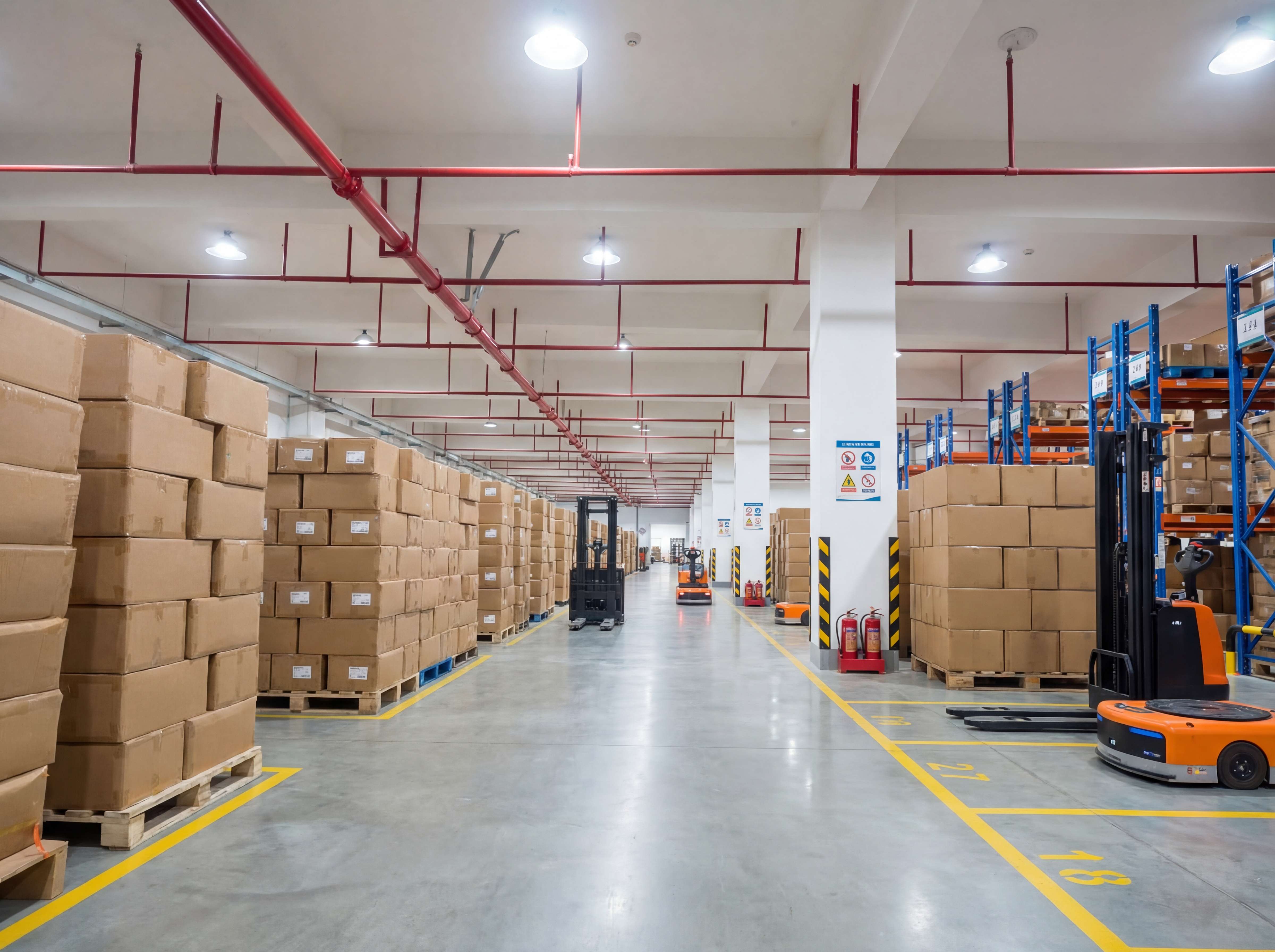
Home exemplifies the integrated model: a dedicated 150,000 sq. ft.
manufacturing facility, an ISO 9001:2015-certified quality management system,
and a cross-disciplinary team of industrial designers, mechanical engineers, and
sustainability specialists. Their approach begins with a collaborative discovery
phase, mapping user workflows, spatial constraints, and brand identity to
produce CAD/BIM deliverables that integrate with architectural plans.
Prototyping iterations use both additive manufacturing for rapid validation and
full-scale pre-production samples for field testing. This meticulous process has
delivered over 200 bespoke commercial furniture programs across North America,
Europe, and Asia-Pacific.
Moreover, Essent Home prioritizes supply chain transparency,
maintaining partnerships with tier-one steel mills and hardwood suppliers to
ensure material traceability and stable pricing—a critical factor for multi-year
contracts. For clients seeking an agile, vertically integrated office
desk ODM solution, this combination of design sovereignty and
manufacturing control reduces project risk while maximizing ROI.
5. Key Selection Criteria for Your Office Desk ODM Partner
Evaluating potential manufacturing partners requires more than a facility
tour. Use the following matrix to ensure alignment with your strategic
goals.
Design & Engineering Resources: Verify the number of
in-house engineers (mechanical, electrical, structural) and their proficiency
with SolidWorks, Revit, and parametric modeling. Request case studies of complex
custom projects.
Certification Portfolio: Beyond BIFMA, ask for GREENGUARD
Gold, level® 2, UL Verified, and specific flammability standards (CAL TB
117-2013, BS 5852).
Production Capacity & Scalability: Assess minimum order
quantities (MOQs) and the manufacturer’s ability to scale from pilot runs (50
units) to enterprise-wide rollouts (5,000+ units) within 8–10 weeks.
Global Logistics & Installation: Inquire about
white-glove delivery networks, installation supervision, and local service
support in target regions.
Intellectual Property Protection: A reputable ODM partner
will sign non-disclosure agreements (NDAs) and provide clear IP ownership
clauses, ensuring exclusive designs remain proprietary to the client.
6. Future-Proofing Workspaces: Trends Influencing Office Desk ODM
Innovation
As workplace dynamics continue to evolve, forward-thinking ODM manufacturers
are integrating advanced capabilities. Hybrid work models demand furniture that
supports both focused individual work and spontaneous collaboration. This
translates to modular desk systems with interchangeable surfaces, integrated
acoustic panels, and power/data connectivity that adapts to reconfiguration.
Biophilic design principles drive the use of real wood veneers, living wall
integrations, and circadian lighting synchronization. Furthermore, digital
manufacturing tools—such as AI-driven nesting software and just-in-time
inventory—allow ODM partners to offer greater customization with minimal waste,
aligning with corporate ESG commitments. Engaging with an office
desk ODM that invests in these capabilities ensures that furniture
assets remain relevant through multiple workplace iterations.
Frequently Asked Questions About Office Desk ODM
Q1: What is the typical lead time for a fully customized office desk
ODM project?
A1: Lead times vary based on complexity and volume. For
a mid-scale project (200–500 units) involving custom finishes, engineering, and
certification, standard lead time ranges from 12 to 18 weeks from design
approval to shipment. Larger programs may be phased. A seasoned office
desk ODM partner provides a detailed project timeline with clear
milestones, including first-article inspection and pilot run sign-off, to ensure
predictability.
Q2: Can an office desk ODM manufacturer accommodate international
safety and electrical standards?
A2: Yes, reputable ODM
manufacturers maintain compliance with multiple regulatory frameworks. For
instance, Essent Home’s engineering team designs power modules and desk
structures to meet UL 962 (US/Canada), CE (EU), CCC (China), and other regional
standards simultaneously. Pre-certification of components reduces duplication of
testing and accelerates market readiness.
Q3: What is the minimum order quantity (MOQ) for a dedicated office
desk ODM program?
A3: MOQs are project-dependent. While some
suppliers enforce rigid MOQs of 500+ units, flexible ODM partners can
accommodate smaller pilot runs (50–100 units) for proof of concept, with
scalable pricing for larger rollouts. Discuss volume tiers and exclusivity
arrangements early in the negotiation phase to align with budget and rollout
schedules.
Q4: How does intellectual property work when co-developing a desk
design with an ODM?
A4: A professional ODM agreement clearly
delineates IP ownership. Typically, any design, tooling, or proprietary
engineering developed under the client’s direction and funding belongs to the
client. The manufacturer may retain the right to use non-patented manufacturing
processes but cannot replicate the client’s exclusive design. Always have legal
review of the manufacturing agreement and secure non-disclosure terms.
Q5: What sustainability certifications should I require from an
office desk ODM supplier?
A5: To ensure environmental
responsibility, prioritize suppliers with FSC Chain-of-Custody certification,
GREENGUARD Gold for low emissions, and BIFMA level® 2 or 3 certification.
Additionally, ask for Environmental Product Declarations (EPDs) and Health
Product Declarations (HPDs) for key materials. A transparent ODM partner will
provide these documents as part of their standard specification package.
Selecting the right office desk ODM partner is a decisive factor in delivering high-performance, aesthetically
compelling, and operationally efficient workplaces. By focusing on technical
rigor, supply chain integrity, and collaborative innovation, organizations can
transform furniture procurement from a cost center into a strategic asset. For
decision-makers seeking a partner that combines European precision engineering
with scalable North American manufacturing, Essent Home provides the
architecture, expertise, and reliability required for projects of any scale.
Explore their comprehensive portfolio of custom solutions to begin your tailored
ODM journey.