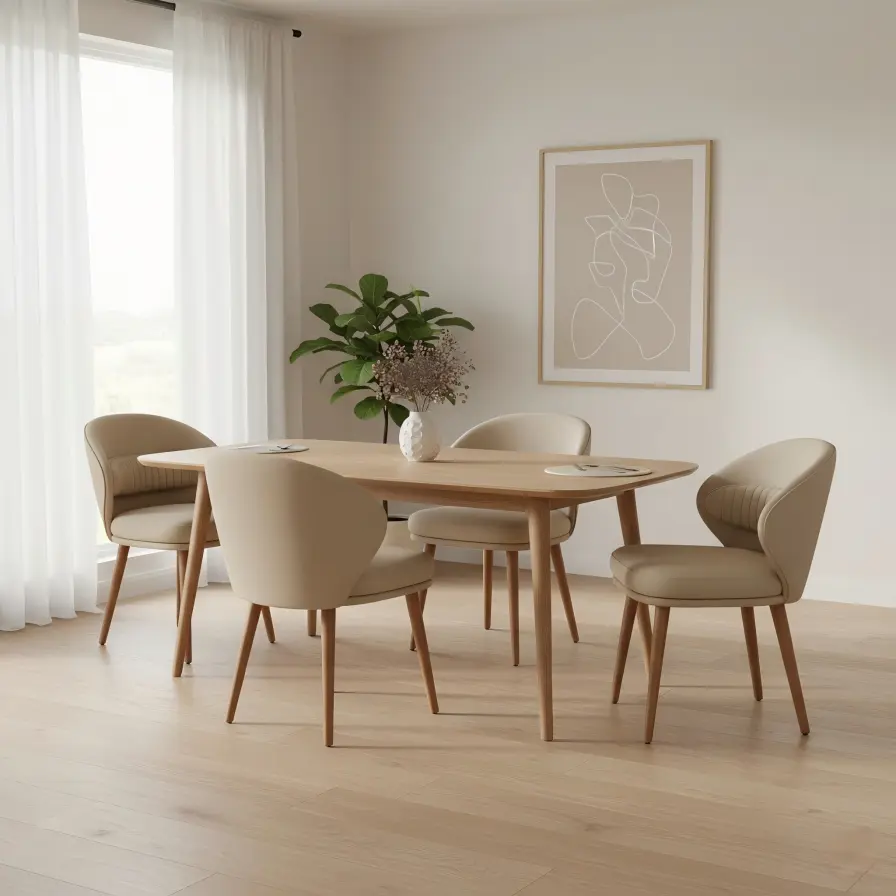
For furniture brands and retailers worldwide, scaling a collection often hinges on reliable, high-quality manufacturing. This is where the strategic partnership of dining chairs OEM becomes indispensable. OEM (Original Equipment Manufacturing) allows brands to bring their unique chair designs to life through specialized manufacturers, without investing in factory infrastructure. It’s a model that balances creative control with production efficiency. Companies like Essent Home have leveraged expert OEM partnerships to consistently deliver refined, market-ready dining ensembles to their discerning clientele.
The decision to work with an OEM partner is driven by core business advantages. It enables brands to focus on their strengths: design, marketing, and sales.
Focus on Design and Brand Identity
You control the aesthetics. From the initial sketch to the final prototype, you specify every detail—materials, dimensions, finishes, and upholstery. This ensures the final product aligns perfectly with your brand’s vision and quality expectations.
Scalability and Flexibility
OEM partners provide the capacity to scale production up or down based on market demand. This flexibility is crucial for managing inventory, launching new lines, or testing products in new regions without massive capital commitment.
Cost Efficiency and Expertise
Access to specialized machinery, skilled labor, and bulk material purchasing translates to significant cost savings. OEM manufacturers bring years of technical expertise in joinery, finishing, and assembly, reducing the risk of defects and ensuring structural integrity.
Selecting a manufacturer is the most critical step. The right partner becomes an extension of your brand.
Defining Your Requirements
Start with clear specifications. Prepare detailed tech packs including CAD drawings, material lists (e.g., solid oak, specific fabric grade, foam density), finish samples, and packaging requirements. The more precise you are, the more accurate the quotation and prototype will be.
Evaluating Manufacturer Capabilities
Look for a partner with proven experience in dining chair construction. Key areas to assess include their woodworking or metalworking prowess, finish quality, upholstery workshop, and quality control processes. Certifications for materials (like FSC wood) or finishes (like CARB compliance) are important for certain markets.
Communication and Project Management
Ensure they have a dedicated project management team that communicates proactively. Time zone compatibility, language fluency, and responsiveness are practical factors that can smooth the entire process, from sampling to bulk shipment.
The OEM Process: From Concept to Delivery
Understanding the workflow sets clear expectations for a successful collaboration.
Design Finalization and Quotation
After sharing your designs, a reputable OEM will provide a detailed quotation covering unit cost, mold/tooling charges (if applicable), sampling costs, and payment terms. This stage includes clarifying all technical details.
Prototyping and Sampling
A pre-production sample is created. This is your chance to evaluate the chair’s comfort, finish, and construction. Provide thorough feedback. Multiple sample rounds may be needed to perfect the design.
Production and Quality Assurance
Upon sample approval, bulk production begins. A robust OEM partner will conduct in-line inspections during production and a final random inspection before shipment. Many brands also hire third-party quality control for an additional layer of assurance.
Logistics and Shipping
The OEM typically prepares goods for export, handling packing, documentation, and loading. They can assist in arranging shipping, whether by sea or air, based on your incoterms agreement.
Cost Considerations for OEM Dining Chairs
Pricing is never a simple figure. It’s a reflection of multiple variables.
Key Factors Influencing Price
- Materials: Solid hardwood versus engineered wood, top-grain leather versus fabric, high-resilience foam.
- Design Complexity: Intricate carving, curved backs, unusual angles, or swivel mechanisms increase labor and tooling costs.
- Order Volume: Higher quantities typically reduce the unit cost due to optimized material use and production line efficiency.
- Finish & Upholstery: Hand-applied distressed finishes, multiple stain steps, or complex upholstery patterns add cost.
Beyond the Unit Price
Remember to factor in sampling fees, shipping, import duties, and insurance. A slightly higher unit cost from a manufacturer with superior quality control can save substantial money on returns and replacements later. Essent Home’s approach emphasizes this total value, prioritizing long-term partner reliability over the lowest initial bid.
A successful dining chairs OEM partnership is a cornerstone strategy for brands aiming to deliver high-quality, distinctive products in the competitive furniture market. It requires careful partner selection, clear communication, and a shared commitment to quality. By mastering this collaborative model, brands can transform their designs into tangible products that resonate with customers, much like the carefully curated collections offered by Essent Home.
Frequently Asked Questions (FAQ)
Q1: What is the main difference between OEM and ODM for dining chairs?
A1: In OEM, you provide the complete design and specifications, and the manufacturer builds the chair to your exact plans. In ODM (Original Design Manufacturing), you typically select from the manufacturer’s existing designs, which may be modified or private-labeled for you.
Q2: What is a typical minimum order quantity (MOQ) for custom OEM dining chairs?
A2: MOQs vary significantly by factory but commonly range from 200 to 500 pieces per model. Some workshops specializing in high-end, low-volume production may accept lower MOQs, but this affects the unit cost.
Q3: How long does the entire OEM process usually take?
A3: The timeline can span from 12 to 20 weeks. This includes sampling (3-6 weeks), production (6-10 weeks), and shipping (3-4 weeks by sea). Complex designs or material sourcing delays can extend this.
Q4: Who is responsible for ensuring the chairs comply with safety standards in my country?
A4: Ultimately, the brand is responsible. However, a professional OEM partner should be informed of your target market’s standards (e.g., BIFMA in the US, EN in Europe) and can often certify that the product is tested and compliant. Always request test reports.
Q5: Can I source my own fabrics or materials for the OEM manufacturer to use?
A5: Yes, this is often called “customer-supplied material” (CSM). However, you must coordinate delivery to their factory, and they will usually charge an additional handling or making-up fee. Ensure your materials meet their required specifications for workability.