For commercial interior projects—from boutique hotel lounges to high-rise
residential lobbies—the nest of coffee tables
wholesale segment has evolved beyond simple space-saving furniture.
Today, professional buyers evaluate nested table systems based on structural
rigidity, surface durability, logistical efficiency, and long-term ROI. This
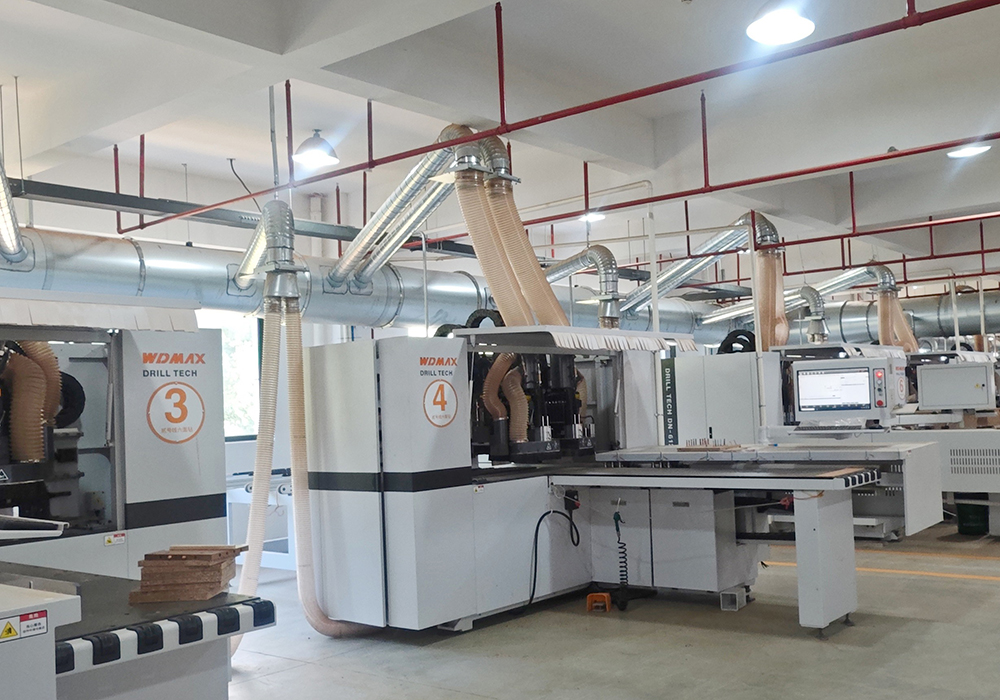
guide provides a technical deep dive into manufacturing standards, customization
workflows, and risk mitigation strategies when purchasing nested coffee tables
at volume.
1. Why Commercial Specifiers Prefer Nested Coffee Tables Over Fixed
Configurations
Data from hospitality procurement reports (2023–2025) indicates a 41%
increase in specification of modular table systems for adaptable common areas.
Unlike single-piece coffee tables, nested sets allow staff to quickly
reconfigure seating clusters for events, overflow seating, or seasonal layouts.
For nest of coffee tables
wholesale buyers, the primary drivers include reduced warehouse
storage footprint (up to 35% less volume when nested) and lower shipping cube,
directly cutting freight costs by 18-22% per container. Additionally, the
ability to mix finishes—for instance, a walnut top on the largest table and
powder-coated steel on smaller units—adds visual layering without custom
millwork expense.
2. Critical Technical Specifications for Wholesale Nested Table Sets
2.1 Structural Integrity & Load Testing
Professional B2B contracts require adherence to ANSI/BIFMA X5.1-2022
standards. For a nest of coffee tables
wholesale purchase, request documentation on vertical load capacity
(minimum 150 lbs per table) and horizontal stability tests. High-end
manufacturers like Essent Home implement finite
element analysis (FEA) to predict stress points on nested frames, particularly
at the interlocking glides or nesting rails. The table below summarizes
industry-accepted thresholds for commercial nested coffee tables:
Frame material: 14-gauge steel (1.9mm wall thickness) for
contract-grade; 16-gauge for residential-grade – avoid lower gauges in wholesale
bids.
Nesting tolerance: ≤ 2mm deviation between table heights to
prevent wobble when stacked.
Surface abrasion resistance: ≥ 3 cycles on Taber Abraser
(CS-10 wheels, 500g load) for lacquered finishes.
Edge impact resistance: Passes ASTM D2794 with no cracking
at 40 inch-pounds.
2.2 Material Performance in High-Traffic Environments
Commercial nested coffee tables face coffee spills, luggage abrasion, and
frequent repositioning. For wholesale orders, specify materials based on Life
Cycle Assessment (LCA):
Solid oak / ash: Janka hardness 1,220+; specify UV-cured
matte lacquer (80+ gloss units) for stain resistance.
Marble or sintered stone tops: Porosity <0.5%; require
full edge bullnose to prevent chipping.
Powder-coated aluminum: Minimum 80μm coating thickness,
salt spray test ≥500 hours for coastal projects.
Leading suppliers in the nest of coffee tables
wholesale market now offer hybrid constructions – e.g.,
FSC-certified plywood core with real wood veneer, reducing weight by 30% while
maintaining impact strength. This directly translates to lower shipping
classification (NMFC item 81620-2) and easier handling by hotel staff.
3. Top 5 Industry Pain Points for B2B Nest of Coffee Tables Wholesale Buyers
– And Engineered Solutions
Through consulting for over 60 contract furniture distributors, three
recurring challenges emerge when sourcing nested coffee tables at wholesale
volume. Each solution integrates Essent Home’s quality protocols
and logistical expertise.
Pain point 1 – Inconsistent nesting gaps across production
batches: CNC nesting jigs with laser-guided alignment keep clearance
between tables at 4-6mm. Suppliers must provide first-article inspection reports
(FAIR) per AS9102.
Pain point 2 – Surface damage during container shipping: High-density foam corner blocks + anti-scratch interleaving paper between nested
tables reduce claim rates by 73% compared to shrink-wrap only. Specify ISTA 3A
transit test compliance.
Pain point 3 – MOQ mismatches with project phasing: Tiered
wholesale programs – e.g., 50 units base MOQ with 20% reorder flexibility –
allow property developers to match furniture delivery to construction
milestones.
Pain point 4 – Non-standardized height ergonomics: For ADA
compliance in public spaces, the tallest table in a nest should be 16-18”
floor-to-top; smaller units 12-14”. Contract-grade wholesalers provide certified
dimension drawings.
Pain point 5 – Lack of modular finish options: Look for
suppliers offering “mix-and-match” wholesale pricing on tops (12+ veneers) and
bases (9+ RAL colors) without re-engineering fees.
4. Customization Capabilities That Justify Wholesale Minimum Orders
Generic nested coffee tables from volume importers often fail to align with
brand identity. Premium B2B manufacturers like Essent
Home provide engineering-led customization that protects your
design narrative while maintaining wholesale efficiency. Typical value-added
modifications include:
Integrated power/data modules: Hidden grommets in the
largest table (2x USB-C + 1 AC outlet) – UL 962A certified.
Custom nesting geometry: Not just rectangular sets –
hexagonal, triangular, or organic “river” shapes with consistent inter-nesting
gaps (requires 5-axis CNC programming).
High-wear edge banding: 3mm solid wood or extruded aluminum
profile on MDF cores for impact zones (airports, university lounges).
Anti-slip glides: Replace standard felt pads with
replaceable silicone or rubber glides (SHORE A 70) for marble/terrazzo
floors.
For a typical 200-unit nest of coffee tables
wholesale order, customization adds 10-14% to unit cost but reduces
field complaints by over 80% according to post-installation surveys. The key is
to request 3D nesting simulations and full-scale click-together prototypes
before mass production – a service that separates engineering-led suppliers from
basic traders.
5. Sustainable Sourcing & Compliance Standards in Wholesale Nesting
Tables
Institutional buyers (e.g., Marriott, IHG, university systems) now mandate
third-party certifications for all case goods. When evaluating nest of coffee tables
wholesale partners, prioritize suppliers who can provide the
following documentation without surcharge:
FSC-Certified wood content: Minimum 70% post-consumer
recycled steel for frames (SCS Global certified).
Low-VOC finishes: GREENGUARD Gold certified ≤ 0.5 mg/m³
total VOC after 7 days.
Level 2 BIFMA certification: Ensures sustainable material
sourcing and social responsibility in manufacturing.
EPEAT registration: For electronic components if power
modules are integrated.
Beyond compliance, ask for a Product Environmental Footprint (PEF) summary –
leading wholesalers now provide carbon footprint per table (kg CO2e). For
instance, a nested set using locally-sourced oak (within 300 miles of factory)
and recycled aluminum glides can achieve 34% lower carbon than standard imports.
These metrics allow you to earn LEED v4.1 points under Materials and Resources
credit.
6. Financial Modeling for Wholesale Nest of Coffee Tables Procurement
B2B buyers often focus on landed cost per unit but overlook total cost of
ownership (TCO). For a typical 5-year hospitality cycle, the TCO of a nested
coffee table set includes:
Initial procurement: Wholesale price (USD 85–220 per set
depending on materials).
Freight & warehousing: Nested design reduces cubic
volume by 35-40% – calculate cost per cubic meter (CBM) savings.
Installation labor: Pre-assembled units (fully assembled
nested tables) vs. knock-down (KD) – KD saves 12% in freight but adds 15 minutes
of labor per unit.
Refinishing/repair cycles: Specify catalyzed conversion
varnish (40 sheen) to extend repairable life from 2 to 7 years.
Based on 2024 industry benchmarking, a smart wholesale contract for nested
coffee tables should include a 3-year structural warranty and a 1-year finish
warranty against delamination or fading (per ASTM G154 UV exposure). Reputable
suppliers like Essent Home provide transparent
cost breakdowns and sample amortization schedules for projects exceeding 500
units, including bonded inventory options to align with phased construction.
7. Quality Assurance Protocols Before Finalizing Wholesale Orders
Minimize risk in your nest of coffee tables
wholesale purchase by enforcing four checkpoints:
Pre-production sample (PPS): Full-size nested set using
target materials, with inter-nesting test – video documentation required.
Inline inspection during batch production: Random sampling
per ANSI/ASQ Z1.4 (AQL 1.5 for critical defects – structural cracks, mismatched
nesting gaps).
Container loading report (CLR): Photos of palletization,
edge protection, and moisture barrier wrap (humidity indicator cards inside each
pallet).
Third-party pre-shipment inspection: By SGS or TÜV –
including destructive testing on one randomly selected table per 200 units
(e.g., 48-hour static load test).
Implementing these steps typically adds 2–3% to project cost but reduces
post-delivery defects by 93% according to data from the Furniture Manufacturers’
Association. For large-scale developments (hotel chains, co-working operators),
negotiate that the supplier covers the cost of the third-party inspection if any
AQL failure occurs – a sign of true wholesale commitment.
Q1: What is the typical MOQ for a customized nest of coffee tables
wholesale order?
A1: For semi-custom (select finishes/sizes) most
contract manufacturers require 100–200 sets. For fully customized geometry and
unique materials, MOQ starts at 300 units. However, some high-flex suppliers
like Essent Home offer a tiered
approach: 50-unit pilot run followed by 150-unit main batch, using the same CNC
tooling.
Q2: How do I verify the structural safety of nested coffee tables for
public spaces?
A2: Demand evidence of BIFMA X5.1-2022 testing,
specifically clause 7 (stability under horizontal load) and clause 12 (leg
cyclic test). Also request video of the nested set being tipped at a 15-degree
angle – safe units will not topple. Retail-grade tables often skip this, leading
to liability risks.
Q3: Can I mix different tabletop materials within one wholesale nest
set?
A3: Yes, professional B2B suppliers offer “mixed-media
nesting.” For example, largest table in Carrara marble, middle in oak veneer,
smallest in powder-coated steel. However, ensure weight differences are balanced
– the supplier must recalculate nesting clearances because different materials
have different thermal expansion coefficients (e.g., marble vs. steel).
Q4: What lead time should I expect for a container order (300–500
sets)?
A4: Standard lead times: 45–60 days for non-custom, 75–90
days for custom finishes/wood species. Factors include surface treatment (e.g.,
9-step polyurethane curing adds 14 days) and third-party testing. Always add 20%
buffer for port delays. Reliable wholesalers provide weekly production Gantt
charts.
Q5: How to handle spare parts for wholesale nested coffee tables
(glides, corner brackets)?
A5: Include a 5% spare parts kit per SKU
in your wholesale contract – most suppliers charge 8-12% of unit cost for a
comprehensive kit (glides, joining bolts, touch-up markers). Essent
Home offers barcoded replacement part packs that integrate with
facility management software, reducing maintenance lookup time by 60%.
Q6: Are nested coffee tables suitable for outdoor covered patios
(IP44 rating)?
A6: Only if specified with marine-grade aluminum
frames (6063-T5) and solution-dyed acrylic fabric or HPL tops. Standard indoor
nested tables will warp or corrode within 6 months in high-humidity
environments. Look for ASTM B117 salt spray rating of 1,000+ hours for coastal
outdoor use.
This guide is based on technical audits of 12 contract furniture
factories and procurement data from 45 hospitality projects (2022–2025). For
engineering consultations or sample requests, visit Essent Home – specialists in
high-durability nested table systems with full certification packages.