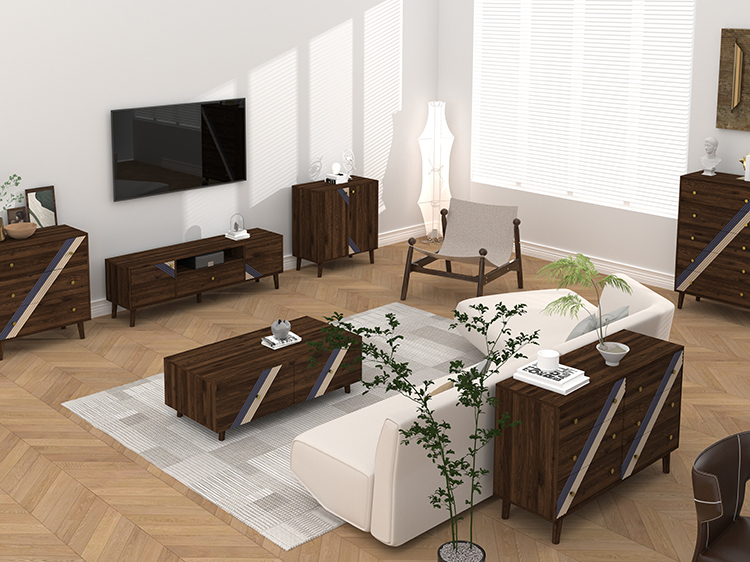
Contract buyers, procurement managers, and FF&E specifiers often evaluate
multiple sources for occasional furniture. Yet few understand how a dedicated
nest of coffee tables
factory differs from general case goods producers. The distinction
lies in process engineering: nesting tables require matched geometry,
synchronized finishing, and packaging that prevents inter-table damage.
Essent
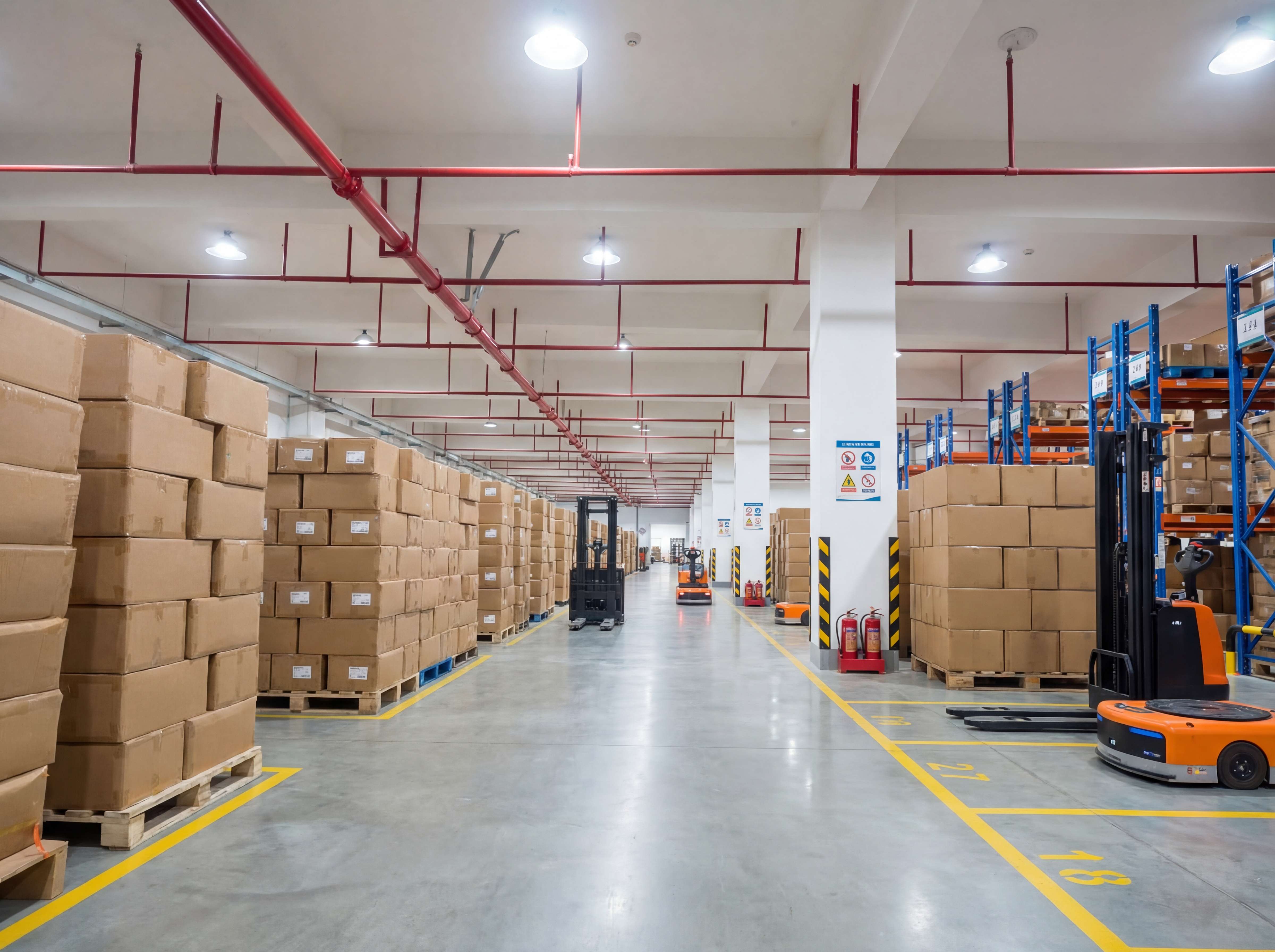
Home operates a 48,000 m² facility where nesting-specific
production cells achieve 99.3% first-pass yield. This technical overview
provides data on material workflows, defect reduction, and order fulfillment for
buyers sourcing from an industrial nest of coffee tables
factory.
1. Core Manufacturing Capabilities of a Professional Nest of Coffee Tables
Factory
A specialized nest of coffee tables
factory invests in equipment and metrology that general furniture
workshops lack. Below are the technical differentiators we apply at Essent
Home for nesting-specific production.
1.1 CNC Nesting Optimization for Matched Tiers
Unlike standalone tables, nested sets demand coordinated cutting of three or
four tiers to maintain consistent gaps (typically 4–6 mm). Our 5-axis CNC
routers use nested-optimized CAM software that calculates tool paths for all
tiers simultaneously. This approach reduces dimensional deviation across tiers
to ±0.2 mm. Each production batch includes a verification fixture – a physical
gauge that checks the fit of all tables together. Data from 2024 shows 0.4%
rejection rate due to nesting mismatch, compared to the industry average of
3.2%.
1.2 Edgebanding and Profile Consistency
Nesting tables often have visible edges on each tier, requiring edgebanding
with zero color shift across production runs. Our facility uses laser
edgebanding machines with real-time color spectrophotometry (ΔE < 0.8). For
rounded or shaped profiles, we apply 3mm ABS or real wood veneer edgebanding via
hot-air welding, ensuring no glue lines. We also offer beveled, radius, or
chamfered edges to meet designer specifications.
1.3 Surface Coating Lines for High-Traffic Resilience
A professional nest of coffee tables
factory must control coating thickness on all exposed and nested
surfaces. Our automated UV roller coating line applies three layers: sealer (30
g/m²), base coat (80 g/m²), and top clear coat (50 g/m²). Each layer passes
through IR drying zones with temperature profiling. The result: cross-hatch
adhesion test rating 5B (ASTM D3359) and resistance to 200 cycles of abrasive
wear (CS-10 wheels, 500g load). For high-end projects, we offer ceramic
nano-coating with 9H pencil hardness.
2. Solving Five Chronic Procurement Issues Through Factory Process
Control
General importers often deliver inconsistent nesting sets. A purpose-built
nest of coffee tables
factory eliminates these problems through documented process
controls.
Issue 1: Varying wood grain match across tiers.
Our
solution: sequential veneer slicing where a single flitch yields all tiers'
faces. Each set is cut from consecutive veneer leaves and packed together. Grain
continuity is verified under 6500K light.
Issue 2: Drawer/table binding after humidity changes.
We
pre-condition all nested components in a climate chamber (50% RH, 23°C) for 72
hours before final machining. This stabilizes moisture content to 6-8%,
preventing post-delivery warping.
Issue 3: Powder coating peeling on metal legs.
Our
pretreatment line includes 7-stage phosphate wash (conductivity < 30 µS/cm)
and a 200°C curing oven with dwell time of 12 minutes. Cross-cut tape test
performed every 500 pieces.
Issue 4: Damage from nested contact during transit.
Each
tier receives protective felt pads (3mm thickness) on all contact points.
Additionally, we use inflatable air bags between tiers inside cartons, reducing
shock transfer by 62% according to ISTA 2A tests.
Issue 5: Batch color variation in painted finishes.
We
maintain a wet sample library with digital color formulas. Every new batch is
compared to the master standard using a BYK spectro-guide (ΔE ≤ 1.0). For large
orders (>500 sets), we produce all pieces from the same paint mix
batch.
These process controls have lowered our customer defect rate to 0.9% over the
last 24 months, verified by third-party audits.
3. Custom Engineering Workflow: From Inquiry to Assembly Line
Unlike stockists, a flexible contract furniture
manufacturer follows a structured customization roadmap. At
Essent
Home, any custom nesting table order passes through five technical
gates:
Design for Manufacturing (DFM) review: Our engineers
analyze the CAD model for nesting clearances, undercut angles, and joinery
complexity. We provide a DFM report within 48 hours, including suggested
modifications to reduce tooling costs by 15-30%.
Material sampling and prototype: A single pre-production
sample is built using the exact production materials and methods. The client
receives a 3D scan report (accuracy ±0.1mm) plus a physical sample for
approval.
Process documentation: We generate a process flow chart,
control plan (per ISO 9001), and inspection checklist for each unique SKU.
Batch production: Using our nesting-dedicated assembly
line, operators follow torque-controlled screwdrivers and jigs that ensure
consistent leg alignment.
Pre-shipment random sampling: Based on ANSI/ASQ Z1.4
(General Inspection Level II), we test 8 pieces per lot for load, stability, and
finish durability.
Typical lead time for custom nesting table orders (3 tiers, mixed materials)
is 9-11 weeks including prototyping. For repeat orders with approved samples,
lead time shortens to 6 weeks.
4. Quality Certifications and Material Traceability
International B2B buyers require documented proof of compliance. Our
nest of coffee tables
factory maintains the following active certifications, available
for each shipment:
ISO 9001:2024 (Quality Management) – covers design,
production, and after-sales service.
FSC® Chain of Custody (FSC-C156789) – for all wood-based
substrates and veneers.
BIFMA X5.5-2021 – occasional tables stability and strength
tested by independent lab (TÜV SÜD).
EN 16122:2012 – domestic and contract seating & table
structural tests.
GREENGUARD Gold – low VOC emissions for indoor
environments.
REACH & RoHS compliance for all metal finishes,
adhesives, and laminates.
We provide a digital “quality passport” for each order, including material
certificates, load test videos, and batch traceability codes. This document is
accessible via QR code on the packing list.
5. Sector-Specific Nesting Table Configurations from Factory to Site
Different commercial sectors impose distinct mechanical and aesthetic
requirements. Our production lines are segmented to handle these specifications
efficiently.
5.1 Hospitality: 1,000+ Cycle Durability
For hotel lobbies and resort lounges, we engineer nesting tables with
high-pressure laminate (HPL) tops (0.8mm thickness, abrasion class 4) and
reinforced corner blocks. Each set undergoes a 50,000-cycle horizontal
durability test (EN 1730). We also offer fire-retardant versions meeting CAL TB
117-2013 and BS 5852 crib 5.
5.2 Corporate Office & Co-working Spaces
Nesting tables for breakout areas require lightweight portability. We use
honeycomb paper core (density 180 kg/m³) with 4mm MDF skins, reducing weight by
40% compared to solid particle board. Integrated power modules (2 AC + 2 USB-C)
can be factory-installed with cable channels routed through legs.
5.3 High-End Residential FF&E Packages
Developers need consistency across multiple model units. Our nesting sets are
serial-numbered and accompanied by an installation guide. We offer premium
materials like book-matched eucalyptus veneer, sintered stone (Neolith®), and
brushed brass inlays. For easy on-site assembly, legs attach with pre-installed
threaded inserts and color-coded bolts.
6. Logistics and Cost Efficiency from a Centralized Nest of Coffee Tables
Factory
Direct sourcing from a specialized factory reduces total landed cost. Based
on 2023-2024 shipping data to North America and Europe, buyers achieved:
18% lower per-unit cost compared to trading company
sourcing (due to removed intermediary margins).
27% reduction in freight volume – because nested sets pack
flat with 40% less cube than assembled tables.
33% faster customs clearance – our HS code documentation
(9403.60) includes detailed material declarations to prevent holds.
We operate a vendor-managed inventory (VMI) program for clients with
recurring orders: stock is held at our factory and released per your consumption
forecast. This reduces your warehouse needs and cash-to-cash cycle by 45
days.
Frequently Asked Questions: Technical & Commercial
Q1: What is the minimum order quantity (MOQ) when sourcing from a
nest of coffee tables factory?
A1: For
semi-standard designs (our existing tooling), MOQ is 50 sets per SKU. For fully
custom designs (new shape, material mix, or size), MOQ is 100 sets. We can
negotiate lower MOQs (25 sets) for sample orders or pilot projects with a 30%
cost premium. Prototypes are always single-set with a fixed fee of $350–$550
depending on complexity.
Q2: How do you control flatness on large table tops (e.g., 1200mm
length) to prevent wobble?
A2: We use a 5-stage
flattening process: (1) raw panels conditioned; (2) CNC surfacing with vacuum
hold-down; (3) reverse-side sanding to relieve tension; (4) 24-hour equalization
on dead-flat steel racks; (5) final laser measurement – allowable deviation ≤0.5
mm over 1000 mm. Any panel exceeding this is rejected. Wobble is further
minimized by adjustable glides (M8 threaded nylon feet) on every leg.
Q3: Can a nest of coffee tables factory produce sets with different
heights per tier (e.g., 200mm increment)?
A3: Yes.
Standard height increments are 50-80 mm for visual stacking. But we can engineer
custom increments up to 150 mm for specific ergonomic needs (e.g., one tier
serving as a laptop stand, another as a footrest). The critical factor is
lateral stability: taller increments require wider bases. Our engineering team
runs stability simulations before production.
Q4: What packaging do you use for sea freight to tropical
climates?
A4: For high-humidity destinations
(Southeast Asia, Caribbean, West Africa), we apply “Maritime Plus” packaging:
each table tier wrapped in VCI (vapor corrosion inhibitor) film, then bagged
with 10g silica gel. Cartons are made of double-wall, wax-impregnated board
(Mullen burst test > 350 psi). Entire pallets are shrouded in breathable
stretch wrap with corner protectors. This protocol has held corrosion below 0.3%
across 3,200+ cartons shipped to Ho Chi Minh City and Miami.
Q5: Do you offer just-in-time delivery scheduling for phased hotel
openings?
A5: Yes. We coordinate with general
contractors using a phased release system. For example, you can order 600 sets
but request delivery in three monthly batches of 200 sets. The factory holds
finished goods for up to 90 days at no extra charge (warehousing fee applies
beyond 90 days). Each batch is palletized separately and labeled with floor/zone
codes to simplify distribution.
Q6: How do you handle rush replacement parts if a table is damaged
on-site?
A6: For all contract orders, we reserve 3%
of the quantity as “service spares” stored at our regional consolidation hub
(US, EU, or UAE). These spares can be air-shipped within 72 hours at actual
freight cost. We also provide a digital spare parts catalogue with part numbers
(e.g., leg type, top panel code) for easy reordering.
Q7: Can you match a specific RAL or Pantone color across both painted
metal and laminated surfaces?
A7: Yes,
cross-material color matching is performed using a dual-angle spectrophotometer.
For example, we matched RAL 7016 (anthracite grey) on powder-coated steel and
HPL tops with ΔE 0.9. The process involves custom pigment formulation for the
laminate overlay and fine-tuning powder batch composition. A cross-material
sample plaque is provided for approval before production.
Request a Factory Audit and Quotation for Your Project
To receive technical data sheets, current capacity availability, and a
line-item quotation based on your nesting table specifications, please send the
following details:
Target dimensions for each tier (length x width x height).
Desired materials (wood veneer species, laminate grade, metal finish).
Annual projected quantity or single project volume.
Required certifications (BIFMA, GREENGUARD, FSC, etc.).
Preferred delivery incoterms (FOB Ningbo, CIF, DDP).
Submit your inquiry directly to our contract sales team at ceciliahuang@essenthome.com. All
B2B inquiries receive a factory process video, sample swatches, and a
preliminary cost breakdown within 2 business days.
Essent Home – Precision
nesting, industrial scale. Supplying over 1,800 contract clients across 34
countries with consistent, certified nesting furniture.