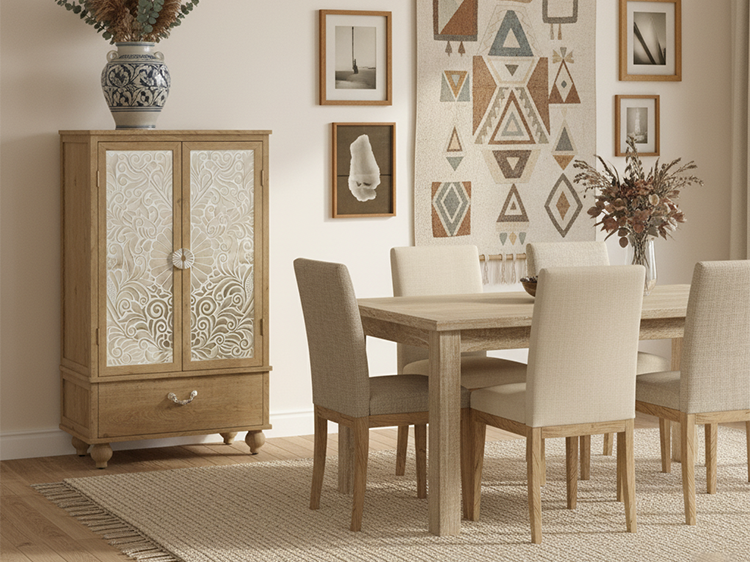
In the high-end residential, commercial, and hospitality sectors, sourcing
furniture that balances architectural vision with structural durability presents
a continuous challenge. Procurement managers, interior design firms, and global
distributors constantly seek manufacturing partners capable of translating
creative concepts into stable, scalable products. One of the most effective
methods to address these challenges is partnering with specialized manufacturers
for dining
tables odm services.
Choosing an Original Design Manufacturer (ODM) allows B2B buyers to leverage
existing engineering frameworks, verified material supply chains, and advanced
production machinery. This process mitigates the risks associated with custom
product development from scratch, while allowing for significant aesthetic
customization to meet specific brand standards or project
requirements.
The Structural Challenges in High-End Dining Table Manufacturing
Large-format dining tables, particularly those exceeding 2.4 meters in
length, face considerable physical stresses. Designing these pieces requires
deep knowledge of material science, structural engineering, and joinery. B2B
buyers often encounter several systemic product issues when sourcing from
manufacturers without dedicated design engineering capabilities:
1. Wood Movement and Climatic Warping
Solid wood is a hygroscopic material that continuously absorbs and releases
moisture in response to relative humidity. In dry environments, wood contracts;
in humid conditions, it expands. Without precise engineering, this natural
movement leads to cupping, twisting, or splitting along the grain. Professional
manufacturers control this by kiln-drying lumber to a strict moisture content of
8% to 12% before processing, depending on the target export market.
2. Sagging and Structural Deflection
Long table tops, especially those made from heavy materials like marble,
sintered stone, or thick solid hardwood, are prone to deflection (sagging) over
time. If the underframe or apron is not designed with appropriate load-bearing
support, the center of the table will bow under its own weight. This risk is
amplified when minimal base designs, such as pedestal or thin trestle bases, are
selected for modern aesthetic layouts.
3. Sub-Top Integration for Stone and Ceramic Slabs
Sintered stone and natural marble offer premium, durable surfaces but lack
structural flexibility. If mounted directly to a metal or wooden base without a
cushioning and stabilizing substrate, these materials are vulnerable to cracking
from impact or uneven surface pressure. Integrating high-density fiberboard
(HDF) or marine-grade plywood sub-tops is a mandatory practice in high-quality
manufacturing to absorb shock and distribute weight
evenly.
Strategic Sourcing via Dining Tables ODM Partnerships
The decision to utilize dining tables
odm services rather than proceeding with standard OEM (Original
Equipment Manufacturer) production is highly practical. While OEM requires the
buyer to provide fully developed, production-ready blueprints, an ODM partner
offers pre-engineered structural chassis, joint designs, and extension
mechanisms that have already undergone rigorous load and fatigue testing.
By selecting a pre-engineered design platform, B2B buyers can focus on
surface customization, such as:
Selecting specific timber species (e.g., American Black Walnut, European
White Oak, or rustic Ash).
Choosing premium surface finishes, including water-resistant polyurethane
coatings, natural oils, or specialized matte lacquers.
Specifying metal accents, including stainless steel (Grade 304) with
Physical Vapor Deposition (PVD) titanium plating or powder-coated aluminum.
Customizing dimensions and edge profiles (e.g., bullnose, chamfered, or
organic live-edge) to suit specific market preferences.
At Essent Home,
we observe that this collaborative model shortens the product development cycle
by up to 50%, allowing distributors and contract buyers to respond to market
trends and project timelines with greater agility.
Material Selection and Engineering Best Practices
High-end furniture must perform reliably under daily use in demanding
environments like hotels, corporate boardrooms, and premium residential spaces.
Understanding the technical specifications of materials is vital during the
sourcing phase.
Hardwood Sourcing and Seasoning
The selection of premium timber is the foundation of structural integrity.
Hardwoods such as walnut and oak are favored for their density, grain patterns,
and structural stability. Advanced ODM facilities utilize vacuum kilns to ensure
uniform moisture levels throughout the timber core, preventing internal stresses
that cause latent cracking post-assembly.
Metal Frame Precision and Finishing
For modern designs featuring metal bases, precision welding and structural
rigidity are paramount. Seamless welding prevents visible joint lines, while
heavy-duty mounting plates ensure a rigid connection between the table top and
base. To prevent corrosion and scratches, metal elements are treated with
premium finishes such as:
Electroplating (PVD Coating): Depositing thin metallic
films in a vacuum chamber, providing superior wear and chemical resistance
compared to traditional wet painting.
Powder Coating: Applying electrostatically charged polymer
powder and curing it under heat to create a tough, resilient finish suitable for
contract environments.
Sintered Stone Integration
Sintered stone has gained immense popularity due to its non-porous surface,
scratch resistance, and heat tolerance. When manufacturing dining tables
odm collections with sintered stone, the material is typically
backed by a structural support layer and bonded using industrial-grade
polyurethane adhesives. This ensures the table top remains flat, rigid, and
resistant to accidental impact.
Engineering Robust Joinery and Extension Mechanisms
The structural longevity of a dining table is determined by its internal
connections. Traditional joinery, combined with modern CNC-milled hardware,
yields the highest level of stability.
For solid wood tables, mortise-and-tenon joints remain the industry standard
for securing aprons to table legs. When KD (Knocked-Down) shipping is required
to minimize container space and shipping costs, heavy-duty steel corner brackets
with dual-bolt leg attachments are utilized. These brackets ensure that the
leg-to-apron connection remains rigid even after years of use and multiple
reassemblies.
| Mechanism Type | Structural Components | Best Application Scenario | Key Engineering Focus |
|---|
| Butterfly Extension | Aluminum folding hinges, central glide tracks | Residential spaces requiring variable seating | Precision alignment of the leaf joint to prevent uneven surfaces |
| Synchronous Extension | Steel cable pulley system, ball-bearing slides | High-end dining rooms, modern linear tables | Smooth, low-friction operation with minimal physical effort |
| Drop-Leaf System | Heavy-duty spring-loaded support brackets | Compact apartments, multi-functional spaces | High load-bearing capacity for the extended leaf
sections |
For extendable designs, the engineering of the slide mechanism is key.
Low-quality slide tracks warp under the weight of extended leaves, causing the
table center to sag and the extension panels to misalign. High-end dining tables
odm solutions feature tempered steel or heavy-gauge extruded
aluminum slides equipped with high-performance ball bearings for smooth,
lifetime operation.
How Essent Home Streamlines the Sourcing Process
Managing the complexity of furniture manufacturing requires a partner with
deep engineering expertise, a reliable supply chain, and rigorous quality
control protocols. Experienced manufacturing partners like Essent Home simplify this
process by managing every stage of production, from material selection to final
quality verification.
Our customized solutions for dining tables
odm address typical B2B pain points, such as structural warping,
material mismatch, and logistics damage. By utilizing CNC manufacturing systems,
controlled kiln-drying chambers, and standardized assembly protocols, we ensure
that every batch of tables meets the exact specifications required by premium
global brands and contract interior designers.
Quality Assurance, Structural Testing, and Global Compliance
A major risk in international furniture sourcing is product failure during
transit or immediately upon installation. Implementing strict quality control
protocols at the factory level is the only way to prevent costly claims and
returns.
A professional manufacturer subjects dining table designs to several key
physical tests:
Static Load Testing: Applying vertical force (often
exceeding 100 kg to 150 kg) to the center and outer edges of the table top to
verify structural capacity.
Horizontal Fatigue Testing: Subjecting the table base to
repeated lateral forces to simulate the natural pushing and pulling that occurs
during use. This verifies the integrity of the leg-to-apron joints.
Finish Durability Testing: Testing surface coatings for
resistance to heat, moisture, household chemicals, and mechanical
scratching.
Packaging Drop Testing: Utilizing ISTA (International Safe
Transit Association) standards, such as the ISTA 3A protocol, to ensure packaged
tables survive the drops, vibrations, and impacts associated with international
sea freight and local last-mile delivery.
Compliance with local regulations is equally important. Premium manufacturers
ensure that all wood materials are sourced in compliance with the FSC (Forest
Stewardship Council) to guarantee sustainable forestry practices. Furthermore,
all manufactured boards, adhesives, and surface finishes must comply with local
chemical emission limits, such as CARB Phase 2 and EPA TSCA Title VI in North
America, and REACH regulations in the European Union.
Conclusion
Sourcing premium dining tables for high-end residential projects or
commercial developments requires balancing design aesthetics with structural
engineering. By utilizing the expertise of an experienced ODM partner, B2B
procurement managers can reduce lead times, minimize development risks, and
ensure that every piece is built to withstand years of use in demanding
environments.
By partnering with Essent
Home, you gain access to a reliable, design-forward manufacturing
infrastructure that transforms concept sketches into durable, market-ready
furniture solutions. Our focus on raw material quality, precise engineering, and
strict compliance ensures your brand delivers exceptional products to your
clientele.
If you are looking to source high-end, engineered dining collections for your
upcoming project or catalog, please contact our team today to discuss your
project requirements, material specifications, and production
timelines.
Frequently Asked Questions
Q1: What is the typical lead time for custom dining tables odm
projects?
A1: Lead times depend on material availability and design
complexity. Generally, the initial engineering design phase takes 1 to 2 weeks.
Once the specifications are finalized, sample production requires approximately
3 to 4 weeks. Bulk production is typically completed within 45 to 60 days
following sample approval and raw material acquisition.
Q2: How do you ensure the stability of tables with heavy sintered
stone tops?
A2: To ensure complete stability, we integrate a structural
sub-top, typically made of high-density MDF or marine-grade plywood, directly
beneath the sintered stone. This sub-top is securely bonded to the stone with
industrial-grade adhesives and bolted to the underlying metal or wooden support
structure, distributing weight evenly and preventing pressure points.
Q3: Can we supply our own custom hardware or metal accents for
production?
A3: Yes. We accommodate client-specified hardware,
mechanisms, or specialized metal accents. Alternatively, our engineering team
can source and test custom hardware from our approved network of high-quality
component suppliers to ensure it meets our structural and durability standards
before assembly.
Q4: How do you package large dining tables to prevent damage during
sea transit?
A4: We utilize heavy-duty export packaging designed to
survive rough handling. Sintered stone and marble tops are packed within rigid,
custom-built wooden crates with thick polyethylene foam padding. Table bases,
legs, and wooden parts are individually wrapped in protective foam and housed in
multi-layered corrugated cardboard boxes. All packaging designs are subjected to
simulated drop and vibration testing prior to shipping.
Q5: What measures are taken to prevent solid wood table tops from
warping in dry climates?
A5: We carefully kiln-dry all lumber to a specific moisture
content range (8% to 12%) optimized for the destination market. Additionally, we
mill expansion channels or install metal tension rods on the underside of wide
wooden tops. These structural features allow the wood to expand and contract
naturally with changing humidity levels without warping, cracking, or
bowing.