In the high-end interior design and hospitality procurement sectors, the
dining table serves as a central structural and aesthetic element. Whether
specifying furniture for luxury residential developments, boutique hotels, or
upscale commercial spaces, procurement managers must secure products that
balance visual refinement with structural longevity. Sourcing these large-scale
pieces requires a direct partnership with a specialized dining room table
wholesaler capable of delivering consistent material quality and
engineering precision.
Standard retail suppliers rarely possess the manufacturing infrastructure to
support custom modifications, strict moisture control protocols, or bulk
logistics. For contract designers, understanding the manufacturing standards of
a potential supply partner is the most reliable way to mitigate risk, protect
project timelines, and guarantee structural integrity over decades of use.
The Engineering Behind Luxury Wooden Dining Tables
Premium wooden dining tables are not merely assembled; they are engineered.
Wood is an anisotropic material, meaning its physical properties differ along
different axes, and it continuously reacts to environmental changes in relative
humidity and temperature. A knowledgeable manufacturing partner manages these
natural behaviors through meticulous material preparation and joinery
design.
Kiln Drying and Moisture Content Standardization
The foundation of any high-quality solid wood table is correct timber
seasoning. Raw lumber must undergo a controlled kiln-drying process to stabilize
its moisture content. For furniture destined for diverse global climates, the
moisture content must be stabilized between 6% and 8%.
Preventing Cellular Collapse: Drying timber too rapidly
causes internal stresses, leading to checking, honeycombing, or cellular
collapse. A gradual, computer-controlled kiln cycle ensures uniform drying from
the core to the surface.
Climate Adaptation: If wood is shipped with a high moisture
content, it will shrink and warp when introduced to air-conditioned or heated
indoor environments, causing joint separation and surface cracks.
To achieve these structural requirements, premium manufacturers like
Essent Home implement stringent moisture monitoring protocols throughout the manufacturing
phase, verifying each wood slab before it enters the cutting and assembly
stages.
Joinery and Structural Reinforcement
While mass-produced furniture often relies on simple dowels and metal
brackets, luxury tables require traditional joinery adapted for modern
longevity. Mortise and tenon joints, sliding dovetails, and finger joints
distribute mechanical stress evenly across the wood fibers.
Additionally, large solid wood surfaces require flat-alignment reinforcements
on their undersides. Embedding steel C-channels into routed grooves on the
bottom of the table top prevents cupping and bowing. These steel channels must
be secured with slotted screw holes, allowing the natural lateral expansion and
contraction of the wood while maintaining a perfectly flat horizontal
surface.
Common Procurement Challenges in High-End Furniture Sourcing
B2B buyers, including interior designers, architects, and hospitality
procurement teams, face unique obstacles when coordinating large-scale furniture
orders. These persistent structural issues emphasize why contract designers and
retail procurement managers must thoroughly vet any prospective dining room table
wholesaler.
1. Structural Failures Due to Poor Joint Design
When tables are placed in high-traffic commercial spaces, such as restaurants
or conference rooms, they undergo constant physical stress. Inferior adhesive
selection or weak mechanical fasteners will quickly fail under cyclic loading.
Professional B2B suppliers utilize industrial-grade polyurethane adhesives and
mortised framing to absorb structural loads.
2. Surface Finish Degradation
A beautiful wood grain can be easily ruined by an inadequate surface finish.
In commercial environments, tables are frequently exposed to hot plates, spilled
liquids, acidic foodstuffs, and chemical cleaning agents. Standard varnishes
often yellow, peel, or ring-mark. High-end manufacturers apply multi-coat
polyurethane, conversion varnishes, or UV-cured acrylic coatings that seal the
wood pores and provide exceptional resistance to heat, moisture, and
abrasion.
3. Inflexible Customization Frameworks
No two commercial spaces are identical. Architects frequently require
specific dimensional adjustments, custom wire-management routing for boardroom
tables, or bespoke metal base finishes. A rigid supplier cannot accommodate
these modifications without charging exorbitant fees or extending lead times
exponentially. A flexible partner must offer custom CAD design and prototyping
support to ensure the final product aligns with architectural drawings.
Sourcing Solutions: Material Selection and Base Configurations
A reliable dining room table
wholesaler should provide transparent engineering specifications,
from timber species to finish durability ratings. When specifying dining
furniture, selecting the right material combination and structural support is
vital to match the intended application scenario.
Selecting the Appropriate Timber Species
The choice of wood species determines not only the visual character of the
table but also its hardness and dent resistance, measured by the Janka hardness
scale:
American Black Walnut: Renowned for its rich, dark tones
and complex grain patterns. With moderate hardness, it is highly stable and
ideal for executive boardrooms and luxury residential spaces.
European Oak: A dense, hard-wearing timber with excellent
structural stability. Its prominent grain makes it highly receptive to texturing
techniques like wire-brushing, making it popular for high-traffic dining
establishments.
Ash Wood: Offering exceptional shock resistance and
elasticity, ash is a pale timber that takes stains beautifully, allowing for
versatile color matching.
By partnering with an experienced manufacturer such as Essent Home, design
professionals gain access to highly adaptable manufacturing facilities capable
of producing bespoke designs at volume, utilizing sustainably sourced, certified
timber species.
Base Engineering and Weight Distribution
Large dining tables require stable understructures to prevent tipping and
minimize structural deflection. The base must be engineered to distribute the
weight of the tabletop—which can easily exceed 100 kilograms for solid oak or
walnut—without flexing. Heavy-duty powder-coated steel bases, stainless steel
sub-frames, or solid timber trestles must be securely anchored using threaded
inserts rather than wood screws, allowing the base to be disassembled and
reassembled during installation without stripping the wood fibers.
Working directly with a specialized dining room table
wholesaler ensures that these material pairings are engineered for
load-bearing capacity and long-term stability, preventing sagging over long
spans.
Quality Control and Global Packaging Standards
When selecting a dining room table
wholesaler, the evaluation must extend beyond the aesthetic appeal
to encompass structural integrity and packaging standards. A flawless table that
sustains transit damage due to substandard packaging results in project delays
and financial disputes.
High-end furniture manufacturing requires structured quality checks at every
stage: raw lumber moisture validation, joinery tolerance inspections, finish
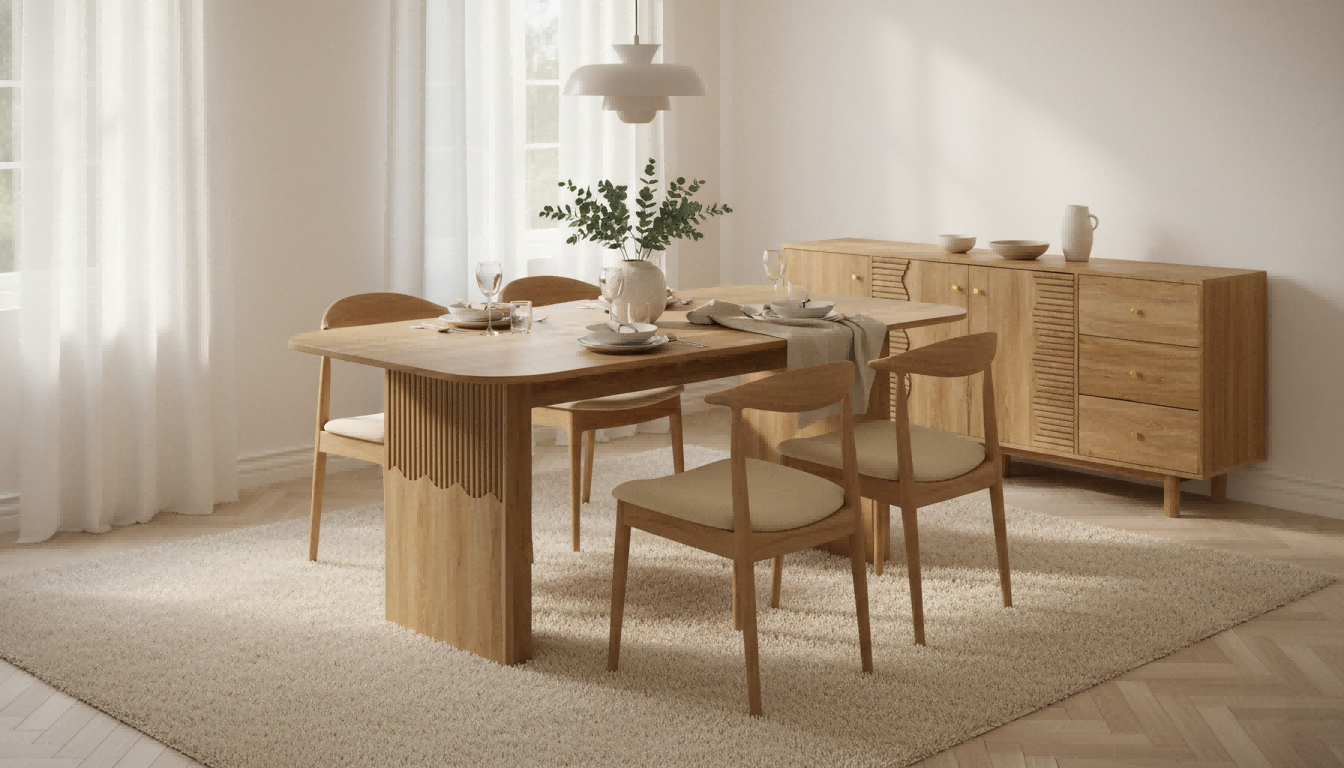
thickness assessments, and post-assembly leveling checks. Once approved, the
packaging must be designed to withstand international maritime shipping and
overland transport. At Essent
Home, we utilize robust structural frameworks and reinforced
packaging to ensure safe transit globally.
Professional packaging should include:
High-Density Edge Protectors: Form-fitting polyethylene
foam to shield vulnerable table corners and edges from impact.
Moisture-Absorbent Desiccant Packets: Placed within sealed
plastic barriers to prevent mold and condensation during ocean freight
transit.
Custom Wooden Crating: For large solid wood slabs or
marble-topped dining tables, fully enclosed wooden crates prevent crushing and
puncture damage during multi-modal shipping.
Frequently Asked Questions
Q1: How do you prevent solid wood tabletops from warping or cracking over
time?
A1: Prevention begins with stabilizing the timber through kiln-drying to a
moisture content of 6-8%. During assembly, we route steel C-channels with
slotted screw holes into the underside of the table top. This allows the wood to
expand and contract laterally with seasonal humidity changes while keeping the
top flat.
Q2: Can your manufacturing facilities accommodate custom wire-management and
power integrations?
A2: Yes. For commercial, hospitality, and office spaces, we can integrate
custom wire-management pathways, pop-up power outlets, and hidden cable channels
into the table legs and tabletop according to your detailed architectural
drawings.
Q3: What finishes do you apply to ensure wood tables survive high-traffic
commercial use?
A3: We apply multi-layer, industrial-grade polyurethane coatings and
conversion varnishes. These finishes seal the wood fiber pores and are tested to
resist damage from hot plates, alcohol, coffee, water, and standard commercial
sanitizers.
Q4: Do you offer sustainable wood options for B2B projects?
A4: We prioritize environmental responsibility and source our timber from
certified forests that adhere to strict reforestation and sustainable harvesting
guidelines, ensuring all materials conform to international import
regulations.
Q5: What are the typical packaging standards for global B2B delivery?
A5: All tables are wrapped in protective polyethylene foam, fitted with
high-density edge guards, and encased in heavy-duty double-wall corrugated
cardboard. For large-format or fragile custom pieces, we construct fully
enclosed wooden shipping crates to protect against freight damage.
Partner with a Reliable Manufacturing Expert
Sourcing furniture for large-scale residential and hospitality projects
requires a manufacturing partner who understands timber science, robust
engineering, and global logistics. If you are looking to secure high-end,
customizable dining tables that meet strict contract quality standards, our
experienced B2B team is ready to assist. Please contact us today to submit your
specifications, request material samples, or receive a comprehensive product
inquiry consultation.