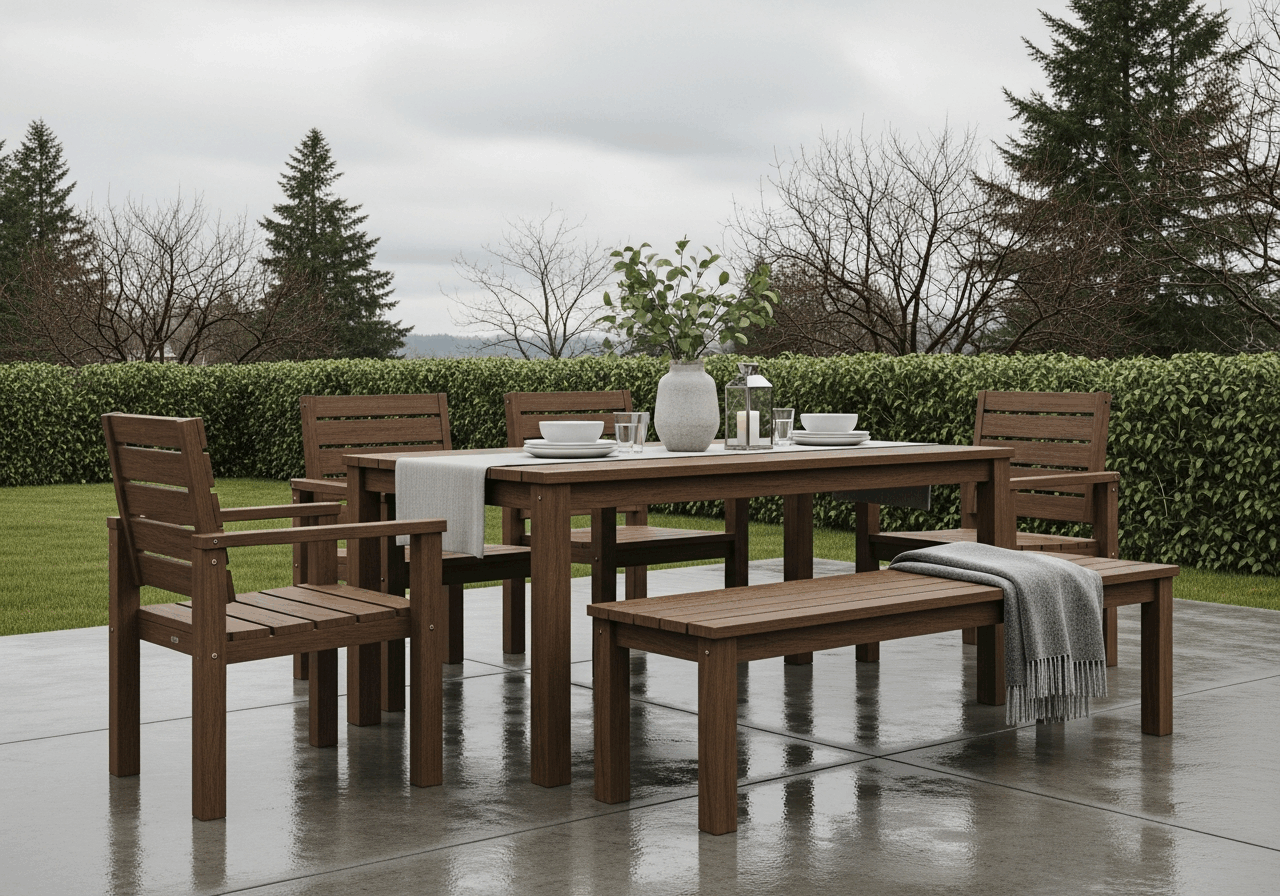
In the luxury furniture sector, a dining table is far more than a simple flat
surface supported by legs. It represents the structural centerpiece of a
residence, requiring a balance between design vision and physical durability.
For international brands, finding a manufacturer that balances aesthetic
complexity with scalable production is a continuous challenge.
Recent data from the Centre for Industrial Studies (CSIL) indicates that
global demand for high-end contract and custom residential furniture has grown
steadily. This growth places pressure on supply chains to maintain high
craftsmanship standards at scale. Managing these standards requires a deep
understanding of raw materials, joint engineering, and climate-adaptive
manufacturing.
For procurement directors and product designers, the choice of a dining tables
oem partner determines whether a collection succeeds or faces
costly returns. This guide analyzes the technical requirements of luxury
furniture production, offering practical frameworks to help brands evaluate
manufacturing partners and secure reliable supply chains.
The Tolerance Paradox: Why Absolute Rigidity Can Cause Failure in Wood
OEM
In high-precision metal fabrication, a zero-tolerance policy is the standard
for quality. However, applying this same rule to luxury solid wood manufacturing
is a common mistake. Wood is an organic, hygroscopic material that continuously
absorbs and releases moisture, expanding and contracting with its
environment.
A common error in basic dining tables
oem production is securing a solid wood tabletop rigidly to a steel
frame using standard screws. When the table is shipped from a humid production
facility to a dry market, the wood contracts. If the tabletop cannot move, it
will eventually warp, crack, or split along the grain.
Experienced manufacturers design for controlled movement rather than trying
to prevent it entirely. They utilize expansion joints, slotted mounting
brackets, and tabletop buttons that allow the wood to breathe without losing
structural stability. This balance between flexibility and security is what
separates retail-grade furniture from true heirloom quality.
By working with an experienced manufacturer like Essent Home, brands can ensure
their designs incorporate these essential engineering details. This proactive
approach helps prevent structural issues before the products reach the final
consumer.
The 4-D Structural Integrity Matrix for Premium Tables
To evaluate potential dining tables
oem partners, brands can use the 4-D Structural Integrity Matrix.
This framework analyzes the four key engineering dimensions required to build a
stable, long-lasting luxury dining table.
The first dimension is Moisture Equilibrium Control (MEC).
Raw timber must be kiln-dried until it reaches an optimal moisture level,
typically between 6% and 10%. This range minimizes movement once the furniture
is installed in different climates, protecting it from dry indoor air or high
humidity.
The second dimension is Tensile Joint Architecture. High-end
tables avoid relying on simple dowels or standard wood glue. Instead, they use
traditional joinery techniques, such as mortise-and-tenon or double-penetrating
dowels, reinforced with steel-to-wood connectors to ensure durable, long-term
stability.
The third dimension is Substructure Load Distribution. Large
luxury dining tables, especially those with stone or concrete tops, require
careful engineering to prevent sagging. A quality manufacturer will integrate
hidden steel reinforcement bars or tension rods underneath the wood to
distribute weight evenly.
The fourth dimension is Surface Resiliency. The table's
finish must protect against daily wear, hot plates, and liquid spills while
preserving the natural look of the wood grain. Achieving this requires
multi-stage polyurethane coatings or specialized water-based lacquers that meet
international safety standards.
Key Material Engineering Challenges in Luxury Table Production
Selecting high-quality raw materials is only the first step in premium
dining tables
oem manufacturing. The primary challenge lies in how these
materials are treated and combined during production to ensure long-term
durability.
When combining wood with materials like Italian marble, sintered stone, or
cast bronze, thermal expansion rates must be considered. Metal and stone react
differently to temperature changes than wood does. A high-end manufacturer will
use flexible adhesive layers or floating sub-frames to allow these materials to
shift independently without cracking.
Additionally, selecting the right cut of timber is critical for stability.
Quarter-sawn or rift-sawn wood is generally more stable than flat-sawn options,
though it requires more raw material. A reliable dining tables
oem partner will advise on the best wood cut and grain matching to
balance cost and structural performance.
For brands looking to optimize their designs, Essent Home offers specialized
material consulting. Their engineering teams help select the right raw materials
and structural techniques to meet both aesthetic goals and functional
requirements.
B2B Luxury Dining Table OEM Spec Checklist
Before initiating mass production with a dining tables
oem partner, product development teams should use this verification
checklist to ensure all technical details are covered.
| Engineering Phase | Specification Checkpoint | Luxury Market Target Standard | Verification Method |
|---|
| Timber Preparation | Equilibrium Moisture Content (EMC) | 6% to 8% for dry climates; 8% to 10% for coastal markets | Pinless moisture meter scanning across multiple core sections |
| Substructure | Anti-Sagging Reinforcement | Zero deflection under a uniform load of 100 kg | Hidden steel channels embedded in the underside of the table |
| Joinery | Metal-to-Wood Connections | Threaded steel inserts; no direct wood screws in high-stress areas | Stress testing with pneumatic press equipment |
| Surface Finish | Chemical & Heat Resistance | No marking from water, alcohol, or hot cups up to 100°C | ASTM/EN standard cross-cut adhesion and heat ring tests |
| Packaging | Drop & Vibration Protection | ISTA 3A or 3B certified packaging | Simulated drop testing from standard shipping
heights |
Using this checklist during the prototyping stage helps brands identify
potential issues early, preventing costly quality claims and logistics
challenges later on.
Optimizing the Supply Chain: Packaging and Shipping Engineering
Even the best-engineered table is of little value if it arrives damaged at
the customer's home or showroom. High-end dining tables are heavy, large, and
susceptible to damage during transit, making packaging design a key part of the
dining tables
oem process.
Standard packaging is rarely sufficient for international shipping. Premium
manufacturers use custom-designed packaging, including high-density polyethylene
foam corner guards, custom wood crates for stone tabletops, and
moisture-absorbing silica gel packs inside sealed plastic wrapping to prevent
mold during ocean transport.
Additionally, flat-pack engineering must be carefully designed so that
assembly is straightforward for the end-user or white-glove delivery team. A
reliable dining
tables oem partner will design intuitive assembly systems with
pre-installed threaded inserts and custom-fit hardware kits to ensure a smooth,
error-free setup.
Through careful packaging design and stress-testing, Essent Home helps brands reduce
transit damage rates to near zero, protecting their reputation and ensuring a
consistent customer experience.
Frequently Asked Questions
Q1: What is the typical lead time for a high-end dining tables oem
project?
A1: Standard lead times for luxury dining table production
generally run from 8 to 12 weeks. This timeframe includes timber conditioning
and kiln drying (2-3 weeks), precision machining and joinery (3-4 weeks),
multi-step finishing (1-2 weeks), and quality control inspections and packaging
(1 week). Custom material sourcing or complex metalwork may extend this
timeline.
Q2: How do manufacturers prevent solid wood tabletops from warping or
cracking?
A2: Warp prevention begins with proper kiln-drying to
stabilize the wood's moisture content. During assembly, manufacturers use hidden
tension rods, relief cuts on the underside of the tabletop, and expansion
joints. These techniques allow the wood to expand and contract naturally with
seasonal humidity changes without cracking.
Q3: What eco-friendly certifications should we look for in a dining
tables oem partner?
A3: Luxury brands should look for FSC (Forest Stewardship
Council) certification to verify that timber is sourced from responsibly managed
forests. For coatings and adhesives, look for CARB Phase II compliance,
Greenguard Gold, or low-VOC finishes to ensure the final product meets
international environmental and indoor air quality standards.
Q4: Can we use luxury stone or sintered porcelain in custom OEM
designs?
A4: Yes, experienced manufacturers can integrate stone,
ceramic, or sintered porcelain into dining table designs. Because these
materials are rigid and heavy, the manufacturer must design a supportive
sub-frame—usually made of marine-grade plywood or aluminum honeycomb—to
distribute weight evenly and prevent cracking during transit and use.
Q5: How do OEM partners handle hardware sourcing and quality
control?
A5: High-end manufacturers source heavy-duty,
corrosion-resistant hardware, such as solid brass or stainless-steel connectors
and soft-close mechanisms from trusted suppliers. Quality control protocols
should include salt-spray testing for metal parts, cycle testing for extending
mechanisms, and thread fit tests before final packaging.
Partnering with the Right Manufacturer for Long-Term Growth
Choosing a dining tables
oem partner is a key business decision that directly impacts your
brand’s reputation and bottom line. It requires a manufacturer that combines
technical expertise, quality materials, and a commitment to precision
engineering.
By partnering with a dedicated manufacturer like Essent Home, brands can
streamline their product development, improve quality control, and scale their
luxury furniture collections with confidence.
If you are looking to elevate your product line with expertly engineered
dining tables, contact the team at Essent Home today to discuss
your next custom manufacturing project.