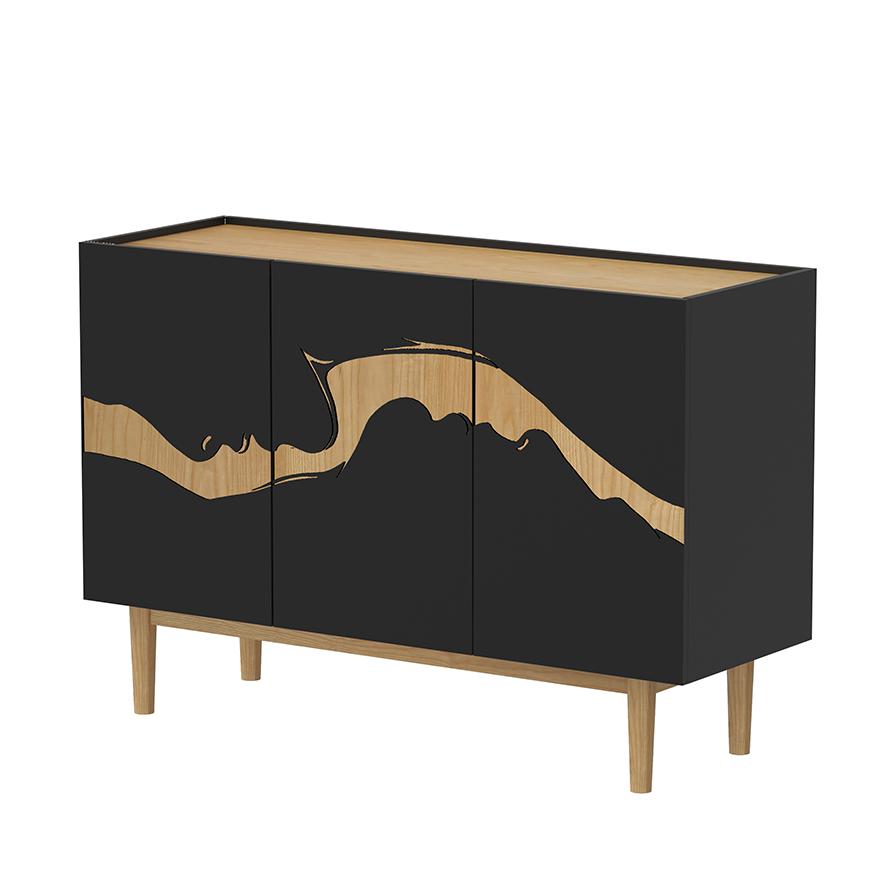
The selection of a sideboard cabinet supplier is a strategic decision that directly impacts the success of hospitality projects, luxury residences, and commercial interiors. Unlike retail purchases, B2B engagements demand rigorous evaluation of manufacturing depth, material consistency, and long-term durability. Based on industry benchmarks and field experience, this article provides a data-driven framework for assessing potential partners, with a special focus on the high-end custom furniture segment.
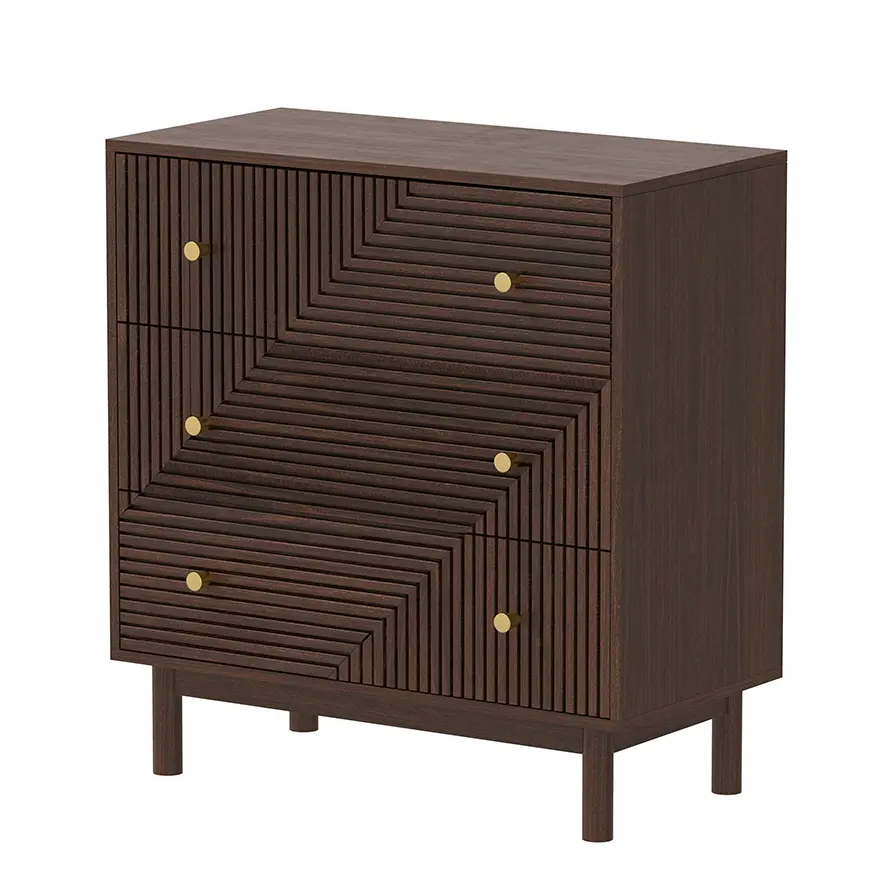
1. Material Science and Construction Standards in Premium Sideboard Manufacturing
A competent sideboard cabinet supplier must demonstrate mastery over both raw materials and engineering. For commercial applications, sideboards face constant use, requiring substrates that resist warping and hardware that withstands thousands of open-close cycles.
Solid Wood vs. Engineered Wood: Application-Driven Choices
High-end custom sideboards often combine kiln-dried hardwoods (oak, walnut, ash) with premium plywood or MDF for dimensional stability. The supplier should provide moisture content reports (typically 6-8% for the installation region) and disclose the source of veneers. Look for suppliers using CNC-cut joinery with tolerances ≤0.5 mm – a critical factor for seamless drawer operation and mitre alignment.
Surface Finishes and Chemical Resistance
Commercial sideboards require finishes that resist ethanol, water rings, and abrasion. A qualified sideboard cabinet supplier will specify the number of coating layers (usually ≥3 for conversion varnish or PU lacquer) and the hardness rating (e.g., ≥3H pencil hardness). Ask for evidence of Taber abrasion tests if the order involves high-traffic areas.
2. The Importance of Customization Capabilities in B2B Sideboard Sourcing
Architects and designers rarely work with standard SKUs. They need a sideboard cabinet supplier capable of executing bespoke dimensions, integrated lighting, and unique material pairings (e.g., marble tops with metal inlays). Essent Home exemplifies this flexibility, offering CAD-to-production workflows that translate complex designs into manufacturable units without compromising structural integrity.
Bespoke Dimensions, Finishes, and Hardware Integration
Whether it’s a 3-meter-long sideboard for a hotel lobby or a shallow unit for a narrow corridor, the supplier must adapt joinery techniques accordingly. Evaluate their portfolio for non-standard depths, curved panels, and the ability to match existing RAL or NCS colours. Advanced suppliers maintain a library of over 200 wood finishes and allow mock-up samples before bulk production.
3. Evaluating Quality Assurance Protocols: From Sample Approval to Mass Production
One of the industry’s biggest pain points is inconsistency between pre-production samples and delivered batches. A reliable sideboard cabinet supplier implements multi-stage inspections:
Incoming material QC: Veneer grade verification (e.g., FAS vs. Select), moisture tests, and hardware sample checks.
In-process inspection: Frame assembly, dovetail alignment, and adhesive spread control (to prevent joint failure).
Pre-shipment evaluation: Simulated assembly, scratch tests on finish, and functional testing of soft-close mechanisms (typically 50,000-cycle certification from brands like Blum or Hettich).
Insist on receiving a Quality Control Plan (QCP) that details these checkpoints. Data-oriented suppliers share defect rates (aim for <2%) and corrective action reports.
4. Navigating Lead Times and Supply Chain Transparency
Delays in sideboard delivery can derail entire project timelines. Transparent suppliers provide a clear breakdown of production stages: timber conditioning (7–15 days), CNC machining (3–5 days), finishing and drying (5–10 days), assembly (2–4 days), and packaging. Ask about their buffer stock policy for high-turnover items like handles and hinges.
International buyers should verify that the sideboard cabinet supplier has experience with export packaging – tropicalization (fungus treatment, moisture barrier) for sea freight, and corner protection that meets ISTA standards. A case in point: Essent Home uses climate-controlled containers for veneer shipments and provides weekly production photos to B2B clients, ensuring no black‑box uncertainty.
5. Sustainability Certifications and Compliance for Global Hospitality Projects
Green building certifications (LEED, WELL, BREEAM) are now mandatory for many commercial projects. Hence, the chosen sideboard cabinet supplier must furnish documentation such as FSC® chain-of-custody, CARB Phase 2 compliant composite panels, and low-VOC finish certificates. Beyond paperwork, ask for the percentage of post-industrial recycled content used in their engineered wood – some premium suppliers now achieve 85% recycled fibre in core layers.
Furthermore, REACH compliance for imported furniture into the EU is non‑negotiable. Suppliers lacking third-party test reports for phthalates, heavy metals, and formaldehyde should be excluded from bidding.
6. Case Studies: Successful Integration of Custom Sideboard Cabinets
To illustrate the value of technical diligence, consider a five‑star hotel project in Dubai that required 120 sideboards with integrated minibar functions. The selected sideboard cabinet supplier (a partner with whom Essent Home often collaborates) used a hybrid structure: a marine‑ply frame for humidity resistance, and hand‑polished polyester fronts. Pre‑production samples revealed a 2 mm gap inconsistency in the drawer fronts, which was corrected by adjusting the CNC pressure settings. Without rigorous QC, the entire batch would have required on‑site rework – a cost of approximately $45,000.
Such cases underscore why technical parameters outweigh aesthetic appeal alone. Always request references from similar‑scale projects and, if possible, visit the factory or conduct a virtual audit.
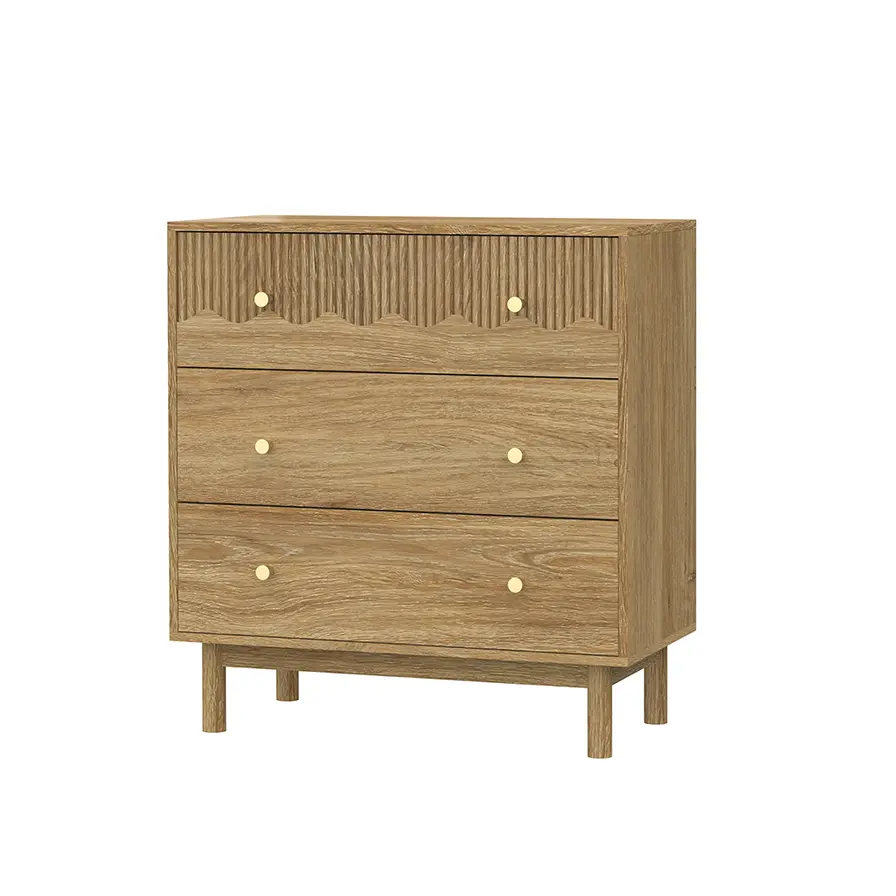
7. Common Pitfalls in Sourcing Sideboard Cabinets and How to Avoid Them
Even experienced buyers can fall into traps when vetting a sideboard cabinet supplier:
Pitfall 1: Ignoring hardware compatibility. Some suppliers use generic slides that fail after 6 months. Solution: Specify branded mechanisms (Blum, Grass, Hettich) and include their model numbers in the contract.
Pitfall 2: Miscommunication on wood colour matching. Veneer is a natural product; batches vary. Solution: Require the supplier to keep 10% extra veneer from the same flitch for future repairs, and define an acceptable colour variation (ΔE < 1.5 under D65 light).
Pitfall 3: Underestimating packaging damage. Solution: Demand edge protectors, foam corners, and full truck‑load shipments to minimise vibration. Review photos of packed containers before departure.
Pitfall 4: No penalty clauses for delays. Solution: Include liquidated damages in the contract, but also verify that the supplier’s production planning software (e.g., SAP, Oracle) provides real‑time bottleneck alerts.
Frequently Asked Questions (FAQs)
Q1: What certifications should a reliable sideboard cabinet supplier
hold for international projects?
A1: At a minimum, they should
provide FSC® (Forest Stewardship Council) certification for wood, CARB/EPA TSCA
Title VI compliance for composite panels, and ISO 9001:2015 for quality
management. For European projects, REACH and CE markings are mandatory.
Fire‑retardant certifications (e.g., NF P 92‑501 M1 or ASTM E84) are also
required for public spaces.
Q2: How can I verify the financial stability of a sideboard cabinet
supplier before placing a large order?
A2: Request audited financial
statements (at least three years) or a Dun & Bradstreet report. Check trade
references with past B2B clients, and ask whether they have credit insurance
(e.g., Euler Hermes) – this indicates they are vetted by insurers. A stable
sideboard cabinet supplier typically has a current ratio (assets/liabilities)
above 1.5.
Q3: What is the typical minimum order quantity (MOQ) for custom
sideboard cabinets from a high‑end supplier?
A3: While Asian
mass‑market suppliers often require 100+ units, premium custom suppliers like
Essent Home accommodate MOQs as low as 10–15 units for bespoke designs, thanks to flexible
manufacturing cells. However, complex finishes or rare veneers may increase the
MOQ due to material purchasing constraints. Always negotiate a pilot run before
scaling.
Q4: How do I handle after‑sales service and spare parts for sideboard
cabinets sourced internationally?
A4: Insist on a warranty clause
(usually 2‑5 years) and a spare parts kit covering hinges, drawer slides, and
touch‑up materials. Some suppliers keep a consignment stock at regional hubs.
Clarify whether the price includes replacement components and the response time
for technical queries (ideally within 48 hours).
Q5: What are the hidden costs when importing sideboard cabinets from
an overseas supplier?
A5: Beyond the ex‑works price, factor in: (i)
fumigation and phytosanitary certificates ($50–$150 per container), (ii)
destination port handling and customs brokerage (3–6% of value), (iii) potential
anti‑dumping duties on certain wooden furniture, and (iv) storage if the site
isn’t ready. A transparent sideboard cabinet supplier provides a detailed
Incoterms quotation and advises on duty codes.
Q6: Can the supplier replicate an existing sideboard design without
violating intellectual property?
A6: Reputable suppliers will
require a signed IP indemnity and will not reproduce designs that infringe
third‑party patents. They should also be willing to sign a non‑disclosure
agreement (NDA) before sharing technical drawings. Customisation from scratch –
not copying – is the hallmark of an ethical partner.
Conclusion: Making the Data‑Driven Choice
Partnering with a sideboard cabinet supplier is not merely a transaction; it is a collaboration that influences brand reputation, guest experience, and operational longevity. By demanding transparency in materials, quality control, and sustainability, B2B buyers mitigate risks and ensure that every sideboard delivers on its functional and aesthetic promise. Firms like Essent Home have built their reputation on this technical rigour, offering not just cabinetry but engineered solutions tailored to the most demanding projects. Apply the eight parameters outlined above – your next sideboard order will thank you.