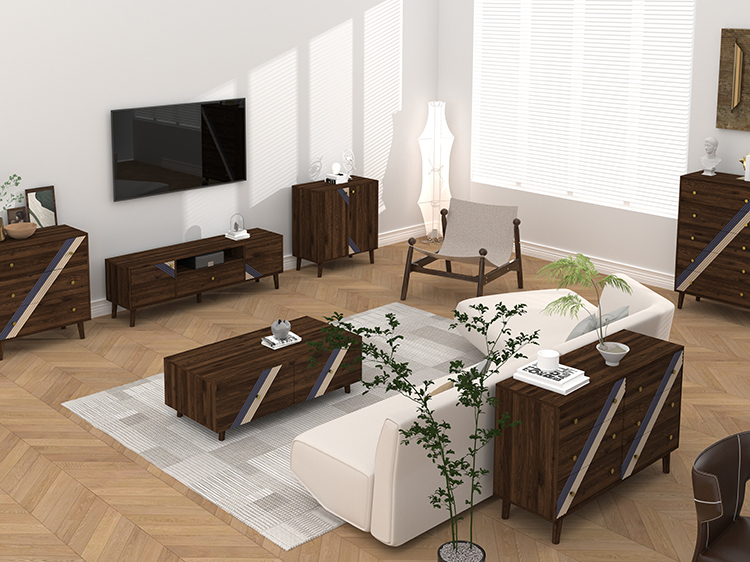
Choosing a reliable kitchen hutch supplier is a strategic decision for furniture retailers, interior design firms, and property developers. The wrong partner leads to customer complaints about warped doors, peeling finishes, and failed hardware – all of which erode margins and brand reputation. This guide presents eight technical benchmarks that purchasing managers and business owners must verify before signing a wholesale agreement. Each criterion is based on ANSI/BIFMA, ASTM standards, and field feedback from successful kitchen furniture programs. Essent Home applies these benchmarks to its premium furniture manufacturing to ensure consistent quality for wholesale clients.
1. Joinery and Carcase Construction Methods
The structural integrity of a kitchen hutch depends entirely on how the carcase and face frames are assembled. A professional kitchen hutch supplier must specify joinery techniques that prevent racking and sagging over years of use.
Dovetail drawers – The gold standard for drawer boxes. Half‑blind dovetails for front joints, through dovetails for rear. Avoid stapled or glued butt joints.
Mortise and tenon face frames – Corner joints should be mortise‑and‑tenon, not pocket screws alone. This resists racking when the hutch is moved.
Dowel or biscuit reinforced panels – For attaching side panels to the back frame. Avoid exposed particleboard edges.
Corner blocking – Glued and screwed blocks in upper corners prevent twist.
Request a photo or video of the assembly line. A quality supplier will showcase their joinery openly.
2. Wood Type, Grade, and Moisture Control
Wood movement is the #1 cause of cracks and warps. A competent kitchen hutch supplier uses properly dried lumber and stable substrates.
Solid wood parts (doors, face frames) – Use kiln‑dried lumber with moisture content (MC) 6–8%. Request MC reports from a pin‑type meter.
Plywood carcases – Cabinet‑grade (A‑A or A‑B) with 7–11 plies. Core should be birch, poplar, or fir – never particleboard or MDF for structural panels.
Veneered panels – Must be balanced with a backer veneer to prevent cupping. Thickness ≥ 18 mm for shelves.
Wood species – Common options: oak, maple, cherry, walnut, hickory. For coastal areas, specify rift or quarter‑sawn to reduce movement.
Avoid suppliers who cannot provide MC data or mix low‑grade timber in non‑visible areas.
3. Finish Application and Curing Process
The finish must withstand kitchen humidity, heat from nearby appliances, and cleaning chemicals. Ask your potential kitchen hutch supplier about their finishing line.
Conversion varnish – The most durable for kitchen environments. Resists water rings, alcohol, and mild acids. Requires spray application and UV or catalytic curing.
Catalyzed lacquer – Good durability but lower chemical resistance. Acceptable for hutches placed away from cooking zones.
Water‑based polyurethane – Low VOC, but requires 3–5 coats and long drying. Only suitable if supplier uses forced hot air ovens.
Number of coats – Minimum: sealer + two topcoats. Sanding between coats.
Request a finish sample and perform a 24‑hour water spot test (wet paper towel covered with glass). Also ask for ASTM D3359 cross‑hatch adhesion test results – should be 4B or 5B.
4. Hardware Specifications and Cycle Testing
Drawer slides and hinges are the most replaced components. A professional kitchen hutch supplier uses commercial‑grade hardware with documented cycle life.
Drawer slides – Full extension, soft‑close, rated for 100 lb minimum. Look for brand names: Blum, Hettich, Grass, or Accuride. Avoid unbranded slides.
Hinges – Concealed cup hinges with 110°‑165° opening. Soft‑close or self‑closing. 304 stainless steel for high‑humidity areas.
Knobs and pulls – Solid metal (zinc, brass, stainless) with consistent finish. Test for corrosion resistance by exposing to salt spray (ASTM B117).
Cycle test data – Slides and hinges should pass 50,000 cycles (BIFMA X5.1). Request test reports.
If a supplier cannot name the hardware brand, consider it a red flag.
5. Load Capacity and Stability Testing
Kitchen hutches hold heavy dishes, small appliances, and cookbooks. Verify that your kitchen hutch supplier conducts structural tests.
Shelf load test – 150 lb uniformly distributed for 7 days. No permanent deflection > 1/8 inch per ASTM F3096.
Top load test – 250 lb applied to top center. No structural damage.
Drawer load test – 75 lb extended full length. Drawer must not bind or rack.
Stability test – 150 lb lateral force at 48 inches height. Hutch must not tip. Wall anchoring recommended for units over 30 inches tall.
Ask for a test video or third‑party lab report (e.g., Intertek, UL).
6. Quality Control and Defect Tolerance
Even the best supplier will produce occasional defects. The key is how they manage outgoing quality. A reliable kitchen hutch supplier should share their AQL (Acceptable Quality Limit) standards.
In‑process inspection – At least three checkpoints: after machining, after assembly, and before packing.
Outgoing AQL – Typically 1.5% for major defects (structural, finish damage) and 4.0% for minor defects (small scratches, color variation).
Defect categories – Major: broken joinery, missing hardware, warped doors > 3 mm. Minor: slight color mismatch, tiny scratch < 25 mm.
Reporting – Supplier should provide a certificate of inspection with each batch.
Essent Home operates an ISO 9001 certified quality system with 100% final inspection for all wholesale kitchen hutches.
7. Packaging and Container Loading Plan
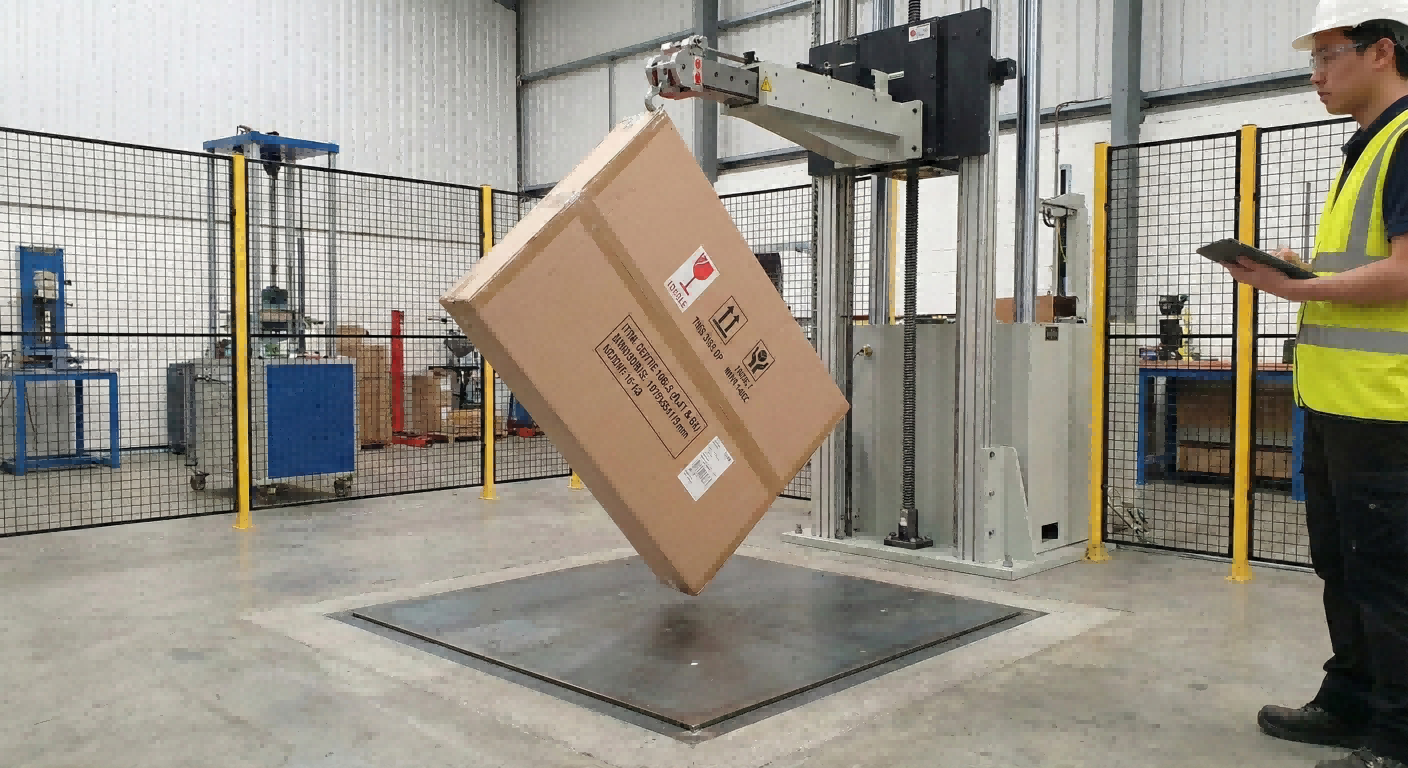
Damage during transit is a leading cause of returns. Your kitchen hutch supplier must demonstrate a proven packaging protocol.
Corner protection – L‑shape cardboard or foam corners on all edges.
Interior cushioning – EPS foam blocks or inflatable bags to prevent part‑to‑part contact.
Pallet type – Heat‑treated (ISPM 15) stringer pallets. Load height ≤ 1.8 meters for container shipping.
Drop test – ISTA 3A or 3E certification. Request a video of the test.
Container loading diagram – Shows how cartons are stacked and secured with strapping or dunnage bags.
A good supplier will offer a 2% spare parts kit (doors, shelves, hardware) with each full container to handle minor damage.
8. Compliance Documentation and Liability Coverage
Wholesale buyers are legally responsible for products sold to consumers. Ensure your kitchen hutch supplier provides these documents:
ASTM F3096 – Standard performance specification for kitchen hutches (compliance letter).
CARB Phase 2 / TSCA Title VI – Formaldehyde emission limits for composite wood.
Flammability test (TB 117‑2013) – If hutch includes any upholstered elements.
General Certificate of Conformity (GCC) – Required for children’s furniture (if hutch marketed for kids’ rooms).
Product liability insurance – Minimum $2 million per occurrence. Supplier must name you as additional insured.
Essent Home maintains BIFMA level 3 certification and provides a full compliance package with every wholesale order.
Case Study: A Hotel Chain Finds a Reliable Kitchen Hutch Supplier
A hotel group needed 2,000 kitchen hutches for extended‑stay suites. Previous suppliers delivered units with MDF backs and cam‑lock drawers that failed after 6 months of guest use. The group switched to Essent Home as their kitchen hutch supplier, specifying solid birch plywood carcases, dovetail drawers, and conversion varnish. After 18 months in service, the defect rate is under 1%. The hotel saved $80,000 in replacement costs and guest compensation.
Frequently Asked Questions (FAQ)
Q1: What is the typical lead time for a first wholesale order from a
new kitchen hutch supplier?
A1: For standard designs (existing
catalog), lead time is 4–8 weeks after sample approval. For custom sizes or
finishes, expect 12–16 weeks. Ocean freight adds 4–6 weeks for international
shipments. Always add 2 weeks buffer for port clearance. Ask for a production
schedule with milestone dates.
Q2: How can I verify a supplier's joinery quality without visiting
the factory?
A2: Request a sample hutch (fully assembled) shipped to
your warehouse. Cut a drawer box in half to inspect dovetail fit and glue
coverage. For face frames, pry a corner joint – should not separate without
breaking wood. Also ask for high‑resolution photos of the assembly line showing
clamps and glue application. Some suppliers offer live video tours.
Q3: What is the most common finish failure in kitchen hutches, and
how to prevent it?
A3: "Blushing" or whitening from moisture
penetration. This happens when water‑based or low‑quality lacquer is used
without proper sealing. Prevent by specifying conversion varnish with a sealer
coat. Also require that the supplier tests finish hardness using a pencil test
(ASTM D3363) – minimum 3H. For coastal areas, add a UV inhibitor to prevent
yellowing.
Q4: Do I need a separate agreement for warranty handling with my
kitchen hutch supplier?
A4: Yes. Define the warranty period
(industry standard: 1 year on materials and workmanship, 5 years on hardware).
Specify that the supplier will provide replacement parts free of charge (FOB
their warehouse). Retailer covers labor for installation. For high‑volume
programs, negotiate a 2% spare parts kit per container. Essent
Home includes a standard warranty clause in its wholesale contract.
Q5: Can a kitchen hutch supplier accommodate OEM designs with my
brand logo?
A5: Yes, many suppliers offer OEM services. You will
need to provide detailed technical drawings (or pay for in‑house design).
Minimum order quantities for OEM are higher – typically 200–500 units. There is
also a one‑time mold or tooling fee ($500–$2,000) for custom embossed logos or
unique hardware. Lead times add 4–6 weeks for tooling. Essent
Home provides OEM/ODM with no minimum design fee for contract
volumes over 100 units.
Request a Supplier Evaluation or Wholesale Quotation
Selecting the right kitchen hutch supplier requires due diligence. Essent Home offers a free supplier audit checklist – send us your target specifications (wood species, dimensions, annual volume). We will provide a detailed quote, a sample finish board, and references from current wholesale clients. Our team can also arrange a virtual factory tour to observe joinery and finishing processes. Start your program with a 10‑unit pilot order to verify quality before scaling.
Submit an inquiry to our wholesale furniture division → Click here for a response within 24 hours