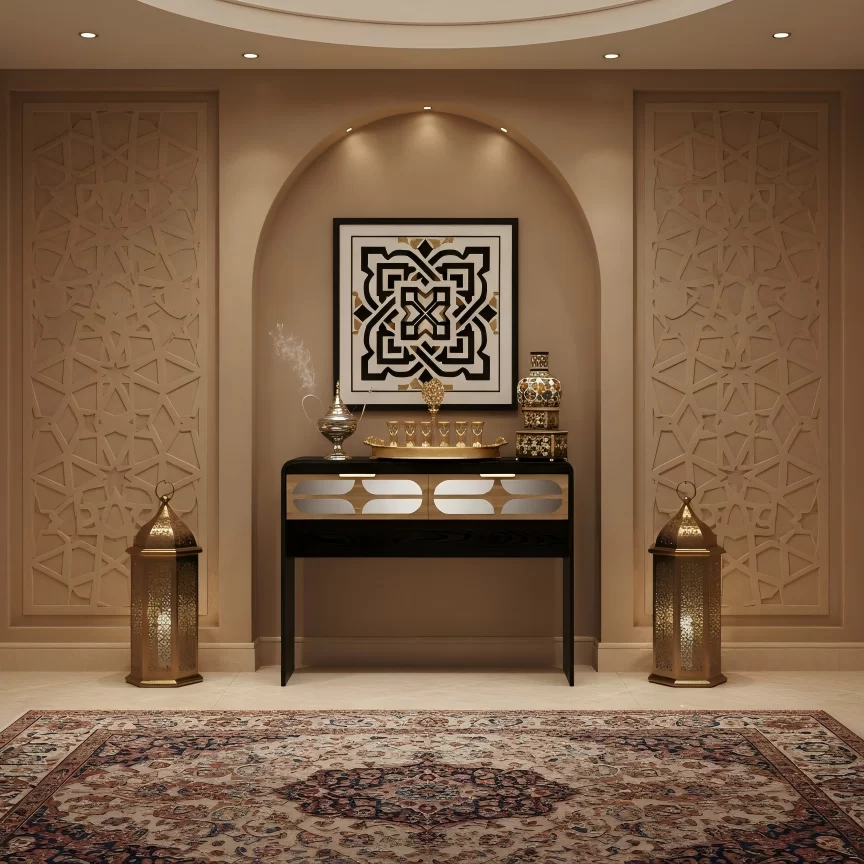
Walk into a modern executive suite today, and you often encounter a sterile
scene. High-gloss laminates, cold glass surfaces, and modular furniture dominate
corporate interiors. While functional, these mass-produced pieces lack
character. They fail to communicate the gravitas required of true leaders.
Your office is more than a workplace. It serves as an arena for crucial
negotiations, strategic breakthroughs, and high-level decisions. The centerpiece
of this room—the desk—anchors the entire environment. It establishes your
presence before you speak a single word.
Discerning executives and interior architects are turning away from standard
catalogs. Instead, they choose bespoke vintage desks that
combine historical craftsmanship with custom utility. At Essent Home, we assist
private clients and executive directors in sourcing and commissioning statement
furniture that stands apart from standard corporate design.
Planning an executive office redesign? Contact the procurement team at Essent Home to discuss custom sourcing and bespoke
vintage desk restorations.
1. The Psychology of Power: What a Vintage Desk Says About a Leader
Furniture carries psychological weight. In executive offices,
mass-manufactured desks project an image of temporary tenure. In contrast, solid
timber aged over decades conveys permanence, resilience, and depth.
Beyond Mass Production: The Aura of Authenticity
True luxury relies on scarcity. Anyone with an enterprise budget can purchase
a standard designer desk from an office supply catalog. Very few possess a desk
carved from dense, old-growth walnut or Cuban mahogany that has survived
generations.
A vintage desk possesses a tactile warmth that synthetic materials cannot
imitate. The gentle wear on the edge of a writing surface tells a story of
survival and endurance. This patina reflects the resilience expected of top-tier
leadership.
When you sit behind an authentic desk, you surround yourself with pieces that
have stood the test of time. Visitors immediately recognize that you value
substance over temporary interior design trends.
Visual Authority in High-Stakes Environments
First impressions form within seconds. When prospective partners, board
members, or high-value clients enter your office, your desk serves as the focal
point. It sets the tone for your interaction.
An antique executive desk projects grounded authority. It suggests that the
person behind it values long-term strategy rather than short-term gains. In
negotiations, this visual weight works silently in your favor, establishing an
atmosphere of trust, heritage, and quiet confidence.
2. The Intersection of History and Modern Utility: The Bespoke
Advantage
A common objection to antique furniture in corporate environments centers on
functionality. Historic furniture was built for quill pens and paper ledgers,
not triple-monitor mounts, laptops, and fiber-optic cables. This is where
bespoke modification changes the equation.
Bespoke custom vintage desk restoration bridges the gap between historical
character and 21st-century executive demands.
Preserving Patina While Integrating Modern Tech
Modern professionals require seamless technological connectivity. Bespoke
adaptation introduces discreet technological capabilities without compromising
the desk's historic integrity:
- Subsurface Induction Charging: Wireless charging pads
hidden directly beneath original leather or wood veneers keep surfaces
clean.
- Concealed Wire Runways: Artisans route internal channels
through solid leg structures to conceal monitor cables and power cords
completely.
- Integrated Power Hubs: Pop-up or drawer-concealed
architectural outlets lined with aged brass complement original hardware.
- Custom Secret Compartments: Traditional drawer locks can be
upgraded with biometric or magnetic locking mechanisms for secure document
storage.
This process ensures you never have to choose between historical beauty and
operational performance.
Tailored Ergonomics from Iconic Eras
Historically, desk heights fluctuated widely across different design eras.
Original Victorian or Mid-Century pieces often sit lower or higher than modern
ergonomic standards.
Master restorers address these challenges through bespoke adjustments.
Artisans can extend desk pedestals using matching reclaimed timber, modify
knee-hole clearances, and balance drawer mechanics. These alterations allow you
to pair the desk with modern executive seating, preserving posture during
demanding workdays.
Our artisans at Essent Home focus on these precise physical adaptations. We
maintain the original balance of the wood while tailoring functional clearances
to each executive's specific physical needs.
3. Curating Iconic Eras: Which Vintage Desk Style Fits Your Executive
Persona?
Selecting the right desk requires aligning your personal leadership style
with the design language of a specific historic period. The design details of
each era convey a distinct organizational character.
Learn more about how historic design movements value materials and structural
balance through the comprehensive Victoria and Albert Museum Furniture Collection.
Mid-Century Modern Desks: Sleek Innovation and Creative Authority
For tech entrepreneurs, venture capitalists, and creative agency founders,
mid-century modern vintage desks offer clean lines and structural daring. Built
primarily between 1945 and 1970, these pieces utilize Brazilian rosewood, teak,
and walnut.
- Key Designers: Florence Knoll, Bodil Kjær, George Nelson,
and Arne Vodder.
- Design Characteristics: Floating pedestals, minimal frames,
and architectural proportions.
- Executive Impression: Forward-thinking, agile, uncluttered,
and strategically decisive.
A Bodil Kjær architectural desk, often dubbed "the most beautiful desk in the
world," immediately identifies its owner as a patron of design who prefers clean
composition to heavy ornamentation.
Victorian and Edwardian Pedestal Desks: Traditional Prestige and
Gravitas
For managing partners in private equity, legal practice, and established
wealth advisory firms, classical twin-pedestal vintage desks project permanence.
Constructed during the 19th and early 20th centuries, these pieces feature flame
mahogany, burr walnut, and hand-tooled leather writing surfaces.
- Key Features: Hand-cut dovetail drawers, brass swan-neck
handles, plinth bases, and deep filing cabinets.
- Executive Impression: Institutional stability, high
fiduciary trust, and historical permanence.
These desks establish an immediate sense of scale in expansive corner suites,
holding their own against tall windows and architectural wall paneling.
Art Deco Masterpieces: Bold Geometric Luxury
Originating in France during the 1920s and 1930s, Art Deco executive desks
appeal to executives who want bold visual statements. These pieces feature
exotic timber veneers—such as Macassar ebony, amboyna burl, and zebrawood—often
balanced with chrome or nickel details.
To see how period furniture defines architectural spaces, study how curators
at Architectural Digest balance historical furnishings within
progressive office interiors.
- Key Features: High-gloss French polish, stepped geometric
forms, rounded corner profiles, and contrasting inlays.
- Executive Impression: Cosmopolitan sophistication, creative
courage, and an uncompromising standard of luxury.
4. Sustainable Luxury and Investment Value
Modern luxury executive office furniture often faces criticism for built-in
obsolescence. Most contemporary corporate pieces depreciate the moment
installation teams leave your building. Bespoke vintage desks, however, follow a
completely different financial and ethical trajectory.
The Purest Form of Circular Luxury
True sustainability avoids manufacturing new items entirely. Reclaiming an
antique executive desk preserves old-growth forests that are no longer
accessible for commercial logging today.
The slow-grown timber harvested centuries ago possesses fiber density and
grain patterns that modern plantation timber cannot match. By investing in
vintage furniture, your firm supports environmental stewardship through circular
longevity. You demonstrate luxury without leaving a raw industrial
footprint.
An Appreciating Asset for the Luxury Office
Unlike commercial corporate furnishings written down to zero over three to
five fiscal years, rare antique and mid-century desks hold tangible asset value.
Significant works by renowned designers often appreciate in value over time.
The market for rare mid-century masterworks and signed antique furniture
consistently outperforms mass-market high-end office retail. A custom vintage
desk is not an operating expense; it functions as a functional, capital-backed
asset for your enterprise.
5. How to Seamlessly Integrate a Vintage Desk into a Contemporary
Office
Placing an antique desk into a modern office requires deliberate design
choices. The goal is to avoid creating an environment that feels like a museum
archive. Instead, strive for a balanced tension between old and new.
Apply these practical spatial techniques to maintain balance:
- Contrast Materials Intentionally: Pair a dark, textured
mahogany Victorian desk with floor-to-ceiling glass partitions, smooth
micro-cement floors, or exposed steel frames. The historical warmth of the wood
softens modern industrial architecture.
- Complement with Modern Task Lighting: Avoid pairing a
vintage desk with a matching antique table lamp. Instead, mount a sleek,
minimalist architectural LED task light above the writing surface to highlight
the natural wood grain.
- Choose Contemporary Executive Seating: Avoid matching
antique chairs that lack modern support. Instead, pair your historic desk with
an ergonomic mesh or tailored leather task chair. This juxtaposition shows that
your focus remains fixed on high-performance work.
- Scale Your Surrounding Art: Position modern abstract
paintings or large-scale black-and-white architectural photography behind a
historic desk. This modern art balance preserves a forward-looking creative
perspective.
By balancing contrasting eras, the desk becomes a deliberate statement of
taste rather than an accidental historical holdover.
Frequently Asked Questions
Q1: Are vintage desks durable enough for rigorous daily corporate
use?
A1: Yes. Historic desks were crafted from solid, old-growth
hardwoods using joinery techniques like mortise-and-tenon and hand-cut
dovetails. These construction methods are far more durable than the composite
boards and veneers used in modern office furniture. With professional bespoke
restoration and periodic waxing, an antique executive desk will withstand
decades of daily executive use.
Q2: How can we route modern computer cords without ruining an antique
desk?
A2: Professional restoration specialists use non-destructive
integration techniques. We route electrical wiring through existing internal
voids, behind false drawer backs, or along structural modesty panels. Grommets
can be fitted inside existing stationery drawers or wrapped in
period-appropriate leather, preserving the exterior woodwork completely.
Q3: How do I know if an executive desk is genuine or a
reproduction?
A3: Authentic vintage desks feature clear structural
indicators: irregular, hand-cut dovetail joints, period-correct drawer locks,
natural oxidation on underside timber, and a genuine aged patina. High-quality
pieces from known design movements often carry stamps, cabinetmaker plates, or
inventory numbers. Essent Home validates the provenance and historical
authenticity of every acquired piece.
Q4: Can antique and mid-century desks accommodate ergonomic height
requirements?
A4: Yes, through bespoke restoration. Historic desks can be
raised cleanly by adding matching, reversible plinth bases or discrete foot
risers crafted from identical, aged timber. Furthermore, custom drawer
configurations can be reshaped internally to expand knee-hole clearance for
modern executive movement.
Q5: What is the typical lead time for sourcing and restoring a custom
vintage desk?
A5: Sourcing a rare piece from a specific designer or era
generally takes two to six weeks. The bespoke restoration process—which includes
sympathetic surface conservation, ergonomic alterations, and technology
integration—typically requires another three to five weeks, depending on the
complexity of your custom requirements.
Secure an Authentic Centerpiece for Your Suite
A generic workspace signals interchangeable leadership. A bespoke
vintage desk conveys authority, long-term vision, and deep appreciation for
genuine quality. It acts as an enduring anchor in your office, grounding every
negotiation, contract, and strategy in decades of authentic craft.
At Essent Home, we source, restore, and tailor exceptional
vintage furniture for distinguished corporate leaders, private family offices,
and luxury design practices worldwide.
Begin your executive suite transformation: Send an inquiry to Essent Home to
receive our curated catalog of vintage desks, or book a private consultation
with our bespoke restoration specialists.