Property developers, interior architects, and procurement specialists face a
persistent challenge: the entryway—a space subjected to daily impact, moisture
from wet footwear, and high foot traffic—must remain both functional and
aesthetically aligned with the overall interior design. Off-the-shelf shoe
cabinets often fail in commercial or multi-family residential settings due to
material delamination, inadequate load ratings, and poor space optimization.
Collaborating with a specialized entryway shoe
storage manufacturer ensures engineered solutions that meet fire
codes, durability standards, and customization requirements. Essent Home has
supplied over 1,200 contract projects globally, including luxury apartment
towers, boutique hotels, and senior living facilities, with cabinetry that
integrates concealed ventilation, soft-close mechanisms, and anti-tip
anchoring.
The term entryway shoe
storage manufacturer encompasses more than production; it involves
material science, joinery engineering, and logistics for both modular and
built-in configurations. This paper examines core specifications, testing
protocols, and lifecycle cost advantages of purpose‑built entryway systems,
along with a comparison of construction methods from a B2B perspective.
1. Technical Material Specifications for Contract‑Grade Shoe Storage
Standard residential furniture is not engineered for the daily load cycles
and environmental stresses of commercial entryways. For B2B applications, an entryway shoe
storage manufacturer must provide documented material
performance:
Panel substrates: High‑moisture‑resistant MDF (MR‑MDF,
density >800 kg/m³, swelling <12% after 24h water immersion) or multiply
birch plywood (13‑ply, 18 mm thickness). Avoid standard particleboard – it fails
within 2 years in humid entryways.
Veneers and laminates: For high‑touch surfaces, specify HPL
(high‑pressure laminate) with minimum thickness 0.8 mm, abrasion class ≥ AC4
(ISO 4586-1). Wood veneers require a catalyzed lacquer (two‑component
polyurethane, 50 µm dry film) to withstand frequent cleaning with quaternary
ammonium compounds.
Hardware: Undermount soft‑close slides (rated for 50,000
cycles per EN 15570, 30 kg load capacity). Hinges must be nickel‑plated steel
with integrated damping, adjustable in three axes.
Feet and levelers: Reinforced nylon or stainless steel,
with 15 mm height adjustment to accommodate uneven subfloors.
Essent Home provides full test reports for all materials used in their entryway systems,
including formaldehyde emission testing (CARB Phase 2 / EPA TSCA Title VI) and
flame spread rating (ASTM E84, Class A). This documentation is mandatory for
LEED v4.1 or BREEAM projects.
2. Modular vs. Built‑In: Configuration Strategies for Project
Efficiency
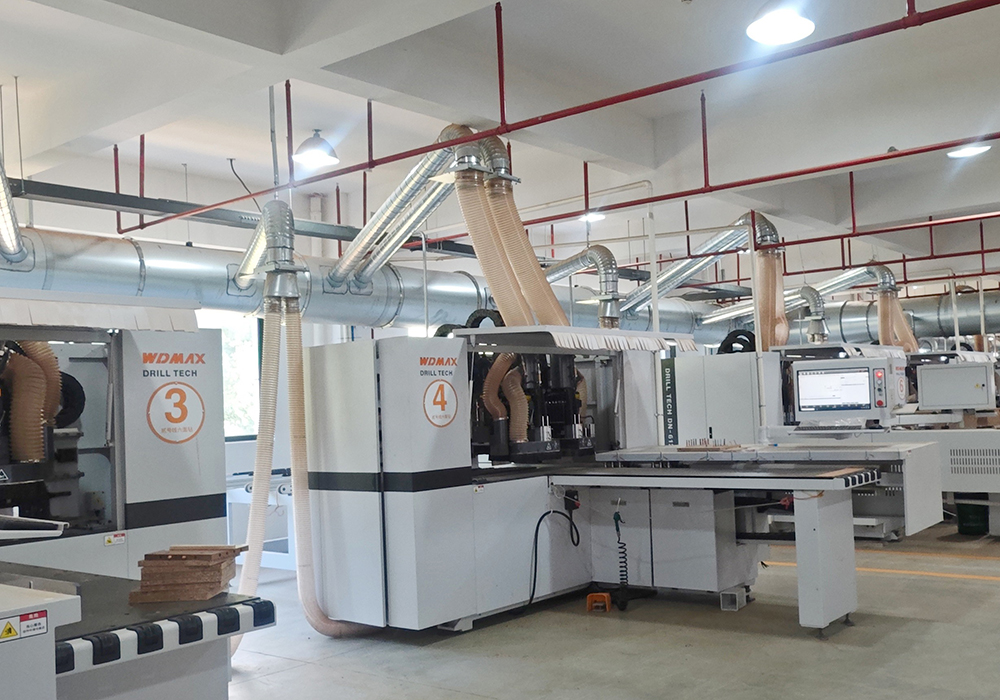
A professional entryway shoe
storage manufacturer offers two primary delivery models, each
suited to different project scales.
2.1 Modular Stackable Systems
Pre‑finished modules (widths 300 mm, 450 mm, 600 mm; heights 450 mm or
900 mm) are CNC‑drilled with standardized dowel and cam‑lock patterns. Benefits
to the B2B client include:
Reduced field labor – assembly is identical to assembling flat‑pack
cabinetry, but with industrial‑grade connections.
Flexible reconfiguration – ideal for staging units or student housing where
partial replacements are common.
Shipping efficiency – modules nest on pallets, reducing cubic volume by
35‑40% compared to pre‑assembled units.
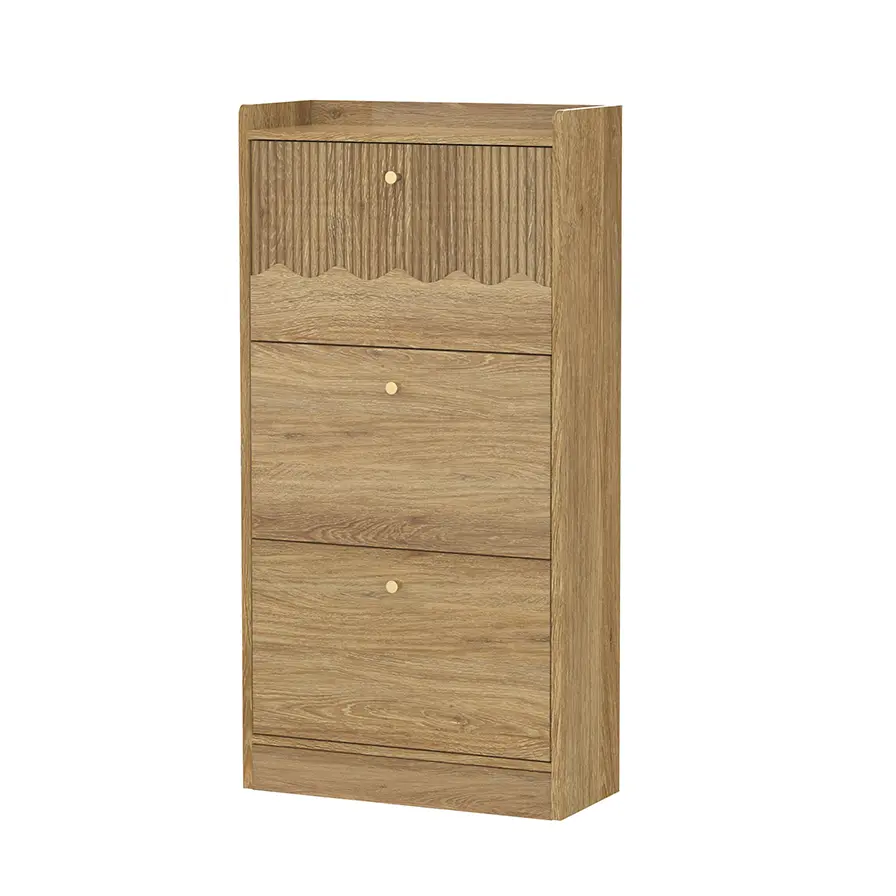
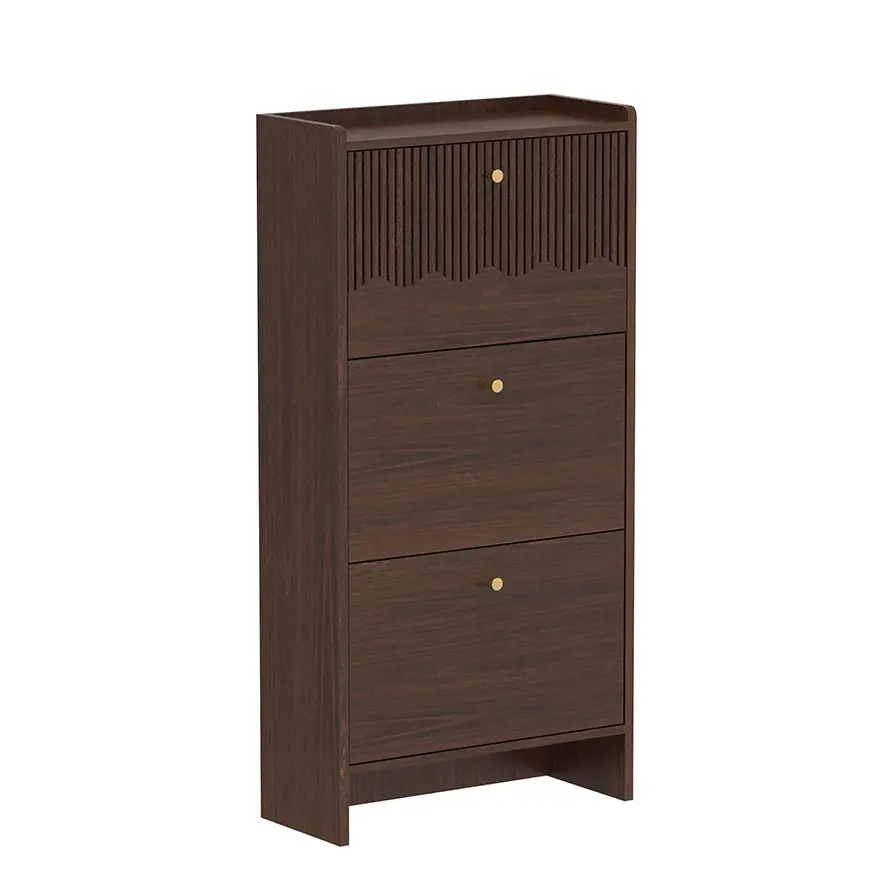
Modular entryway
cabinets with integrated benchtops from Essent Home utilize a
proprietary steel corner bracket system (3 mm thickness, powder‑coated) that
transfers lateral loads to the wall, preventing racking even when fully loaded
with footwear.
2.2 Built‑In / Site‑Measured Constructions
For multi‑family developments where entryway alcoves vary by unit, built‑in
systems provide seamless integration. The manufacturer supplies CNC‑cut panels
with edgebanding (2 mm ABS, impact‑resistant) and assembly hardware. A typical
built‑in installation for 200 units requires:
Laser measurement of each alcove (reported to ±1 mm).
Adjustable side fillers (20‑60 mm width) to absorb irregularities.
Pre‑drilled anchor points for anti‑tip brackets (required for units >1 m
height under ASTM F3097).
This method yields a 100% custom fit without onsite cutting, preserving the
factory‑applied finish. Essent
Home offers an integrated BIM library (Revit families) for both
modular and built‑in configurations, allowing architects to specify and schedule
components directly in their models.
3. Addressing B2B Industry Pain Points: Ventilation, Load Distribution, and
Cleaning Protocols
Standard shoe cabinets often neglect three functional requirements that lead
to premature replacement:
Ventilation: Enclosed, non‑ventilated compartments
accumulate moisture from damp shoes, causing mold growth and odor. A specialized
entryway shoe
storage manufacturer incorporates louvered door panels (open area
>15%) or rear ventilation gaps (10 mm offset from wall). For premium
projects, passive air circulation can be enhanced with small battery‑powered
silica gel cartridges.
Weight load distribution: A single shelf loaded with 8‑10
pairs of adult shoes exceeds 35 kg. Without reinforced shelf pins (minimum 6 mm
diameter, metallic) and a back panel that transfers load to the wall, sagging
occurs. Solutions include 18 mm plywood shelves with a front aluminum stiffener
(20 mm×20 mm channel).
Sanitization compatibility: Post‑pandemic, many commercial
clients require daily disinfection of high‑touch surfaces. Surfaces must
withstand repeated wiping with IPA 70% or sodium hypochlorite 0.5% without
discoloration. HPL and UV‑cured acrylic finishes meet this requirement; raw wood
veneers do not.
Essent Home tests
all finished product surfaces using a modified ISO 11998 scrub test (100 cycles
with disinfectant solution), guaranteeing no visible degradation. This
information is provided in the technical datasheet for each product line.
4. Production Quality Assurance and Compliance Standards
When evaluating a potential entryway shoe
storage manufacturer, B2B buyers should request certifications that
align with their project requirements. Minimum acceptable standards include:
EN 16122:2012 – Domestic and contract storage furniture –
test methods for strength, durability, and stability.
ANSI/BIFMA X5.9-2019 – Standard for storage units
(including lateral stability under horizontal loading).
GREENGUARD Gold (UL 2818) – Low chemical emissions for
indoor environments (schools, healthcare).
ISO 9001:2015 – Quality management systems – essential for
consistent batch production.
Beyond certifications, a professional manufacturer will provide a
first‑article inspection report for each production run,
including measurements, finish gloss level (measured by 60° glossmeter), and
edgeband adhesion test (peel force >3 N/mm). Essent Home implements
a 100% check on hinge hole placement (tolerance ±0.2 mm) using laser templating,
eliminating misalignment during assembly. For large‑scale projects (500+ units),
Essent Home offers on‑site quality audits prior to shipment.
Custom entryway
organizers with adjustable shelving and integrated drawer boxes are
produced on a 5‑axis CNC line, allowing any R‑radius (minimum 3 mm) for
ergonomic edges. The lead time for custom dimensions (non‑standard widths or
heights) is typically 15‑20 working days for quantities up to 300 pieces,
including finishing.
5. Lifecycle Cost Analysis and Warranty Considerations
From a procurement perspective, the lowest initial quotation often leads to
higher total cost of ownership (TCO). A professional entryway shoe
storage manufacturer provides a 5‑ to 10‑year warranty on
mechanical components and a 2‑year warranty on finishes. Compare two scenarios
over a 7‑year period for a 150‑unit apartment building:
Option A (low‑cost vendor): $18,000 initial cost.
Particleboard construction, plastic drawer slides. After 2.5 years, 28% of units
require shelf replacement, 15% have hinge failures. Cumulative
repair/replacement cost $11,000. Total = $29,000.
Option B (Essent Home engineered): $30,000 initial cost.
MR‑MDF with HPL, full‑extension slides, reinforced back. One scheduled
maintenance visit at year 4 (tightening of cam locks, $800). Total =
$30,800.
The engineered solution costs only 6% more over 7 years while eliminating
resident complaints and maintenance disruptions. For projects with rental
income, this translates to higher net operating income and better guest
satisfaction scores. Essent
Home provides a TCO calculator tailored to each client’s utility
rates and maintenance labour costs.
Frequently Asked Questions – B2B Specification & Procurement
Q1: What fire rating requirements apply to entryway shoe storage in
multi‑family buildings?
A1: Under IBC 2018/2021, storage cabinets in corridors or
dwelling unit entries must meet one of two conditions: (1) Constructed from
materials with a flame spread index ≤75 (ASTM E84) and smoke developed ≤450, or
(2) Provided with automatic sprinkler coverage (NFPA 13). Essent Home uses Class
A HPL (flame spread 20, smoke 180) and can supply a product label stating
compliance. For buildings without sprinklers, we recommend metal door inserts or
12 mm calcium silicate backing panels.
Q2: How does a manufacturer handle color matching across different
production batches for large projects?
A2: Professional manufacturers buy laminate or veneer from
the same dye lot for the entire order. For veneer, we match using a X‑Rite
spectrophotometer (ΔE < 0.8) and supply spare material (5% overage) from the
same batch. Essent Home provides a signed color lot certificate with every
shipment. For projects exceeding 6 months’ phased delivery, we reserve the
original material batch under climate‑controlled storage.
Q3: Can entryway shoe storage be designed to accommodate accessibility (ADA)
requirements?
A3: Yes. For commercial spaces, the toe kick must be at
least 100 mm high, and operable parts (handles) must be between 380 mm and
1220 mm from the floor (2010 ADA Standards §309). A professional entryway shoe
storage manufacturer can integrate pull‑handles with closed‑loop
design (finger clearance >25 mm) and lever latches that require ≤5 lbf to
operate. Essent Home offers an ADA compliance addendum with each
accessible‑height cabinet design.
Q4: What is the typical minimum order quantity (MOQ) for custom finish and
dimensions?
A4: For laminate finishes from our standard collection (65
options), MOQ is 50 units per SKU. For custom RAL or Pantone matching (lacquer
or UV‑matte), MOQ is 150 units. For wood veneers, MOQ is 100 units due to log
slicing and lay‑up requirements. Essent Home accommodates sample orders (5‑10
units) at 1.5× standard pricing to validate fit and finish before full
production.
Q5: How are warranty claims processed for contract furniture delivered to
multiple sites?
A5: A responsible entryway shoe
storage manufacturer provides a web‑based claim portal where site
managers can upload photos and unit serial numbers (each cabinet has a
tamper‑evident label). Replacement parts are shipped within 5 working days via
expedited courier. For major component failures (door, drawer box), Essent Home
offers a video diagnostic session and, if verified, dispatches a local trained
installer within 5‑10 days at no cost to the client during the first 3 years of
warranty.
Request a Project Specification Kit & Quote
Whether you are a property developer fitting out 200 apartments or an
architect specifying for a boutique hotel, partnering with an experienced entryway shoe
storage manufacturer ensures predictable cost, durability, and
aesthetics. Essent
Home delivers:
Free technical consultations with our in‑house industrial engineers.
BIM‑ready families and 2D CAD blocks for all standard product lines.
Sample boards (300 mm × 300 mm) shipped within 48 hours globally.
Volume pricing – discounts from 12% (100 units) to 28% (1,000+
units).
Submit your request via the inquiry form at https://essentfurniture.com/contact.html , or send your project specifications (drawings, quantities, required delivery
schedule) directly to our B2B sales team at
ceciliahuang@essenthome.com.
For completed project images and installation referrals, explore our
product gallery and
contract case studies online.