In the competitive landscape of home furnishings, the entryway has become a focal point for both functionality and design. As a result, the demand for well‑crafted, space‑efficient, and aesthetically pleasing shoe storage solutions has grown significantly. For furniture brands, retailers, and importers, partnering with the right manufacturer through a shoes cabinet oem arrangement is critical to delivering quality products while maintaining margins. With over two decades of experience in high‑end furniture manufacturing and global sourcing, I have witnessed the complexities of OEM partnerships—from material selection to logistics. This article provides a comprehensive technical and strategic overview of shoe cabinet OEM, addressing the key considerations, common pitfalls, and best practices for successful collaboration. We draw on the expertise of Essent Home, a leader in custom furniture manufacturing.
Understanding the Shoe Cabinet OEM Landscape
An OEM (Original Equipment Manufacturer) partnership for shoe cabinets involves a manufacturer producing goods according to a buyer's specifications, which are then sold under the buyer's brand. The shoes cabinet oem model allows brands to leverage established production capabilities without investing in factories. However, the success of such partnerships hinges on several factors:
Design and engineering: Translating concept art into manufacturable products.
Material sourcing: Selecting appropriate woods, boards, hardware, and finishes.
Quality assurance: Ensuring consistency across production runs.
Compliance: Meeting safety and environmental standards in target markets.
Supply chain logistics: Managing lead times, packaging, and shipping.
Technical Specifications and Material Selection
The durability, appearance, and cost of a shoe cabinet are determined by the materials and construction methods used. When specifying a shoes cabinet oem project, buyers must make informed decisions about the following components.
Core Materials
Solid wood: Used for frames, legs, or decorative elements. Common species include rubberwood, oak, ash, and walnut. Solid wood offers strength and a premium appearance but requires careful drying to prevent warping.
Engineered wood: Medium‑density fiberboard (MDF) and particleboard are widely used for panels and carcasses due to their stability and cost‑effectiveness. MDF provides a smooth surface for painting or veneering, while particleboard is suitable for hidden components.
Plywood: Often used for back panels or structural components where screw‑holding strength is required. Birch or poplar plywood is common.
Veneers: Real wood veneers over MDF or plywood offer the look of solid wood at a lower cost and with greater dimensional stability.
Finishes and Coatings
The finish protects the cabinet and defines its aesthetic. Options include:
Paint: Polyurethane or acrylic paints provide a durable, washable surface. Matte, satin, and gloss levels can be specified.
Stain and lacquer: For wood veneers or solid wood, stain highlights the grain, and a topcoat of lacquer (nitrocellulose, PU, or UV‑cured) adds protection.
Melamine or laminate: Thermally fused melamine on particleboard or MDF is economical and scratch‑resistant, ideal for modern styles.
Natural oil or wax: For a more organic look, hardwax oils penetrate the wood and provide a breathable surface.
Hardware and Mechanisms
Shoe cabinets often include moving parts that must withstand repeated use:
Hinges: Soft‑close hinges are now standard in quality cabinetry. European‑style concealed hinges (e.g., Blum, Hettich) offer adjustability and durability.
Drawer slides: For cabinets with drawers, ball‑bearing slides with soft‑close mechanisms are recommended. Undermount slides provide a cleaner look.
Handles and knobs: These can be metal (zinc alloy, stainless steel), wood, or leather. OEM buyers may supply their own designs.
Ventilation: Many shoe cabinets include metal or plastic vent covers to allow air circulation, preventing odors.
Design for Manufacturability (DFM) in Shoe Cabinets
A common challenge in shoes cabinet oem projects is that designs created by industrial designers without manufacturing input can be costly or impossible to produce efficiently. DFM principles should be applied early:
Standardized panel sizes: Designing cabinets around standard sheet sizes (e.g., 4'x8' or 1220x2440 mm) minimizes waste and reduces cost.
Joinery: For RTA (ready‑to‑assemble) cabinets, cam lock and dowel construction is standard. For assembled cabinets, dowel and glue, or pocket hole screws may be used.
Tolerances: Specify realistic tolerances (e.g., ±0.5 mm for CNC‑cut parts) to ensure fit without excessive rework.
Modularity: Designing cabinets that can be stacked or combined allows for a product family with fewer unique components.
Essent Home employs experienced engineers who collaborate with clients to refine designs for efficient production while preserving aesthetic intent.
Quality Control in Shoe Cabinet Manufacturing
Consistent quality is the foundation of a successful OEM partnership. Buyers should establish clear quality standards and inspection protocols.
In‑Process and Final Inspection
Raw material inspection: Verify that incoming boards, veneers, and hardware meet specifications (moisture content, grade, thickness).
In‑process checks: During machining, assembly, and finishing, random samples are checked for dimensional accuracy, glue application, and finish consistency.
Final inspection: A representative sample (e.g., AQL level II) is inspected for appearance, function, and packaging. Common defects include scratches, dents, color mismatch, misaligned doors, and hardware issues.
Performance Testing
Depending on the target market, specific tests may be required:
Stability and load: Shelves should withstand a specified weight (e.g., 20 kg per shelf) without deflection or failure.
Cycle testing: Doors and drawers are opened and closed repeatedly (e.g., 50,000 cycles) to verify hinge and slide durability.
Finish durability: Tests for scratch resistance, heat resistance, and chemical resistance (e.g., acetone, water).
Safety: Compliance with tipping stability standards (e.g., ASTM F3096 in the US) to prevent furniture tip‑over.
Supply Chain and Logistics Considerations
An OEM project is not complete until the product is delivered to the buyer's warehouse. Several logistics factors must be addressed.
Packaging
Shoe cabinets are often shipped as flat‑pack (RTA) or fully assembled. Packaging must protect the product during ocean freight and last‑mile delivery. Typical packaging includes:
Corrugated boxes with appropriate thickness (e.g., 5‑ply for heavy items).
Corner protectors, foam sheets, or edge protectors for vulnerable areas.
Polybags to prevent moisture damage.
Desiccant packs for high‑humidity routes.
Lead Times and MOQs
Understanding the manufacturer's production schedule is vital. Typical lead times for a shoes cabinet oem order range from 45 to 90 days, depending on complexity and order quantity. Minimum order quantities (MOQs) often start at 100–300 units per design, but some manufacturers offer lower MOQs for a premium. Essent Home works with clients to balance MOQ requirements with market entry strategies.
Compliance and Certification
Different markets have specific regulations for furniture:
US: CARB Phase 2 (formaldehyde emissions), CPSC tip‑over standards.
EU: REACH, EN standards for stability and safety.
Australia/New Zealand: Similar to EU standards with local variations.
Ensure that your OEM partner has experience with these certifications and can provide the necessary documentation.
Common Industry Pain Points and Solutions
Based on extensive experience in furniture sourcing, the following issues frequently arise in shoes cabinet oem projects.
Communication and Language Barriers
Misinterpretation of specifications is a leading cause of production errors. Mitigation:
Provide detailed technical drawings (DXF, PDF) with dimensions, tolerances, and assembly instructions.
Use 3D renderings or physical samples to clarify design intent.
Establish a single point of contact and conduct regular video meetings.
Work with manufacturers that have English‑speaking project managers (like Essent Home).
Inconsistent Quality Across Orders
Variability can arise from changes in raw material batches or production shifts. Solutions:
Implement a pre‑production sample approval process.
Conduct third‑party inspections during production (mid‑term and final).
Maintain a quality manual with clear acceptance criteria (e.g., acceptable color variation, scratch standards).
Supply Chain Delays
Raw material shortages, especially for specialty veneers or hardware, can disrupt schedules. Mitigation:
Place orders well in advance and secure material commitments.
Specify alternative materials that can be substituted if primary sources are delayed.
Build buffer time into the delivery schedule.
Intellectual Property Protection
Brands investing in unique designs need assurance that their designs won't be copied. Steps to protect IP:
Sign a non‑disclosure agreement (NDA) before sharing detailed designs.
Work with manufacturers who have a reputation for respecting IP.
Consider design patents in key markets.
Selecting the Right Shoe Cabinet OEM Partner
Choosing a manufacturing partner is a strategic decision. Evaluate potential partners based on:
Experience and portfolio: Have they made similar products? Ask for case studies and client references.
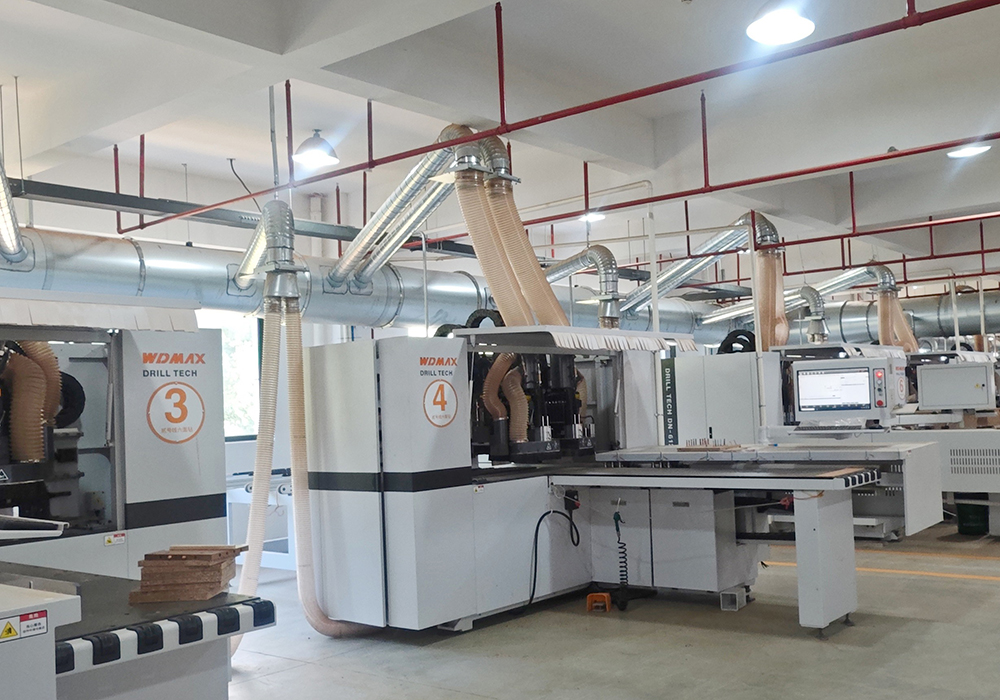
Factory capabilities: Visit the factory or conduct a virtual audit. Assess machinery (CNC routers, edgebanders, finishing lines) and workforce skill.
Quality management system: ISO 9001 certification is a good indicator of process control.
Sourcing network: Do they have reliable suppliers for materials and hardware?
Communication and responsiveness: How quickly and clearly do they respond to inquiries?
Future Trends in Shoe Cabinet Design and Manufacturing
The shoe cabinet category continues to evolve. Key trends include:
Smart storage: Integrated lighting (LED strips), motion sensors, and even UV sanitizers.
Sustainable materials: Use of recycled wood, bamboo, and low‑VOC finishes.
Multi‑functionality: Cabinets that double as seating, with flip‑up tops or cushions.
Customization: Modular systems that allow consumers to configure size, color, and internal fittings.
Direct‑to‑consumer (DTC) packaging: Smaller, more protective packaging for e‑commerce shipments.
Manufacturers like Essent Home are investing in these technologies to offer clients competitive advantages.
Frequently Asked Questions (FAQs) about Shoe Cabinet OEM
Q1: What is the typical minimum order quantity (MOQ) for a shoe
cabinet OEM project?
A1: MOQs vary widely depending on the
complexity and materials. For simple designs, MOQs may start at 100–200 units
per SKU. For more complex or high‑end cabinets, MOQs could be 300–500 units.
Some manufacturers, like Essent
Home, offer flexible MOQs for initial sampling or pilot runs.
Q2: How long does it take to develop a new shoe cabinet design from
concept to production?
A2: A typical timeline is 8–16 weeks. This
includes design finalization (2–4 weeks), engineering and prototyping (3–5
weeks), sample approval (2–3 weeks), and production lead time (4–8 weeks).
Rushed timelines are possible but may incur additional costs.
Q3: What information should I provide to get an accurate quote for a
shoes cabinet oem project?
A3: Provide detailed specifications:
drawings or 3D models, dimensions, materials (e.g., 18 mm MDF with oak veneer),
finish (paint color, stain), hardware requirements, packaging requirements, and
target quantity. The more detail, the more accurate the quote.
Q4: How can I ensure the quality of shoe cabinets produced
overseas?
A4: Implement a multi‑stage quality control plan:
pre‑production sample approval, in‑line inspections during manufacturing, and
final random inspection before shipment. Third‑party inspection agencies can be
hired if you cannot be present. Establish clear quality standards (AQL levels)
in your contract.
Q5: What are the most common quality issues with OEM shoe
cabinets?
A5: Common issues include: color variation between
batches, misaligned doors or drawers, scratches or dents in the finish, hardware
that fails after limited use, and packaging damage during transit. These can be
mitigated through clear specifications and rigorous inspection.
Q6: Do I need to provide my own hardware (hinges, handles) or does
the OEM supplier source it?
A6: Both options are possible. Many OEM
suppliers have established relationships with hardware brands and can source at
competitive prices. If you have proprietary hardware or specific brand
requirements, you can supply it, but discuss lead times and compatibility with
the factory.
Q7: What certifications should an OEM shoe cabinet manufacturer
have?
A7: Look for ISO 9001 (quality management). Depending on your
target market, certifications for formaldehyde emissions (CARB, E1), safety
(e.g., tip‑over standards), and environmental management (ISO 14001) may be
required. Ask for test reports.
Q8: Can I make changes to an existing shoe cabinet
design?
A8: Yes, modifications to size, material, finish, or
hardware are common in OEM. However, changes may incur tooling or setup fees,
especially if they require new molds or CNC programs. Discuss the extent of
changes early to understand cost implications.
In summary, a successful shoes cabinet oem partnership requires a deep understanding of materials, manufacturing processes, quality control, and supply chain logistics. By approaching the collaboration with clear specifications, realistic expectations, and a focus on communication, furniture brands can bring high‑quality products to market efficiently. With experienced partners like Essent Home, navigating these complexities becomes a strategic advantage.