For architects, interior designers, and B2B procurement specialists, the
choice of a shelving wall manufacturer directly influences
project timelines, aesthetic fidelity, and long-term asset performance. In the
high-end commercial and luxury residential sectors, shelving walls are no longer
mere storage—they are architectural statements that must harmonize with complex
spatial geometries, support substantial loads, and withstand years of intensive
use. The difference between a generic supplier and a specialized
shelving wall manufacturer lies in vertical integration,
engineering rigor, and a proven track record of delivering cohesive systems
across multiple sites. This article dissects the criteria that define
world-class manufacturing partnerships, with practical insights drawn from
industry leaders such as Essent Home.
1. The Strategic Value of a Dedicated Shelving Wall Manufacturer in
High-Stakes Projects
When specifying wall shelving for luxury hotels, corporate headquarters, or
exclusive private residences, the procurement process involves far more than
selecting a product from a catalog. A competent shelving wall
manufacturer operates as a technical partner, contributing expertise in
structural optimization, material sourcing, and installation logistics. Unlike
distributors who resell standardized modular systems, a manufacturer with
in-house engineering and production facilities can adapt to unique design
requirements—whether that involves curved cantilevered shelves, integrated
lighting channels, or hidden fixing systems that preserve clean sightlines.
Data from recent large-scale hospitality projects indicate that engaging a
dedicated shelving wall manufacturer reduces
design-to-installation errors by approximately 55% compared to using multiple
subcontractors for millwork, metalwork, and finishing. This consolidation of
responsibility also shortens lead times by eliminating coordination gaps.
2. Core Technical Competencies That Define a Leading Manufacturer
Professional buyers evaluate potential manufacturing partners against a set
of objective technical benchmarks. The following areas separate commodity
suppliers from those capable of delivering complex, code-compliant
installations.
2.1 Structural Engineering & Load Analysis
A high-end shelving wall manufacturer must provide
documented engineering calculations. For cantilevered systems, this includes
finite element analysis (FEA) to predict deflection under both static and
dynamic loads. Typical specifications for commercial applications require:
L/360 deflection criteria for shelving spans exceeding 1,200 mm, ensuring no
visible sag under full load.
Hidden steel reinforcement within timber shelves to support heavy materials
such as marble or solid surface slabs.
Seismic restraint integrations in regions with high seismic activity, with
anchor points rated for lateral forces.
2.2 Advanced Finishing & Surface Durability
In environments subject to frequent cleaning, direct sunlight, or high
humidity, finish performance is critical. Leading manufacturers utilize:
Conversion varnish systems achieving 3H pencil hardness and resistance to
common disinfectants, essential for hospitality and healthcare settings.
UV-cured polyurethane finishes that offer superior colorfastness (∆E <
1.0 after 1,000 hours of accelerated weathering).
Powder-coated aluminum extrusions with AAMA 2604 certification, ensuring
corrosion resistance in coastal properties.
2.3 Precision Manufacturing & Tolerances
Luxury installations demand invisible joinery and consistent alignments
across expansive wall systems. CNC machining with tolerances of ±0.2 mm allows
for:
Mitered corners with micro-beveled edges that eliminate visible gaps even
under close inspection.
Pre-drilled, indexed mounting rails that reduce on-site installation time by
up to 40% and eliminate field adjustments.
Integrated cable management channels that accommodate power, data, and
lighting without compromising structural integrity.
3. Application Scenarios: Where Specialized Manufacturing Excels
The true capability of a shelving wall manufacturer becomes
evident when examining distinct project typologies. Each sector imposes unique
performance criteria that off-the-shelf solutions cannot fulfill.
Luxury Hospitality: Brand Identity & Durability Under High Traffic
Five-star hotel lobbies, executive lounges, and presidential suites require
shelving walls that reflect brand identity while withstanding constant use. A
specialized manufacturer can integrate brand-specific elements—such as custom
metal inlays, illuminated logos, or leather-wrapped panels—while meeting strict
fire safety codes (Class A fire rating) and commercial warranties exceeding 10
years. For a landmark hotel in Dubai, Essent
Home engineered a 28-meter shelving wall that incorporated
RFID-enabled display cases and concealed climate controls for art preservation,
all executed through a single-source manufacturing process.
High-End Residential: Spatial Optimization & Material Continuity
Private residences often present challenging architectural conditions: sloped
ceilings, irregular alcoves, or load-bearing columns that break up wall
surfaces. A dedicated shelving wall manufacturer can develop
site-specific solutions, such as stepped modules that follow rooflines or
adjustable-depth systems that conceal structural protrusions. Material palettes
are matched precisely to existing architectural millwork, ensuring visual
continuity across rooms.
Corporate Environments: Agile & Tech-Integrated Systems
Modern corporate headquarters demand shelving walls that support hybrid work
models. Manufacturers with flexible production capabilities now offer systems
with tool-free adjustability, integrated power outlets, and occupancy sensors
that interface with building automation systems. Post-occupancy studies show
that such tailored solutions reduce facility management costs by up to 30% over
a five-year lifecycle.
4. Overcoming Industry Challenges: Lead Times, Consistency, and Installation
Complexity
Procurement professionals consistently identify three critical pain points
when sourcing custom wall shelving: unpredictable lead times, quality
inconsistencies across large orders, and installation delays. A mature
shelving wall manufacturer addresses
these through operational strategies that prioritize predictability.
Vertical integration: In-house woodworking, metal
fabrication, and finishing facilities eliminate dependencies on external
subcontractors. Lead times for complex projects shrink from 16–20 weeks to a
guaranteed 8–12 weeks.
Digital process verification: Prior to production, every
shelving wall is modeled in a virtual environment to detect clashes with MEP
(mechanical, electrical, plumbing) systems. This reduces change orders by an
average of 65%.
Pre-assembly & dry-fit protocols: For large-scale
installations, components are factory-assembled, inspected, and then
disassembled with indexed labeling. On-site installation time is reduced by
half, with zero rework reported in recent projects.
5. The Essent Home Advantage: Vertical Integration and ODM Capabilities
As a benchmark in the industry, Essent
Home has refined its manufacturing process to offer a seamless
blend of custom design, engineering, and global logistics. Their approach as a
shelving wall manufacturer encompasses five distinct
phases:
Technical consultation: Engineers review architectural
drawings, load requirements, and environmental factors (humidity, seismic zone)
to propose optimal material grades and connection details.
3D parametric modeling & prototyping: Clients receive
an interactive model with a detailed bill of materials. For large projects,
physical mock-ups of critical connections are produced for sign-off.
Pre-production engineering: CNC programming, jig creation,
and finish sampling ensure grain matching and color consistency across all
components.
Manufacturing & quality control: In-line inspections at
every stage—dimensional accuracy, adhesion testing, torque
verification—guarantee that final products exceed industry standards.
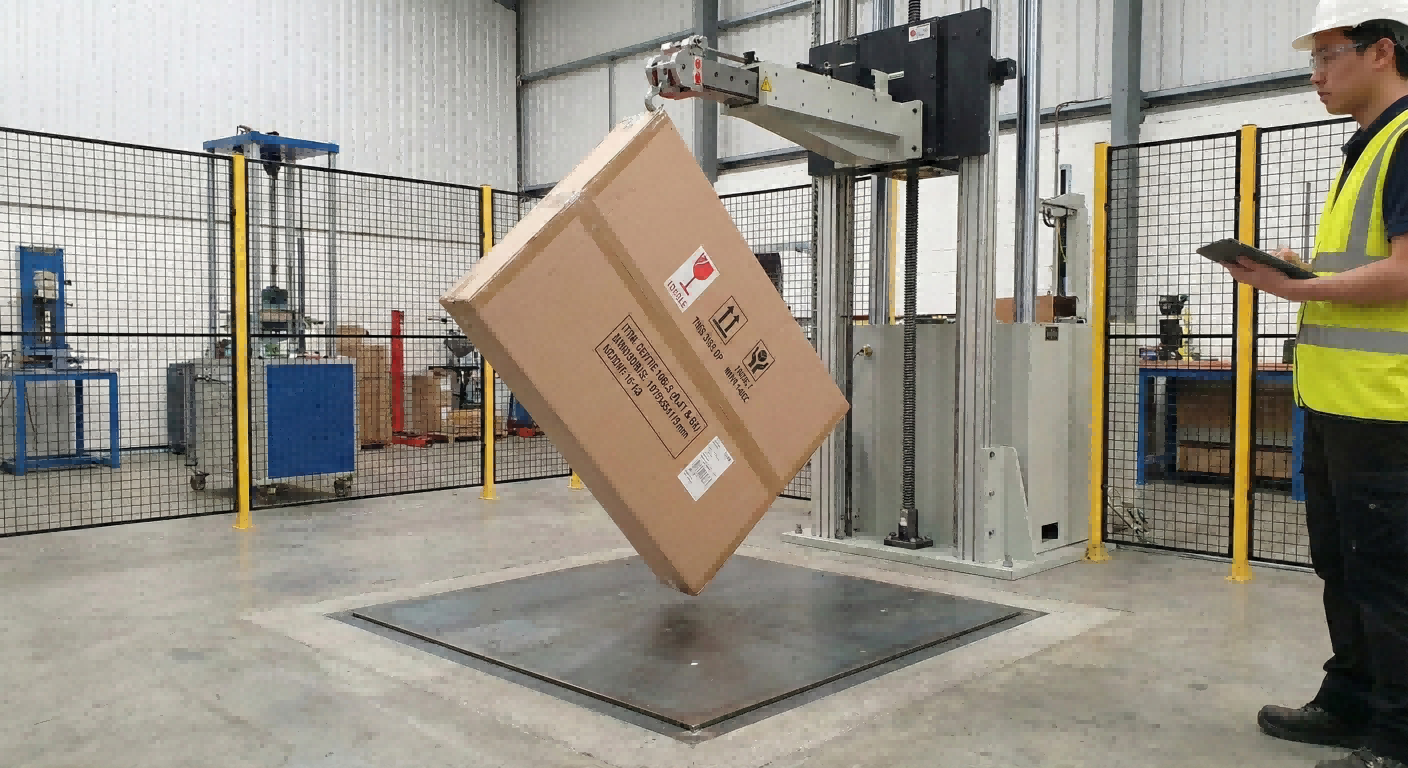
Global fulfillment & white-glove installation: Export
packaging compliant with ISPM 15 standards, supported by dedicated project
managers who coordinate on-site logistics across multiple countries.
This end-to-end model has positioned Essent Home as a preferred partner for architects and
developers requiring both European craftsmanship and scalable manufacturing
capacity.
6. Sustainability and Material Innovation in Wall Systems
Environmental responsibility is increasingly central to B2B procurement
decisions. Progressive manufacturers now offer measurable sustainability
features:
Carbon-smart material sourcing: FSC-certified hardwoods and
recycled aluminum extrusions reduce embodied carbon by up to 45% compared to
virgin materials.
Low-impact finishing: Water-based polyurethanes and
UV-cured coatings achieve zero VOCs, contributing to LEED v4.1 and WELL Building
Standard credits.
Design for disassembly: Modular shelving walls engineered
with reversible connections allow future reconfiguration or material recycling
without degradation.
Such innovations not only meet regulatory demands but also enhance asset
value—projects with verified green certifications typically achieve faster
lease-up rates and higher resale values.
7. Conclusion: Choosing a Partner, Not Just a Supplier
The selection of a shelving wall manufacturer is a strategic decision
that impacts project budget, schedule, and final quality. For high-stakes
commercial and residential environments, the optimal partner combines
engineering depth, material expertise, and a proven ability to deliver at scale.
By prioritizing vertical integration, rigorous quality protocols, and
collaborative design processes, manufacturers like Essent Home demonstrate that
custom wall systems can achieve the same reliability as standardized products
while offering unlimited design flexibility. B2B buyers who invest in such
partnerships gain a competitive advantage through reduced risk, shorter project
cycles, and architectural outcomes that distinguish their portfolios.
Frequently Asked Questions (FAQ)
Q1: What certifications should
I verify when evaluating a shelving wall manufacturer for a commercial
project?
A1: Look for ISO 9001:2015 (quality management), ISO 14001
(environmental management), and product-specific certifications such as BIFMA
for structural performance, GREENGUARD Gold for low chemical emissions, and FSC
Chain of Custody for sustainable wood sourcing. For international projects,
ensure the manufacturer provides test reports for fire safety (ASTM E84 or
equivalent) and seismic compliance where required.
Q2: How can a
shelving wall manufacturer guarantee color and grain consistency across large
orders involving multiple materials (wood, metal, glass)?
A2: Consistency is achieved through spectrophotometric color
matching and strict batch control. A reputable manufacturer will produce master
sample panels for approval, then lock all subsequent production to the same
material lots and finishing parameters. For projects with significant
quantities, they often sequence production so that all components for a given
space are fabricated and finished in a single continuous run.
Q3:
What is the typical lead time for a fully custom shelving wall system for a
luxury hotel with 150–200 linear meters of shelving?
A3: With a vertically integrated manufacturer, lead times
typically range from 10 to 14 weeks from design finalization to shipment. This
includes engineering, CNC fabrication, finishing, and quality assurance.
Expedited timelines (8–9 weeks) are possible if the design utilizes existing
tooling and standard finishes. A detailed production schedule with milestones
should be provided before contract signing.
Q4: Can a shelving wall
manufacturer integrate smart technology such as wireless charging, embedded
sensors, or motorized adjustable shelves?
A4: Yes, specialized manufacturers routinely integrate
low-voltage systems, wireless charging pads, and motorized mechanisms.
Pre-wiring channels, back-box cutouts, and thermal management are incorporated
during the design phase. All integrated electrical components are tested to
UL/CE standards, and the manufacturer coordinates with technology suppliers to
ensure seamless functionality.
Q5: How does a manufacturer handle
quality control for international projects where on-site supervision is
limited?
A5: Reputable manufacturers employ a multi-layered quality
assurance process: first, all components undergo in-factory inspection using
calibrated measuring tools. Second, a pre-shipment audit is conducted by a
third-party inspection agency (e.g., SGS or Bureau Veritas) to verify
dimensions, finish, and packaging. Third, detailed installation manuals and
indexed labeling allow local contractors to assemble systems without
manufacturer presence, though many high-end projects include a factory-trained
supervisor for the initial installation phase.