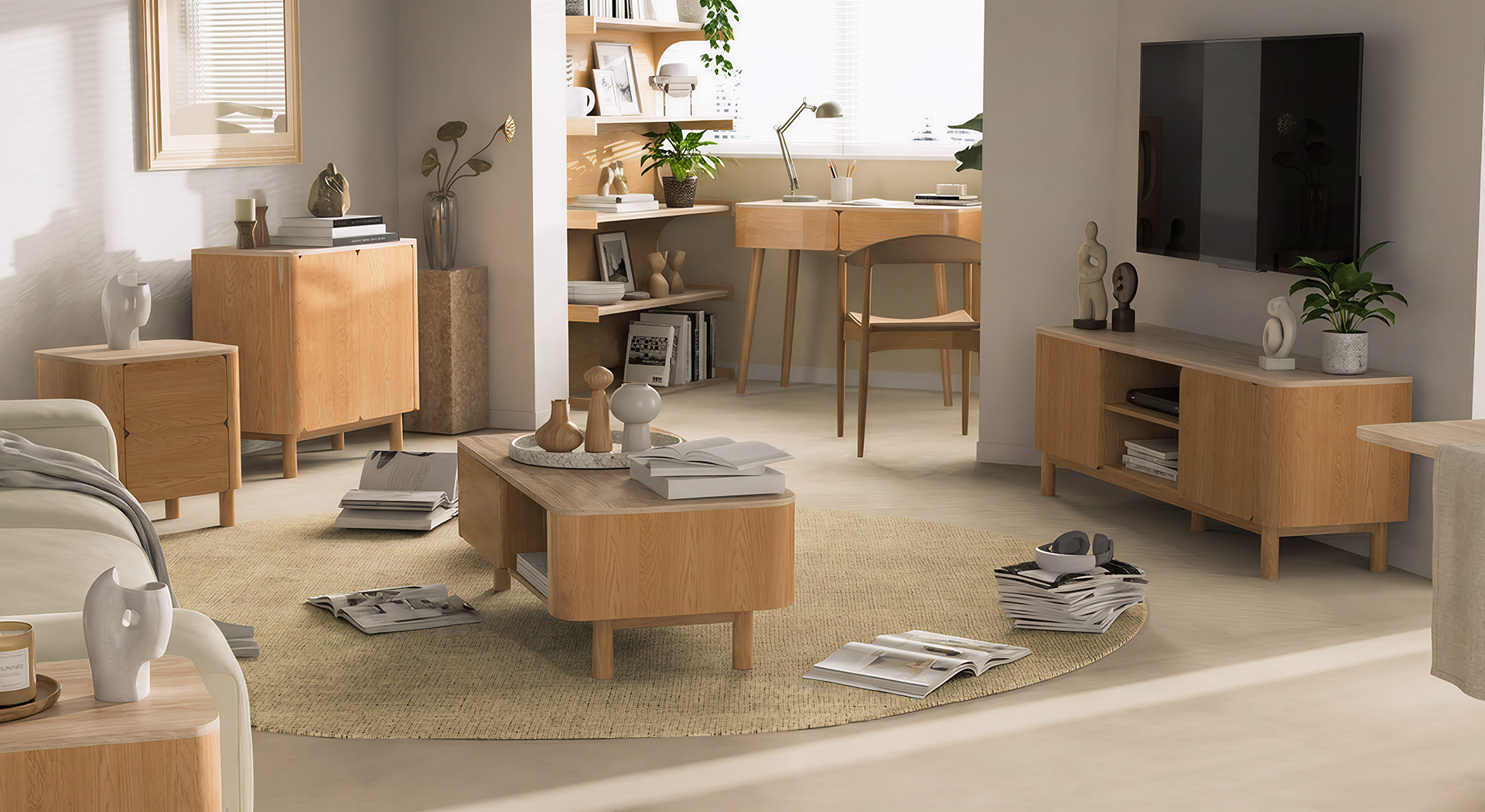
In the global commercial furniture sector, sourcing case goods that combine
aesthetic appeal with structural durability is a complex challenge. For
hospitality procurement managers, high-volume retailers, and premium interior
design brands, the wooden storage cabinet represents a significant investment.
Partnering with a specialized manufacturing provider allows businesses to
streamline production, verify material quality, and guarantee product longevity.
This document provides an analysis of the engineering principles, material
standards, and supply chain logistics involved in a professional drawer dresser oem partnership.
When executing large-scale hospitality or retail production runs,
off-the-shelf items rarely meet specific spatial or durability criteria.
Utilizing a custom manufacturing model ensures that every joint, drawer slide,
and surface finish complies with regional commercial codes and aesthetic
guidelines. Manufacturers like Essent Home work closely with
product developers to translate architectural concepts into container-load
shipments ready for distribution.
Key Challenges in Sourcing a Reliable Drawer Dresser OEM Partner
Case goods manufacturing is prone to subtle defects that can compromise a
brand's reputation. Understanding these challenges assists procurement teams in
vetting potential production facilities.
1. Dimensional Stability and Moisture Management
Wood is a hygroscopic material, meaning it constantly absorbs and releases
moisture based on its environment. If raw timber is not properly kiln-dried
before processing, completed drawer chests may warp, crack, or twist when
shipped to regions with different humidity levels. An experienced manufacturing
facility maintains rigorous moisture-monitoring protocols, ensuring raw lumber
is stabilized between 8% and 12% moisture content before milling begins.
2. Hardware Alignment and Weight Tolerance
The weakest points of any drawer chest are the mechanical slide mechanisms
and the structural joinery of the drawer boxes. Over time, heavy daily use can
cause drawer sag, misaligned drawer fronts, or complete hardware failure. A
qualified drawer
dresser oem partner must implement premium hardware solutions, such
as soft-closing undermount slides with load ratings of at least 35 kilograms,
ensuring smooth operation over thousands of cycles.
3. Compliance with Safety and Environmental Standards
Global markets require compliance with strict safety and emissions
regulations. In North America, the CARB Phase 2 and TSCA Title VI standards
dictate permissible formaldehyde emission limits for composite wood products
like MDF and particleboard. Additionally, safety standards like ASTM F2057-23
demand that all clothing storage units over a certain height pass strict
tip-over tests and include reliable anti-tip hardware kits. Failure to meet
these regulatory standards can lead to costly custom delays, product recalls,
and legal liability.
Material Selection and Structural Engineering for Case Goods
Achieving a balance between structural strength and cost efficiency requires
a deep understanding of material sciences and joinery techniques.
Solid Wood vs. Engineered Wood Substrates
While solid timber offers natural beauty and high perceived value, a hybrid
construction method is often the most stable option for large-scale production.
Modern manufacturing frequently utilizes a combination of materials to optimize
durability:
Solid Timber (Ash, Oak, Walnut, Beech): Best utilized for
structural frames, legs, and drawer front borders where maximum impact
resistance is needed.
Medium-Density Fiberboard (MDF) with Wood Veneer: Ideal for
large flat panels, such as tops and side walls. MDF provides a flat, isotropic
substrate that does not expand or contract significantly with humidity changes,
preventing the natural splitting associated with wide solid wood panels.
Multi-layer Plywood: Frequently chosen for drawer boxes due
to its high screw-holding capacity and resistance to shear forces.
High-Performance Joinery Methods
To ensure a dresser can withstand the rigors of commercial shipping and years
of daily use, traditional and modern joinery methods are blended:
Dovetail Joinery: English or French dovetails on drawer
boxes represent the gold standard for tensile strength, preventing the drawer
front from separating from the sides during heavy use.
Mortise and Tenon Joinery: Used for the primary
load-bearing outer frames, providing superior structural rigidity compared to
simple dowel or cam-lock configurations.
Dowel and Glue Construction: Enhanced with high-solids PVAc
adhesives for internal shelving and partition panels to maintain structural
squareness during transit.
Quality Assurance Protocols in Commercial Furniture Production
A structured quality control framework is necessary to ensure consistent
product standards across multiple production runs. Trusted manufacturing brands,
such as Essent Home,
implement multi-stage inspection gates throughout the production timeline.
Pre-Production Raw Material Auditing
Before any timber is cut, inspectors verify species classification, moisture
levels, and the absence of structural knots or insect damage. Veneer sheets are
carefully matched for grain consistency and color uniformity across the entire
production batch.
In-Process Tolerances and Machining Precision
Using high-precision CNC routers allows manufacturers to maintain dimensional
tolerances of less than 0.5 millimeters. This precision is vital for the smooth
installation of drawer runners and ensures that all components fit together
tightly. Regular testing is performed at several stages:
First-Article Inspection (FAI): The first fully assembled
unit from a batch is thoroughly measured and tested against the approved CAD
shop drawings.
Diagonal Alignment Tests: Ensuring the outer cabinet
carcass is perfectly square to prevent drawer misalignment.
Hardware Cyclic Testing: Randomly testing drawer slides to
50,000 cycles under full weight capacity.
Surface Finish Durability Testing
The protective coating on a dresser must resist scratches, household
chemicals, and moisture rings from cups. Industrial OEM manufacturers apply
multi-layer polyurethane (PU) or ultraviolet (UV) cured coatings. These finishes
undergo cross-hatch adhesion tests, chemical resistance evaluations (using
alcohol, coffee, and water exposures), and pencil hardness tests to ensure they
meet commercial-grade standards.
Customization Capabilities: From CAD to Container Loading
Successful execution of a drawer dresser oem project depends on clear engineering communication and secure packaging
design.
Engineering Translation and Prototyping
The process begins with translating a designer's concept sketch or 3D model
into production-ready CAD drawings. These schematics outline material
specifications, joinery details, and hardware positions. Once these drawings are
approved, a physical prototype is created. This sample allows clients to inspect
the scale, finish, and mechanical functions before committing to full-scale
production.
Packaging Engineering and Shipping Optimization
Even the highest quality furniture is vulnerable during maritime shipping and
domestic distribution. To protect finished goods, professional OEM manufacturers
design customized packaging solutions. This involves utilizing high-density
polyethylene (PE) foam corner protectors, honeycombed cardboard buffers, and
double-wall corrugated outer cartons. Packaging setups are verified using
standardized ISTA 3A or ISTA 1A drop testing protocols to ensure the product
arrives undamaged.
Selecting the Appropriate Production Strategy
B2B buyers must evaluate a manufacturer's production capacity, machinery
investment, and supply chain transparency. A reliable drawer dresser oem should offer detailed material tracing, clear production timelines, and
container optimization strategies to maximize shipping efficiency.
By establishing long-term manufacturing agreements, brands can secure stable
material pricing, reserved production lines, and consistent build quality. This
approach allows furniture distributors and commercial developers to focus on
sales, marketing, and installation, confident that the underlying manufacturing
processes meet high standards of reliability.
Partner with a Leading Custom Furniture Manufacturer
For brands and procurement teams seeking a reliable partner for high-volume
or bespoke case goods production, Essent Home offers specialized
manufacturing capabilities. Our engineering experience, modern production
facilities, and strict quality control processes ensure that your custom designs
are executed to precise specifications. Contact our engineering team today to
submit your RFQ, share your CAD drawings, and learn how we can support your
commercial supply chain.
Frequently Asked Questions
Q1: What is the typical Minimum Order Quantity (MOQ) for an OEM
drawer dresser production run?
A1: MOQs depend on the complexity of the design, material requirements, and
production setup. For standard custom runs using readily available veneers and
wood species, the MOQ generally starts at 50 to 100 units per style.
High-volume, fully customized designs requiring dedicated tooling or unique
hardware configurations may require larger production volumes to optimize
manufacturing efficiency.
Q2: How does a professional manufacturer prevent wood warping in
humid climates?
A2: Warping is prevented by using kiln-dried lumber with controlled moisture
levels (typically 8%-12%). In addition, utilizing engineered wood cores, such as
MDF or plywood faced with natural wood veneers, provides greater dimensional
stability across flat panels. Applying balanced veneer backing on both sides of
a panel also prevents uneven tension and warping.
Q3: Are the materials used in OEM drawer dressers compliant with
international environmental laws?
A3: Yes. Legitimate manufacturers source raw timber and composite wood
materials that comply with major international environmental standards. These
include CARB Phase 2 and TSCA Title VI for formaldehyde emissions, as well as
FSC-certified lumber options for projects requiring verifiable sustainable
sourcing.
Q4: Can we supply our own custom hardware, or do you provide sourcing
options?
A4: Most professional drawer dresser oem suppliers offer both options. Clients can specify and ship proprietary hardware
to the factory for integration, or select high-performance components from the
manufacturer's approved supply network, which includes international brands
specializing in soft-closing slides, hinges, and drawer pulls.
Q5: What packaging standards are used to prevent damage during
drop-shipping and transport?
A5: Packaging is engineered based on the distribution channel. For retail and
e-commerce distribution, packaging is designed to meet ISTA 3A drop-test
standards. This includes thick edge protectors, high-density foam padding, and
heavy-duty outer cartons to protect the product from impact, vibrations, and
pressure during transit.