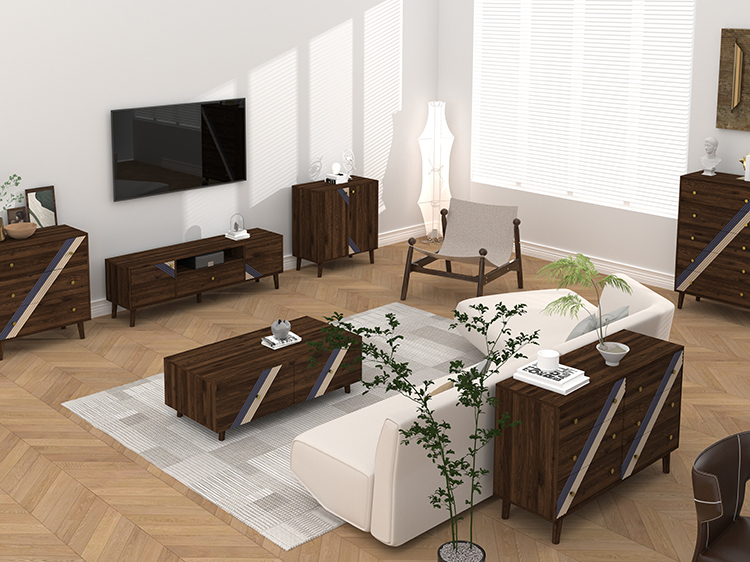
For hotel procurement managers, interior designers, and real estate
developers, choosing the right media console
supplier determines not only aesthetic coherence but also long-term
durability, cable management efficiency, and compliance with fire safety codes.
A poorly designed media console leads to overheating of AV equipment, sagging
shelves, and frequent warranty claims. This technical guide examines the
engineering behind premium media consoles — from substrate selection and edge
banding to ventilation analysis and weight load testing. Essent
Home has supplied over 1,500 custom media consoles to luxury
hotels, corporate boardrooms, and residential developments. Drawing on that
experience, this article provides a data-driven framework for specifying and
sourcing from a reliable media console
supplier.
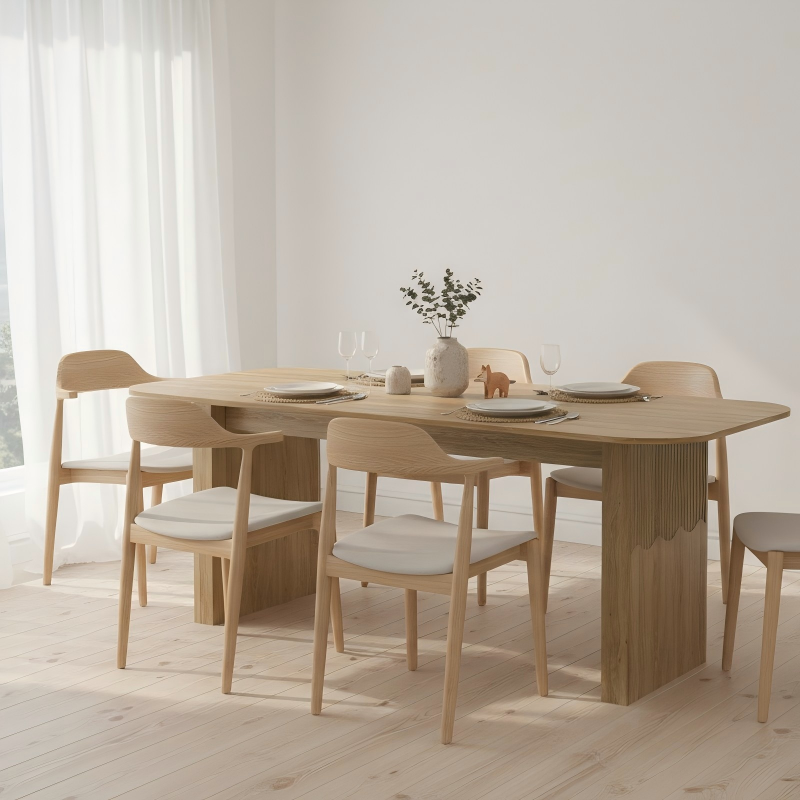
1. The Role of a Media Console Beyond Aesthetics: Functional
Engineering
A media console is not merely a decorative table. It must manage multiple
electronic components: cable boxes, gaming consoles, network routers, soundbars,
and sometimes amplifiers. A professional media console
supplier designs for:
Thermal management – Minimum 50 mm clearance above AV
receivers; perforated back panels or active cooling fans for enclosed
compartments.
Cable routing – Integrated pass-through grommets (≥50 mm
diameter) and rear channel raceways.
Weight distribution – Shelf load rating of 30–80 kg, with
center deflection less than 2 mm under full load.
Finish durability – Resistance to alcohol, coffee, and
cleaning agents (tested per EN 12720).
A qualified media
console supplier provides technical data sheets for each model,
including maximum distributed load and surface scratch resistance (Mohs scale).
2. Material Selection for Commercial-Grade Media Consoles
Not all substrates perform equally. When evaluating a media
console supplier, demand clarity on core materials. The four most
common are:
2.1 High-Density Fiberboard (HDF) with Melamine Laminate
Entry-level for mid-tier residential projects. Typical density >800 kg/m³,
thickness 18–25 mm. Advantages: low cost, consistent surface. Weaknesses:
moisture absorption (swelling >12% after 24h water immersion per ASTM D1037).
Not recommended for high-humidity coastal or basement installations.
2.2 Plywood Core with Wood Veneer (Grade A/B)
Preferred for high-end residential and boutique hotels. Baltic birch or
poplar plywood, 9–13 plies, void-free. Advantages:
Veneer thickness should be ≥0.6 mm for sanding and repair
capability. A reputable media console
supplier will specify the plywood grade and veneer origin.
2.3 Solid Hardwood (White Oak, Walnut, Ash)
Used for luxury residential and executive offices. Requires kiln-dried lumber
(6–8% moisture content) to prevent cracking. Joints should be mortise-and-tenon
or dovetail, not merely glue blocks. Expect 50+ years service life.
2.4 Powder-Coated Steel or Aluminum Frames
For industrial-chic or outdoor-rated media consoles. Steel gauge 1.5–2.0 mm
(16–14 ga). Powder coating thickness 60–80 µm with salt spray resistance >500
hours (ASTM B117).
Essent Home uses a multi-layer
finish system: 2K polyurethane topcoat over sealed substrate, achieving 6H
pencil hardness and resistance to acetone (100 double rubs).
3. Industry Pain Points in Media Console Procurement and Solutions
Buyers often encounter recurring failures when sourcing from inexperienced
media console
supplier. Below are four documented issues and engineered
countermeasures.
3.1 Cable Management Chaos and Ventilation Blockage
Standard consoles with a single small hole cause tangled cables, restricted
airflow, and overheating. Solution:
Specify a console with a full open back panel (at least 70% open area) or
removable back with multiple 80 mm grommets.
Include a built-in power strip housing with a concealed cord channel.
For closed-back designs, require a minimum 200 cm² of ventilation slots per
compartment, with forced convection (quiet fans, <25 dBA).
A
qualified media console
supplier will simulate thermal load using computational fluid
dynamics (CFD) for custom projects.
3.2 Shelf Sagging Under Heavy AV Equipment
Particleboard shelves spanning >800 mm without center support deflect
visibly over time, damaging equipment. Standards:
Maximum deflection L/250 for shelves (e.g., 800 mm span = 3.2 mm max
deflection).
Use 25 mm thick plywood or add a steel stiffener beneath the shelf.
For spans >1,000 mm, require a fixed center divider or a support
bracket.
Independent testing of Essent Home consoles shows deflection below 1.5 mm at 80 kg load on a 1,200 mm span.
3.3 Finish Damage from Cleaning Chemicals
Hotels and offices use aggressive disinfectants (quaternary ammonium
compounds, bleach) that strip lacquer finishes. Solution:
Specify 2K polyurethane or conversion varnish (cross-linked) with high
chemical resistance per EN 12720: Class 5 (resistant to 48h exposure to ethanol,
acetone, coffee).
Avoid standard nitrocellulose lacquer or simple wax finishes.
Request test reports for spot resistance to common cleaning
agents.
Essent Home provides a chemical
resistance chart with each material grade.
For large projects (e.g., 200+ rooms), batch-to-batch variation causes
unacceptable visual inconsistency. Mitigation:
Require a master sample and production approval before bulk
manufacturing.
Source veneer from a single log or use engineered veneer (reconstituted) for
absolute consistency.
For painted finishes, use spectrophotometer color control (ΔE <1.0
between batches).
A professional media console
supplier will submit a First Article Inspection (FAI) report before
mass production.4. Technical Specifications Checklist for Selecting a Media Console
Supplier
When evaluating potential vendors, request the following performance
data:
Material certification – CARB Phase 2 or TSCA Title VI for
low formaldehyde emission.
Load rating – Shelf and top deck static load (kg), with
test method (e.g., ASTM E3090).
Finish adhesion – Cross-cut tape test (ASTM D3359) rating
≥4B.
Edge banding – ABS or laser-edge with thickness ≥2 mm, peel
strength ≥50 N/25mm.
Fire safety – Flammability per UL 94 HB (horizontal burn)
or FAR 25.853 (for aviation/commercial).
Warranty – Minimum 5 years on structure and
finish.
Essent Home provides a technical compliance pack including all of the above, plus material
safety data sheets (MSDS).
5. Custom Media Console Design Process for B2B Projects
Working with an experienced media console
supplier for custom dimensions involves a structured workflow:
Step 1: Needs analysis – Equipment dimensions (height,
depth, weight), number of components, required ventilation, and cable
access.
Step 2: CAD modeling – 2D shop drawings and 3D renders
showing internal compartment layout, grommet positions, and leg
configuration.
Step 3: Material selection – Choose substrate,
veneer/lacquer color, edge profile, and hardware (blum soft-close hinges
optional).
Step 4: Prototype (for orders >50 units) – Physical
sample tested for load and stability.
Step 5: Production and quality control – Batch sampling
with dimensional tolerance ±1 mm.
Step 6: Packaging and drop-testing – ISTA 3A or ASTM D4169
for shipment protection.
Essent Home reduces lead time
for custom consoles to 25–35 days from approval, using CNC nesting and automated
edge banding.
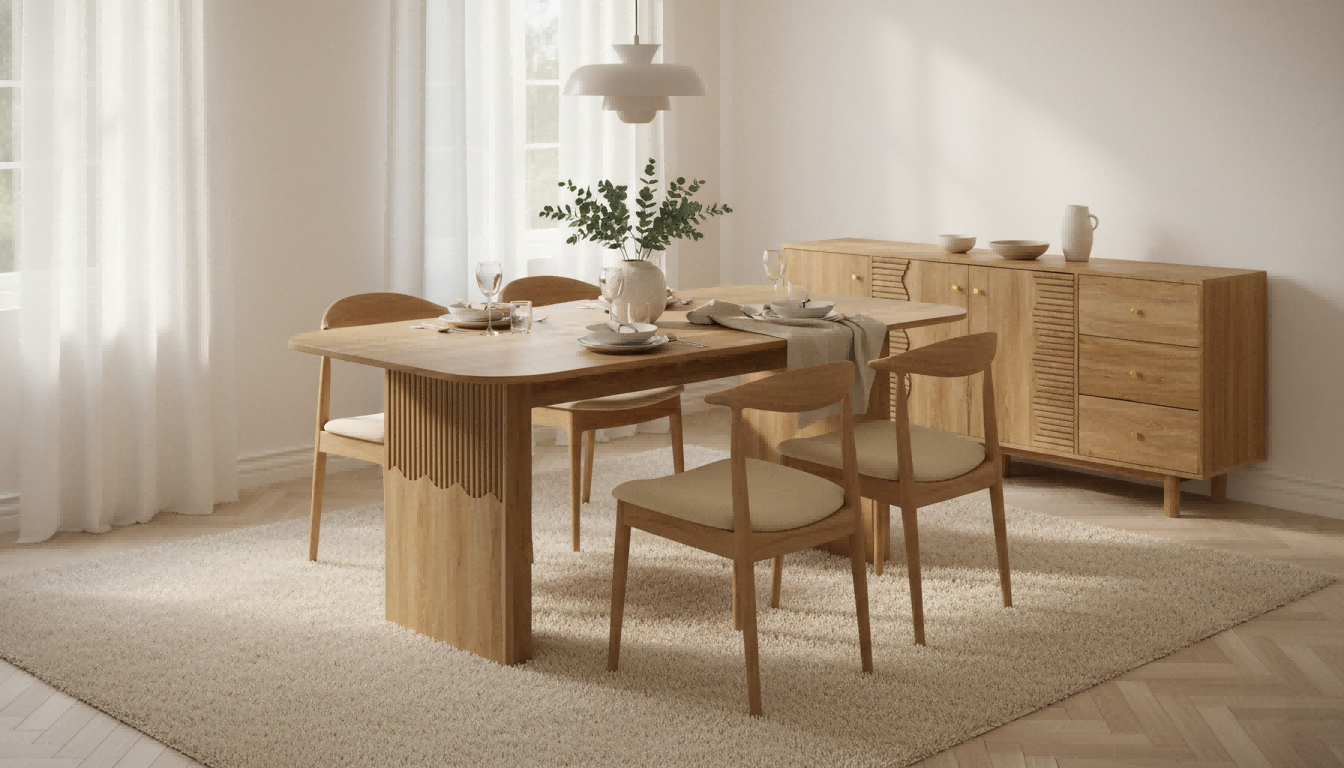
6. Performance Comparison: Standard vs. Premium Media Console
Specifications
To illustrate differences among media console
supplier tiers, the table below contrasts entry-level, mid-grade,
and premium offerings.
| Feature | Entry-Level | Mid-Grade | Premium (Essent Home) |
|---|
| Core material | Melamine over particleboard | Plywood core + veneer | Baltic birch plywood + solid wood frame |
| Shelf thickness / span | 18 mm / max 800 mm | 20 mm / max 1000 mm | 25 mm / max 1200 mm with stiffener |
| Finish type | Low-pressure melamine | Polyurethane lacquer (2K) | Conversion varnish (Catalyzed) |
| Chemical resistance | Poor (water rings, alcohol marks) | Good (30 min ethanol) | Excellent (48h ethanol, acetone) |
| Ventilation design | One rear hole (40 mm) | Two grommets + open back | Perforated back + optional fan kit |
| Warranty | 1 year | 3 years | 10 years structural |
For hospitality projects with high guest turnover, the premium tier reduces
replacement frequency and protects brand image.
7. Logistics and Packaging Requirements for B2B Media Console Orders
A capable media console
supplier must ensure damage-free delivery. Critical packaging
specifications:
Corrugated carton with edge protectors (200 lb burst strength).
Corner blocks and foam padding (density ≥25 kg/m³).
Palletization with stretch wrap and corner boards, load capacity 1,000 kg
per pallet.
Container loading plan (max 36 units per 20’ container for typical 1,500 mm
console).
RTA (ready-to-assemble) or fully assembled? RTA reduces shipping volume by
40% but requires clear assembly instructions with cam lock and dowel
fittings.
Essent Home provides flat-pack
options with German Hettich connectors and illustrated manuals, achieving 99.2%
customer assembly success rate.
8. Sustainability and Certifications for Responsible Media Console
Sourcing
Hotels and developers increasingly require green credentials from their
media console
supplier. Look for:
FSC-certified wood (Forest Stewardship Council) – chain of custody.
LEED v4 contribution – MRc4 (Building product disclosure) or MRc5 (Material
ingredients).
Low VOC finish – GREENGUARD Gold certified for indoor air quality.
Recyclable packaging – ≥80% post-consumer recycled
content.
Essent Home holds
FSC certification and uses water-based topcoats with <50 g/L VOC, meeting
California CARB 93120 requirements.Frequently Asked Questions (FAQ) About Media Console Suppliers
Q1: What is the typical MOQ for custom media consoles from a
B2B supplier?
A1: Most specialized
media
console supplier require 50–100 units for fully custom dimensions
and finishes. However,
Essent Home accepts MOQ as low
as 20 units for semi-custom (standard sizes with custom veneer) and 50 for full
custom. Sample production available for orders above 100
units.
Q2: How can I verify a media console supplier’s build
quality before bulk order?
A2: Request a pre-production sample (paid
but deductible from order). Also ask for third-party test reports: e.g., ASTM
E3090 for load, ASTM D3359 for adhesion, and EN 12720 for chemical resistance. A
transparent
media console
supplier will share these without hesitation.
Q3: Do you offer media consoles with integrated power and
USB ports?
A3: Yes. Many commercial projects require
built-in power grommets (2x AC outlets + 2x USB-A/C).
Essent
Home integrates UL-listed retractable power strips or flush-mount
pop-up modules, fully pre-wired with a 1.5 m cord. All electrical components
comply with CE and ETL standards.
Q4: What is the lead time for a hotel order of 200 media
consoles?
A4: For a standard design (existing
catalog with custom finish), production takes 30–40 days after sample approval.
For fully custom dimensions and new veneer matching, allow 45–55 days.
Essent
Home provides a production schedule with weekly
updates.
Q5: How to request a quotation and technical drawing from
Essent Home?
A5: Send your requirements: overall
dimensions (width x depth x height), number of shelves, desired material (wood
veneer / painted / melamine), target load capacity, and any cable management
preferences.
Essent Home will
respond with a CAD drawing, material swatches, and a tiered pricing list within
3 business days. Use the inquiry form below to begin.
Need
a reliable media console supplier for your next hospitality or residential
project? Essent Home delivers
custom-engineered media consoles with full documentation, warranty, and global
logistics. Request a free specification consultation, including load analysis
and material samples. Fill out the form below to receive a detailed proposal
within 24 hours.
Send Media Console Inquiry →
© 2026 Essent Home – Precision custom furniture for B2B clients.
Performance data based on in-house testing and third-party laboratory
reports.