In the premium furniture sector, the distinction between OEM and ODM
represents a fundamental shift in value creation. While OEM focuses on producing
to a client’s existing specifications, a nightstand with
drawers ODM (Original Design Manufacturing) partnership offers a
more comprehensive solution: it combines in-house industrial design, material
engineering, and precision production under a single, accountable entity. For
hospitality groups, luxury developers, and high-end furniture brands, this model
unlocks the ability to introduce proprietary, patentable designs without the
overhead of an internal product development division. This article provides a
technical and strategic examination of the ODM approach, detailing how leading
manufacturers translate conceptual sketches into production-ready furniture that
meets rigorous performance, aesthetic, and budgetary targets.
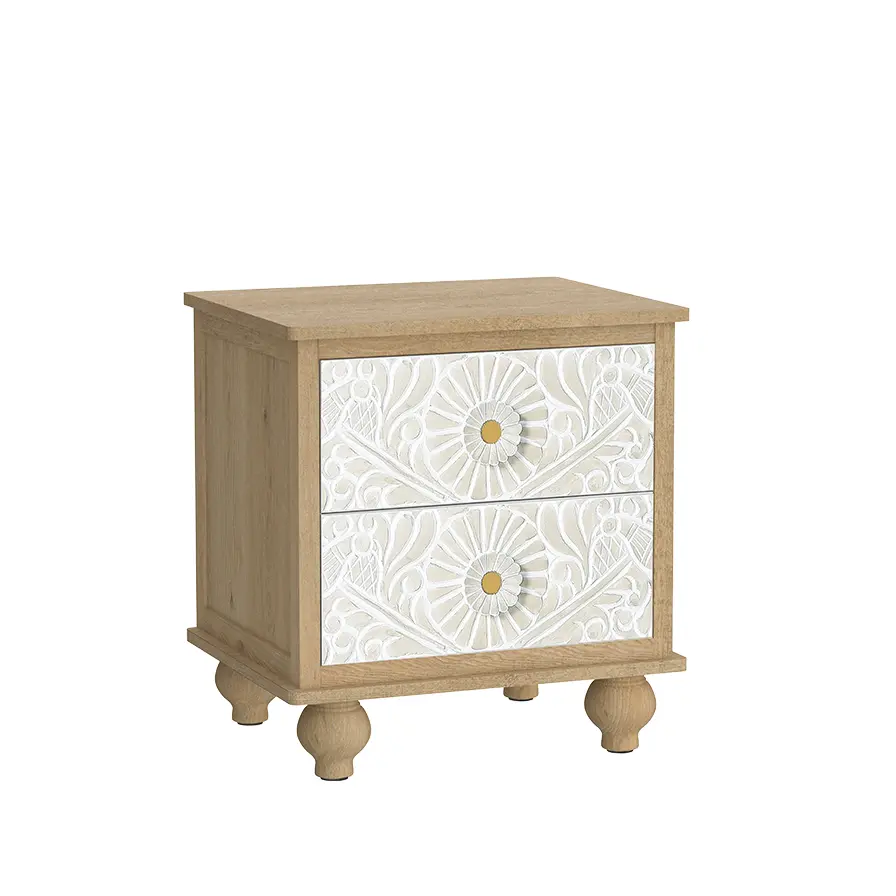
1. Defining the ODM Value Proposition for Nightstand with Drawers
The core advantage of selecting a nightstand with drawers
ODM provider lies in design ownership and supply chain consolidation.
Unlike a standard OEM arrangement where the buyer provides complete engineering
drawings and material specifications, an ODM partner offers a portfolio of
proprietary designs that can be customized—or collaborates from concept to
commercialization. This model is particularly effective for:
Brands seeking exclusivity: The ODM manufacturer provides
designs that are not available to other clients, often with design patents filed
jointly or under the client’s name.
Developers with tight timelines: By selecting from
validated design platforms, lead times for sampling and production are reduced
by 30-40% compared to ground-up custom projects.
Cost predictability: ODM partners have established supply
chains for components, finishes, and hardware, resulting in stable unit costs
and fewer engineering change orders.
A proficient nightstand with drawers ODM manufacturer
leverages design for manufacturing (DFM) principles from the outset. This means
that aesthetic decisions—such as a waterfall edge, integrated wireless charging,
or a specific drawer pull profile—are evaluated for structural integrity,
material yield, and assembly efficiency before prototypes are produced. The
result is a product that looks bespoke but is engineered for repeatable,
high-quality production.
2. The Technical Architecture of ODM-Developed Nightstands
When evaluating a nightstand with drawers ODM partner, it is
essential to assess their in-house capabilities across the product lifecycle.
Premium ODM facilities operate with integrated design studios, CNC machining
centers, and finishing lines that allow for total quality control. Key technical
attributes to examine include:
Modular Construction Systems: Advanced ODM manufacturers
use standardized joinery and component interfaces (e.g., dowel and cam lock
systems with reinforced corner blocks) that allow for varied exterior designs
while maintaining structural consistency. This modularity simplifies repairs and
replacements in hospitality environments.
Material Performance Specifications: Rather than leaving
material selection to chance, ODM engineers specify substrates based on
application. For high-humidity coastal properties, they may recommend
marine-grade plywood with phenolic resin cores; for urban residential projects,
FSC-certified walnut veneer over engineered wood provides stability and
aesthetic warmth.
Hardware Integration: A sophisticated ODM approach
integrates hardware such as soft-close undermount slides (rated for 100,000
cycles) and concealed hinges into the design architecture. This ensures that
mechanical components do not compromise drawer capacity or visual
lines.
For clients requiring a nightstand with drawers ODM solution
that incorporates smart features, manufacturers with electrical engineering
divisions can design and test integrated power modules. This includes UL-listed
outlets, USB-C ports, and wireless charging pads, with wiring concealed within
the frame to meet safety codes and maintain clean aesthetics.
3. Addressing Industry Pain Points Through ODM-Led Development
Procurement professionals and designers often encounter three persistent
challenges when sourcing bedside furniture: inconsistent quality across large
orders, aesthetic dilution due to production constraints, and logistical
fragmentation. An experienced nightstand with drawers ODM partner directly addresses these issues:
Quality Consistency via Process Control: ODM manufacturers
implement statistical process control (SPC) across all production stages. For
example, during the sanding and finishing phases, automated systems measure film
thickness (target: 3-5 mils) and gloss uniformity (ΔGU < 2), ensuring that
units from the first batch to the last are visually and functionally
identical.
Design Fidelity: By controlling both design and
manufacturing, ODM teams can preserve complex design details that traditional
OEMs might simplify due to tooling limitations. Examples include sculpted drawer
fronts, tapered legs with compound angles, and intricate inlay patterns—all
executed with CNC precision.
Integrated Logistics: Leading ODM providers offer
consolidated shipping, white-glove delivery coordination, and even on-site
installation management for large hospitality projects. This single-source
accountability reduces the number of vendors a developer must manage, directly
impacting project efficiency.
For a recent luxury resort project, the client partnered with an ODM
specialist to produce 400 units of a custom nightstand with drawers
ODM. The manufacturer managed everything from initial 3D renderings to
air-freighted samples for approval, and ultimately delivered the full order with
a documented defect rate below 0.3%—a metric that underscores the value of
vertical integration.
4. Navigating the ODM Engagement Process: From Concept to Container
The ODM development pathway is structured to balance creative exploration
with manufacturing pragmatism. A typical engagement for a nightstand
with drawers ODM project follows these stages:
Phase 1: Design Brief & Mood Boarding: The client
provides inspiration images, dimensional constraints, and target material
palettes. The ODM design team responds with initial sketches and 3D CAD models,
often offering three distinct directions.
Phase 2: Engineering & Material Selection: Once a
design direction is approved, engineers perform structural analysis, specify
joinery methods, and select substrates. Clients receive a detailed bill of
materials (BOM) and a sample plan.
Phase 3: Prototyping & Refinement: Full-scale
prototypes are produced, typically in the target materials and finish. Clients
evaluate drawer glide smoothness, finish quality, and assembly logic. Up to two
rounds of revisions are included before production sign-off.
Phase 4: Pilot Run & Production: A pilot run (typically
5-10% of total order) validates production line setup and quality checkpoints.
Full production then proceeds with scheduled milestone inspections.
Phase 5: Fulfillment & Post-Shipment Support: Finished
goods are packed in ISTA-certified packaging, shipped, and accompanied by
assembly instructions and spare parts kits.
This structured methodology, employed by firms like Essent
Home, ensures that the final product aligns precisely with the
client’s vision while adhering to production schedules and cost parameters.
5. Material Science and Finish Durability: Non-Negotiable Standards
For a nightstand with drawers ODM intended for commercial or
high-end residential use, surface durability is paramount. ODM specialists
utilize industrial finishing systems that go beyond conventional furniture
coatings. Common specifications include:
Conversion Varnish: A two-part catalyzed finish that
cross-links chemically, offering exceptional resistance to water rings, alcohol,
and household chemicals. Typical hardness exceeds 3H on the pencil hardness
scale.
UV-Cured Polyurethane: Applied in a controlled environment
and cured instantly with ultraviolet light, this finish provides consistent
thickness and is free of VOCs. It is ideal for high-touch surfaces due to its
abrasion resistance.
Ceramic-Enhanced Topcoats: Emerging in the luxury segment,
these finishes incorporate ceramic nanoparticles that increase scratch
resistance and facilitate easy cleaning—a significant advantage for hospitality
applications.
Beyond finishes, ODM manufacturers offer advanced material options such as
high-pressure laminate (HPL) for drawer fronts in high-use settings, or
solid-surface materials like Corian for integrated, seamless designs. The
ability to specify these materials within a coherent design framework is a
hallmark of a sophisticated ODM partner.
6. Sustainability Integration in ODM Furniture Production
Environmental stewardship is now a deciding factor for institutional and
corporate buyers. A responsible nightstand with drawers ODM manufacturer embeds sustainability into its operations through:
Certified Material Sourcing: Offering FSC or PEFC-certified
wood products as a standard option, with chain-of-custody documentation provided
per shipment.
Low-Impact Finishing: Utilizing waterborne stains and
sealers that reduce VOC emissions by up to 80% compared to solvent-based
alternatives.
Waste Reduction Programs: Implementing closed-loop systems
that reclaim wood dust for energy generation and recycle cardboard, metal, and
plastic from the production floor.
Lifecycle Considerations: Designing furniture for
disassembly—using mechanical fasteners rather than permanent adhesives—allows
components to be replaced or recycled at end-of-life.
For projects pursuing LEED v4.1 ID+C or WELL certification, an ODM partner
that provides Environmental Product Declarations (EPDs) and Health Product
Declarations (HPDs) for key materials contributes significantly to certification
credits.
7. The Financial Logic of ODM: Total Cost of Ownership Analysis
While the upfront engineering costs of a nightstand with drawers
ODM project may be higher than a simple OEM procurement, a total cost
of ownership (TCO) analysis reveals substantial long-term savings. Key factors
include:
Reduced Design and Engineering Spend: Clients avoid the
expense of hiring independent industrial designers and mechanical engineers, as
these services are bundled.
Fewer Change Orders: Because DFM is integrated early, there
are fewer production surprises, minimizing costly mid-stream modifications.
Lower Replacement Rates: Higher initial quality translates
to fewer warranty claims and replacements over the furniture’s lifecycle,
particularly in hospitality settings where wear and tear is accelerated.
Streamlined Logistics: Consolidated sourcing and shipping
reduce freight costs and administrative overhead.
For a 300-room hotel, choosing a comprehensive ODM solution can result in
lifecycle savings of 15-20% compared to a fragmented approach involving multiple
vendors for design, prototyping, and production.
8. Future-Proofing Through ODM: Smart Furniture and Integrated
Technology
As guest expectations evolve, the demand for integrated technology in bedside
furniture is surging. An innovative nightstand with drawers ODM manufacturer is already developing solutions that address:
Wireless Power Integration: Qi-certified charging surfaces
seamlessly embedded into the top panel, with heat dissipation channels to
maintain safety.
IoT Connectivity: Drawers equipped with sensors that
interface with room management systems, allowing housekeeping to know when
amenities need replenishing.
Biophilic Design Elements: Incorporating integrated planter
boxes with self-watering systems, blurring the line between furniture and
interior landscaping.
Manufacturers that invest in R&D for these features provide a competitive
edge to their clients, enabling them to market properties with truly
forward-thinking amenities.
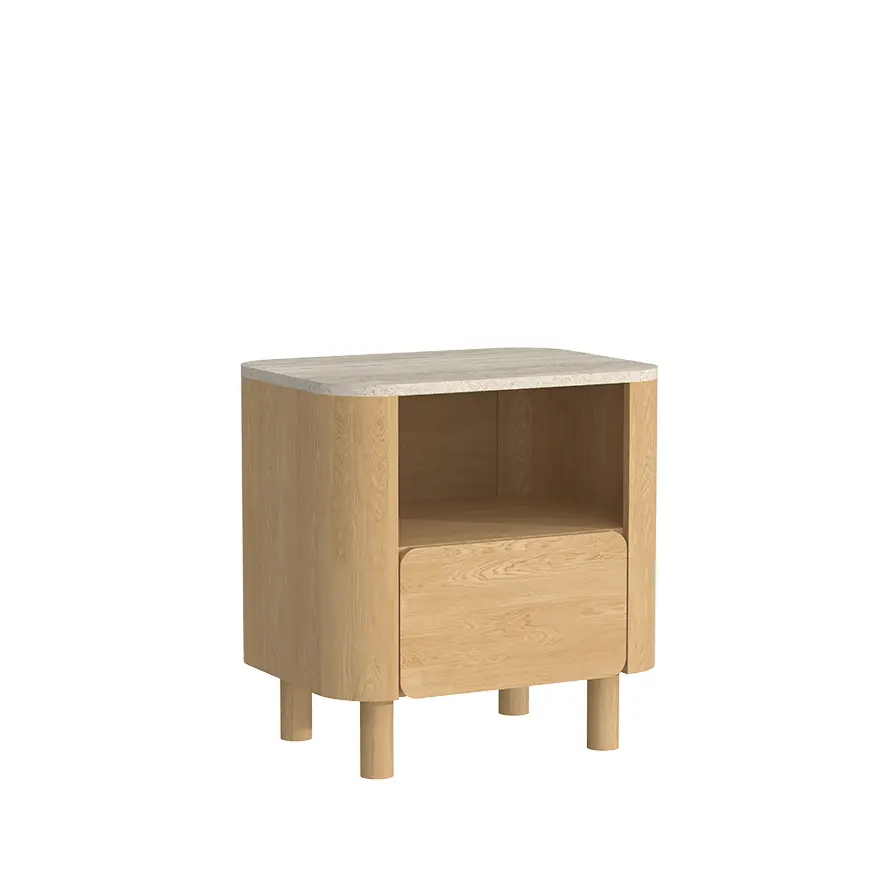
Elevating Projects Through Strategic ODM Partnerships
The decision to engage a nightstand with drawers
ODM specialist is a strategic investment in design originality,
quality assurance, and operational efficiency. By consolidating design,
engineering, and manufacturing under one roof, ODM partners eliminate the
friction points that typically plague custom furniture projects. For developers,
designers, and brands seeking to differentiate their spaces with furniture that
embodies both aesthetic sophistication and industrial-grade durability, the ODM
model represents the optimal path. Organizations like Essent
Home exemplify this integrated approach, providing clients with the
peace of mind that comes from working with a partner that manages every stage of
the product lifecycle—from the initial sketch to final installation. To explore
how a tailored ODM solution can align with your next project’s requirements, a
detailed consultation on design capabilities and production capacity is the
logical first step.
Frequently Asked Questions About Nightstand with Drawers ODM Services
Q1: What is the typical timeline for a custom ODM nightstand project
from design to delivery?
A1: The timeline generally spans 12 to 18
weeks from final design approval to shipment. This includes 2–3 weeks for design
refinement and engineering, 4–6 weeks for prototyping and sample approval, and
6–8 weeks for production, finishing, and packaging. Accelerated timelines (10
weeks) are possible when leveraging existing design platforms or when the client
approves digital renderings without physical prototypes.
Q2: Can an ODM manufacturer help with patenting a unique nightstand
design?
A2: Yes, many ODM partners collaborate with intellectual
property attorneys and can assist in drafting design patent applications.
Typically, the client holds the patent, while the manufacturer agrees to not
reproduce the design for other clients. This arrangement is formalized through a
non-disclosure and design exclusivity agreement before development
begins.
Q3: How does an ODM provider ensure color and finish consistency
across large orders?
A3: Professional ODM facilities use
spectrophotometers to create digital color formulas with a Delta E (ΔE) value
below 1.0. They also maintain batch records for stains and topcoats. During
production, finish samples are pulled at regular intervals and compared against
the master standard under standardized lighting (D65). Any deviation triggers an
immediate process adjustment.
Q4: What are the cost implications of choosing ODM over OEM for a
nightstand project?
A4: ODM projects typically have higher initial
engineering and tooling costs (ranging from $3,000 to $15,000 depending on
complexity). However, these costs are amortized over the production volume.
Per-unit costs for ODM are often 10–20% lower than OEM for comparable designs
because the manufacturer optimizes material usage and assembly processes. For
volumes above 200 units, ODM generally offers superior value.
Q5: Can an ODM manufacturer incorporate specific smart features like
wireless charging or USB ports?
A5: Absolutely. Leading ODM firms
have in-house electrical engineering teams that integrate UL-listed components.
Features can include wireless charging pads (Qi standard), USB-A and USB-C
ports, AC outlets, and even ambient LED lighting. All electrical integrations
are designed to comply with local safety codes, and certifications are provided
with the shipment.
Q6: What quality certifications should I look for in an ODM furniture
manufacturer?
A6: For global projects, prioritize manufacturers with
BIFMA (for durability and safety), FSC Chain of Custody (for sustainable
forestry), and ISO 9001 (for quality management systems) certifications. For
finishes, ensure they comply with CARB Phase 2 or TSCA Title VI for formaldehyde
emissions. If shipping to Europe, EN 16122 and REACH compliance are
essential.