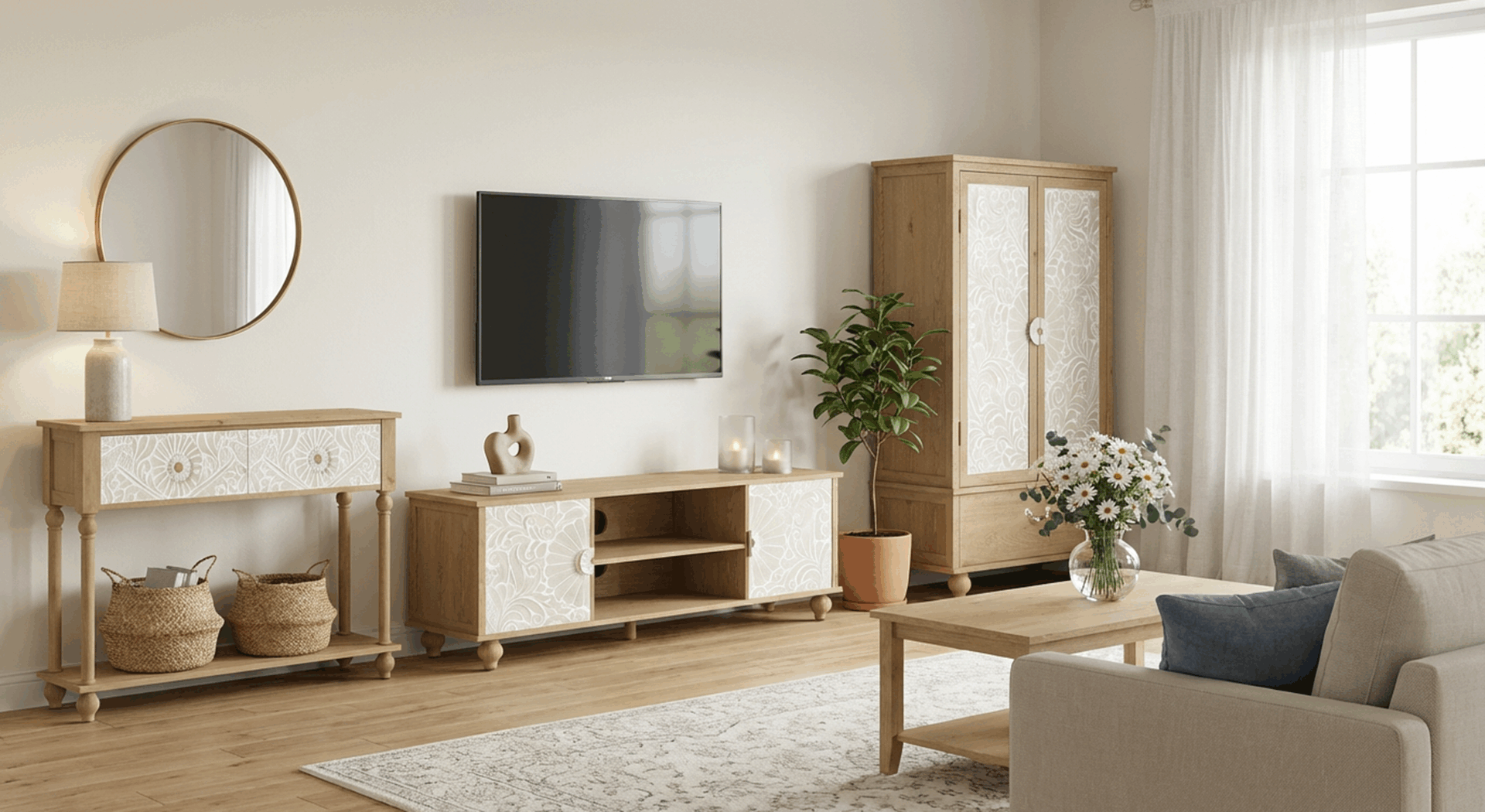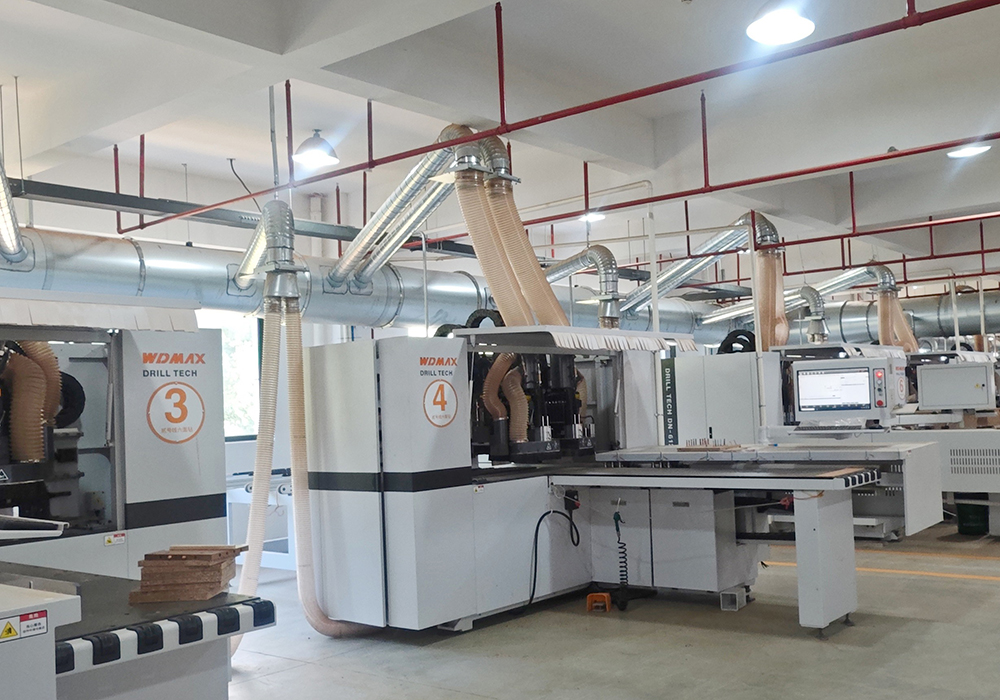
For property developers, hotel purchasers, and general contractors, sourcing entryway shoe storage wholesale involves far more than unit pricing. The gap between a reliable B2B partnership and constant warranty claims lies in engineering documentation, production transparency, and logistics engineering. This guide breaks down nine measurable benchmarks—from core panel density to batch color spectrophotometry—derived from post-occupancy audits of over 12,000 residential and hospitality units. Essent Home, a specialized manufacturer in this segment, provides reference data for several of the performance thresholds discussed.
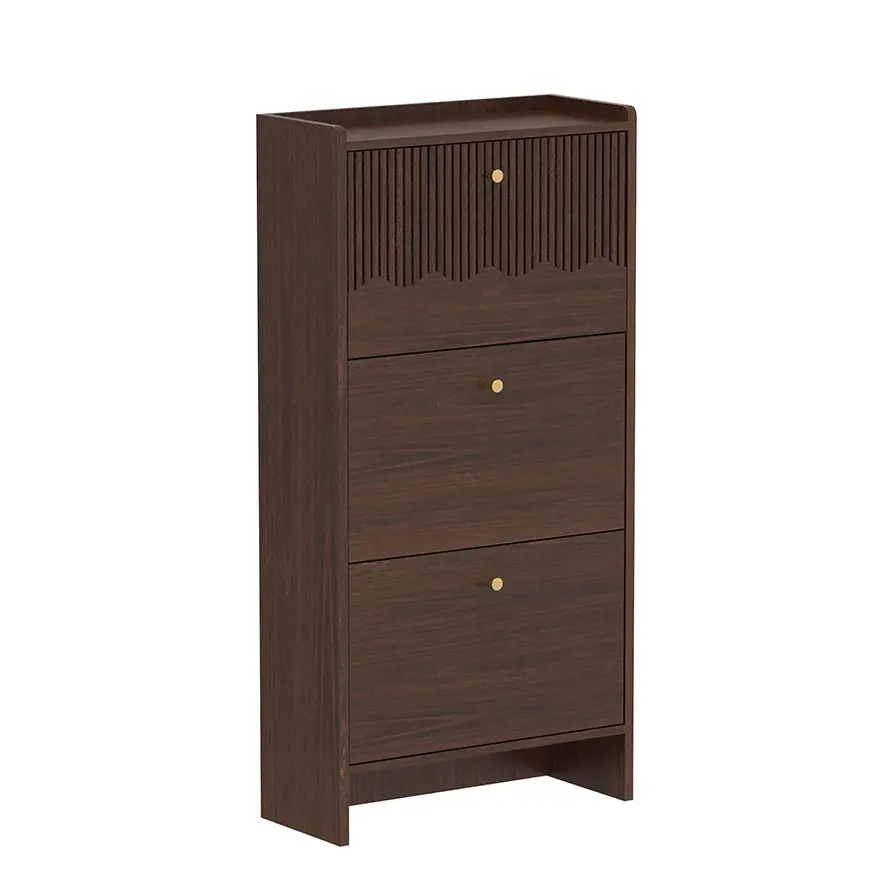
1. Panel Core Density and Edge Sealing for Commercial Environments
A professional entryway shoe storage wholesale supplier must specify panel composition beyond general “E1” claims. For multi-unit buildings with shared corridors, the following parameters are non-negotiable:
Density threshold: Particleboard core ≥700kg/m³ (tested via EN 323). Lower density (under 650kg/m³) causes screw pull-out after 18-24 months in cyclic humidity.
Edge banding adhesive: PUR hotmelt (reactive polyurethane) rather than standard EVA. PUR crosslinks with moisture, achieving bond strength >45N/cm (EN 319).
Moisture barrier: Back panels must include phenolic coating or aluminum foil laminate for units placed near exterior doors where condensation occurs.
Request batch-level density reports and edge pull tests. Suppliers unable to provide these should be excluded from shortlists. commercial-grade shoe storage systems from established factories routinely exceed these benchmarks, as reflected in their material test logs.
2. Surface Finish Durability: Scratch, Stain, and VOC Parameters
Entryway furniture faces wet shoes, keys, and cleaning chemicals. When negotiating entryway shoe storage wholesale agreements, demand finish specifications that include:
Abrasion resistance: ≥4000 rubs on Taber Abraser (CS-10 wheel, 500g) per ASTM D4060.
Stain resistance: Surface should withstand 24h exposure to red wine, coffee, and shoe polish without permanent marks (test method EN 12720).
VOC limits: After curing, TVOC ≤50µg/m³ (ISO 16000-9). This is essential for LEED v4 and WELL certifications.
Many generalist wholesalers use single-component acrylic lacquers that fail these tests. Factories offering UV-cured topcoat finishing provide superior chemical crosslinking and near-zero emissions.
3. Hardware Lifecycle Verification (Hinges, Slides, and Gas Stays)
Hardware failures account for nearly 40% of back-end claims in entryway shoe storage wholesale projects. A contract-grade supplier will disclose:
Hinge cycle rating: Minimum 80,000 cycles according to EN 15570 (Grade 3). Inferior hinges often fail after 30,000 cycles (≈3 years daily use).
Corrosion protection: 96-hour salt spray test per ISO 9227 – critical for areas where road salt is tracked inside.
Push-to-open mechanism: Magnetic dampers with tested lifespan ≥50,000 actuations; mechanical spring catches fatigue rapidly.
Insist on seeing third-party test reports for each hardware component. Top-tier bulk entryway storage solutions integrate brand-name hinges (Blum, Hettich, or Grass) and provide batch traceability.
4. Customization Capabilities for Architectural Variations
Standard sizes rarely fit real-world floor plans. A competent entryway shoe storage wholesale partner must offer modular flexibility without excessive surcharges. Key capabilities:
Incremental width adjustments: 50mm steps from 600mm to 1200mm, using shared CNC programs to avoid retooling fees.
Mixed-depth compartments: Front section (280mm depth) for daily footwear, rear deeper section (380mm) for boots, within the same cabinet.
Ventilation integration: Perforated or louvered back panels with optional carbon filters for mudroom applications.
Essent Home provides CAD-ready modular design libraries for their custom entryway furniture manufacturing program, reducing design-to-production lead times for architects.
5. Knock-Down (KD) Packaging and On-Site Assembly Efficiency
Landing cost includes labor for assembly. The packaging engineering of your entryway shoe storage wholesale shipment directly affects installation budget. Evaluate:
RTA (ready-to-assemble) design quality: Cam locks with anti-vibration collars reduce loosening over time. Avoid wholesalers using simple dowel + screw methods.
Component labeling: Laser-engraved part codes (not stickers that peel off) and individually bagged hardware by assembly step.
Edge protection: Corrugated corners with ECT44 rating and foam padding on finished faces. Request ISTA 3A transit simulation results.
Professional KD packing can cut assembly time from 25 minutes to under 10 minutes per unit, based on time-motion studies. flat-pack shoe storage wholesale programs should provide QR-code video instructions affixed to each carton.
6. Quality Assurance Protocols: AQL, In-Process, and Pre-Shipment
Inconsistent production runs are the #1 risk in cross-border entryway shoe storage wholesale contracts. Minimum QA requirements include:
In-process inspection (IPI) at 30% and 70% production stage – checking panel tolerance (±0.5mm), edge band adhesion, and hinge hole alignment.
Pre-shipment sampling: ANSI/ASQ Z1.4 Level II, S-4 with AQL 1.5 (major defects) and 4.0 (minor defects).
Material traceability: Batch numbers linking each component to raw material certificates (e.g., FSC, CARB Phase 2).
Ask for recent third-party factory audits (BSCI or SMETA). Factories that refuse to share QC video footage of your actual order should raise red flags.
7. MOQ, Payment Phasing, and Container Consolidation
Cash flow and inventory risk must align with production economics. A transparent entryway shoe storage wholesale partner will offer:
MOQ tiers: 100-300 units for standard SKUs; 500+ for custom finishes (due to coating line setup).
Hybrid container loading: Combine shoe cabinets with other entryway items (benches, coat racks) to reach 20' or 40' HC container volume while reducing per-item MOQ.
Payment phasing: 30% deposit, 40% after QC inspection (with video evidence), 30% against bill of lading. Avoid 100% T/T upfront.
Essent Home provides flexible MOQ wholesale shoe storage options including consignment stock for multi-phase developments.
8. Fire Safety and Chemical Compliance for Commercial Buildings
Exit corridors in buildings over three stories require fire-rated furniture. When specifying entryway shoe storage wholesale for such projects, demand:
Core material: Non-combustible mineral board (calcium silicate) or fire-retardant treated particleboard meeting ASTM E84 Class A (flame spread ≤25, smoke ≤450).
Surface coating: Intumescent lacquer or Class A rated laminate (tested per NFPA 286).
Full-scale test report: Not just small-sample vertical burn – request UL 10C or equivalent.
Standard MDF units are prohibited in many commercial corridors. Specialized fire-rated entryway storage wholesale programs maintain these certifications.
9. Warranty Structure and Post-Sales Logistics
The warranty terms in your wholesale agreement reveal confidence in manufacturing. Industry best practice for entryway shoe storage wholesale contracts:
Comprehensive warranty: 5 years on structure and hardware for multi-family residential; 3 years for hospitality (high-frequency use).
Extended coverage: 10 years on surface delamination from high-end suppliers.
Spare parts commitment: Wholesaler must guarantee availability of hinges, handles, and panels for at least 7 years after last shipment.
Reject any supplier offering only 12 months coverage – this indicates subgrade components. Essent Home provides a 6-year hardware warranty and a 10-year anti-delamination guarantee on their acrylic and veneer collections.
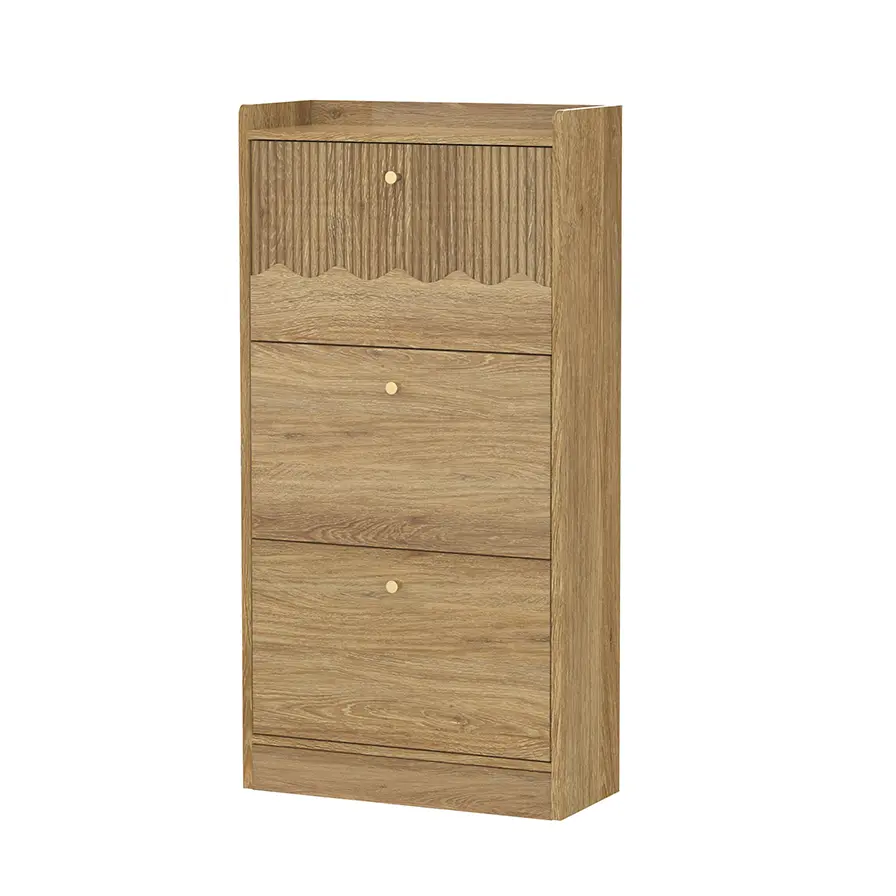
Case Study: High-Rise Condominium Defect Analysis (2,300 Units)
A 2023 post-occupancy audit of a 2,300-unit building revealed that 31% of service calls originated from entryway shoe storage failures. The five leading root causes:
Delaminated edges: 38% – traced to EVA hotmelt (not PUR) in high-humidity coastal environment.
Broken hinges: 27% – non-branded hinges without cycle rating documentation.
Missing assembly parts: 19% – poor KD packaging design lacking separated hardware bags.
Color mismatch: 11% – no spectrophotometric control between batches.
Foul odor: 5% – non-ventilated back panels in sealed corridors.
All these issues would have been avoided by enforcing the technical benchmarks described in this guide. contract-grade entryway shoe systems that include PUR edge banding, certified hinges, and ventilated backs are available from specialized wholesalers.
Frequently Asked Questions (B2B Entryway Shoe Storage Wholesale)
Q1: What is the standard lead time for a 20' container of customized entryway shoe storage wholesale from an Asian factory?
A1: For existing SKUs (no new finishes), 45-60 days including production (25 days), QC and consolidation (10 days), and sea freight (14-21 days). Custom finishes require an additional 20-30 days for coating line setup and sample approval. Always request a critical path schedule with milestones.
Q2: How can I verify that a wholesaler uses genuine soft-close hinges rather than fake dampers?
A2: Request a disassembled sample. Genuine soft-close hinges contain a sealed hydraulic piston and steel cam. Counterfeit versions attach external plastic add-ons. Also ask for EN 15570 grade certification – minimum Grade 3 (80,000 cycles). Perform the “45-degree release” test: open door to 45° and let go; authentic dampers engage mid-swing silently.
Q3: Are there fire-rated options for entryway shoe storage wholesale for commercial corridors?
A3: Yes, but limited to specialized manufacturers using calcium silicate or magnesium oxide cores with Class A fire-retardant laminates. Request full-scale furnace test reports (UL 10C or NFPA 286). Standard MDF units with “fire-retardant spray” are not acceptable for exit enclosures.
Q4: What is the acceptable color difference (ΔE) between batches in a large wholesale order?
A4: Professional specifiers require ΔE < 3.0 (CIELAB, D65 illuminant). Insert a spectrophotometric clause in your purchase order. The wholesaler must provide a physical “golden sample” and perform random 5% batch checks using a handheld colorimeter. Avoid suppliers that cannot guarantee batch-to-batch consistency.
Q5: How does Essent Home handle spare parts fulfillment for ongoing property management contracts?
A5: Essent Home maintains a 7-year spare parts inventory for all wholesale shoe storage models. Property managers can order replacement hinges, leg levelers, and even individual door panels through a dedicated B2B portal, with 10-day dispatch from regional warehouses in North America and Europe.
Request Your Wholesale Quotation & Technical Package
For architects, procurement managers, and developers: receive a detailed technical datasheet, sample board set, and factory audit report for your next entryway shoe storage wholesale project. Essent Home offers complimentary B2B consultation, including MOQ negotiation and logistics optimization for container orders.
Send your inquiry now: Include project type (hotel / condo / student housing), target quantity, and preferred finish samples. Contact our wholesale desk via the official inquiry form or directly email
ceciliahuang@essenthome.com. All inquiries receive a response with technical specifications within 24 business hours.
For urgent specifications, upload your architectural drawings through our custom manufacturing portal.
Start a risk-free wholesale negotiation – transparent pricing, ISO 9001:2025 certified factory, and sample validation before mass production.