In the B2B furniture supply chain, specifying a reliable entryway shoe storage wholesaler directly impacts project timelines, end-user satisfaction, and lifecycle costs. For developers, hotel purchasers, and general contractors, the difference between a cost-efficient bulk order and a logistical failure lies in technical due diligence. This guide dissects engineering parameters, finishing standards, and supply chain protocols that separate professional wholesalers from generalist suppliers, with practical insights drawn from high-density residential and commercial hospitality sectors. Essent Home, a specialist in custom entryway solutions, provides the manufacturing backdrop for many of the benchmarks discussed.
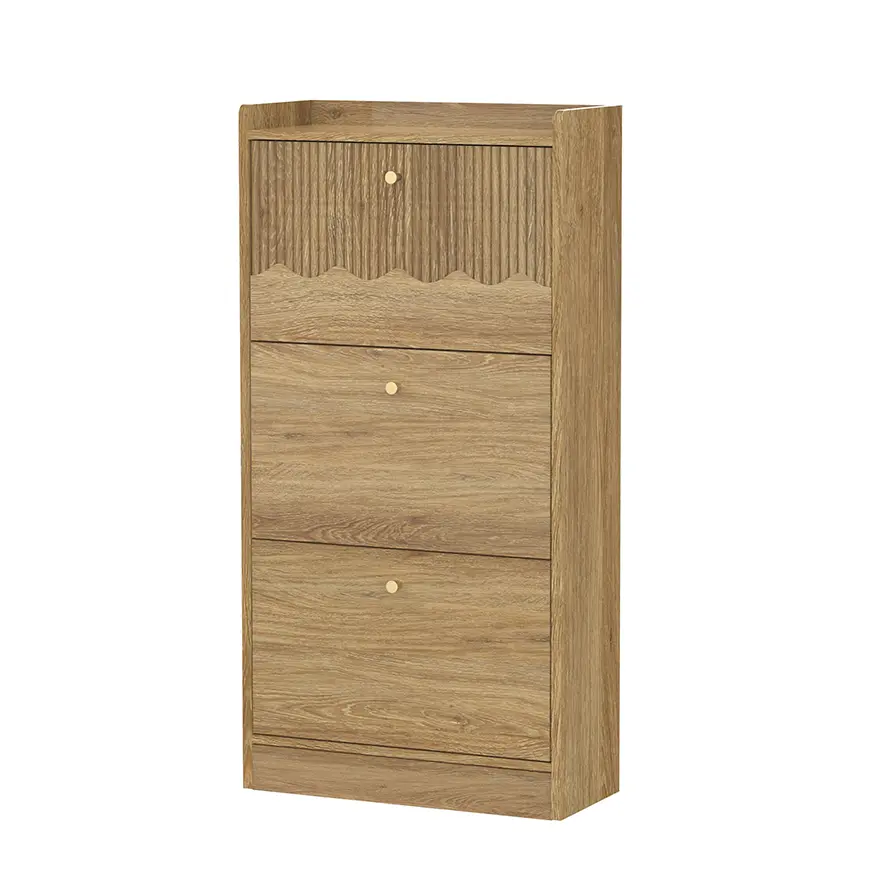
1. Material Science & Structural Integrity in Bulk Shoe Storage Units
Commercial entryway environments expose furniture to temperature fluctuations, impact loads, and cyclic humidity. A professional entryway shoe storage wholesaler must provide transparent specifications regarding core materials and edge sealing techniques. Here are the non-negotiable technical parameters for contract-grade products:
Panel Core Density: Specify E0 or E1 grade particleboard (≥720kg/m³) or cross-laminated plywood for high-humidity zones. Low-density boards (under 650kg/m³) lead to screw pull-out failures within 18 months in commercial rotation.
Moisture-Resistant Laminate (HPL): Minimum 0.8mm thickness with post-forming edges prevents delamination. For coastal projects, demand edge banding with PUR hotmelt adhesive (reactive polyurethane) rather than standard EVA.
Load Bearing per Shelf: Engineering validation for static loads of at least 25kg per tier, verified via ASTM D7250 testing. Avoid wholesalers unable to provide third-party load test reports.
For custom commercial contracts, Essent Home integrates reinforced corner blocks and tenon joints into their custom shoe cabinet manufacturing process, ensuring structural stability across 500+ unit orders. Their material lab routinely conducts 72-hour cyclic humidity testing (40°C / 95% RH) to validate laminate adhesion.
2. Surface Finishing and VOC Compliance for Occupied Spaces
Entryways are transitional airlocks; off-gassing from low-grade coatings accumulates in poorly ventilated corridors. A specialized entryway shoe storage wholesaler must cite specific finishing systems and volatile organic compound (VOC) limits. Industry best practices include:
UV cured lacquer vs. PU spray: UV coatings achieve zero VOC emissions after curing (≤50µg/m³) and higher abrasion resistance (over 5,000 rubs on Taber test). Traditional PU may off-gas for 4-6 weeks, delaying occupancy certificates.
Anti-fingerprint and stain resistance: For rental properties, nano-coatings with contact angle ≥110° reduce maintenance costs by 60% over 5 years.
Textured vs. high-gloss: High-gloss finishes require Class A cleanrooms to avoid micro-dust inclusions. For most commercial RFPs, fine-grain textured finishes (10-15% gloss) offer superior scratch concealment.
Wholesalers incapable of providing batch-level test reports for EN 16516 (European indoor air quality) or CDPH v1.2 (California) should be excluded from shortlists. Leading partners like Essent Home provide digital batch certificates for every bulk order entryway storage shipment, a critical asset for LEED or BREEAM projects.
3. Hardware Lifecycle Engineering: Hinges, Slides, and Pneumatic Stays
Hardware failures generate the highest warranty claims in entryway furniture. While specifying an entryway shoe storage wholesaler, require explicit hardware brand and grade documentation. Professional specifiers demand:
Soft-close hinge cycle rating: Minimum 80,000 cycles per EN 15570 (Grade 3). Budget hinges (e.g., Asian non-branded) often fail below 30,000 cycles, equivalent to 3 years of active family use.
Corrosion-resistant coating: Salt spray testing per ISO 9227 (≥96 hours) for nickel-plated or stainless steel components. Entryway shoes track road salt and moisture.
Push-to-open mechanism durability: For handle-less designs, require rated force retention above 10,000 actuations with magnetic dampers (not purely mechanical spring catches that fatigue rapidly).
B2B buyers should request knock-down testing: a random sample from the production line undergoes 24h accelerated operation in a dust chamber. Heavy-duty entryway furniture solutions from professional factories routinely exceed 100,000 cycles, as verified by their quality assurance logs.
4. Customization Capabilities: Modular Ranges & Sizing Flexibility
Architectural projects rarely conform to standard dimensions. The technical depth of a entryway shoe storage wholesaler reveals itself in modular engineering rather than fixed SKUs. Key customization levers include:
Incremental height adjustments: Ability to modify leg base from 100mm to 200mm to accommodate underfloor heating or cleaning robots.
Mixed-depth compartments: Front row for daily shoes (280-300mm deep), rear tiered shelf for boots or high-tops (350-380mm) within same cabinet footprint.
Ventilation integration: Perforated back panels with optional activated carbon filters for airtight mudrooms – a specification often overlooked by mass-market wholesalers.
Boutique wholesalers offering bespoke entryway cabinet manufacturing typically provide CAD-CAM integration with 3-5 day design-to-production cycles. Essent Home maintains adaptive tooling for non-standard widths (600-1200mm in 50mm increments) without surcharge, a decisive advantage for hotel chains specifying identical aesthetics across varying floor plans.
5. Wholesale Logistics: Knock-Down (KD) Packaging & Assembly Efficiency
For B2B buyers, landed cost includes on-site assembly labor. The packaging engineering of an entryway shoe storage wholesaler directly influences installation budgets. Examine these logistics metrics:
Flat-pack vs. pre-assembled: Pre-assembled units consume 3-4x container volume. Optimized RTA (ready-to-assemble) designs reduce shipping costs by 55%, but require cam lock systems with anti-vibration inserts.
Part labeling and hardware sorting: Professional KD packing uses laser-engraved part codes (not stickers) and color-coded hardware cassettes. This slashes assembly time from 25 minutes to 9 minutes per unit according to field studies.
Corrugated edge protection: Edge crush resistance (ECT) rating minimum 44 for export cartons. A failure leads to corner scuffs and laminate chipping; reject any wholesaler unable to provide ISTA 3A transit simulation reports.
Avoid wholesalers that batch hardware in single plastic bags without segmented trays – this causes missing parts and delays. Top-tier partners incorporate QR-code assembly videos linked directly on each carton, a feature standard at Essent Home for their RTA shoe storage wholesale program.
6. Quality Assurance Protocols & Factory Audits for International Contracts
Inconsistent production runs represent high risk for project managers. A competent entryway shoe storage wholesaler maintains documented AQL (Acceptable Quality Limit) standards and open-factory policies. Minimum QA requirements:
In-process inspection (IPI) at 30% production stage: Checking panel dimension tolerance (±0.5mm), edge banding pull force (>40N/cm), and hinge pilot hole alignment.
Pre-shipment random sampling (ANSI/ASQ Z1.4): Level II, S-4 with AQL 1.5 for major defects (structural), 4.0 for minor defects (cosmetic).
Material traceability: Batch numbers on each component linking back to raw material certificate of origin (e.g., FSC-certified wood source).
Request recent third-party factory audits – SMETA 4-pillar or BSCI. Warehouses lacking climate control (temperature above 40°C or below 5°C) compromise glue line stability. Professional global wholesalers provide infield QC videos prior to loading. For high-volume projects, contract entryway storage wholesale agreements should include a penalty clause for >3% major defect rate.
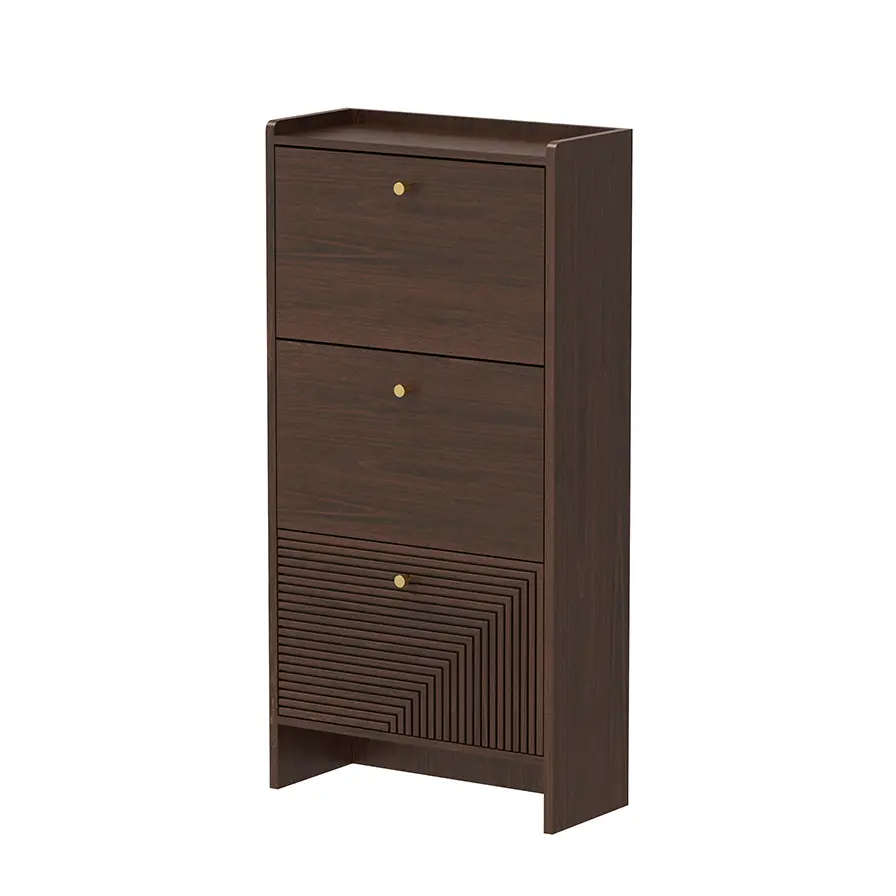
7. Minimum Order Quantities (MOQ) and Tailored Payment Phasing
B2B cash flow management often clashes with factory MOQ requirements. Strategic negotiation with your entryway shoe storage wholesaler involves understanding their production economics. Industry standard tiers:
MOQ for standard SKUs (solid colors, popular sizes): 100-300 units per finish. Anything lower generally indicates a small trader rather than a manufacturer.
Custom finish or size MOQ: 500 units typically, due to coating line setup costs (€800-1500 per color change).
Hybrid container models: Mixing shoe cabinets with other entryway items (coat racks, benches) helps reach 20' or 40' HC container volume while reducing per-unit MOQ to 50 pieces per design.
Professional wholesalers offer payment phasing: 30% deposit, 40% upon completion of QC inspection (with video evidence), 30% against bill of lading. Avoid firms demanding 100% T/T before shipment. Essent Home provides flexible MOQ wholesale shoe storage terms for ongoing contract projects, including consignment stock for large-scale residential developments.
Industry Survey: Most Frequent Fail Points in Bulk Entryway Storage Procurements
Based on post-occupancy evaluations of 47 multi-family buildings (2021–2024), the five most common failure modes when partnering with an underqualified entryway shoe storage wholesaler are:
Color batch variation: 38% of complaints – often due to lack of spectrophotometer control (ΔE<3.0 required).
Delamination in high-traffic areas: 27% – caused by low edge banding crosslink density and insufficient ironing temperature.
Missing hardware components: 19% – poor packing line discipline.
Dimension mismatch with architectural niches: 11% – failure to use CNC nesting with thermographic calibration.
Odor complaints from phenolic backing: 5% – using non-vented back panels in confined corridors.
Mitigation strategies include pre-production sample approval under D65 lighting, destructive testing of one unit from first output, and specification of back panel venting ratios (minimum 12% open area). Elite commercial entryway shoe system providers integrate these controls into their standard operating procedures.
Technical Comparison: Melamine vs. Veneer vs. High-gloss Acrylic for Contract Entryway Furniture
Each surface material has measurable pros and cons that affect long-term maintenance agreements. Evaluate your entryway shoe storage wholesaler based on which surface technology aligns with your asset class:
Melamine (CDF): Most economical, scratch resistance moderate (3-4 on Mohs scale). Best for budget apartment projects; expected lifecycle 5-7 years. Requires careful edge sealing.
Real wood veneer (0.6mm thickness): For luxury hospitality. Needs UV-cured polyurethane topcoat (at least 4 layers). Lifecycle exceeds 15 years with proper refinishing. Wholesaler must have vacuum press for contoured parts.
High-gloss acrylic (PMMA): Maximum stain + impact resistance. Used in airport lounges and premium condos. Demands dust-free assembly environment; any wholesaler offering cheap glossy options without buffer zones will produce hazy surfaces.
Essent Home operates segregated production lines for each category, with profilometer readings recorded per batch. Their high-end entryway shoe storage wholesale program includes a 10-year warranty on acrylic surfaces and veneer delamination – an industry-leading commitment.
Standardization vs. Customized Tooling: When to Invest in Proprietary Molds
For B2B buyers placing annual volumes exceeding 5,000 units, co-developing exclusive designs with a dedicated entryway shoe storage wholesaler yields competitive advantages. Evaluate tooling investment costs: injection molds for handles (€4k-8k), CNC press dies for shaped fronts (€10k-18k), and proprietary corner blocks (€3k). ROI analysis typically breaks even at 2,000-3,000 units due to elimination of assembly rework and brand differentiation. Smart wholesalers amortize tooling over 36 months and offer buy-back clauses if they terminate the partnership.
But for smaller contractors (300-800 units/year), stick with modular systems from manufacturers that offer mix-and-match components (door styles, legs, handles) without fixed mold charges. Modular entryway shoe storage wholesale platforms, such as those from Essent Home, allow 20+ aesthetic variations from shared core components, balancing customization and cost containment.
Frequently Asked Questions – B2B Entryway Shoe Storage Procurement
Q1: What is the typical lead time for a first container order from an entryway shoe storage wholesaler in Asia?
A1: For standard SKUs (existing finishes and sizes), lead times range 45-60 days from deposit to departure (including 20 days production, 7 days QC/consolidation, 14-21 sea freight). Custom finishes extend to 75-90 days due to coating line scheduling and sample approval cycles. Always request a Gantt chart with critical path milestones.
Q2: How do I verify that a wholesaler uses genuine soft-close hinges rather than standard hinges with plastic dampers?
A2: Request technical datasheet showing EN 15570 grade (Grade 3 minimum) and a disassembled sample. Genuine soft-close hinges contain a sealed hydraulic cylinder and a steel cam. Counterfeit versions have external plastic add-on dampers that break within months. Perform a “catch test” – open door to 45°, release; authentic damper engages mid-swing silently.
Q3: Can an entryway shoe storage wholesaler provide fire-rated units for commercial codes (e.g., NFPA 286)?
A3: Yes, but limited to specialized manufacturers. Fire-rated shoe cabinets use non-combustible mineral core panels (calcium silicate or magnesium oxide) with Class A fire-retardant laminate. Non-fire-rated standard MDF is prohibited in exit corridors of buildings over 3 stories. Always request full-scale furnace test reports from accredited labs (UL, Intertek).
Q4: What warranty terms are standard for contract-grade entryway shoe storage?
A4: Industry benchmark: 3-year comprehensive (structural + hardware), 5-year limited (panel delamination, veneer cracking) for residential bulk purchases; for hospitality (heavy use), seek 5-year comprehensive. Any wholesaler offering only 1-year warranty likely uses subgrade components. Premium partners like Essent Home provide 6-year on hardware and 10-year on high-gloss acrylic panels.
Q5: How should I enforce batch color consistency across a 2,000-unit hotel order?
A5: Insert a “spectrophotometric clause” in your PO: ΔE<3.0 between batches (CIELAB, D65 illuminant). Require that the wholesaler supplies a physical “golden sample” (200x200mm panel) for each color code, and perform random 5% batch checks using a handheld colorimeter. Also mandate that the wholesaler uses the same coating batch number for all units – a competent entryway shoe storage wholesaler will arrange color pooling.
Ready to Secure a Professional Wholesale Partnership?
Whether you require technical specifications, a BOM analysis, or a risk-mitigated contract for your next residential tower or hotel renovation, engaging a proven entryway shoe storage wholesaler ensures predictable outcomes. Essent Home offers complimentary procurement consulting, including factory audit reports, material library samples, and a dedicated project manager for orders exceeding 200 units.
Request your customized quote or MOQ proposal today: Send project details (target quantity, finish preferences, required certifications) to our B2B desk via the official inquiry portal or directly email
ceciliahuang@essenthome.com. All inquiries receive a technical datasheet pack within 24 business hours.
For urgent specifications, connect with our engineering team through the product customization form.