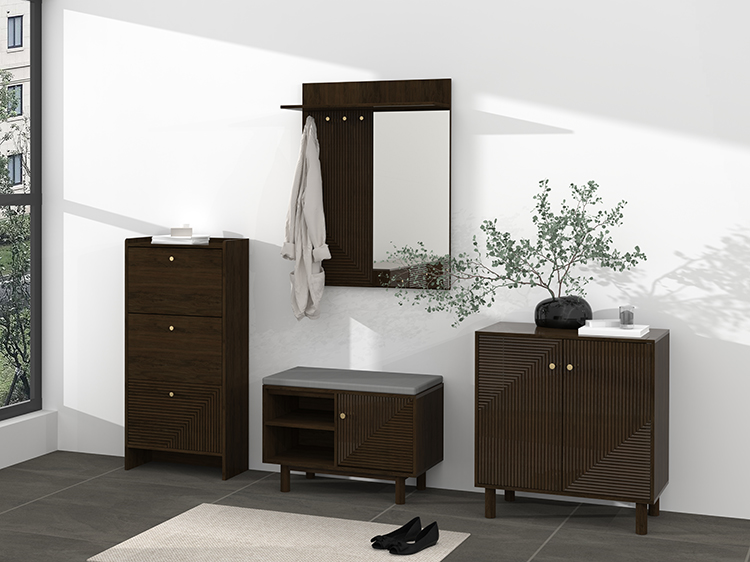
10 Criteria for Selecting a Premium Shoes Storage Cabinet ManufacturerIn the competitive landscape of contract furniture and high-end interior fit-outs, the choice of a shoes storage cabinet manufacturer can determine the success or failure of a project. Architects, interior designers, and procurement managers face the challenge of sourcing products that balance aesthetic precision, durability under heavy use, and compliance with international standards. This article, informed by the engineering expertise of Essent Home, outlines the ten critical factors to evaluate when vetting manufacturers for bespoke shoe storage solutions, ensuring your investment delivers long-term value and end-user satisfaction.
1. Industry Context: The Evolving Demands on Shoe Storage Manufacturing
The global luxury furniture market increasingly recognises shoe storage as a functional necessity, not an afterthought. Data from hospitality design reports indicate that 72% of luxury hotel guests consider adequate storage space a key factor in their overall satisfaction. Simultaneously, high-end residential developments now feature walk-in closets where shoe display and preservation are paramount. Consequently, a professional shoes storage cabinet manufacturer must move beyond simple shelving to provide engineered systems that address ventilation, load distribution, and integration with smart home technologies. This shift demands manufacturers with deep material science knowledge and flexible production capabilities.
2. Material Sourcing and Substrate Quality
The foundation of any durable shoe cabinet lies in its core materials. A reputable manufacturer sources only certified panels with controlled moisture content (typically 8–12%) and low formaldehyde emissions (CARB Phase 2, E1, or F★★★★). For luxury applications, multi-layer plywood (birch or poplar) is preferred over particleboard due to its screw-holding strength and resistance to humidity. Additionally, solid wood components (oak, ash, walnut) for frames or doors should be kiln-dried to prevent warping in varying climates. When evaluating a shoes storage cabinet manufacturer, request documentation of material certifications and test reports for bending strength and formaldehyde content.
3. Precision Engineering and Joinery Techniques
Luxury-grade cabinets are defined by their construction methods. CNC machining ensures consistent tolerances of ±0.5 mm, critical for flush-fitting doors and seamless drawer operation. Joinery should employ dowel-reinforced mortise-and-tenon or CNC-cut dovetail joints rather than basic stapling. For flat-pack shipments, cam-lock fittings with metal dowels provide superior stability during reassembly. A competent manufacturer invests in automated edge-banding machines that apply hot-melt adhesives evenly, preventing edge lifting over time. These technical details directly correlate with the product’s lifespan in high-traffic environments like hotels.
4. Hardware Integration and Mechanical Performance
High-frequency use in commercial settings demands hardware rated for 50,000 to 100,000 open-close cycles. Premium manufacturers integrate soft-close mechanisms from leading brands (Blum, Hettich, or Grass) and offer options like push-to-open systems for handle-less designs. For specialised applications—such as tilt-out boot compartments or pull-out valet rods—gas struts with adjustable damping force must be tested for consistent performance. The manufacturer should provide cycle test certifications and offer spare parts availability for long-term maintenance.
5. Ventilation and Microclimate Solutions
Footwear preservation requires active air circulation to prevent mould and odour. Advanced manufacturers incorporate concealed ventilation channels, perforated metal back panels, or integrated low-voltage fans with humidity sensors. For tropical climates or projects requiring extra protection, options include built-in dehumidifying cartridges or UV-C sanitisation modules. When vetting a shoes storage cabinet manufacturer, inquire about their experience with climate-controlled storage and the integration of such systems without compromising cabinet aesthetics.
6. Surface Finishes and Chemical Resistance
In contract markets, finishes must withstand frequent cleaning with industrial-grade agents. High-durability options include PU (polyurethane) high-gloss lacquers, ceramic coatings, or UV-cured acrylics that resist scratching, yellowing, and chemical attack (e.g., alcohol or acetone). For natural veneers, a multi-layer sealer with a topcoat of nitrocellulose or conversion varnish ensures protection while retaining the wood’s tactile appeal. A professional manufacturer maintains a library of finish samples and can match any RAL or NCS colour, as well as provide physical samples for on-site testing.
7. Customisation Capabilities for Complex Architectural Spaces
No two projects are identical. A capable manufacturer offers true bespoke services: non-standard depths (e.g., 250 mm for narrow corridors), curved or angled cabinets, and mixed-material fronts (veneer, leather, metal mesh). They should also accommodate specialised internal fittings—tilted shelves for sneaker display, adjustable dividers for high boots, or pull-out trays for shoe care accessories. At Essent Home, our design engineering team collaborates directly with clients to translate architectural drawings into production-ready CAD files, ensuring seamless integration with existing millwork.
8. Quality Assurance Protocols and International Certifications
Reliability is non-negotiable in B2B contracts. A trustworthy shoes storage cabinet manufacturer operates under ISO 9001 quality management systems and conducts multi-stage inspections:
Incoming QC: Verification of raw material specs, including veneer matching and hardware authenticity.
In-process checks: Dimensional accuracy, edge-band adhesion, and squareness (±1 mm).
Pre-shipment assembly: Trial assembly of random samples to validate fit and function.
Packaging tests: ISTA-certified drop and vibration tests for export safety.
Additionally, certifications such as FSC® for sustainable wood, Greenguard Gold for indoor air quality, and fire-resistance ratings (e.g., ASTM E84) are essential for many commercial tenders.
9. Supply Chain Transparency and Lead Time Management
Project timelines depend heavily on the manufacturer’s production capacity and logistics. Enquire about their average lead times (typical range: 6–10 weeks from sample approval), raw material inventory levels, and ability to handle urgent orders. A robust manufacturer maintains relationships with multiple timber suppliers to mitigate supply disruptions. They should also offer consolidated shipping options, customs documentation support, and on-site installation supervision for large-scale projects. These logistical capabilities minimise on-site adjustments and keep construction schedules on track.
10. Cost Engineering and Value-Added Services
While price is a factor, true cost efficiency comes from a manufacturer’s ability to reduce waste, optimise designs for production, and avoid costly field modifications. Look for partners who provide value engineering consultations—suggesting material alternatives that maintain quality while reducing expenses. For example, Essent Home often assists clients in redesigning cabinetry layouts to use standard panel sizes, lowering material waste and production time without compromising customisation. Post-installation support, including warranty terms and spare parts availability, should also be clearly defined in the contract.
Case Study: Essent Home’s Partnership with a 5-Star Hotel Chain
A recent project involved supplying custom shoe cabinets for 450 guest rooms in a Middle Eastern luxury hotel. The original spec required Italian-made units with a 14-week lead time. By switching to shoes storage cabinet manufacturer Essent Home, the developer achieved:
30% cost reduction compared to European quotes.
8-week lead time including prototyping and mass production.
Zero on-site defects due to pre-shipment assembly validation.
Positive guest feedback highlighting the “thoughtful, spacious storage.”
This partnership exemplifies how a technically proficient manufacturer can enhance both project economics and end-user experience.
Conclusion: Making an Informed Selection
Choosing the right shoes storage cabinet manufacturer requires a thorough evaluation of technical capabilities, quality systems, and industry experience. By prioritising material integrity, precision engineering, and customisation flexibility, you mitigate risks and ensure that the finished product aligns with your brand’s standards. Essent Home combines decades of contract manufacturing expertise with a commitment to innovation, serving as a reliable partner for luxury projects worldwide. To discuss your specific requirements, contact our B2B consultation team for a detailed capability presentation and portfolio review.
Frequently Asked Questions (FAQ)
Q1: What is the typical minimum order quantity (MOQ) for custom shoe cabinets from a manufacturer?
A1: MOQs vary based on complexity. For fully bespoke designs, many manufacturers, including Essent Home, require a minimum of 30–50 units per design to optimise production efficiency. Smaller quantities may be possible for pilot projects or showroom samples; contact us for a tailored quote.
Q2: Can the manufacturer match existing interior finishes or provide custom colours?
A2: Yes. Professional manufacturers maintain extensive finish libraries and can match any RAL, NCS, or Pantone colour, as well as replicate wood veneer samples. A physical sample is always produced and approved before mass production begins.
Q3: What certifications should I look for in a shoe storage cabinet manufacturer?
A3: Key certifications include ISO 9001 (quality management), FSC® (sustainable wood), CARB Phase 2 or E1 (low formaldehyde), and Greenguard Gold (indoor air quality). For fire safety, request ASTM E84 or EN 13501 test reports for materials used.
Q4: How does the manufacturer ensure consistent quality across multiple production batches?
A4: Reputable manufacturers follow a strict quality management system. A “golden sample” is approved before production, and in-line inspections are conducted throughout. Random samples from each batch are fully assembled and tested for dimensions, function, and finish. Detailed inspection reports are shared with clients.
Q5: Do you offer installation support or technical supervision for international projects?
A5: Yes. For large contracts, we can provide on-site installation supervisors to train local crews or manage the entire installation. For smaller shipments, we supply detailed assembly drawings, video guides, and 24/7 technical support via video call.
Q6: What is the lead time for a custom shoe cabinet order, and can it be expedited?
A6: Standard lead times range from 6 to 10 weeks, depending on order complexity and quantity. This includes tooling, sampling, production, and quality control. Expedited options are available for urgent projects; please discuss your timeline with our sales team.
Q7: Can the manufacturer integrate smart features like lighting or dehumidifiers?
A7: Absolutely. Many luxury projects require integrated LED lighting with motion sensors, USB charging ports, or dehumidifying systems. Our engineering team designs pre-wired channels and ensures all electronic components meet safety certifications (CE, UL).