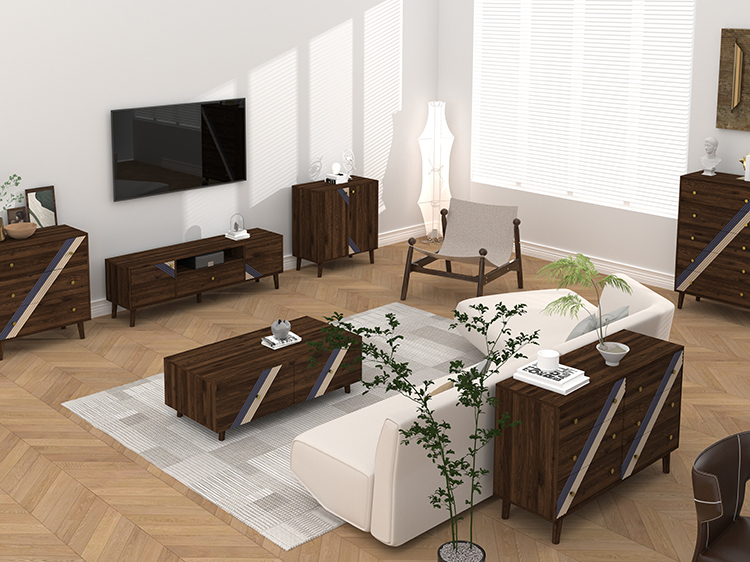
Exporting kitchen hutches – tall, freestanding cabinets with open shelves and
enclosed storage – requires more than carpentry skills. A professional
kitchen hutch exporter must
manage wood species selection, joinery techniques, surface finishing, packaging
for ocean freight, and compliance with destination country regulations (e.g.,
Lacey Act, formaldehyde emission standards). This article provides a deep
technical analysis of the entire export process, from design for manufacturing
(DFM) to container loading and documentation. For buyers seeking reliable
sourcing, Essent Home acts as a
vertically integrated kitchen hutch exporter, offering OEM and ODM services
with strict quality control and on‑time delivery.
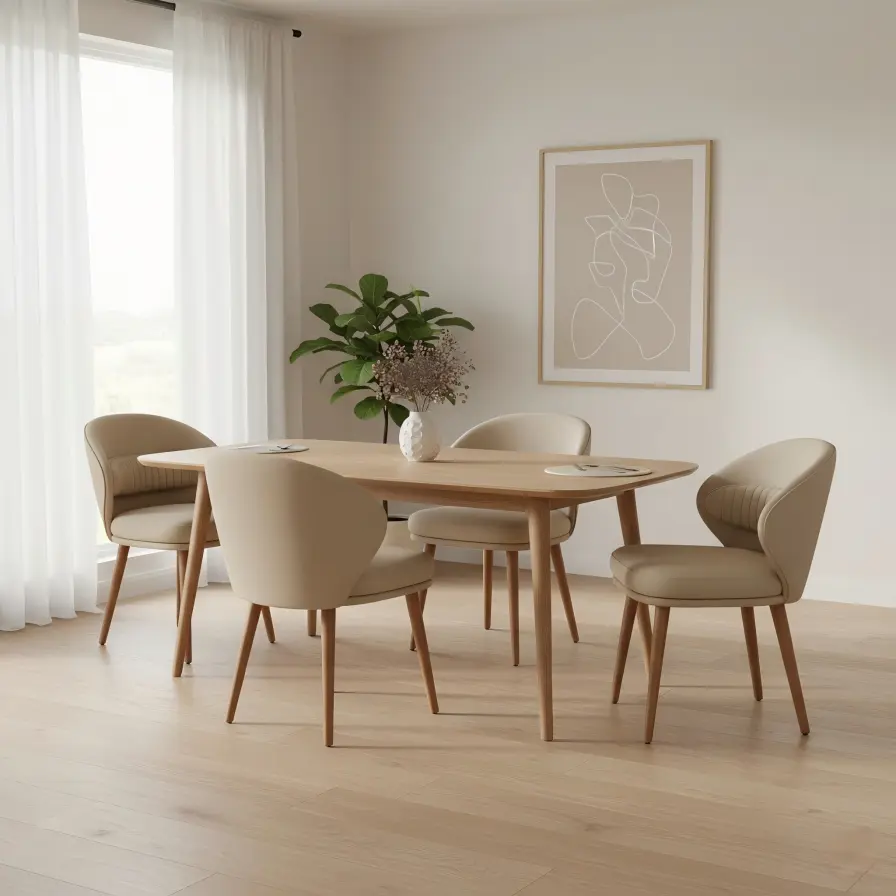
1. Defining the Kitchen Hutch: Design Variations and Export Markets
A kitchen hutch (also called a china cabinet or buffet hutch) typically
measures 1,500–2,000 mm in height, 900–1,200 mm in width, and 400–500 mm in
depth. Key variations for international buyers:
Traditional hutches: Raised panels, crown molding, and
glass doors. Popular in North America and Western Europe.
Modern hutches: Flat panels, concealed hinges, matte
finishes. Preferred in Scandinavia and Japan.
Rustic farmhouse: Reclaimed wood, distressed paint, metal
hardware. Strong demand in Australia and UK.
Modular hutches: Stackable or expandable units for small
apartments. Growing in Southeast Asia.
An experienced kitchen hutch exporter adapts designs to
regional preferences while maintaining structural integrity for long‑distance
shipping.
2. Material Selection for Export-Grade Kitchen Hutches
The choice of wood and engineered panels directly affects durability, weight,
and cost. Exporters must balance aesthetics with stability in varying humidity
conditions (e.g., from factory in Vietnam to dry Arizona or humid
Singapore).
2.1 Solid Wood Species
Oak (white/red): High density, excellent screw holding, but
heavy. Preferred for high‑end hutches.
Rubberwood: Sustainable, medium density, uniform texture.
Commonly used in Asian export manufacturing.
Walnut: Premium, darker color, higher cost. Requires
careful drying to prevent warping.
Pine: Soft, affordable, but prone to dents. Often used for
painted hutches.
For export, wood moisture content must be 8–12% at time of packing to prevent
cracking in container transit (where temperatures range from -10°C to 60°C). A
reliable kitchen hutch exporter uses a moisture meter on every
batch.
2.2 Engineered Panels and Veneers
To reduce weight and cost, many hutches combine solid wood frames with
plywood or MDF panels. Specifications:
Plywood: Birch or poplar core, 9–18 mm thickness, CARB
Phase 2 compliant for formaldehyde.
MDF (medium density fiberboard): For painted or veneered
surfaces. Must be moisture‑resistant (MR) grade for kitchen environments.
Wood veneer: Rotary‑cut or sliced veneer (0.5–0.6 mm) on
MDF core. Requires proper edge banding to prevent moisture ingress.
Essent Home sources all
panels from FSC‑certified suppliers and provides test reports for formaldehyde
emissions (EN 717-1, ASTM E1333).
3. Joinery and Construction Standards for Export
A kitchen hutch shipped across oceans experiences vibration, stacking
pressure, and humidity cycles. Weak joinery leads to claims. Professional
exporters use:
Dado and rabbet joints: For shelves and back panels –
stronger than butt joints.
Mortise and tenon: For door frames and leg
attachments.
Corner blocks and glue: Added to all stressed corners. Use
cross‑linked PVA glue (water resistant).
Knock‑down (KD) fittings: For flat‑pack hutches. Use cam
locks and dowels with metal brackets rated for 50 kg load.
Additionally, back panels should be braced with a cross‑strut to prevent
racking. The kitchen hutch exporter must perform a 24‑hour
vibration test on a loaded hutch to simulate truck and sea transport.
4. Surface Finishing and Coating for Durability
Kitchen hutches require finishes that resist moisture, grease, and cleaning
agents. Exporters offer three main options:
Conversion varnish (CV): Two‑part catalyzed finish. High
chemical resistance, hardness. Typical thickness 2–3 mils (50–75 µm). Cure time
24 hours.
Polyurethane (PU): Available in water‑based or
solvent‑based. Good scratch resistance. Water‑based PU has lower VOC (≤100 g/L)
– required for European markets.
Lacquer (pre‑catalyzed): Faster drying but less durable
than CV. Often used for painted hutches.
For export, the finish must pass a cold check test (4 cycles of -15°C to
25°C) and a cross‑hatch adhesion test (ASTM D3359, rating 4B or 5B). Essent Home provides a finish durability certificate
with every shipment.
5. Packaging and Container Loading for Sea Freight
Improper packaging is the leading cause of damage claims. A professional
kitchen hutch exporter follows these protocols:
Individual wrapping: Each hutch is covered in EPE foam (10
mm thickness) and then in a polyethylene bag to prevent moisture.
Edge protectors: Cardboard or plastic corners on all 8
edges of the hutch.
Corrugated carton: Double‑walled (BC flute) for hutches
shipped as single pieces. For KD hutches, use 5‑ply cartons with internal
dividers.
Palletization: Hutches are strapped to heat‑treated pallets
(ISPM 15 compliant). Maximum stack height: 1.8 meters.
Container loading: Use air bags (dunnage bags) between rows
and at the container doors to prevent shifting. For 40‑foot HC containers,
typical loading is 36–48 hutches depending on size.
Moisture control: Include 10–20 grams of silica gel per cubic foot inside the
carton. For high‑humidity routes (e.g., Asia to Europe), a desiccant bag is
attached to the container ceiling.
6. Regulatory Compliance for Exporting Kitchen Hutches
Different markets impose specific requirements. A compliant kitchen
hutch exporter must provide:
Lacey Act declaration (USA): For solid wood and veneer,
declare genus and species, country of harvest.
CARB / EPA TSCA Title VI (USA): Formaldehyde emission
limits for composite wood products. Test method: ASTM E1333 or EN 717-1.
REACH (EU): Registration of chemicals – ensure finishes and
glues do not contain restricted substances (e.g., lead, cadmium, certain
phthalates).
FSC certification (optional but preferred): Chain of
custody for wood from responsible sources.
ISPM 15: All wooden packaging (pallets, crates) must be
heat‑treated and marked.
Essent Home maintains a compliance library with test
reports and certificates for all export markets, allowing buyers to avoid
customs holds.
7. Quality Control and Pre‑Shipment Inspection
Before a container is sealed, a thorough inspection must verify:
Dimensions (tolerance ±2 mm for width/height, ±1 mm for shelf holes).
Finish color match (ΔE < 1.5 under D65 light).
Hardware function (hinges, drawer slides, cam locks).
No visible defects: scratches, dents, glue residue, or open joints.
Packaging integrity: carton sealing, edge protectors in place, labels
correctly applied.
A professional kitchen hutch exporter follows ANSI/ASHRAE
Standard 135 (or internal AQL sampling plan, e.g., AQL 1.5 for critical
defects). Essent Home provides a
video recording of the final inspection and a signed quality report for each
order.
8. Common Challenges in Kitchen Hutch Export and Solutions
Even experienced exporters face issues. Here are frequent problems and
remedies based on field data:
Wood warping after container arrival: Caused by high
moisture content at packing or condensation during transit. Solution: Use
kiln‑dried wood (MC ≤10%) and include desiccants; instruct buyers to acclimate
hutches in the destination room for 72 hours before unpacking.
Glass door breakage: Standard glass is fragile. Solution:
Use tempered glass (5 mm thick) or replace with acrylic for high‑risk shipments.
Add foam separators between glass and wooden frame.
Hardware corrosion: Zinc‑plated screws may rust in humid
containers. Solution: Use stainless steel (304) hardware for all coastal or
tropical destinations.
Color mismatch between batches: Finish formulations vary by
batch. Solution: Request a “master sample” approved by buyer; produce all
hutches for an order from the same finish batch and keep a retained
sample.
Frequently Asked Questions (FAQ) About Kitchen Hutch Exporter
Q1: What is the minimum order quantity (MOQ) when working with a
kitchen hutch exporter?
A1: For OEM/ODM production, typical MOQ is
100–300 pieces per design (mix of sizes/finishes). For stock models (exporters’
own catalog), MOQ can be as low as 50 pieces. Essent Home offers lower MOQs (50 pieces) for
first‑time buyers to test market reception.
Q2: How long does it take to produce and ship a container of kitchen
hutches?
A2: Production lead time: 30–45 days after sample approval.
Sea freight from Asia to US West Coast: 18–22 days; to Europe: 30–35 days. Total
door‑to‑door: 60–80 days. A responsive kitchen hutch exporter provides a production schedule with milestones.
Q3: Can a kitchen hutch exporter provide custom sizes and finishes
for a specific hotel project?
A3: Yes, most exporters offer full
customization (size, wood species, paint color, hardware). Minimum for custom:
50–100 pieces. You must provide a detailed technical drawing or 3D model.
Essent Home has in‑house
designers to convert your concept into manufacturing drawings.
Q4: What documentation should I request from a kitchen hutch exporter
before placing an order?
A4: Request: (1) Product specification
sheet (dimensions, materials, finish). (2) Wood origin declaration (Lacey Act).
(3) Formaldehyde test report (CARB/EPA). (4) Packaging diagram. (5) Reference
order from another buyer in your country. (6) Sample of the hutch (shipped via
air freight, cost deducted from bulk order).
Q5: How do I verify that the exporter’s factory has ethical labor and
environmental practices?
A5: Ask for a third‑party social compliance
audit (e.g., BSCI, Sedex, SMETA). Also request FSC chain of custody
certification if wood sourcing is a concern. A reputable kitchen hutch
exporter will share audit reports. Essent Home publishes annual sustainability
reports.
Q6: What is the typical warranty period offered by a kitchen hutch
exporter?
A6: Professional exporters provide a 1‑year warranty
against manufacturing defects (joint failure, finish peeling, hardware
malfunction). Some offer extended warranty (3–5 years) at extra cost. The
warranty does not cover damage from improper handling or extreme humidity.
Ensure the warranty terms are stated in the proforma invoice.
Ready to Source High‑Quality Kitchen Hutches for Your Market?
Selecting the right kitchen hutch exporter determines your product
quality, supply chain reliability, and customer satisfaction. Essent Home combines 15 years of export experience, a
vertically integrated factory, and a dedicated compliance team to ensure every
hutch meets ASTM, EN, and ISO standards. We offer OEM/ODM services from design
to delivery, including mixed container consolidation with other dining room
furniture.
Send your inquiry today – include target market (USA, EU,
Australia, etc.), desired hutch dimensions, wood species, finish type, and
estimated annual volume. We will respond within 48 hours with a preliminary
quote, sample cost, and a checklist of required certifications for your country.
For urgent projects, we can arrange a video factory tour and provide a sample
within 15 days.
Request a consultation from Essent Home,
your trusted kitchen hutch exporter – references available from
hotel chains, furniture retailers, and wholesalers worldwide.