High-end residential projects and luxury commercial spaces require display
casework that balances visual transparency with structural stability. A curio
cabinet serves as both a protective enclosure and a presentation platform for
valued objects, high-value retail merchandise, or curated private collections.
Achieving this dual function requires specialized production methodologies that
go beyond conventional casegood manufacturing. Partnering with a skilled curio
furniture manufacturer allows interior designers, procurement agencies, and
architectural firms to transform complex design concepts into durable,
real-world installations. Manufacturers like Essent Home combine traditional
woodworking joinery with modern glass engineering to deliver high-specification
display units across international markets.
Custom display cabinets present unique mechanical challenges. Unlike standard
wardrobes or sideboards, curio furniture utilizes expansive glass panels,
internal illumination systems, and minimal timber or metal framing. The
structural load must be distributed evenly across slender structural members
while maintaining tight tolerances to prevent dust infiltration and door
misalignment. Understanding the engineering practices, material selections, and
production standards behind custom cabinet fabrication enables procurement
managers to make informed decisions during vendor evaluation.
Structural Engineering and Load Distribution in Curio Cabinets
The foundation of a high-performance display cabinet lies in its structural
frame. Selecting a qualified curio furniture manufacturer requires evaluating
their wood processing capabilities. Timber selection and drying processes
directly affect the long-term dimensional stability of the cabinet. Premium
hardwoods such as European Oak, American Walnut, and Ash must undergo controlled
kiln-drying to achieve a moisture content of 8% to 10%. This precise moisture
control prevents frame warping, twisting, or joint separation when the finished
cabinet is exposed to varying ambient humidity levels in target
environments.
Joinery techniques must account for the heavy weight of glass shelves and
full-length glass doors. Traditional mortise-and-tenon joints, reinforced with
concealed structural steel brackets or internal dowel systems, form the backbone
of the wooden framework. For minimalist designs featuring slim metal profiles,
high-tensile aluminum or stainless steel extrusions are welded and
precision-ground to create seamless corner joints.
Weight-Bearing Capacity: Display shelves designed for heavy
items require glass thickness calculations based on span width. Standard 6mm
tempered glass suits short spans, whereas spans exceeding 900mm demand 8mm or
10mm toughened glass to prevent center deflection.
Anti-Tip and Anchoring Mechanisms: Due to high
height-to-depth ratios, tall display units feature integrated structural back
panels or concealed wall-anchoring hardware to meet international commercial
safety codes.
Deflection Tolerances: Structural framing must limit flex
under load to less than 1.5mm across the entire width, ensuring smooth operation
of sliding or hinged door hardware over decades of use.
Material Integration: Glass, Metalwork, and Architectural Illumination
A capable curio furniture manufacturer must excel at combining disparate
materials into a cohesive assembly. Glass selection significantly influences
light transmission and color accuracy inside the cabinet. Standard float glass
exhibits a subtle green tint caused by iron content. High-end display casework
frequently utilizes ultra-clear low-iron glass (Optiwhite), which offers
crystal-clear optical clarity, permitting true color representation of displayed
items.
Edge finishing on glass panels is equally important. Polished flat edges with
arris profiling remove micro-fractures created during cutting, increasing the
overall mechanical strength of the pane while providing a smooth, refined visual
edge. Where frameless glass-to-glass joints are required, ultraviolet (UV)
structural bonding adhesives create seamless transparent corners that withstand
substantial tensile and shear forces without visible mechanical fasteners.
Illumination plays an active role in display casework design. Integrating
electrical components within closed timber and glass assemblies requires careful
thermal management and wire routing.
Linear LED Extrusions: Recessed micro-channels built into
cabinet stiles or shelf undersides house flexible LED strips with high Color
Rendering Index ratings (CRI 95+). These extrusions incorporate frosted
diffusers to eliminate visible diode hot spots.
Thermal Dissipating Channels: Aluminum tracks act as heat
sinks, drawing thermal energy away from the LEDs to protect wood veneers and
sensitive display objects from localized temperature increases.
Concealed Power Delivery: Low-voltage wiring is routed
through internal dado cuts, hollow metal frames, or conductive shelf-support
rails, eliminating exposed cabling while allowing adjustable shelf height
configurations.
Precision Hardware and Seal Engineering
The longevity and tactile quality of a display cabinet depend heavily on its
mechanical hardware. Hinges for heavy glass doors must support substantial
cantilevered loads without sagging. Concealed continuous pivot hinges,
heavy-duty soft-close European hinges, or precision top-and-bottom offset pivots
are selected based on frame geometry and door weight.
Dust protection is a major consideration for museum-grade and luxury
residential cabinets. Unsealed gaps between doors and frames allow ambient dust
to accumulate on interior surfaces and displayed items. Modern manufacturing
solves this through integrated channel sealing.
Extruded Silicone Gaskets: Flexible, clear silicone
profiles fitted into perimeter grooves seal micro-gaps when doors are
closed.
Magnetic Compression Seals: Concealed magnetic strips along
door edges ensure uniform pull, compressing dust seals across the entire
vertical height.
Micro-Gap Tolerance Controls: CNC-machined frame pockets
ensure hinge clearances remain within a tight +/- 0.5mm window, maintaining
airtight integrity without obstructing smooth manual opening.
Surface Finishing and Custom Varnish Systems
The finishing process for curio cabinets demands rigorous cleanliness
standards. Because display cabinets often incorporate interior lighting that
highlights surface imperfections, the application of lacquers, stains, and oils
must occur in positive-pressure, dust-controlled spray environments.
Open-pore polyurethane finishes accentuate the natural grain texture of solid
wood and rich veneers, while high-gloss polyester lacquers require multi-stage
hand polishing to achieve a flawless mirror finish. Inner cabinet backings are
frequently wrapped in aniline leathers, synthetic suedes, or silk fabrics. These
soft materials require pH-neutral, solvent-free adhesives during application to
prevent off-gassing, which can tarnish metallic artifacts or discolor display
items over extended periods.
At Essent Home, finishing procedures involve multi-layer sanding schedules
between coat applications, ensuring deep color depth and resistance to surface
scratching, chemical cleaners, and UV radiation exposure.
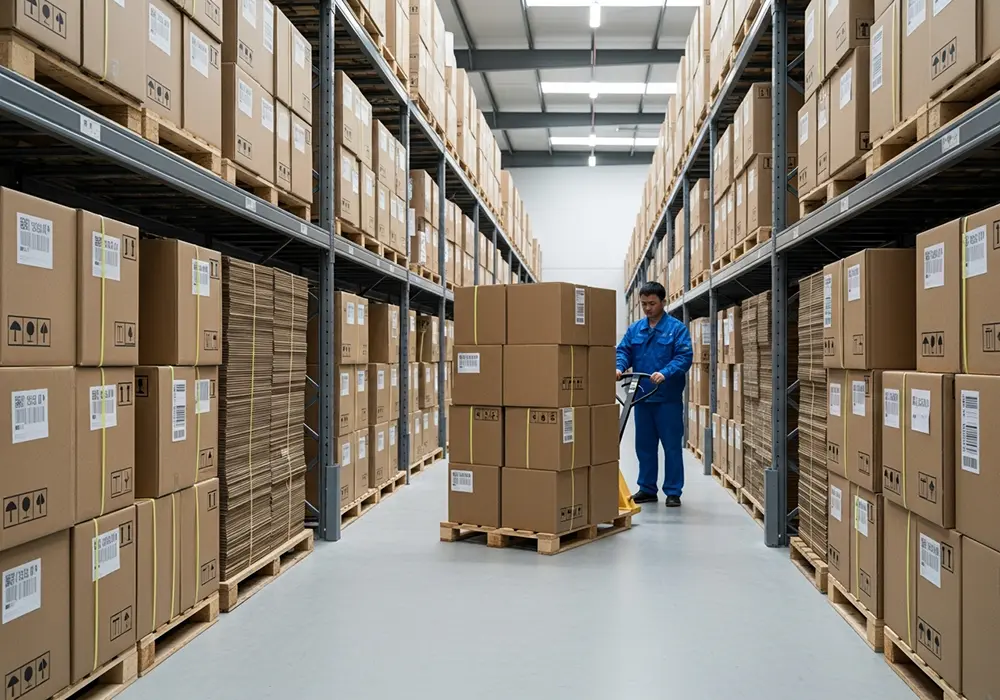
Supply Chain Logistics, Packaging, and Quality Testing
Sourcing from a global curio furniture manufacturer demands strict controls
over shipping preparation. Transporting fully assembled or knock-down glass
casework across international supply chains presents significant risk.
Establishing standardized packaging and quality assurance protocols minimizes
transit damage and project installation delays.
Every completed cabinet undergoes dry-fit assembly and operational testing
before final packaging. Quality control inspectors verify door clearance
alignment, hinge dampening speed, lighting circuit continuity, and structural
stability under load.
Packaging strategies for flat-pack or fully assembled units incorporate
engineered drop-testing standards:
Custom Honeycomb and EPE Foam Cushioning: High-density
Expanded Polyethylene (EPE) foam panels envelope all glass components,
insulating against vibration and impact shock.
Reinforced Plywood Crating: Outer packaging utilizes
ISPM-15 compliant heat-treated plywood crates featuring internal structural
corner blocks to resist vertical stacking pressure during ocean freight
transit.
Moisture and Desiccant Shielding: Sealed poly-wrapping with
industrial desiccant bags protects metal finishes and wood components from
humidity spikes during marine transport.
Frequently Asked Questions
1. What glass thickness is recommended for structural display shelves in
custom curio cabinets?
Shelf thickness depends on the supported span width and intended weight
capacity. For spans up to 600mm carrying lightweight objects, 6mm toughened
glass is sufficient. For wider spans between 600mm and 1000mm, or for supporting
heavy decorative items, 8mm to 10mm toughened glass is necessary to limit flex.
In commercial applications, laminated toughened glass may be specified to comply
with safety regulations.
2. How do specialized display furniture manufacturers prevent dust ingress
inside illuminated cabinets?
Dust ingress is controlled through precise frame milling and perimeter seal
systems. Manufacturers recess continuous silicone or brush seals along door
rebates and install magnetic latches that draw the door tightly against the
frame gaskets. Maintaining strict machining tolerances (+/- 0.5mm) across door
frames prevents gaps where dust typically enters.
3. Which wood species offer the best dimensional stability for display
casework in fluctuating climates?
Stable, dense hardwoods like European Oak, American Walnut, Maple, and Teak
perform exceptionally well when properly kiln-dried to 8–10% moisture content.
Quarter-sawn timber yields even greater stability compared to flat-sawn wood, as
the grain orientation minimizes expansion and contraction across the panel width
when relative humidity changes.
4. How are low-voltage lighting systems safely integrated into wooden
display units?
Low-voltage LED systems (typically 12V or 24V) are installed within anodized
aluminum channels that serve as structural heat sinks, keeping operating
temperatures low. Wiring is routed through concealed channels milled into the
wood frame before final assembly. Power supply drivers are housed in ventilated
compartments outside the sealed display chamber to facilitate heat dissipation
and future maintenance.
5. What custom options exist for cabinet interior back panels?
Interior backings can be tailored to complement specific interior schemes.
Options include back-lit translucent onyx or frosted glass panels, bronze or
antique mirrored glass, hand-stitched leather upholstery, architectural timber
veneers, or metal leafing. All backing fabrics and adhesives must be neutral and
non-gassing to protect enclosed collection pieces.
Partnering with Essent Home for Contract Manufacturing Solutions
Selecting an established curio furniture manufacturer with proven engineering
capabilities is essential for delivering commercial and high-end residential
FF&E projects on schedule. Sourcing from an experienced factory reduces
structural rework, improves material compatibility, and delivers a refined
finished product that fulfills architectural design intent.
Essent Home offers complete OEM and ODM manufacturing services for contract
buyers, procurement agents, and design studios worldwide. From shop drawing
generation and sample approval to bulk fabrication and international freight
preparation, our factory team ensures strict quality compliance at every stage.
For technical inquiries, custom prototyping, or to submit your project bill of
quantities and CAD specifications for commercial bidding, please contact our
engineering division directly at ceciliahuang@essenthome.com.