Display cabinetry serves as a focal point in luxury residential interiors,
high-end retail environments, and boutique hospitality projects. Producing
high-capacity display showcases requires a balance between structural
engineering and visual clarity. Sourcing a specialized curio furniture oem
provider allows furniture brands, procurement groups, and interior architectural
firms to translate complex design concepts into durable, retail-ready products.
Essent Home operates at this manufacturing intersection, delivering engineered
display solutions built to withstand international logistics, ambient climate
shifts, and heavy commercial use. Achieving repeatable quality across volume
production requires rigorous control over timber stabilization, glass mechanics,
and integrated electrical components.
Timber Stabilization and Kiln-Drying Precision
Wood frame movement represents a primary point of failure in enclosed display
cabinetry. Because curio cabinets rely on narrow stiles and rails to maximize
visible display area, any dimensional instability in the wood substrate leads to
binding doors, misaligned latches, or fractured glass panels. High-grade custom
manufacturing begins with timber selection and strict moisture management.
Hardwoods such as American Walnut, European White Oak, and Soft Maple must
undergo controlled kiln drying to achieve an Equilibrium Moisture Content (EMC)
between 8% and 12%, depending on the target destination climate. Wood boards are
selected to avoid grain tension, reducing the likelihood of warping after
milling.
Substrate Selection: Solid timber is prioritized for
structural perimeter frames, while high-density, low-emission composite cores
(E0 or CARB P2 compliant) with thick hardwood veneers are specified for large
planar backings to ensure dimensional stability.
Joinery Systems: Precision mortise-and-tenon joints,
reinforced with concealed corner brackets and structural polyurethane adhesives,
distribute load stresses across frame corners without visible fasteners.
Acclimatization Cycles: Machined wood components undergo
rest periods between rough cutting, detailed milling, and final finishing. This
step releases internal fiber stresses before final cabinet assembly.
Glass Structural Engineering and Dynamic Load Capacities
Glass is both the primary aesthetic element and a key structural component in
modern display units. Managing structural integrity while maintaining thin
visual profiles presents major challenges in curio furniture oem projects.
Precision manufacturing requires distinct glass selection and mounting protocols
tailored to specific loading demands.
Tempered glass is used across all external doors, side panels, and adjustable
shelves. Tempered panels offer four to five times the flexural strength of
standard float glass and meet international impact safety standards (EN 12150
and ANSI Z97.1). Shelf thickness calculations depend directly on clear span
width and expected display weight:
6mm Tempered Glass: Suitable for shelf spans up to 600mm
under light display loads.
8mm Tempered Glass: Specified for spans between 600mm and
900mm, supporting heavier collections without noticeable deflection.
10mm Ultra-Clear Low-Iron Glass: Used for wider spans
exceeding 900mm and premium showcases where color neutrality is required to
prevent green edge tinting.
Shelf support hardware must feature dampening gaskets, such as clear silicone
or rubberized brass sleeves, to prevent point-load stress on glass edges. Edge
polishing—specifically flat polish with arrissed edges—eliminates
micro-fractures created during glass cutting, reducing thermal stress fractures
under ambient light heat.
Integrated Micro-Lighting and Electrical Compliance
Illumination turns a standard shelf unit into a professional display
showcase. Integrating low-voltage lighting directly into curio furniture oem
specifications requires early structural planning during the drafting phase to
avoid exposed wiring and thermal build-up inside timber enclosures.
Modern display cabinets utilize continuous Chip-on-Board (COB) LED strips or
recessed micro-spotlights with high Color Rendering Index (CRI > 90) ratings.
High CRI lighting ensures displayed objects retain true color fidelity. Thermal
management is achieved by housing LED channels inside extruded aluminum heat
sinks recessed directly into hardwood top caps or shelf support rails. This
prevents heat buildup that could degrade adhesive bonds or damage sensitive
display items.
Wiring pathways are routed through internal wire chases pre-milled into
cabinet stiles during primary CNC processing. Conductive hinge systems or
wireless contact plates allow adjustable shelf lighting without visible hanging
cords. Transformers and smart dimming modules are housed in ventilated, hidden
bottom compartments with toolless access panels, ensuring full compliance with
regional electrical safety codes such as UL, CE, and SAA.
Micro-Tolerances and Dust-Sealing Architecture
Enclosed display cabinetry must protect contents from airborne dust and
environmental humidity fluctuations. Achieving an effective seal while keeping
smooth door mechanics requires maintaining micro-tolerances across the entire
frame assembly.
Frame gap tolerances are held within ±0.5mm across vertical and horizontal
planes. Door movement is managed through 3D adjustable concealed pivot hinges or
continuous concealed piano hinges that support high cantilever weight without
sagging over time.
Perimeter Gasketing: Extruded clear silicone profiles or
soft magnetic seal strips are recessed into door rebates, forming an air barrier
when closed.
Soft-Close Latches: Integrated magnetic latches pull doors
tightly against perimeter seals without harsh vibration that could rattle
delicate displays.
Alignment Hardware: Adjustable leveling feet are built into
cabinet bases, allowing installers to compensate for uneven floors and maintain
frame squareness on site.
Addressing Bottlenecks in High-Volume Custom Production
Translating bespoke interior designs into scalable production lines often
exposes weaknesses in finish consistency, transit durability, and hardware
reliability. Experienced global contract suppliers clear these bottlenecks
through standardized testing procedures and advanced manufacturing setups.
Finish variation across separate production runs remains a common issue for
large-scale procurement. Automated spray application systems paired with
UV-cured topcoats maintain consistent film thickness and color tone. Multi-stage
finish schedules—including grain filling, hand-wiping stains, sealers, and
topcoats—provide chemical resistance against household cleaners and protection
against UV yellowing.
To support large-scale deployment, manufacturers like Essent Home implement
pre-assembly protocols where every showcase is dry-fitted, checked for door
reveal consistency, and tested for electrical safety before final disassembling
or packing. Standardized production jigs eliminate human error in drill hole
placement, ensuring complete hardware interchangeability across high-volume
production batches.
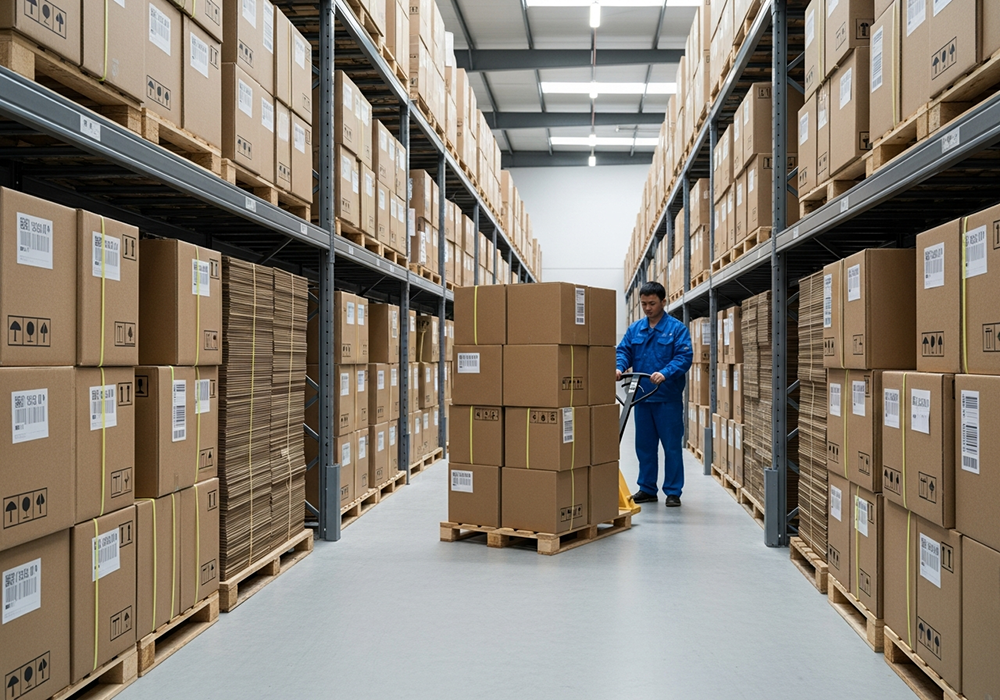
Packaging Engineering and International Logistics Standards
The combination of structural hardwood, heavy glass panels, and delicate
surface finishes makes display furniture vulnerable during ocean transit and
last-mile distribution. Freight safety requires specialized packaging
engineering designed for global transit environments.
Packaging designs undergo testing based on ISTA 3A protocols, simulating
shock, drop, and vibration stresses encountered in international supply chains.
Fully assembled cabinets are encased in high-density Expanded Polyethylene (EPE)
foam profiles that cushion all structural corners and edges. Glass panels
receive clear protective films to prevent surface scratching during assembly and
transit.
Knock-Down (KD) structural options are engineered for high-volume commercial
runs. Flat-packing reduces shipping volume, lowers freight charges, and lowers
transport emission footprints. Flat-pack designs use pre-set cam-lock fasteners,
dowels, and step-by-step assembly guides to allow quick, accurate on-site
installation by local contract crews.
Frequently Asked Questions
Q1: What structural features differentiate commercial-grade display
cabinets from standard residential units?
A1: Commercial-grade units
utilize thicker glass profiles (8mm to 10mm tempered), continuous structural
joinery, heavy-duty commercial hinges rated for high cycle counts, integrated
heat-dissipating LED lighting systems, and serviceable electrical housings that
comply with regional safety standards.
Q2: How are fragile glass elements protected during transit when
sourcing display units overseas?
A2: Glass components are secured
using high-density EPE foam armor, vacuum sealed, and packed inside drop-tested
corrugated cartons or reinforced plywood crates. Packaging designs comply with
ISTA 3A standards to survive drop, vibration, and stacking pressures during
maritime freight.
Q3: Can electrical and lighting configurations be customized for
different international destinations?
A3: Yes. Wiring harnesses,
power supplies, drivers, and plug configurations are selected based on the
destination market's specific voltage and regulatory certifications, including
UL for North America, CE for Europe, and SAA for Australia.
Q4: What minimum order quantities apply to custom display cabinet
manufacturing projects?
A4: Minimum order quantities depend on
material specifications and customization depth. Standard production runs
typically begin at 20 to 50 units per design, while fully custom architectural
procurement projects are calculated based on container load volume.
Q5: What strategies prevent wood movement and panel warping in
variable climate conditions?
A5: Frame stability is maintained by
kiln-drying solid timber to an exact 8-12% moisture content, utilizing veneered
composite panels for broad surfaces, and sealing all timber faces—including
unseen back and bottom surfaces—with moisture-resistant polyurethane
topcoats.
Initiate Your Contract Manufacturing Project
Engineered display furniture demands precision, structural stability, and
reliable supply chain execution. At Essent Home, our engineering team works
closely with global furniture brands, hospitality procurers, and design
specifiers to bring custom display concepts to life. Contact our engineering
desk to submit CAD drawings, request material finish samples, or discuss
scalable manufacturing solutions tailored to your commercial distribution
schedule.