Essent Home has supplied contract-grade furniture to hospitality groups, property developers, and furniture retailers for over 15 years. This technical guide examines the criteria for selecting an entryway table wholesaler – covering wood species, veneer matching, finish durability (scratch, stain, UV resistance), packaging standards for damage-free transit, and quality control protocols for bulk orders (50–2000 units). We also address industry pain points such as inconsistent colour matching, corner damage during shipping, and lead time variability.
1. Defining the Wholesale Entryway Table: Market Segments and Application Standards
A professional entryway table wholesaler serves multiple B2B channels: hotel FF&E (furniture, fixtures & equipment), apartment staging companies, e‑commerce furniture dropshippers, and interior design firms. Each segment demands specific technical parameters:
Hospitality (hotels, resorts): Contract-grade construction. Requires abrasion resistance (≥ 5000 rubs on finish), fire retardancy (TB 117-2013 or EN 13501-1), and anti-tip hardware.
Multifamily housing (model homes, staging): Mid-range durability, easy assembly (cam lock or KD fittings), and scratch-resistant tops for staging turnover.
Retail (furniture stores, online marketplaces): RTA (ready-to-assemble) or fully assembled options. Packaging must survive FedEx/UPS handling (ISTA 3A testing).
Contract offices (reception areas): Larger dimensions (120–180cm width) with wire management grommets and higher weight capacity (≥ 50 kg).
Wholesale buyers must verify that the entryway table wholesaler provides a technical data sheet for each model, specifying load rating, finish type, and joinery method. Essent Home offers model-specific certification for all four market segments.
2. Material Selection: Solid Wood, Veneers, and Engineered Panels
The choice of substrate directly affects cost, weight, and longevity. For wholesale entryway tables, four material categories dominate:
Solid hardwood (oak, walnut, ash, rubberwood): Highest durability, but prone to movement (expansion/contraction) in low-humidity environments. Use only with kiln-dried wood (8–10% moisture content). Joints should be mortise-and-tenon or dowelled, not just glue blocks.
Walnut veneer on MDF (medium-density fibreboard): Stable, no warping, excellent for painted or stained finishes. Specify MDF with formaldehyde emissions ≤ 0.09 ppm (CARB Phase 2 or E0 grade). Veneer thickness minimum 0.5mm for sanding/repair.
High-pressure laminate (HPL) on particle board: Most scratch and stain resistant. Ideal for high-traffic hotel lobbies. Edge banding must be 2mm thick ABS or PVC, not 0.4mm.
Powder-coated steel frame + wood top: Industrial style. Steel gauge minimum 1.5mm for legs; powder coating thickness 60–80 µm with salt spray test ≥ 200 hours.
A reliable entryway table wholesaler will disclose the exact wood species, veneer source, and substrate composition. Avoid suppliers who use "wood grain foil" or paper laminate on low-density particle board – these fail within 12 months of commercial use.
3. Joinery and Construction Standards for Bulk Orders
Wholesale entryway tables must withstand repeated assembly/disassembly (for RTA models) or continuous use in public spaces. Critical joinery specifications:
Corner joints: Dovetail or box joint for drawers; mortise-and-tenon for table aprons. Blocked corner joints (glue blocks only) are unacceptable for contract use.
Screw insertion: For RTA (ready-to-assemble) tables, use Confirmat screws (8mm diameter) with pre-inserted threaded bushings – not standard particle-board screws which strip after one assembly.
Leg attachment: Metal leg plates with four screws per leg, minimum 30mm plate width. Avoid plastic threaded inserts (strip easily). For solid wood legs, use hanger bolts with locking nuts.
Drawer slides: For models with storage, specify full-extension ball-bearing slides (45 kg rating) with soft-close mechanism. Side-mount slides are acceptable for budget lines, but must have 12mm clearance.
For hotel projects, an entryway table wholesaler should provide a sample unit for destructive testing – including a 50 kg vertical load on the top centre and a 25 kg lateral pull to simulate guest leaning. Essent Home performs these tests for every contract order.
4. Finish Durability: Scratch, Stain, and UV Resistance
Finish failure is the number one complaint from hotel housekeeping and residential users. Professional specifications include:
Scratch resistance: Pencil hardness ≥ H (ASTM D3363). For high-traffic areas, specify 2H. Use a catalytic lacquer or two-component polyurethane – not single-component nitrocellulose.
Stain resistance: Must pass 24-hour exposure to red wine, coffee, and acetone (ASTM D1308). No whitening or blistering.
UV resistance (for natural wood finishes): Colour change ΔE ≤ 2.0 after 200 hours of QUV testing (ASTM G154). This prevents yellowing or fading near windows.
Chemical resistance: Withstand 5% ammonia (cleaning products) and 10% ethanol. Use a cross-linked acrylic polyurethane topcoat.
Application method matters: spray-applied conversion varnish provides the hardest finish, but requires ventilated booths. Roller-applied UV-cured finishes are consistent but cannot achieve deep gloss (≥ 85 sheen). For most wholesale models, a two-coat polyurethane (sealer + topcoat) with 40–50 sheen is the best balance of durability and cost.
Ask your entryway table wholesaler for a finish sample and perform the "key scratch test": drag a metal key across a hidden area – the finish should only show a faint line that rubs out with a damp cloth. Essent Home's product line uses German-made Chemcraft polyurethane with a 2H hardness rating.
5. Packaging Standards for Wholesale Distribution
Damaged goods during shipping are a primary profit eroder for wholesalers. Professional packaging for entryway tables includes:
Corner protection: Molded EPS foam (expanded polystyrene) or corrugated cardboard corners with 20mm thickness. Each corner must have a protective block.
Edge guards: L-shaped plastic or cardboard runners along all four edges of the table top.
Wrap film: First layer – polyethylene foam (3mm) directly against the finish. Second layer – stretch wrap or shrink film. Third layer – double-wall corrugated carton (200 lb burst strength).
Blocking and bracing: For palletized orders, tables must be strapped to the pallet with 18mm polyester straps, not stretch wrap alone. Use anti-slip mats between layers.
ISTA testing: Request ISTA 3A or 3E test reports – these simulate UPS/FedEx handling (drop tests, vibration, compression). A compliant package survives a 45cm drop on each corner.
For RTA models (flat-packed), each hardware bag must be sealed and labelled with a barcode. Include a visual assembly guide (not just text). The carton should have a "do not stack over 2 high" label if the table is heavy. A professional entryway table wholesaler will provide free replacement for any damage that exceeds 2% of the shipment.
6. Quality Control Protocols for Bulk Orders (50–2000 units)
Consistency across large batches is the hallmark of a reliable entryway table wholesaler. Minimum QC requirements:
Colour matching: ΔE ≤ 1.5 between any two tables from the same production run (measured using spectrophotometer under D65 light). For veneer, grain matching across batches is not guaranteed, but colour must be consistent.
Dimension tolerance: ±2mm for length/width; ±1mm for leg alignment (all four legs must sit flat on a surface without rocking).
Finish inspection: No orange peel, runs, sags, or dust nibs visible from 50cm under 1000 lux lighting. Acceptable repair: burn-in sticks for small dents (≤ 2mm).
Hardware torque: All screws tightened to manufacturer specification (e.g., Confirmat screws to 3.5 Nm). Loose hardware flagged by automated torque testing.
Packaging drop test: One carton from every 500 units is dropped from 30cm on each face – no structural damage allowed.
Essent Home operates a pre-shipment inspection (PSI) protocol: for orders over 200 units, an independent third-party inspector (SGS or TÜV) checks 10% of the cartons before loading. The buyer receives a detailed report with photos.
7. Industry Pain Points: Color Inconsistency, Warping, and Lead Time Variability
Buyers frequently report the following problems with entryway table wholesalers. Below are root causes and preventive measures.
7.1 Color Inconsistency Between Batches
Cause: different lots of veneer or stain mixing. Solution: specify that all tables for a single order must come from the same production batch (same week). The wholesaler should provide a "master colour panel" signed by the factory QC. For large hotel projects, order a 5% overage (e.g., 105 tables for 100 rooms) and use the best-matching 100; the rest can be sold as seconds.
7.2 Table Top Warping After Delivery
Cause: substrate with high moisture content (MDF or particle board > 10% moisture) or uneven lamination. Solution: require a moisture meter reading (≤ 8% for solid wood, ≤ 9% for MDF) on the packing list. For wide tops (≥ 60cm depth), specify a 20mm thick substrate with a balancing backer (same laminate on underside) to prevent warping. Essent Home's product line uses cross-banded plywood for tops over 120cm width.
7.3 Delays in Lead Times for Peak Season Orders
Cause: wholesaler overcommits without buffer capacity. Solution: request a production schedule with weekly milestones. For orders of 500+ units, require a "fixed lead time" clause with penalties (e.g., 1% discount per week late). Reliable wholesalers maintain 30% spare capacity in their factory. Essent Home offers a guaranteed 45-day lead time for standard models and 60 days for custom finishes.
7.4 Scratched or Dented Tops Upon Unboxing
Cause: inadequate corner protection or multiple handling points. Solution: require photographic documentation of packaging before sealing. Use edge protectors that extend 30mm beyond each corner. For high-value orders (e.g., solid walnut), request that each table top is individually wrapped in foam sheet (5mm) before being placed in the carton.
7.5 Difficulty Assembling RTA Models (Missing or Mislabeled Parts)
Cause: poor hardware bagging and lack of visual guide. Solution: specify that each hardware bag must have a part number and a QR code linking to a video assembly. The wholesaler should provide a "first article" – assemble one unit at the factory and record the time (should be ≤ 15 minutes for a typical entryway table). Any missing parts are replaced via express courier within 48 hours.
8. Logistics and Minimum Order Quantities (MOQ)
Wholesale entryway tables are typically shipped by sea (LCL or FCL) or air for urgent orders. Key logistics parameters:
MOQ: Most entryway table wholesalers require 50–200 units per model/colour. Some offer mixed MOQ (e.g., 100 units total across 2–3 models). Essent Home accepts MOQ of 50 units for stock finishes.
Packaging dimensions: A standard 100cm × 40cm × 75cm table (assembled) packs into a carton of 105 × 45 × 15 cm (flat-packed) weighing 18–25 kg. For assembled tables, carton size increases to 105 × 45 × 80 cm (cubic volume ~0.38 m³).
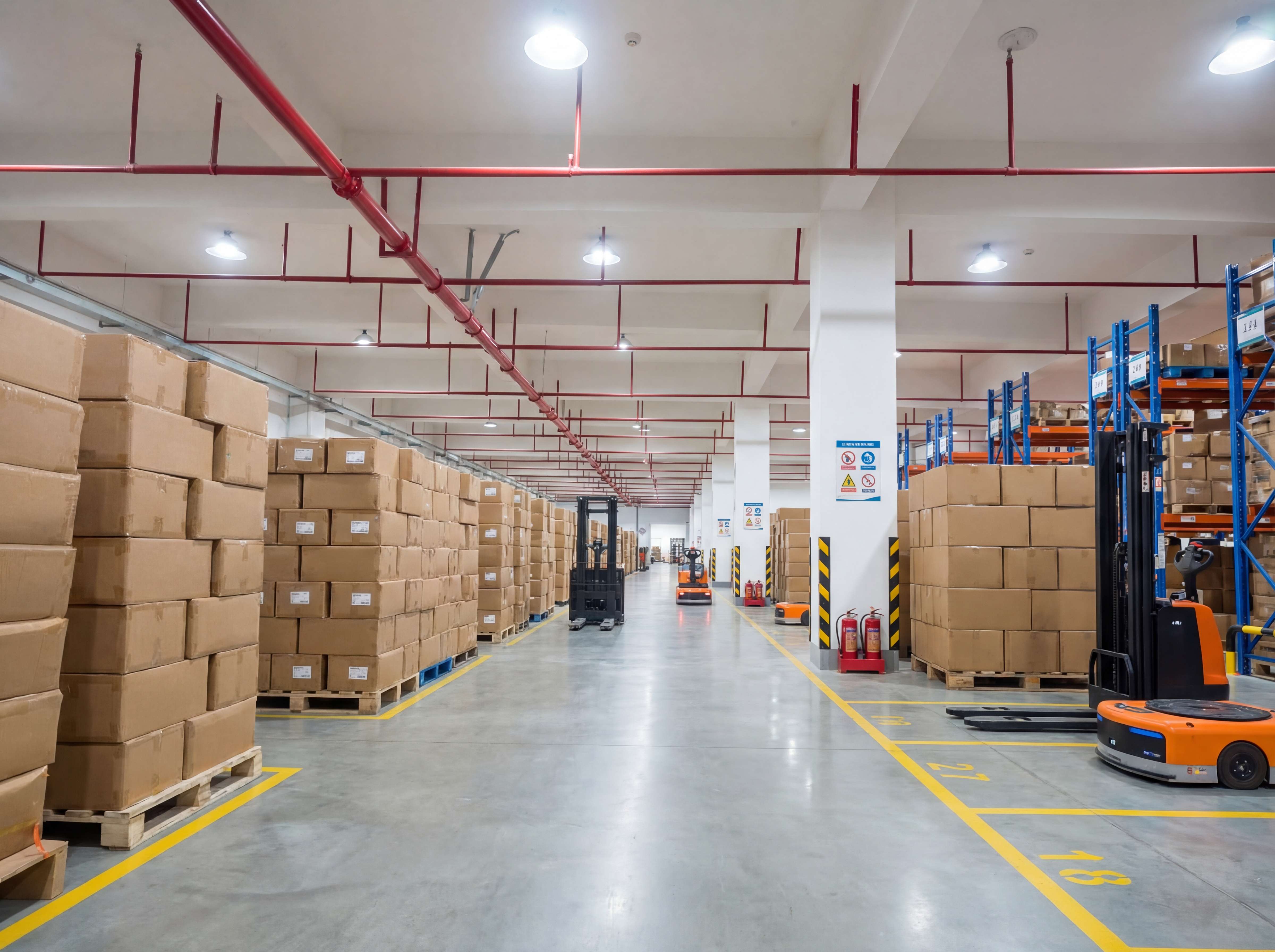
Container loading: A 40ft HC container holds approximately 350–400 flat-packed entryway tables (stacked 6–8 high). For assembled tables, capacity drops to 200–250 units.
Customs and compliance: The wholesaler must provide a commercial invoice, packing list, and certificate of origin (if claiming preferential duty). For wooden products entering the EU or US, ISPM 15 heat treatment for pallets and fumigation-free wood is required.
Buyers should negotiate payment terms: 30% deposit, 70% against copy of bill of lading (or LC at sight). Avoid paying 100% before shipment. For repeat orders, request net 30 days after delivery.
9. Frequently Asked Questions (FAQ) – Entryway Table Wholesaler
Q1: What is the typical lead time for a wholesale order of 200 entryway tables?
A1: For a standard model (no custom finish, existing stock colours), lead time is 35–45 days from deposit to loading at port. For custom finishes (e.g., matching a specific RAL colour or wood stain), add 15–20 days for sample approval and production. Essent Home guarantees 45 days for stock models.
Q2: How can I verify the quality of an entryway table wholesaler before placing a large order?
A2: Request a pre-production sample (paid, typically $200–500, refundable with order). Test the sample for stability (load test), finish durability (scratch with a coin), and assembly time. Also request the factory's ISO 9001 certificate and a list of past B2B clients (hotels or retailers). A reliable wholesaler will provide a sample within 15 days.
Q3: What is the difference between "contract grade" and "residential grade" entryway tables?
A3: Contract grade uses thicker substrates (e.g., 25mm MDF vs 18mm), higher-density joinery (mortise-and-tenon vs glue blocks), and finishes that pass abrasion tests (≥ 5000 rubs). Residential grade is lighter and cheaper but will show wear within 2 years in a hotel setting. Always specify contract grade for hospitality projects.
Q4: Do entryway table wholesalers offer custom sizes and finishes for hotel projects?
A4: Yes, many wholesalers including Essent Home offer custom dimensions (minimum 100 units per size) and colour matching. Provide a technical drawing (DXF or PDF) and a physical colour sample. Custom orders typically add 20–30% to unit cost and extend lead time by 3–4 weeks. A entryway table wholesaler with in-house finishing can also match Pantone or RAL codes.
Q5: How do I handle defective units in a wholesale shipment?
A5: Standard wholesale terms allow for 2–3% defect allowance. For any unit with structural damage (cracked leg, split top) or major finish flaws (peeling, missing veneer), the wholesaler must provide free replacements on the next order or issue a credit. Document defects with photos and a report within 14 days of delivery. Some wholesalers offer a "replacement parts kit" (extra hardware and touch-up markers) included with each order.
Q6: Can I mix different entryway table models in one container to reach MOQ?
A6: Many wholesalers allow mixed MOQ (e.g., 150 units total across 3 models). However, each model must meet its own per-model minimum (often 30–50 units). Mixed containers help retailers test new designs without overcommitting. Confirm with your entryway table wholesaler if they charge a mixing fee (typically $200–500 for extra SKU handling).
10. Inquiry – Wholesale Pricing and Technical Support for Entryway Tables
Selecting the right entryway table wholesaler requires evaluation of material quality, finish durability, packaging robustness, and lead time reliability. Essent Home provides:
Contract-grade entryway tables in oak, walnut, and painted finishes (RAL palette).
Custom sizes and veneer matching for hotel FF&E projects.
ISTA-certified packaging with free replacement for transit damage.
Pre-shipment inspection by third-party agencies (SGS, TÜV).
Warehouse stock for quick dispatch of sample orders (1–10 units).
Send your inquiry with the following details: required quantity (units), preferred material (solid wood, veneer, or laminate), dimensions (length × depth × height), finish colour (or RAL code), and target FOB port. Our B2B sales team will respond within 24 hours with a detailed quotation, lead time, and a sample unit offer (refundable with first order).
Submit your wholesale inquiry now: Click here for the official inquiry form or visit our product catalogue page to download technical specifications and high-resolution images.