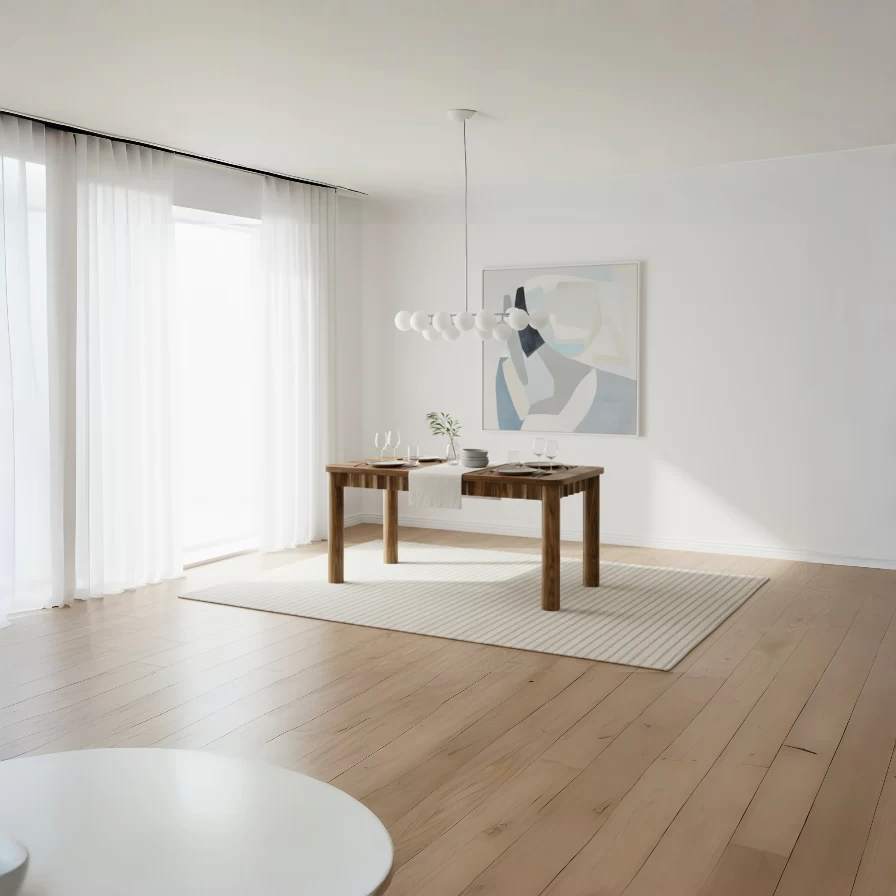
A dining table anchors the modern home. Long gone are the days when rustic
furniture meant rough-hewn pine boards nailed together in a hurry. Today, a
custom farmhouse dining room table stands as a functional work of art, combining
ancestral craftsmanship with contemporary architecture.
High-end interior designers, hospitality developers, and discerning
homeowners now view the farmhouse table as an heirloom investment. In 2026, the
demand centers on authenticity, sustainable provenance, and uncompromising
joinery. At Essent Home, our artisan workshops build these foundational pieces
for spaces designed to bring people together for generations.
Whether you are outfitting a private residence or sourcing furniture for an
architectural project, this guide covers the engineering, wood species, and
design parameters needed to commission the right piece. If you are planning a
project, submit your specifications to our team today to request a custom trade
catalog and consultation.
The contemporary market has turned away from the disposable, flat-pack
furniture cycle. Buyers now prioritize longevity and character over synthetic
convenience.
The Shift from Mass-Produced to Bespoke
Mass-market retailers flood catalogs with factory-distressed pieces coated in
plastic varnishes. These finishes disguise inferior core materials like
medium-density fiberboard (MDF) and soft composite woods. True collectors see
through these imitations immediately.
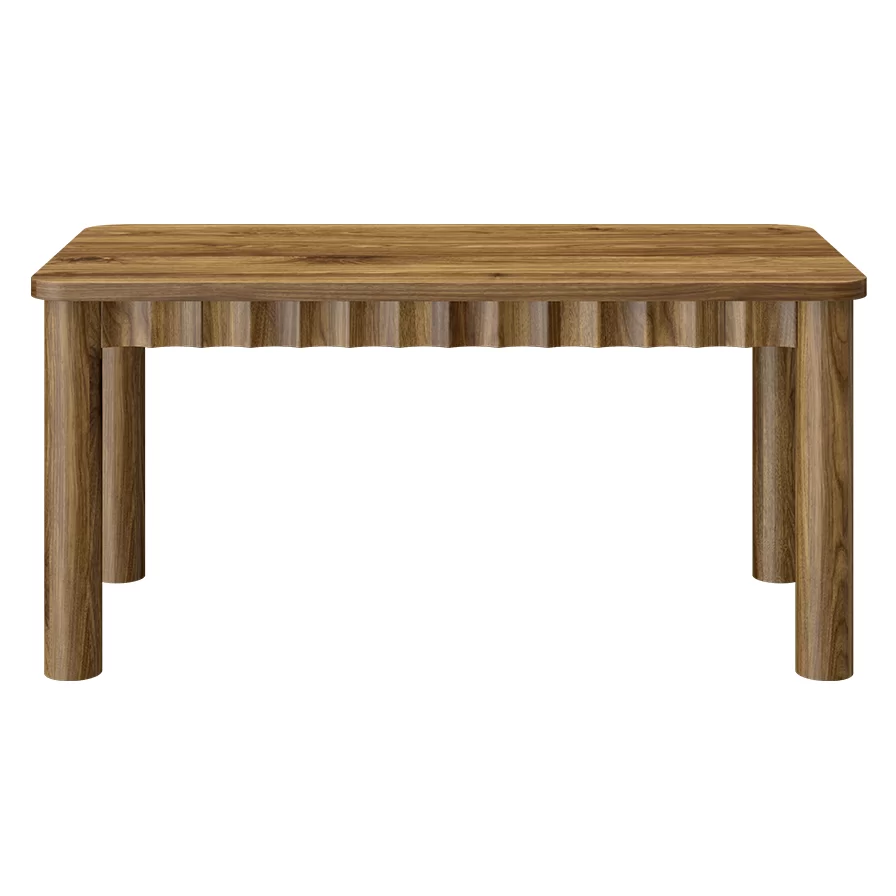
A bespoke farmhouse dining table tells a completely different story. Every
board displays organic variations in grain, historical saw marks, and mineral
streaks. Commissioning a bespoke table gives you absolute authority over
dimensions, leg clearances, and timber selection, ensuring your piece fits your
dining hall without compromise.
Signature Design Elements
An authentic farmhouse table balances visual weight with refined joinery. Key
hallmarks include:
- Substantial Tabletop Thickness: Tops range between 1.75 to
2.5 inches thick, providing visual gravity and structural stability.
- Exposed Structural Joinery: Visible mortise-and-tenon
joints, wedged keys, and through-tenons celebrate the structural integrity of
timber framing.
- Artisanal Surface Planing: Hand-scraped and wire-brushed
textures replace sterile machine-sanded finishes, highlighting the natural
growth rings of the wood.
- Balanced Proportions: Substantial bases anchor the top
without crowding the floor or inhibiting chair movement.
Materials Matter: The Collector’s Guide to Wood Species
The timber you select dictates not just the look, but also the lifecycle and
maintenance routine of your dining table. Hardwoods react uniquely to
environmental shifts, sunlight, and heavy daily use.
Reclaimed Wood
Reclaimed timber sourced from 19th-century agricultural barns, cotton mills,
and industrial warehouses holds a status all its own. This old-growth wood was
harvested centuries ago from ancient forests, resulting in a tight ring density
rarely found in contemporary lumber.
Reclaimed wood dining tables offer an authentic patina: genuine nail holes,
insect tracts, oxidation marks, and natural checking. These imperfections are
structural medals earned through decades of service. Because the wood has
acclimatized to dry indoor environments for over a century, it resists seasonal
warping far better than newly felled trees.
American Hardwoods
For spaces requiring architectural precision and cleaner lines, domestic
hardwoods offer exceptional strength and timeless appeal.
- White Oak: The cornerstone of 2026 interior schemes. White
oak features closed cellular structures (tyloses), making it resistant to rot
and liquids. It displays a neutral, muted wheat tone that accepts subtle cerused
and raw finishes effortlessly.
- American Black Walnut: The pinnacle of luxury dining
furniture. Walnut offers rich coffee and dark chocolate undertones mixed with
smoky purple grain. It is softer than oak, yet its dark coloration hides
everyday wear beautifully.
- Hard Rock Maple: Ultra-dense and fine-grained. Maple suits
formal farmhouse interiors where a smooth, uniform surface is preferred over
open, rustic grain patterns.
- Black Cherry: Revered for its warm, reddish-amber tone that
darkens and deepens as it oxidizes in natural ambient light.
Hardwood Comparison for Custom Tables
| Wood Species | Janka Hardness (lbf) | Maintenance Level | Relative Cost | Aesthetic Compatibility |
|---|
| Reclaimed Barn Wood | Varies (900 – 1,400) | Low (Wabi-Sabi Friendly) | Premium | Heritage, Industrial Farmhouse |
| American White Oak | 1,360 | Low to Moderate | Moderate to High | Organic Modern, Scandinavian |
| Black Walnut | 1,010 | Moderate | High to Luxury | Transitional, Modern Farmhouse |
| Hard Maple | 1,450 | Low | Moderate | Classic Country, Contemporary |
Structural Anatomy & Base Styles: Form Meets Function
A table's undercarriage defines both its architectural stance and its
day-to-day functionality. Different leg formats change how chairs and benches
fit into the overall footprint.
Trestle Tables
A bespoke trestle table remains the quintessential farmhouse design. Two
heavy vertical stanchions connect via a central horizontal stretcher, locked in
place with traditional wooden wedges.
Trestle designs eliminate the traditional four corner posts. This
architecture allows your guests to slide onto continuous bench seating without
striking their shins against corner legs. It is the premier choice for large
gatherings and multi-generational households.
Turned Leg & Four-Legged Tables
Rooted in historic French and English country homes, the four-legged
farmhouse table places carved, baluster, or tapered square legs directly at the
corners. While this layout requires you to account for leg clearances when
picking dining chairs, it provides unmatched structural rigidity across lengths
under eight feet.
Modern Pedestal & Metal Hybrid Bases
Recent developments favor architectural cross-pollination. Modern
interpretations feature dual solid wood pedestals paired with black steel
tie-rods, or geometric U-channel metal trestles supporting heavy timber tops.
This structural approach suits open-concept urban lofts and transitional country
homes alike.
Customization Blueprint: How to Commission Your Table
Commissioning an authentic farmhouse dining room table through master
woodworkers like Essent Home requires a systematic design process. Planning
ahead prevents ergonomic errors and ensures the table fits your dining area
perfectly.
Sizing and Seating Capacity
Never size a table based on seating count alone; measure your room first.
Maintain a perimeter buffer of at least 36 to 42 inches between the table edge
and surrounding walls, sideboards, or doors. If your dining chairs are wide or
feature arms, allocate 48 inches of perimeter space.
- 6-Foot Table (72" x 38"): Comfortably seats 6 guests (three
on each side).
- 8-Foot Table (96" x 40"): Seats 8 guests comfortably, or 10
if using matching host chairs at the heads.
- 10-Foot Table (120" x 42"): Seats 10 to 12 guests; ideal
for dedicated dining rooms and executive boardrooms.
Extensions and Breadboard Ends
Wood is a living material that swells across its grain during humid summer
months and contracts during winter heating seasons. Restraining this natural
movement with rigid glue or fixed screws causes wide table slabs to crack over
time.
Traditional breadboard ends solve this problem. Woodworkers fit transverse
end-caps across the main planks using a tongue-and-groove joint secured by
elongated peg mortises. The outer pegs slide inside internal slots, allowing the
center top to expand and contract while keeping the surface flat.
For dynamic seating capacities, look for custom extension systems such as
removable breadboard company boards. These boards slide into sturdy wooden
supports that extend directly out from the ends of the table, preserving the
visual balance of the central top.
Finishes and Edge Profiles
The finish you choose determines how your table interacts with spilled wine,
hot plates, and daily cleaning products.
- Natural Hardwax Oils: Products like plant-based hardwax
oils bond molecularly with raw wood fibers. They create a non-film-forming,
matte finish that feels like natural timber. Minor scratches can be buffed out
locally in minutes without stripping the whole table.
- Matte Polyurethane: Formulated for high-traffic and
commercial hospitality settings. Modern non-yellowing polyurethanes protect
against standing liquids while maintaining an ultra-flat, natural
appearance.
- Edge Profiles: Softened eased edges preserve modern
architectural profiles, while thumb-molded or hand-chiseled edges highlight
antique country charm.
2026 Styling Trends: Integrating Farmhouse Tables into Modern Spaces
The rustic modern movement has moved beyond painted white shiplap walls and
faux-distressed signs. Today's aesthetic marries architectural restraint with
warm, tactile materials.
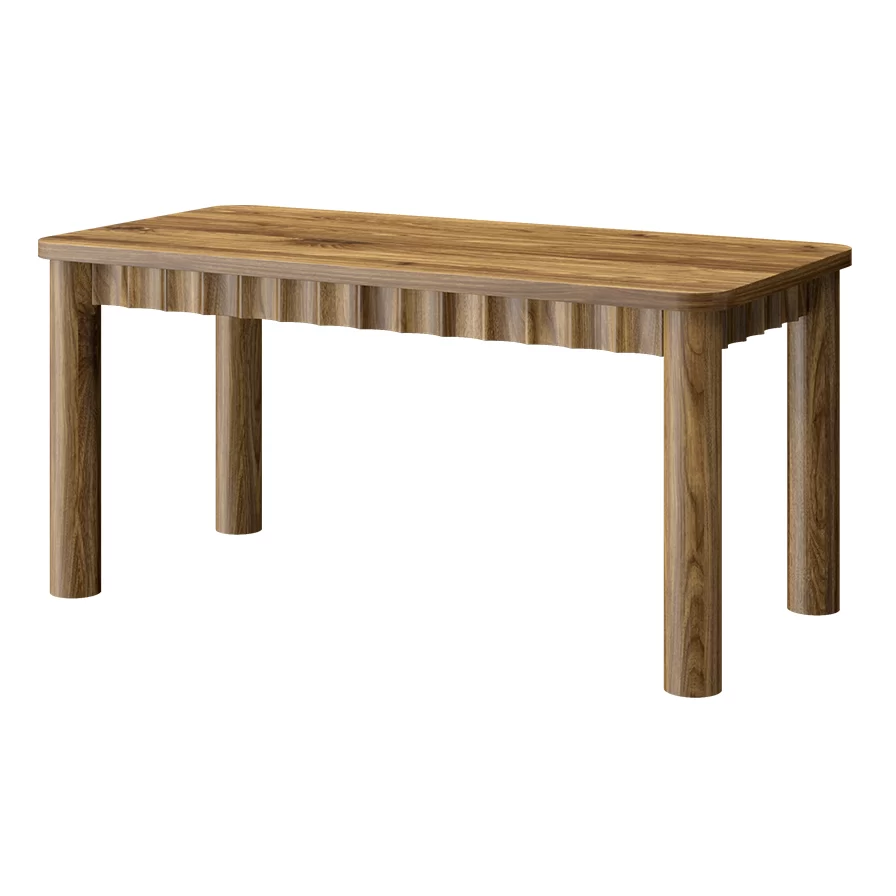
The Organic Modern Farmhouse: Pair a white oak farmhouse
dining room table with limestone flagstone flooring, unlacquered brass light
fixtures, and lime-wash plaster walls. The table acts as an earthy, grounded
focal point within a bright, airy architectural envelope.
Dark Moody Dining Spaces: Deep fumed oak or ebonized walnut
tables hold their own against charcoal, forest green, or deep navy rooms.
Accentuate the wood with warm, directional downlights to bring out the depth of
the hand-planed grain.
Mismatched Seating Profiles: Avoid purchasing matching chair
sets directly from factory catalogs. Combine a full-length wooden bench on one
side with sculptural mid-century dining chairs or slipcovered Belgian linen
armchairs on the other. This curated approach feels gathered over time rather
than purchased in a single delivery.
Longevity, Care, and Maintenance
A solid wood dining table should never be treated like delicate museum art.
Daily usage builds a rich patina over the decades, turning minor dings into
beloved family history.
Maintain consistent relative indoor humidity between 35% and 55% to minimize
seasonal movement. Never position solid wood furniture directly over forced-air
heating registers or right against working woodstoves.
For routine cleaning, wipe the surface with a lint-free microfiber cloth
dampened with plain warm water. Avoid chemical surface sprays, commercial
silicone polishes, and harsh scouring powders. These synthetic products degrade
natural oil finishes and leave sticky, dust-attracting residues. Once or twice a
year, reapply an artisan maintenance oil to restore surface hydration and deep
luster.
Frequently Asked Questions (FAQs)
Q1: How much does a custom farmhouse dining room table cost in
2026?
A1: Fully custom, solid hardwood dining tables built by master woodworkers
generally range between $3,500 and $10,000, depending on size, species, and
structural base complexity. Historic reclaimed timber and wide-slab black walnut
sit at the upper end of the price spectrum, reflecting the scarcity of materials
and the labor-intensive milling process involved.
Q2: Is a farmhouse dining table suitable for a modern
home?
A2: Yes. Contemporary interior design thrives on tactile contrast. A
farmhouse dining room table featuring clean, minimalist lines or an
architectural trestle base brings warmth to concrete floors, steel-framed glass
windows, and minimalist kitchen cabinetry. It anchors the space and keeps the
room from feeling sterile.
Q3: What is the best wood for a high-traffic farmhouse
table?
A3: American White Oak is the premier material for busy households and
commercial dining rooms. With a Janka hardness rating of 1,360 lbf and a
naturally dense grain, it resists dents, scratches, and moisture better than
soft pines and standard poplars.
Q4: How do I tell if a reclaimed wood table is
authentic?
A4: Authentic reclaimed wood displays irregular, asymmetrical imperfections
like antique saw marks, natural structural checks, nail oxidations, and varying
growth-ring density across individual planks. Mass-produced imitation tables use
repeated stamped patterns, mechanical wire-wheeling, and synthetic chemical
stains that lack natural depth.
Q5: Can custom tables be specified for commercial or hospitality
projects?
A5: Yes. Commercial applications require specialized finish schedules, such
as commercial-grade conversion varnishes or heavy-duty hybrid oils that resist
high-temperature water spots and industrial sanitizers. Brands like Essent Home
engineer tables specifically to meet both residential and contract hospitality
stability codes.
Building Your Next Family Heirloom
A custom farmhouse dining room table is more than just an assembly of boards
and hardware. It is the place where families gather, deals are closed, and
memories take shape over meals. By choosing authentic reclaimed wood or
responsibly managed American hardwoods, you invest in a piece of furniture that
defies passing fads.
At Essent Home, our woodworkers combine time-tested mortise-and-tenon
construction with high-performance finishes to deliver functional furniture
built to endure. Start bringing your dining room plans to life today.
Contact our design team today to submit your room dimensions, request
timber samples, or review trade pricing for your next project.