In the high-end furniture market, the shift from basic manufacturing to
Original Design Manufacturing (ODM) represents a sophisticated evolution in the
supply chain. For international furniture retailers, boutique hotel developers,
and large-scale interior design firms, selecting a [dresser for bedroom
odm] partner involves much more than reviewing a catalog. It
requires an assessment of the manufacturer’s research and development (R&D)
capabilities, their mastery of material science, and their ability to engineer
products that balance structural durability with contemporary aesthetics.
A professional ODM relationship is built on the premise that the manufacturer
provides a turnkey solution, from the initial sketch and CAD modeling to the
final quality-assured product. Companies like [Essent Home] operate at this
intersection of design innovation and industrial precision, ensuring that each
casegood unit adheres to international safety standards and ergonomic
requirements. This article examines the technical foundations that define a
successful dresser production cycle in the B2B sector.
1. The R&D Workflow: From Concept to Market-Ready Engineering
The primary differentiator of an ODM service is the depth of the design
phase. Unlike a build-to-print model, a [dresser for bedroom
odm] project begins with market analysis and structural feasibility
studies. The manufacturer’s design team must translate trend forecasts—such as
the demand for integrated technology or minimalist silhouettes—into functional
furniture.
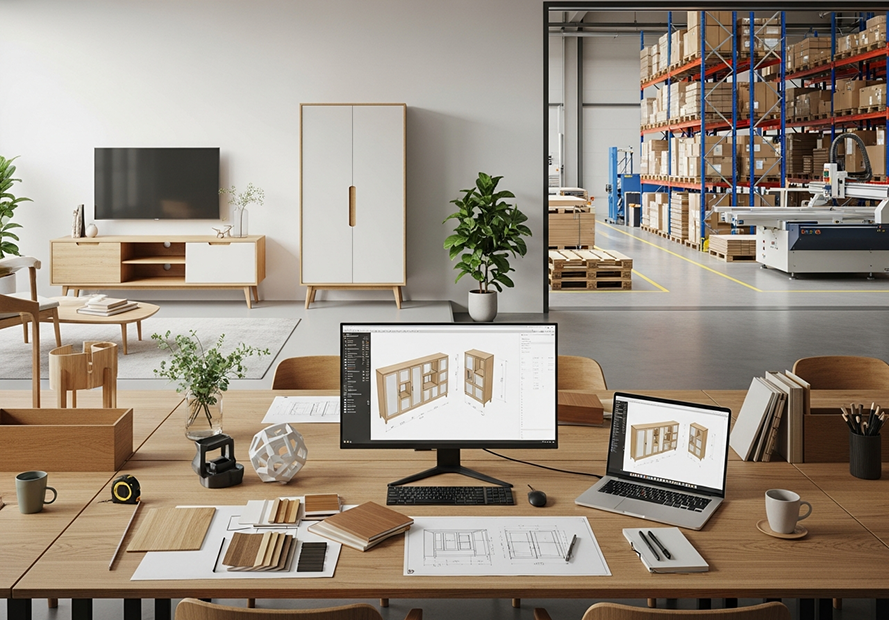
Professional ODM providers utilize advanced CAD (Computer-Aided Design) and
SolidWorks software to create detailed 3D models. These models allow for virtual
stress testing, identifying potential sagging in long drawer spans or
instability in high-profile chests. By addressing these issues in the digital
phase, the manufacturer avoids the trial-and-error approach that often leads to
delays in traditional manufacturing. The result is a refined blueprint that
optimizes both material usage and production speed.
2. Material Selection and Environmental Compliance
For a high-end dresser, the choice of substrate is a fundamental engineering
decision. Professional ODM services prioritize materials that offer dimensional
stability and meet global emissions standards. The use of CARB P2-compliant MDF
or E0-grade plywood is a requisite for entering the North American and European
markets. These materials provide a smooth, uniform surface for high-gloss
lacquers or fine wood veneers, which are often prone to telegraphing if the
substrate is inferior.
Furthermore, the moisture content (MC) of the timber must be meticulously
managed. [Essent
Home] and other industry authorities implement a strict kiln-drying
process to stabilize the wood between 8% and 12% MC. This precision prevents
common industry failures such as seasonal expansion, panel cracking, or joint
separation when the furniture is moved from a humid manufacturing environment to
a drier climate.
3. Joinery and Structural Integrity
The longevity of a bedroom dresser is determined by its internal
architecture. High-performance ODM furniture moves away from reliance on
adhesives alone, favoring mechanical and traditional joinery. Technical
specifications should ideally include:
English Dovetail Joints: Preferred for drawer construction
due to their superior tensile strength and resistance to the constant force of
opening and closing.
Corner Block Reinforcement: Screwed and glued blocks at the
base of the carcass to provide lateral stability and prevent racking.
Internal Dust Panels: Strategically placed between drawers
to add structural rigidity while protecting the contents from dust and
friction.
When evaluating a [dresser for bedroom
odm], the quality of these hidden elements serves as a proxy for
the manufacturer's commitment to durability. A rigid carcass ensures that the
drawers remain perfectly aligned over years of use, maintaining the uniform gaps
(reveals) that are a hallmark of high-quality craftsmanship.
4. Motion Hardware and Functional Engineering
In modern bedroom furniture, the hardware is as important as the woodwork.
The integration of high-cycle-tested slides is a prerequisite for B2B
procurement. Most premium ODM designs now incorporate undermount, soft-close
slides. These mechanisms are hidden beneath the drawer box, allowing the beauty
of the wood or finish to remain unobstructed.
Technical parameters for hardware include the load-bearing capacity, often
specified as a 35kg or 45kg dynamic load rating. Additionally, the inclusion of
"full-extension" capabilities allows the end-user to access the entire depth of
the drawer, a functional detail that enhances the product's perceived value. The
hardware must also be tested for corrosion resistance, especially for products
intended for high-humidity geographical zones.
5. Surface Finishing and Chemical Resistance
The finish of a [dresser for bedroom
odm] is its first point of contact with the consumer and its
primary defense against the environment. ODM manufacturers utilize multi-step
finishing processes that can include up to 10-15 individual stages, including
sanding, staining, sealing, and top-coating.
For high-volume B2B orders, UV-cured finishes are often used for their
consistency and hardness. However, for bespoke or luxury lines, Polyurethane
(PU) or Water-based finishes are preferred for their clarity and low-VOC
(Volatile Organic Compound) profiles. The technical standard for a professional
finish is measured by its resistance to household chemicals, heat, and moisture,
ensuring that the dresser maintains its aesthetic integrity even after spills or
cleaning.
6. Addressing Safety: The STURDY Act and Anti-Tip Engineering
Safety compliance is a pivotal concern for any furniture importer. The
dresser category has seen significant regulatory changes, such as the STURDY Act
in the United States. A competent [dresser for bedroom
odm] partner integrates safety into the design itself rather than
treating it as an afterthought.
Solutions include:
Weighted Bases: Increasing the weight at the bottom of the
unit to lower the center of gravity.
Interlocking Drawer Systems: Preventing more than one
drawer from being opened at a time, which significantly reduces the risk of
tip-over.
Certified Anti-Tip Kits: Supplying wall-anchor systems that
meet ASTM F2057 standards.
By providing documented test results from third-party laboratories, an ODM
manufacturer like [Essent
Home] provides the necessary assurance that the products are safe
for residential and commercial environments.
7. Customization Within the ODM Framework
While ODM implies a pre-designed product, professional manufacturers offer a
degree of "mass customization." This allow B2B clients to differentiate their
offerings without the high costs of full bespoke production. Customization
options often include:
Veneer Species: Switching between walnut, oak, maple, or
exotic burls.
Hardware Finishes: Options for brushed brass, matte black,
or polished chrome handles.
Inlay Materials: Incorporating metal, stone, or leather
accents into the drawer fronts or tops.
This flexibility allows retailers to maintain a unique brand identity while
leveraging the manufacturer’s existing R&D and production efficiencies.
8. Packaging, Logistics, and Freight Optimization
The final technical hurdle for a [dresser for bedroom
odm] is surviving the global supply chain. Furniture is notoriously
difficult to ship due to its volume and fragility. Manufacturers must engineer
packaging that passes ISTA 3A or 6A drop tests. This involves high-density
polyethylene (PE) foam, double-walled corrugated cardboard, and honeycombed
structural supports.
Furthermore, ODM designers look for ways to optimize freight. This may
involve "Flat-Pack" or "Knock-Down" (KD) designs that are engineered for easy
assembly without compromising structural integrity. For fully assembled units,
the dimensions are often calculated to maximize the "cube" of a shipping
container, reducing the per-unit shipping impact for the B2B buyer.
Solving Common Industry Pain Points
Many B2B buyers face the challenge of inconsistent quality between production
batches. An authoritative ODM partner solves this through a standardized Quality
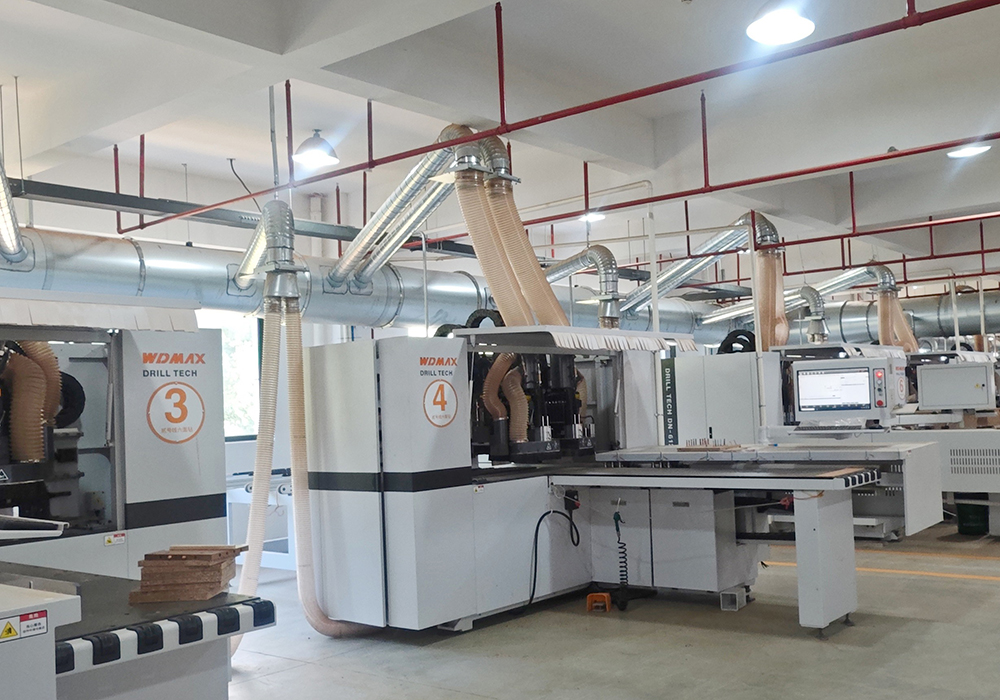
Management System (QMS). By using jigs, CNC machining, and automated sanding,
the manufacturer ensures that the first unit off the line is identical to the
thousandth. This consistency is fundamental for retailers who rely on a unified
customer experience across multiple locations.
Another pain point is the lack of transparency in the production timeline.
Professional ODM firms provide detailed production schedules and use ERP
(Enterprise Resource Planning) systems to track the progress of raw materials
through the assembly and finishing stages. This data-driven approach allows for
accurate delivery forecasting, which is fundamental for coordinating large-scale
furniture rollouts.
The procurement of a [dresser for bedroom
odm] is a strategic decision that impacts a brand's market
positioning and operational efficiency. By prioritizing manufacturers that
demonstrate expertise in R&D, material stability, and safety compliance, B2B
buyers can ensure they are offering a product that meets the high expectations
of the modern consumer. Precision in joinery, sophistication in finishing, and
rigor in testing are the pillars of a successful furniture partnership.
[Essent Home] continues to lead the industry by providing design-forward, engineered furniture
solutions. Our commitment to technical excellence and global compliance makes us
the preferred partner for brands looking to expand their bedroom collections
with confidence.
Are you ready to enhance your product lineup with expertly engineered
casegoods? Contact our project management team today to initiate an inquiry and
explore how our ODM capabilities can support your brand’s growth.
Frequently Asked Questions (FAQ)
Q1: What is the primary difference between OEM and ODM for bedroom
dressers?
A1: OEM (Original Equipment Manufacturer) involves the factory building a
product based entirely on your designs. ODM (Original Design Manufacturer)
involves the factory providing the design and engineering expertise, which you
then purchase under your brand, often with minor customizations.
Q2: How do you verify the formaldehyde levels in the
dressers?
A2: We only source substrates that are certified by third-party agencies to
meet CARB P2 or EPA TSCA Title VI standards. We provide the corresponding
certification documents with every shipment to ensure full compliance with
international environmental laws.
Q3: Can your dressers withstand high-humidity
environments?
A3: Yes. By kiln-drying our wood to a specific moisture content and using
high-quality sealants and moisture-resistant adhesives, we engineer our dressers
to remain stable even in tropical or coastal climates.
Q4: What testing is performed on the drawer slides?
A4: Our hardware undergoes cycle testing, where drawers are opened and closed
50,000 to 100,000 times under full load to ensure smooth operation. We also
perform salt-spray tests to verify the corrosion resistance of the metal
components.
Q5: Do you provide assembly instructions for Knock-Down (KD)
dressers?
A5: Yes, for KD products, we provide detailed, easy-to-follow technical
manuals and can also provide video demonstrations. Our KD joinery is designed to
be intuitive, using high-quality cam-locks and pre-inserted nuts for a secure
fit.