
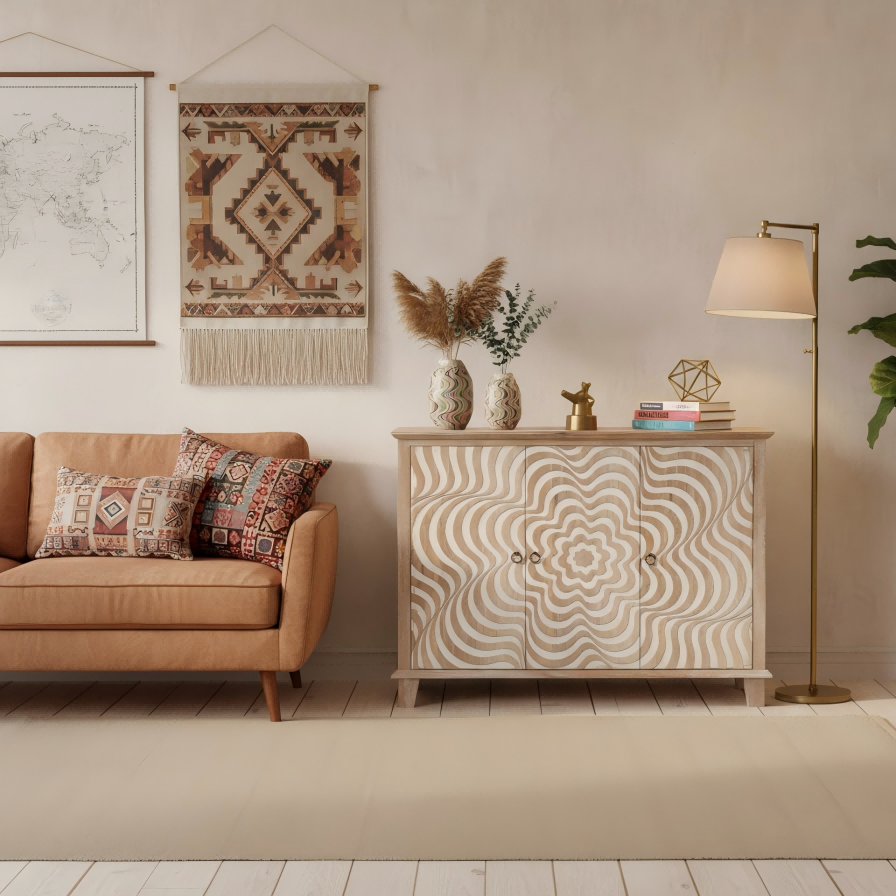
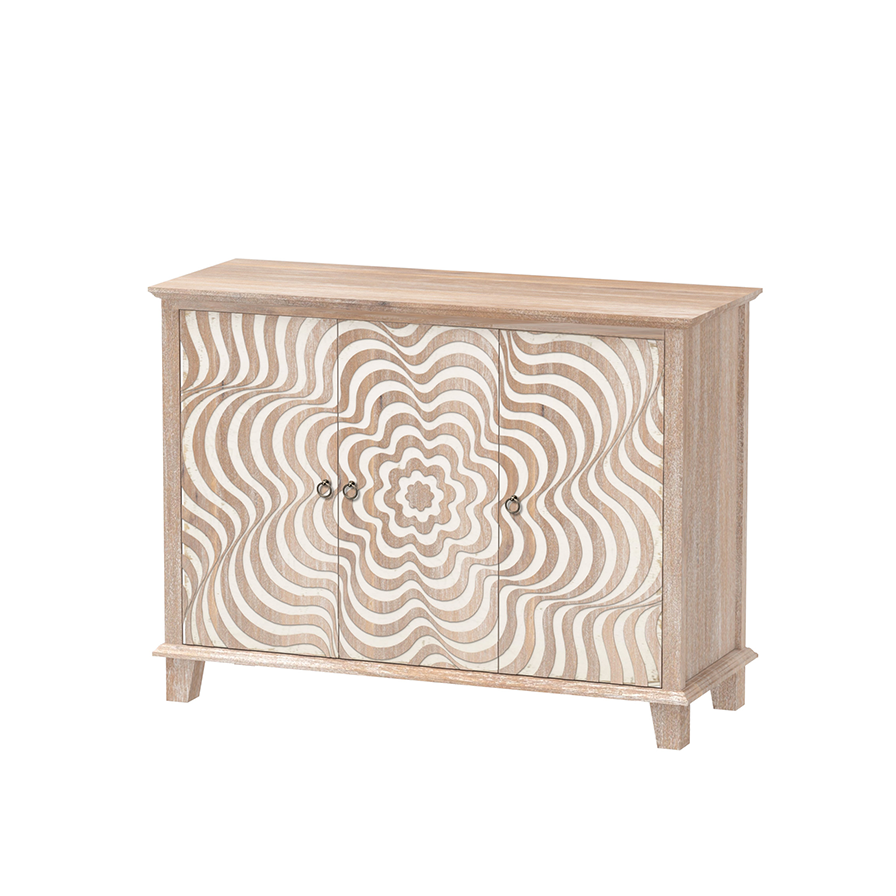
Ondura 3-Door Cabinet
Contact Customer Service
-
SpecificationsItem Size800x350x800mmIntended / Approved UseResidences/Apartments/B&BsMaterialMDF/PB/SWFeaturesAntique reliefOversizeNAssembly RequiredYProduction Lead Time60 daysQTY/FCL680pcs
-
Description
Compact two-door cabinet with bold graphic veneer—art meets utility. The clean body and warm wood accents bring gallery character to small spaces.The Next Bestseller ; Small footprint, big style: ideal as an entry cabinet or living-room accent. Photo-ready patterning drives clicks and quick add-to-cart conversion.
-
ODM/OEM ServiceThis patterned-front collection is available for both ODM and OEM cooperation. Cabinets, chests and side tables can be built with your choice of size, storage layout and construction, while the graphic panels can be done as printing, carving or inlay in different motifs, colors and wood tones. We can also switch between light washed finishes and charcoal blacks to match rustic, boho or boutique hotel concepts.
For OEM, we adapt the existing designs to your brand—logo application, color matching, hardware selection, packaging and documentation—so you can launch quickly with a ready-made look. For ODM, we co-create new artwork and panel layouts from your sketches or mood boards, prepare 3D visuals and samples, then run stable mass production under agreed quality and testing standards. -
FAQ
Q1. What is a dining room sideboard used for in everyday life?
A1. A dining room sideboard is used to store plates, bowls, glasses, and table linens close to the table. It also provides a surface for serving food, drinks, and decorative objects during daily meals and special occasions.
Q2. How deep should a dining room sideboard be for tableware storage?
A2. A dining room sideboard depth of 40–50 cm is usually ideal for storing plates, serving dishes, and glassware. This depth offers generous storage while still fitting comfortably along the wall.
Q3. How do I choose the right length of sideboard for my dining room?
A3. The right length for a dining room sideboard is typically between half and the full length of the dining table. Make sure there is at least 90 cm of clearance between the sideboard and the back of the chairs so people can move around easily.
Q4. Should a dining room sideboard match the dining table and chairs?
A4. A dining room sideboard does not have to match the table and chairs exactly, but it should complement them in style, color, or material. Repeating one element—such as wood tone, leg shape, or metal finish—creates a coordinated look.
Q5. What interior features are useful inside a dining room sideboard?
A5. Useful interior features for a dining room sideboard include adjustable shelves, drawers for cutlery and linens, and compartments for bottles or tall vases. Soft-close doors and sturdy hinges improve the long-term performance of the sideboard.