
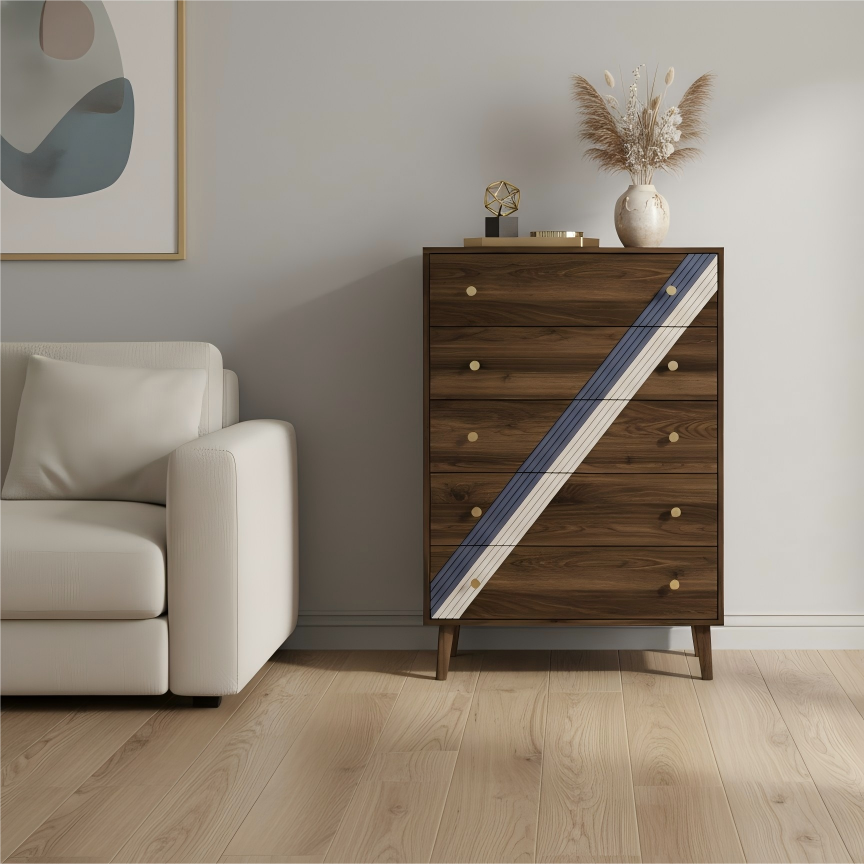
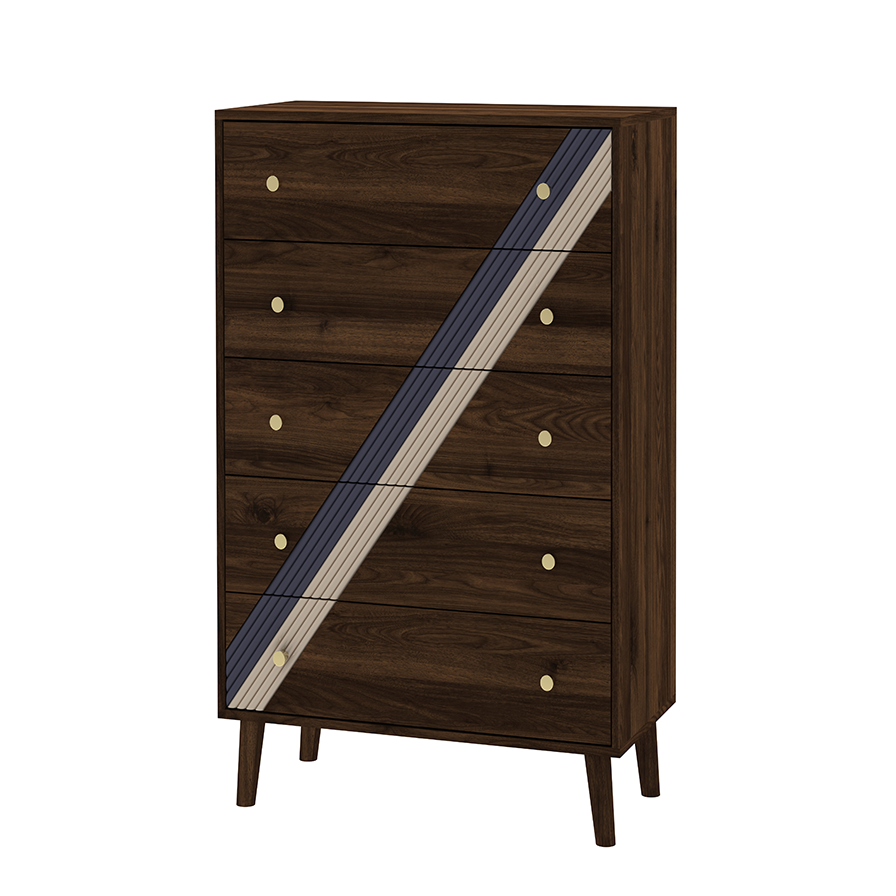
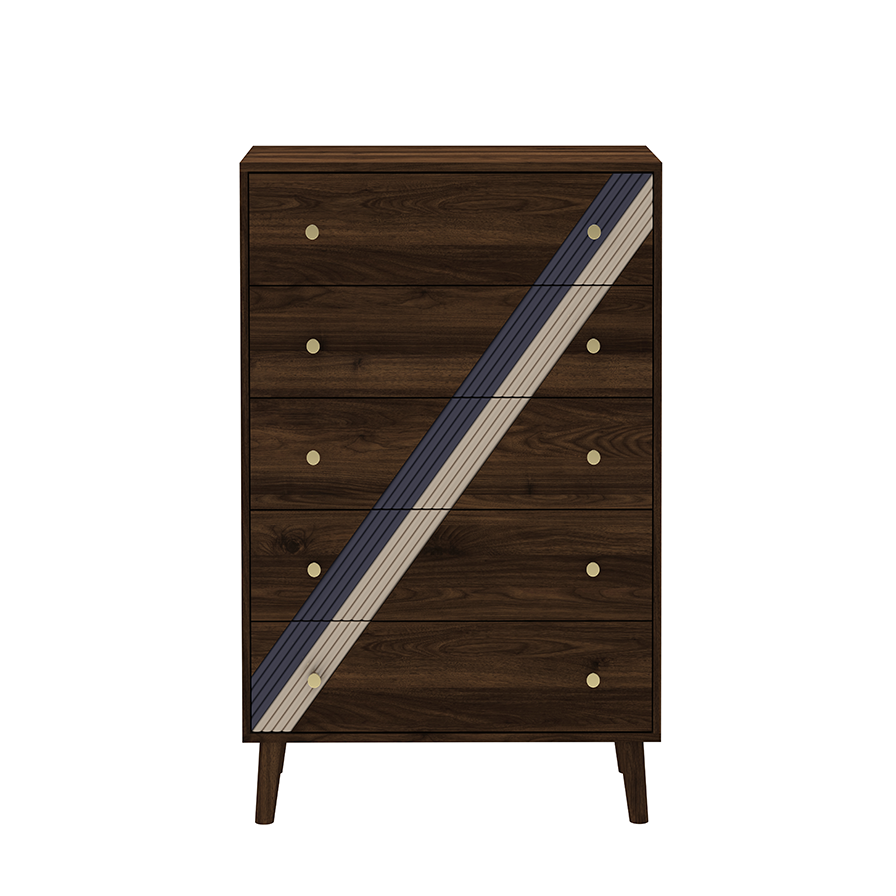
Harbor Sash 5-Drawer Dresser
Contact Customer Service
-
SpecificationsItem Size800x390x1150mmIntended / Approved UseResidences/Apartments/B&BsMaterialMDF/PB/SWFeaturesColor-blocked profile-wrapped trimOversizeNAssembly RequiredYProduction Lead Time60 daysQTY/FCL481pcs
-
Description
Tall, slim and architectural; the sash accent breaks the vertical mass and pairs with fine grain for a refined, hotel-grade presence.
The Next Bestseller: Maximum vertical storage with a premium face—ideal to lift AOV in bedroom sets and hospitality.
-
ODM/OEM ServiceWe offer ODM/OEM service for this tall 5-drawer chest, which repeats the diagonal sash detail on a compact vertical format. Height, drawer layout, hardware, wood stain and accent-strip finish can all be tailored to match your target market and storage needs.
For OEM, we handle private label solutions from logo application to customized cartons and instruction sheets, and can bundle this chest with matching low cabinets and coffee tables. For ODM, we refine proportions, stripe composition and material mix according to your brand positioning, backed by digital mock-ups, prototypes and consistent volume supply. -
FAQ
Q1. What is a dining room sideboard used for in everyday life?
A1. A dining room sideboard is used to store plates, bowls, glasses, and table linens close to the table. It also provides a surface for serving food, drinks, and decorative objects during daily meals and special occasions.
Q2. How deep should a dining room sideboard be for tableware storage?
A2. A dining room sideboard depth of 40–50 cm is usually ideal for storing plates, serving dishes, and glassware. This depth offers generous storage while still fitting comfortably along the wall.
Q3. How do I choose the right length of sideboard for my dining room?
A3. The right length for a dining room sideboard is typically between half and the full length of the dining table. Make sure there is at least 90 cm of clearance between the sideboard and the back of the chairs so people can move around easily.
Q4. Should a dining room sideboard match the dining table and chairs?
A4. A dining room sideboard does not have to match the table and chairs exactly, but it should complement them in style, color, or material. Repeating one element—such as wood tone, leg shape, or metal finish—creates a coordinated look.
Q5. What interior features are useful inside a dining room sideboard?
A5. Useful interior features for a dining room sideboard include adjustable shelves, drawers for cutlery and linens, and compartments for bottles or tall vases. Soft-close doors and sturdy hinges improve the long-term performance of the sideboard.