
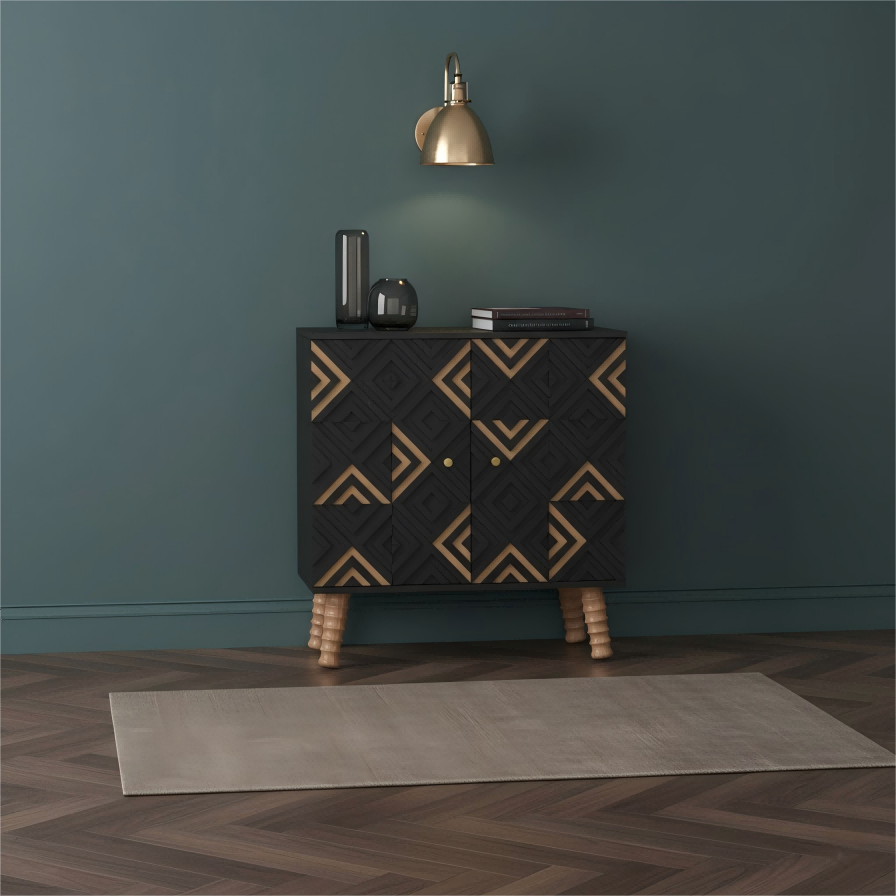
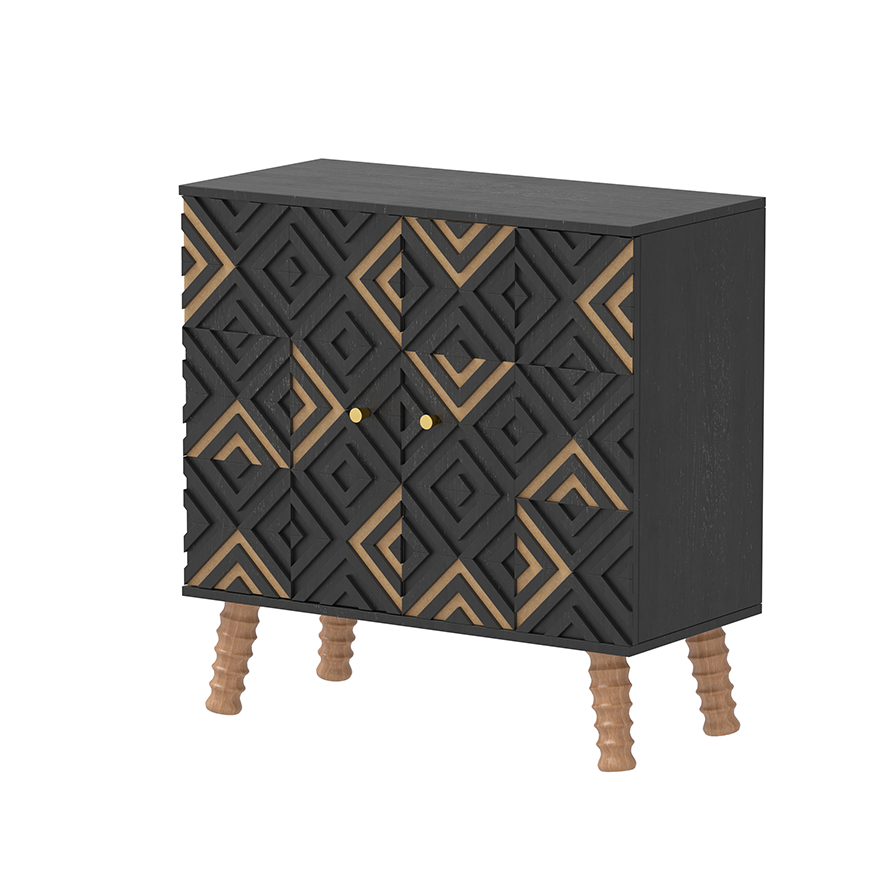
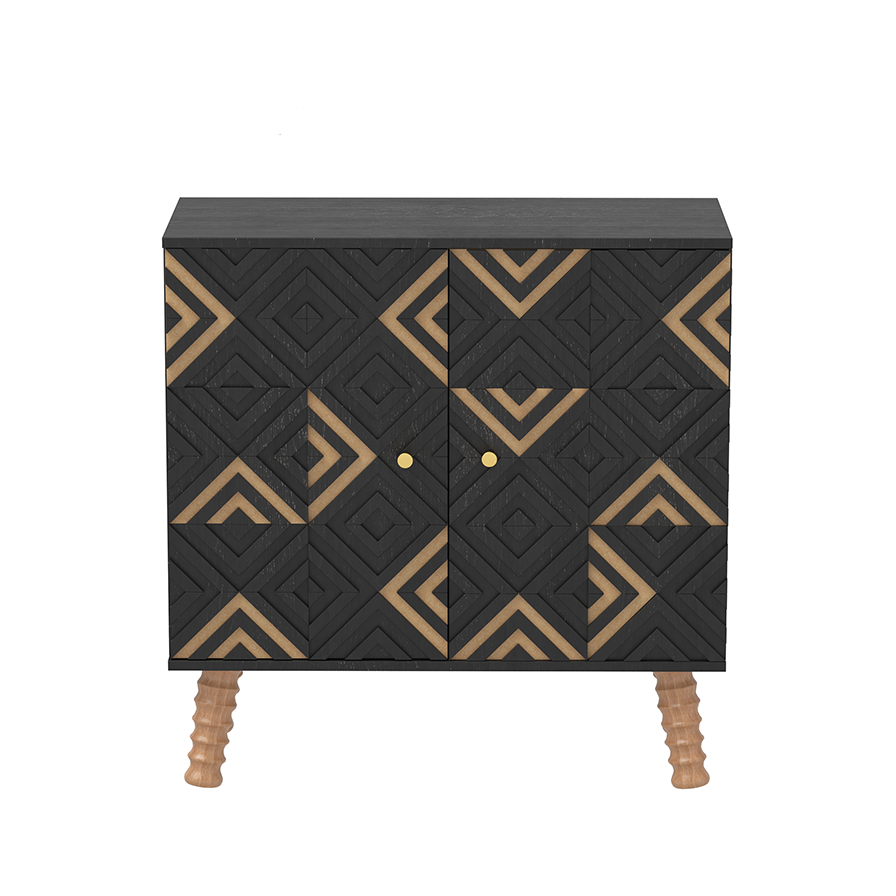
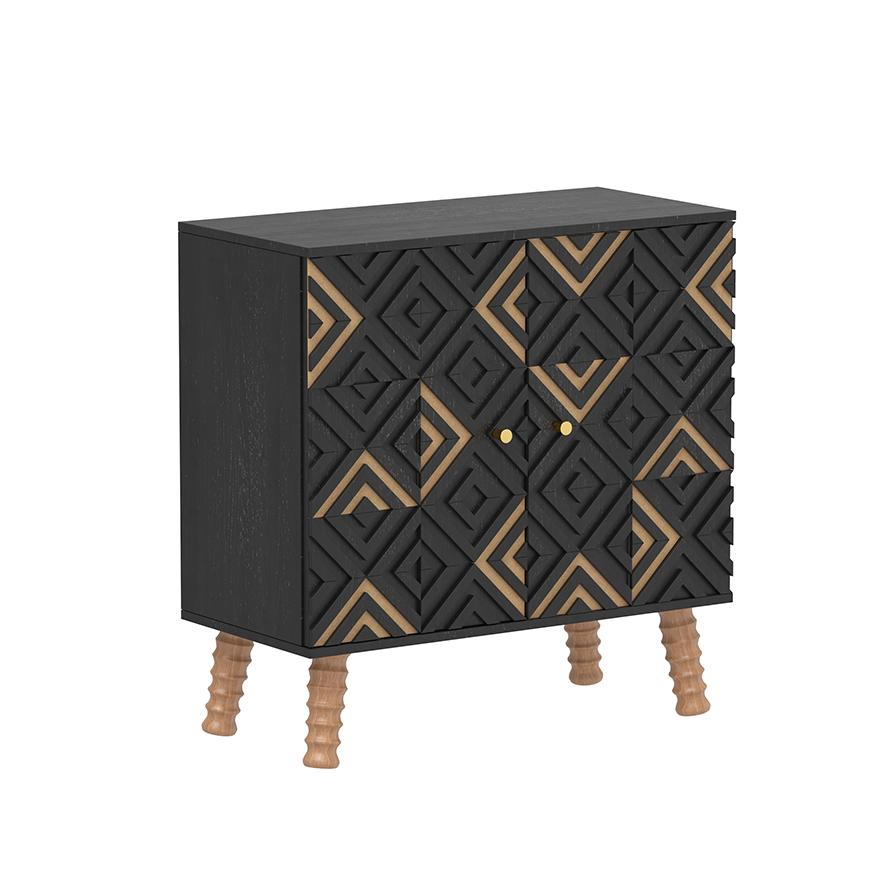
Aurum 2-Door Cabinet
Contact Customer Service
-
SpecificationsItem Size800x350x780mmIntended / Approved UseResidences/Apartments/B&BsMaterialMDF/PB/SWFeatures3D geometric carvingOversizeNAssembly RequiredYProduction Lead Time60 daysQTY/FCL750pcs
-
Description
Shadow Geometry: deep black wood and warm brass accents, layered triangular relief for a sculptural, gallery-like façade in a compact body.
The Next Bestseller:Small footprint, big visual impact—high click-through and easy styling for entryways and living spaces.
-
ODM/OEM ServiceWe provide flexible ODM/OEM service for this compact accent cabinet with black carcass, 3D geometric carved fronts and warm turned wooden legs. Size, door/drawer layout, carving pattern, body color, leg finish and knob style can all be customized to fit different entryway, hallway or bedroom applications.
For OEM, we support private label branding with your logo, cartons, manuals and barcodes, and can build a small coordinated series based on this motif. For ODM, we can develop exclusive patterns, color combinations and leg designs from your mood boards, then deliver 3D renderings, samples and stable mass production. -
FAQ
Q1. What is a dining room sideboard used for in everyday life?
A1. A dining room sideboard is used to store plates, bowls, glasses, and table linens close to the table. It also provides a surface for serving food, drinks, and decorative objects during daily meals and special occasions.
Q2. How deep should a dining room sideboard be for tableware storage?
A2. A dining room sideboard depth of 40–50 cm is usually ideal for storing plates, serving dishes, and glassware. This depth offers generous storage while still fitting comfortably along the wall.
Q3. How do I choose the right length of sideboard for my dining room?
A3. The right length for a dining room sideboard is typically between half and the full length of the dining table. Make sure there is at least 90 cm of clearance between the sideboard and the back of the chairs so people can move around easily.
Q4. Should a dining room sideboard match the dining table and chairs?
A4. A dining room sideboard does not have to match the table and chairs exactly, but it should complement them in style, color, or material. Repeating one element—such as wood tone, leg shape, or metal finish—creates a coordinated look.
Q5. What interior features are useful inside a dining room sideboard?
A5. Useful interior features for a dining room sideboard include adjustable shelves, drawers for cutlery and linens, and compartments for bottles or tall vases. Soft-close doors and sturdy hinges improve the long-term performance of the sideboard.