
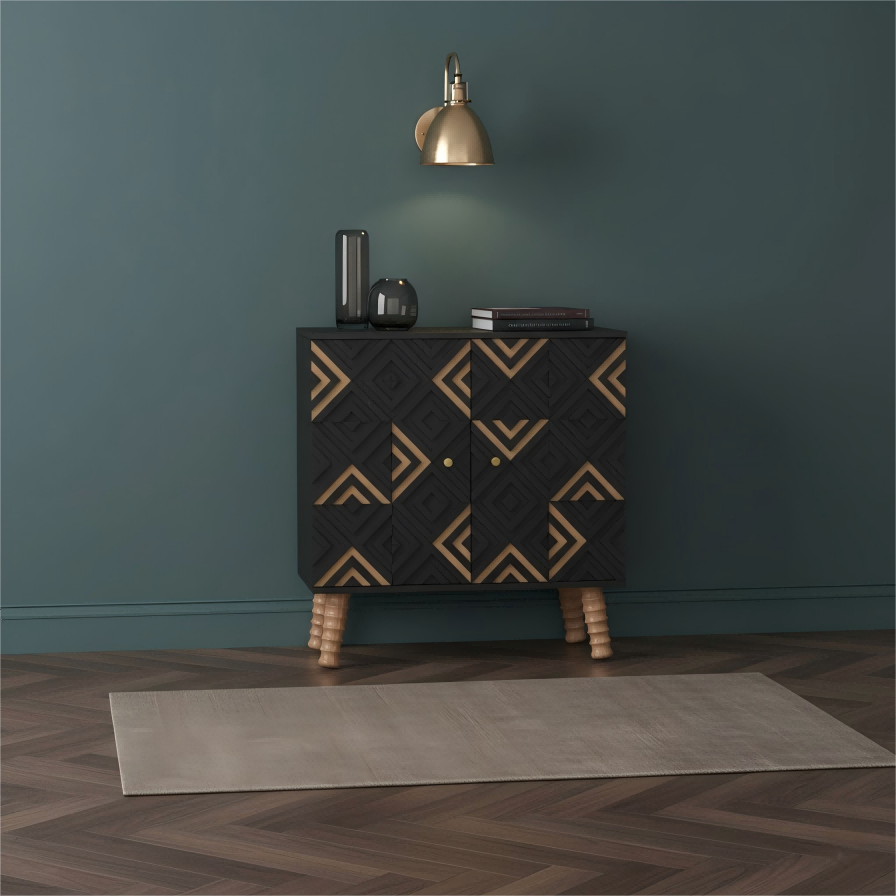
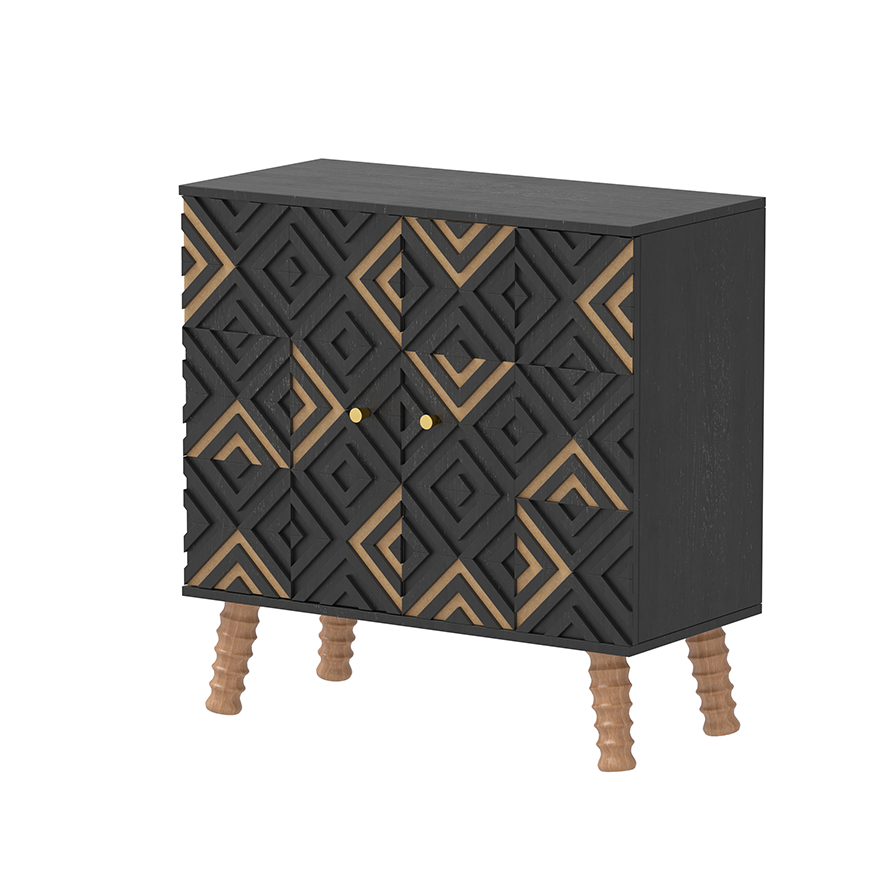
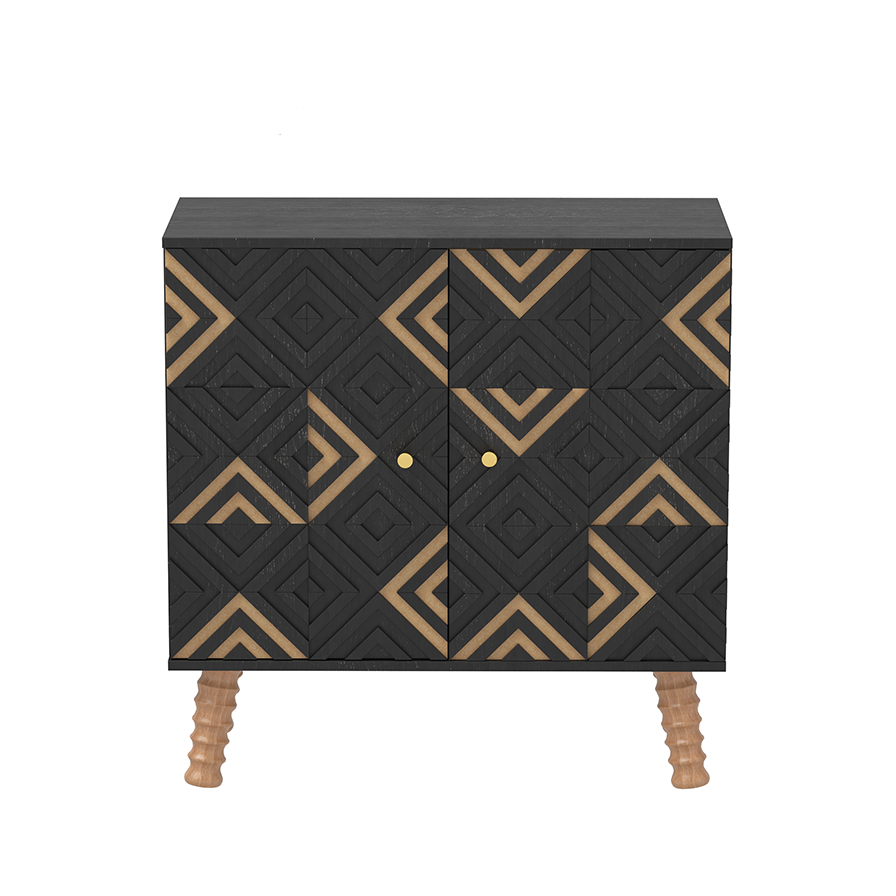
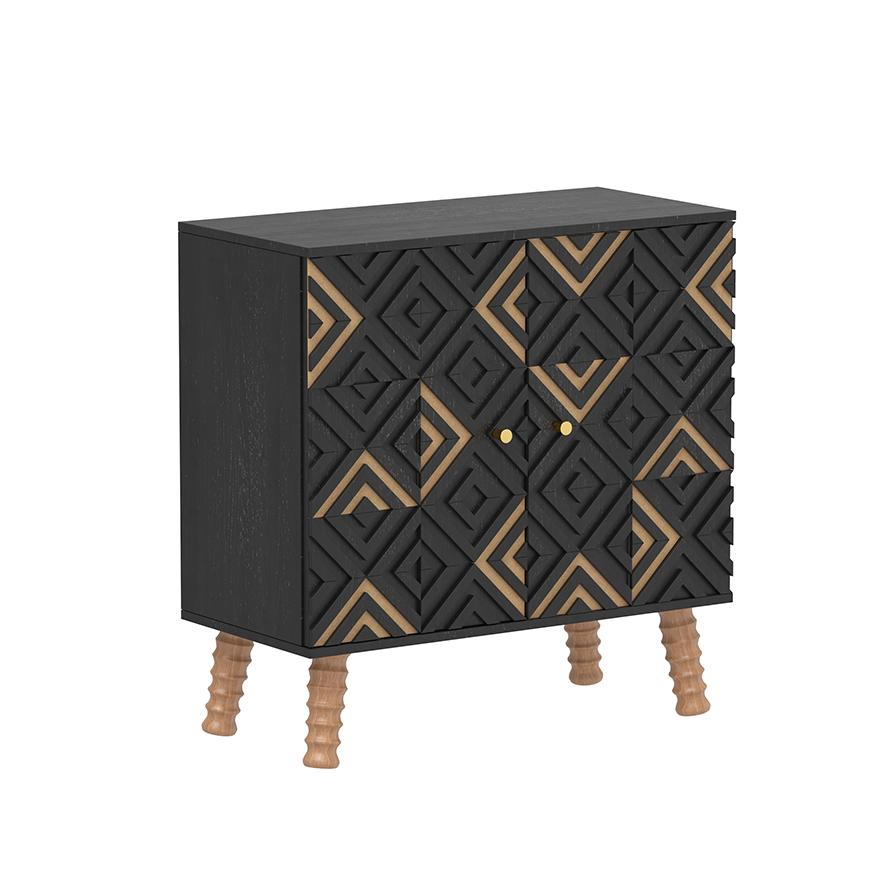
Aurum 2-Türer Schrank
Kundendienst kontaktieren
-
SpezifikationenArtikelgröße800x350x780mmVorgesehene / Genehmigte VerwendungWohnungen/Apartments/B&BsMaterialMDF/PB/SWMerkmale3D-geometrische SchnitzereiÜbergrößeNMontage erforderlichYProduktionsvorlaufzeit60 TageMenge/FCL750 Stück
-
Beschreibung
Shadow Geometry: tiefschwarzes Holz und warme Messingakzente, geschichteter dreieckiger Relief für eine skulpturale, galerieähnliche Fassade in einem kompakten Gehäuse.
Der nächste Bestseller: Kleiner Fußabdruck, große visuelle Wirkung – hohe Klickrate und einfaches Styling für Eingangsbereiche und Wohnräume.
-
ODM/OEM-ServiceWir bieten einen flexiblen ODM/OEM-Service für diesen kompakten Akzentschrank mit schwarzem Korpus, 3D-geometrisch geschnitzten Fronten und warm gedrechselten Holzbeinen. Größe, Tür/Schubladenlayout, Schnitzmuster, Korpusfarbe, Beinfinish und Knopfdesign können alle angepasst werden, um verschiedenen Anwendungen im Eingangsbereich, Flur oder Schlafzimmer gerecht zu werden.
Für OEM unterstützen wir Private-Label-Branding mit Ihrem Logo, Kartons, Handbüchern und Barcodes und können eine kleine koordinierte Serie basierend auf diesem Motiv erstellen. Für ODM können wir exklusive Muster, Farbkombinationen und Beindesigns aus Ihren Moodboards entwickeln und dann 3D-Renderings, Muster und stabile Massenproduktion liefern. -
FAQ
Q1. What is a dining room sideboard used for in everyday life?
A1. A dining room sideboard is used to store plates, bowls, glasses, and table linens close to the table. It also provides a surface for serving food, drinks, and decorative objects during daily meals and special occasions.
Q2. How deep should a dining room sideboard be for tableware storage?
A2. A dining room sideboard depth of 40–50 cm is usually ideal for storing plates, serving dishes, and glassware. This depth offers generous storage while still fitting comfortably along the wall.
Q3. How do I choose the right length of sideboard for my dining room?
A3. The right length for a dining room sideboard is typically between half and the full length of the dining table. Make sure there is at least 90 cm of clearance between the sideboard and the back of the chairs so people can move around easily.
Q4. Should a dining room sideboard match the dining table and chairs?
A4. A dining room sideboard does not have to match the table and chairs exactly, but it should complement them in style, color, or material. Repeating one element—such as wood tone, leg shape, or metal finish—creates a coordinated look.
Q5. What interior features are useful inside a dining room sideboard?
A5. Useful interior features for a dining room sideboard include adjustable shelves, drawers for cutlery and linens, and compartments for bottles or tall vases. Soft-close doors and sturdy hinges improve the long-term performance of the sideboard.